EWK 6.5L Oil Extractor Review (2026): Pros, Cons and Who It’s For
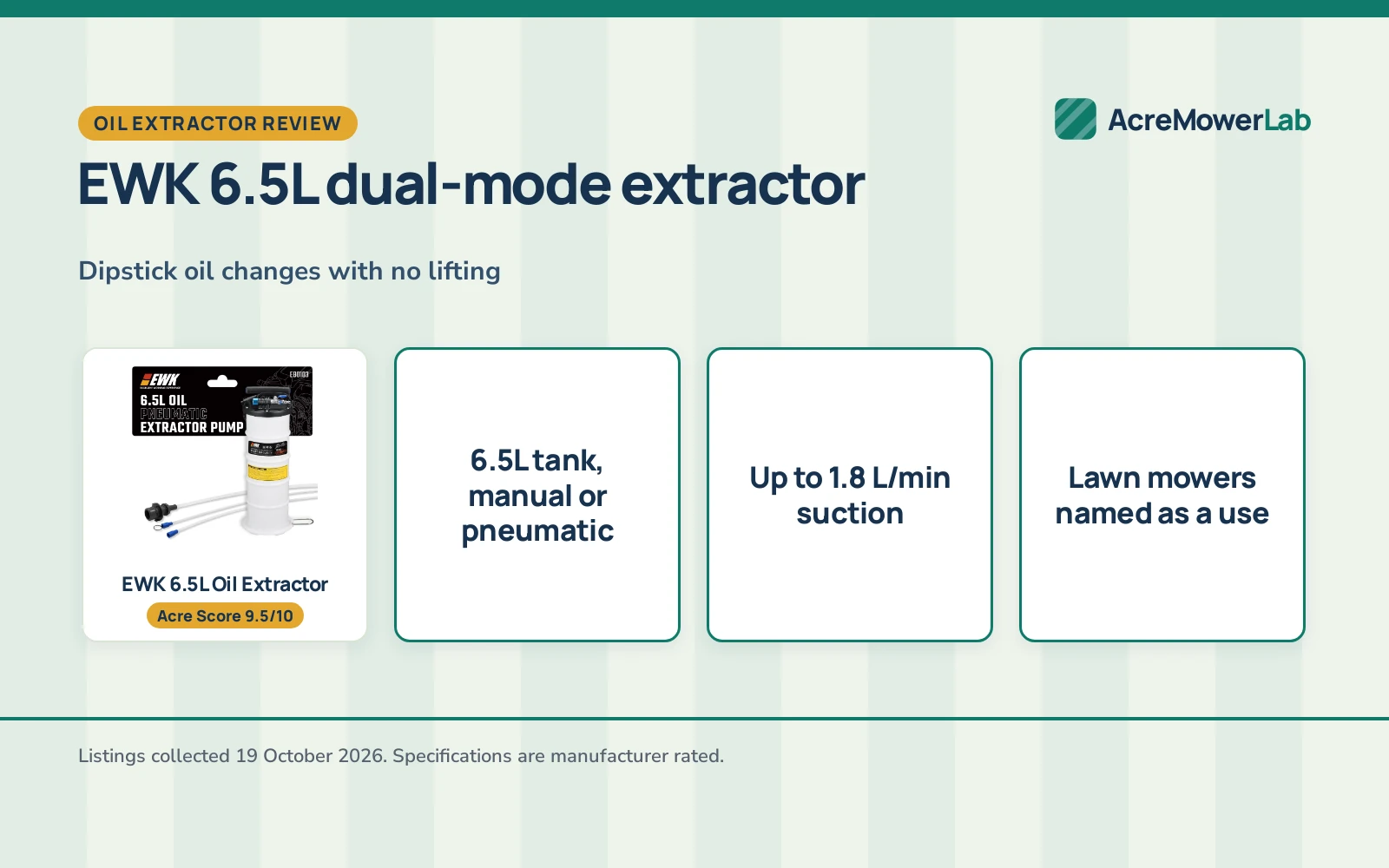
EWK 6.5L oil extractor review: a dual-mode dipstick extractor at up to 1.8 L/min for mower and car oil changes, with the listing's limits flagged.

On this page
Top picks at a glance
As an Amazon Associate I earn from qualifying purchases.
- 1
 EWK 6.5L Pneumatic/Manual Oil Extractor9.5/10View on Amazon
- 2
 Lustriix 6.5L Pneumatic and Manual Oil Extractor Pump9.6/10View on Amazon
- 3
 Briggs & Stratton 5430K Oil Extractor Kit9.6/10View on Amazon
- 4
 Amarine Made Oil PumpView on Amazon
- 5
 Oil Pump 12V 100WView on Amazon
- 6
 ELEAD 500cc Oil Fluid Extractor PumpView on Amazon
- 7
 Oil Extractor Pump 12V 80WView on Amazon
- 8
 Oil Extractor Pump 12V 100WView on Amazon
- 9
 12V Oil Extractor Pump 100WView on Amazon
Our ewk 6.5l oil extractor review in one line: a 6.5 liter dual-mode extractor that pulls oil through the dipstick at up to 1.8 liters per minute, so a riding mower or car oil change becomes a one-person job with no lifting and no drain plug mess. We have not used it ourselves; every figure below comes from the EWK Amazon listing, collected 19 October 2026.
AcreMowerLab earns a commission when you shop through links here. It never changes your price. Affiliate disclosure.
This is a research-based review. Where the listing does not state something, we say so.

EWK 6.5L Pneumatic/Manual Oil Extractor, Oil Change Pump
A 6.5 liter dual-mode oil extractor that pulls fluids through the dipstick at up to 1.8 L/min in pneumatic mode, for engine oil, transmission fluid, coolant and power steering fluid.
Read the full review
The EWK 6.5L is a dipstick oil extractor with two modes: a manual pump for anywhere use and a pneumatic mode that plugs into shop air for up to 1.8 liters per minute of suction. The 6.5 liter sealed tank, two extended suction tubes and 6.45 pound body make it a one-person oil change tool, and the listing names lawn mowers alongside cars, motorcycles, boats and jet skis.
The listing is clear about the limits: no Mercedes W212 E350 or C218 CLS 350, no gasoline or highly volatile fluids, and no warranty term stated. The 1.8 L/min figure is the pneumatic rate; manual pumping has no stated rate. We have not used it; this is from the listing.
Pros
- Dual manual and pneumatic modes in one tank
- Up to 1.8 L/min suction in pneumatic mode
- Two extended tubes reach deep into the reservoir
- Lawn mowers named among stated uses
Cons
- No warranty term stated
- Excludes Mercedes W212 E350 and C218 CLS 350
- No gasoline or highly volatile fluids
- Manual-mode suction rate not stated
Other machines to compare
 Amarine Made Oil PumpCheck price on Amazon
 Oil Pump 12V 100WCheck price on Amazon
 ELEAD 500cc Oil Fluid Extractor PumpCheck price on Amazon
 Oil Extractor Pump 12V 80WCheck price on Amazon
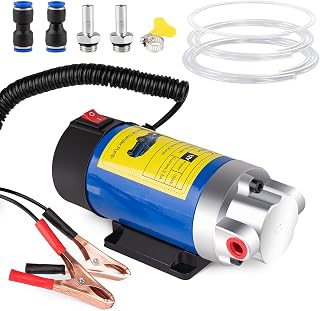 Oil Extractor Pump 12V 100WCheck price on Amazon
 12V Oil Extractor Pump 100WCheck price on Amazon
Ewk 6.5l oil extractor review: the specs at a glance
| Spec | EWK 6.5L (EB0103) |
|---|---|
| Capacity | 6.5 liters |
| Modes | Manual pump or pneumatic |
| Suction rate | Up to 1.8 L/min (pneumatic) |
| Suction tubes | Two extended tubes |
| Fluids handled | Engine oil, transmission fluid, coolant, power steering fluid |
| Stated uses | Cars, motorcycles, boats, jet skis, lawn mowers |
| Not compatible | Mercedes W212 E350, C218 CLS 350; no gasoline or highly volatile fluids |
| Weight | 6.45 lb |
| Dimensions | 8.27 x 8.27 x 22.05 in |
| Warranty | Not stated |
Who the EWK 6.5L is for
- Riding mower and lawn tractor owners who change their own engine oil: the listing names lawn mowers among the uses, and 6.5 liters covers a small engine’s sump several times over.
- DIYers without a lift: extraction through the dipstick means no jacking the car and no crawling under it.
- Multi-vehicle households: the pneumatic mode is the faster option for back-to-back oil changes on a busy weekend.
- Anyone who hates the drain plug mess: a sealed tank and tubes keep the oil off the driveway.
The pick
What the EWK 6.5L does well
Dual-mode extraction
Manual mode works anywhere with no power or air supply; pneumatic mode plugs into shop air for faster extraction. The stated suction rate is up to 1.8 liters per minute in pneumatic mode, which clears a small engine’s oil in a few minutes. Two modes in one tank means it works in the driveway and in the shop.
Dipstick extraction, no lifting
The two extended suction tubes go down the dipstick tube and pull the oil out, so the car stays on the ground and the mower stays where it sits. The listing calls out no drop left behind, with the tubes reaching deep into the reservoir. For a riding mower, where the drain plug can be awkward to reach, this is the practical way to change oil.
More than engine oil
The listing states the extractor also handles transmission fluid, coolant and power steering fluid. One tool covers several fluid jobs around the garage, not just oil changes.
Buying advice: getting the most from the 6.5 liters
The 6.5 liter tank is the number everything else hangs on. For a riding mower or a typical car, one tank covers the oil change, and the sealed tank carries the old oil to recycling in the same container you extracted it with. For a large truck sump, plan on two trips: fill the tank, empty it, and go back for the rest. The stated footprint is 8.27 by 8.27 inches, so it takes up less garage floor than a creeper, and at 6.45 pounds empty it carries easily from the garage to the driveway. The height to plan around is 22.05 inches; it stands tall and narrow, so give it a corner where it cannot be knocked over.
Manual or pneumatic: pick by where you work
Manual mode needs nothing but your arm, which makes it the driveway, field and boat-ramp choice. Pneumatic mode is the shop choice, trading shop air for the stated 1.8 liters per minute. The listing does not state what air pressure or fitting the pneumatic mode needs, so check the connectors in the box against your compressor before you count on a quick-connect you already own. If you have no compressor, you are buying the manual experience; the listing states no suction rate for manual pumping, so judge that mode on convenience rather than speed.
The tubes do the work
The kit includes two extended suction tubes, and the listing credits them with reaching deep into the reservoir so little oil is left behind. Match the tube to the dipstick tube on the engine in front of you: a loose tube lets air past and weakens the suction, and forcing an oversized tube risks damaging the dipstick tube. Warm the engine before you start so the oil flows freely, feed the tube down until it stops, then pull back slightly so the tip does not seal flat against the bottom of the pan.
Four fluids, one tank: plan the order
The listing states the extractor also handles transmission fluid, coolant and power steering fluid, which makes it four tools in one. But the tank holds whatever you put in it, and the listing describes no cleaning procedure between fluids. Used coolant in particular does not belong mixed with used oil at the recycling point, and collection sites take the two separately. If you plan to pull transmission fluid or coolant, decide in advance whether this tank stays an oil-only tool or becomes the shop’s everything extractor.
Setup and first use
- Check the tank seal and seat both tubes before the first job; the listing leans on a precision-sealed tank, so confirm the fittings are snug.
- Choose the suction tube that fits the dipstick tube and check its reach against the engine.
- If you are using pneumatic mode, connect shop air and confirm the pump cycles before the tube goes in.
- Extract with the engine warm, watching the level through the translucent finish; that matte/translucent exterior is how you see the 6.5 liter ceiling approaching.
- Cap the tank, carry it upright, and take the used oil to a recycling point; most auto parts stores and municipal collection sites accept used engine oil.
Limitations to know before you buy
No warranty term stated
The listing states no warranty at all. For a tool with a sealed tank and a pump mechanism, that is a gap worth noting before you buy.
Not for every vehicle
The listing excludes the Mercedes W212 E350 and C218 CLS 350 by name, and warns against gasoline and highly volatile fluids. Check the compatibility note against your own vehicles before ordering.
6.5 liters is the ceiling
The tank holds 6.5 liters, so a large truck sump may need two trips. For riding mowers and most cars it is one and done, but know the limit.
Pneumatic speed needs shop air
The fast 1.8 L/min figure is the pneumatic mode, which needs an air compressor. Without one, you are on the manual pump, and the listing gives no manual-mode rate.
Who should skip the EWK 6.5L
- Owners of the excluded Mercedes models named in the listing.
- Anyone who needs to extract gasoline or highly volatile fluids: the listing warns against it.
- Buyers who want a stated warranty: there is none here.
- Anyone without an air compressor who expected the 1.8 L/min rate: that is the pneumatic figure.
Read the manual, keep children and pets out of the yard while you work, wear eye and hearing protection and sturdy footwear, and never exceed the slope rating of your machine. Refuel only with the engine off and cool. See CPSC lawn mower safety. Read our Safety Disclaimer.
FAQ: mowing large lots
Does the EWK 6.5L work on lawn mowers?
Yes, the listing names lawn mowers among the stated uses. A 6.5 liter tank is plenty for a mower engine’s oil capacity, and dipstick extraction avoids tipping the mower.
Do I need an air compressor?
Only for the fast pneumatic mode. The manual pump mode works without one, though the listing states no suction rate for manual pumping.
What fluids can it extract?
Engine oil, transmission fluid, coolant and power steering fluid, per the listing. Not gasoline or highly volatile fluids.
Is there a warranty?
No warranty term is stated in the listing.
How do you know when the tank is full?
The exterior is listed as a matte/translucent finish, so the fluid level shows through the tank wall as it rises. Watch it while you work; 6.5 liters is the ceiling and no automatic shutoff is stated.
What air supply does the pneumatic mode need?
The listing does not state a required pressure or fitting size for pneumatic mode. Check the connectors in the box against your compressor before you plan a pneumatic-only workflow.