Best UTV Snow Plow (2026): 4 Picks
UTV snow plow kits for driveways, farm roads and parking lots, compared by blade width, angle, mount and vehicle fit, with what each listing…
Zero-turn mowers for fast, tight mowing around trees and beds on 1 to 10+ acres: residential lap-bar mowers, commercial-grade machines and battery models. Guides compare deck width and fabrication, engine, transmissions, top speed, slope rating and ROPS.
Turn rise and run, or a phone level reading, into degrees and percent, then compare it with typical mower slope ratings.
UTV snow plow kits for driveways, farm roads and parking lots, compared by blade width, angle, mount and vehicle fit, with what each listing…
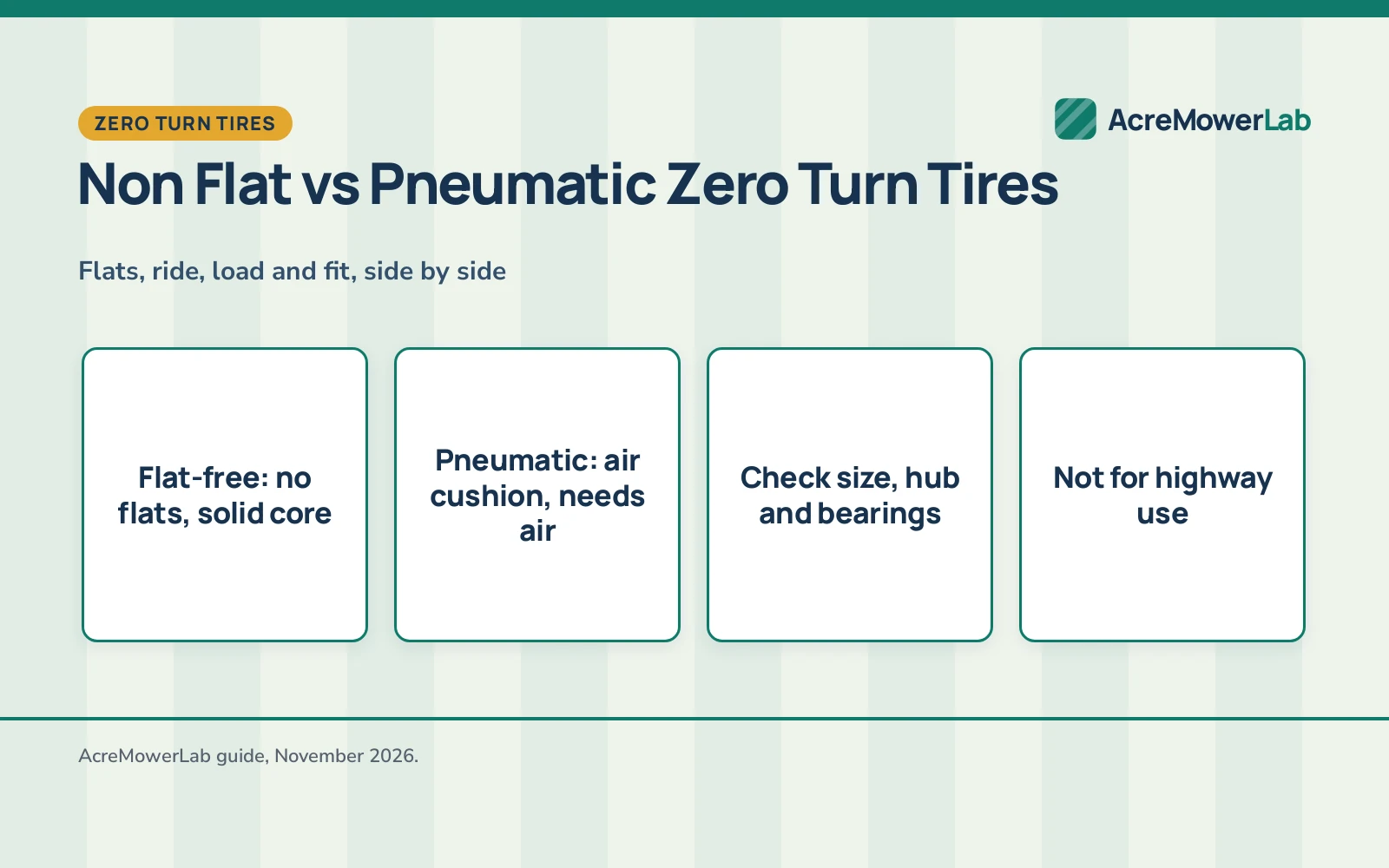
Flat-free and pneumatic zero-turn front tires compared on flats, ride, load and fit, so you can match the tire to the mower and the…
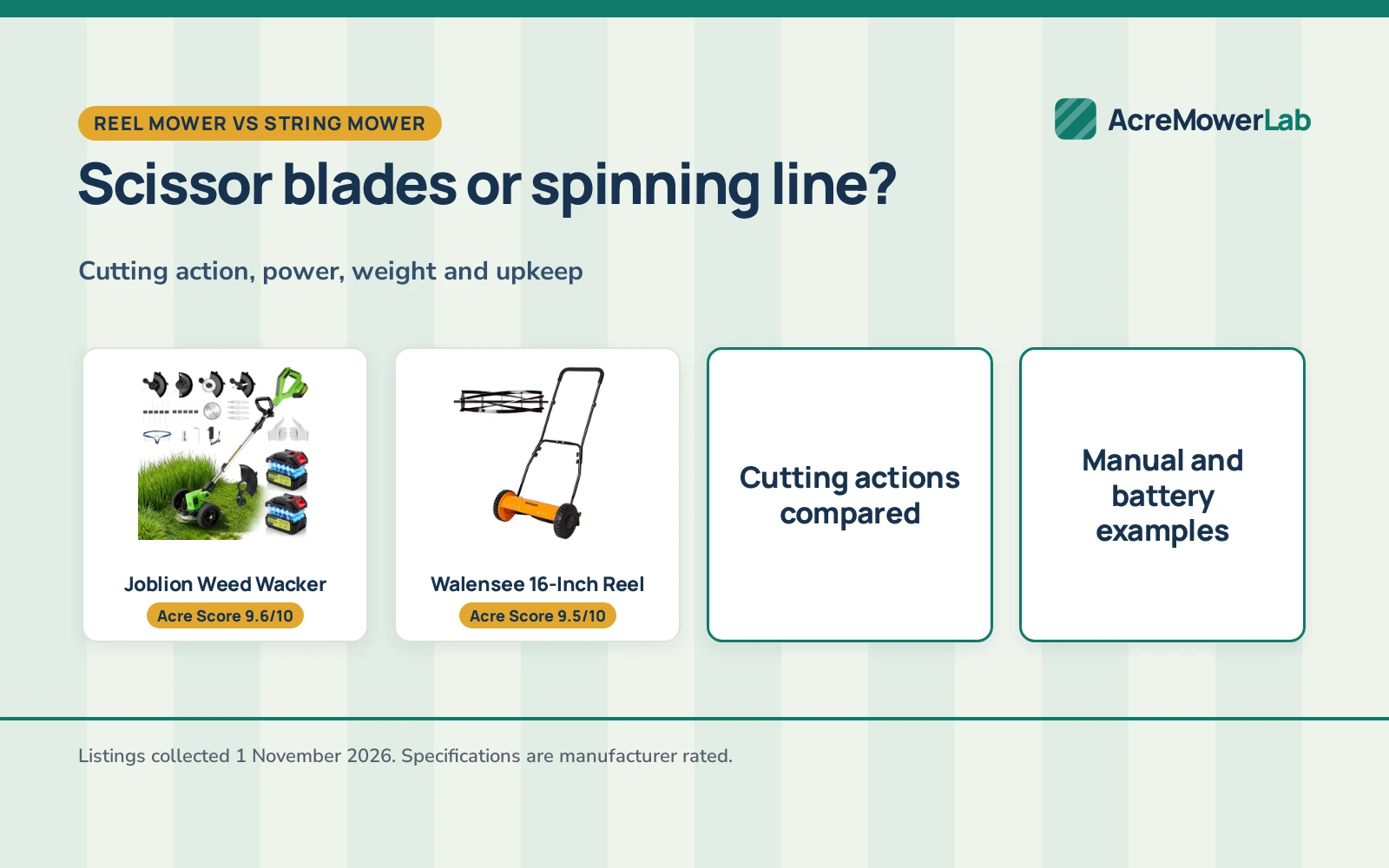
Reel mowers and string mowers compared on cutting action, power, weight and upkeep, with one example of each from the listings we reviewed.
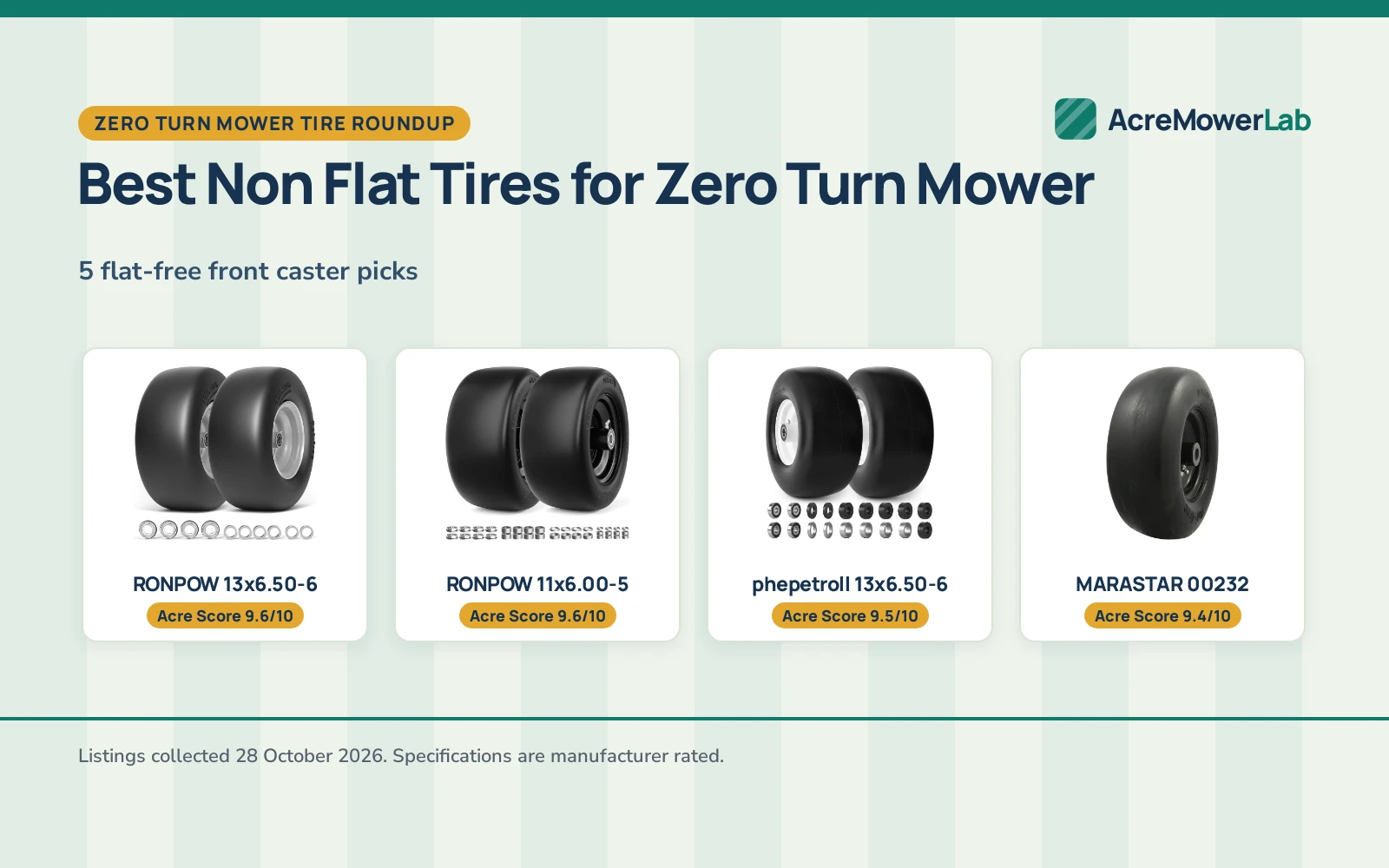
Five flat-free front caster tires for zero turn mowers, compared by size, load capacity, hub fit and warranty, with the listing contradictions marked.
Belt drive and gear drive mowers compared through replacement belt and gear kit examples, with fit, material and warranty stated for each side.
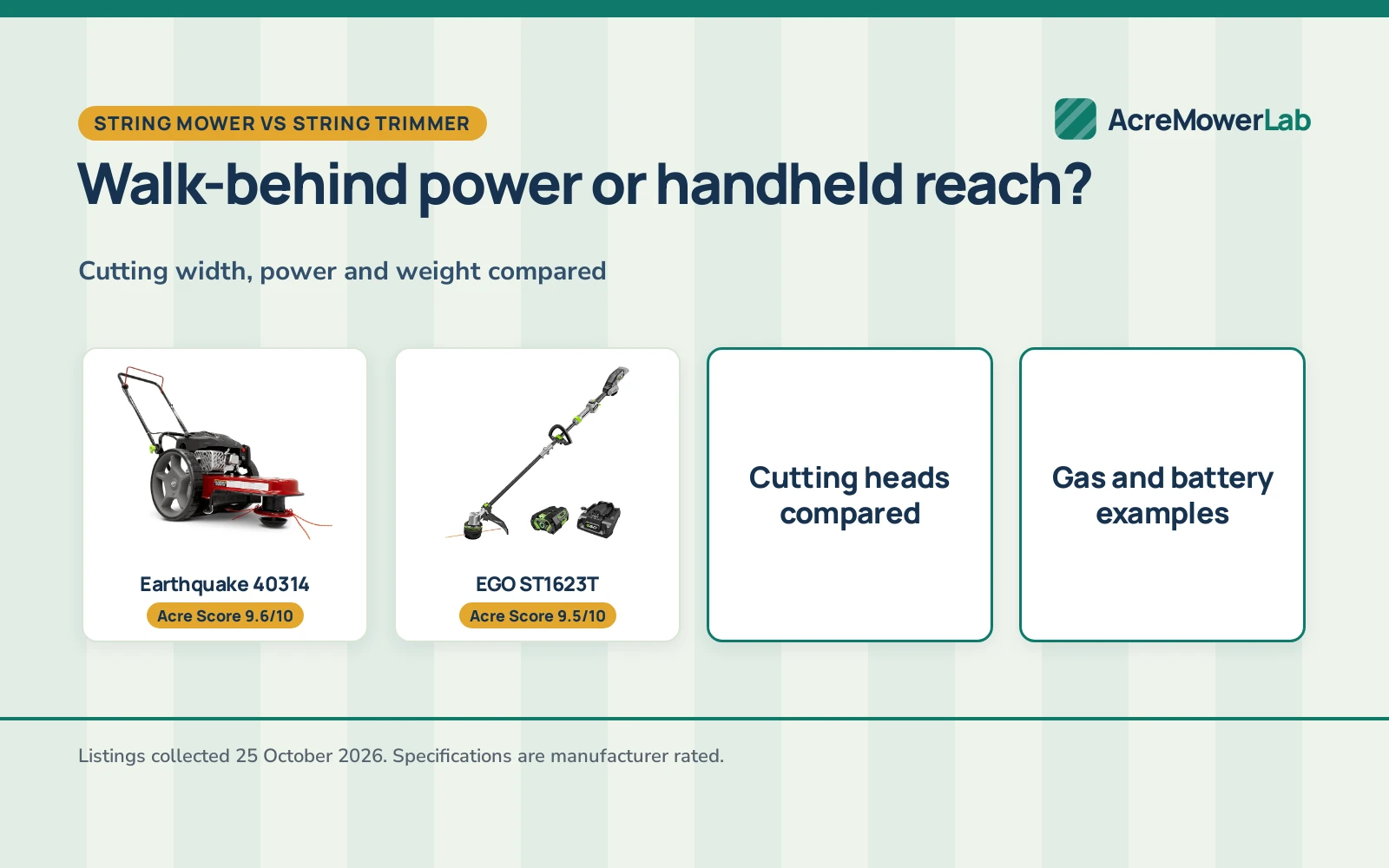
A walk-behind string mower and a handheld string trimmer compared on cutting width, power, weight, runtime and upkeep, with one example of each from…
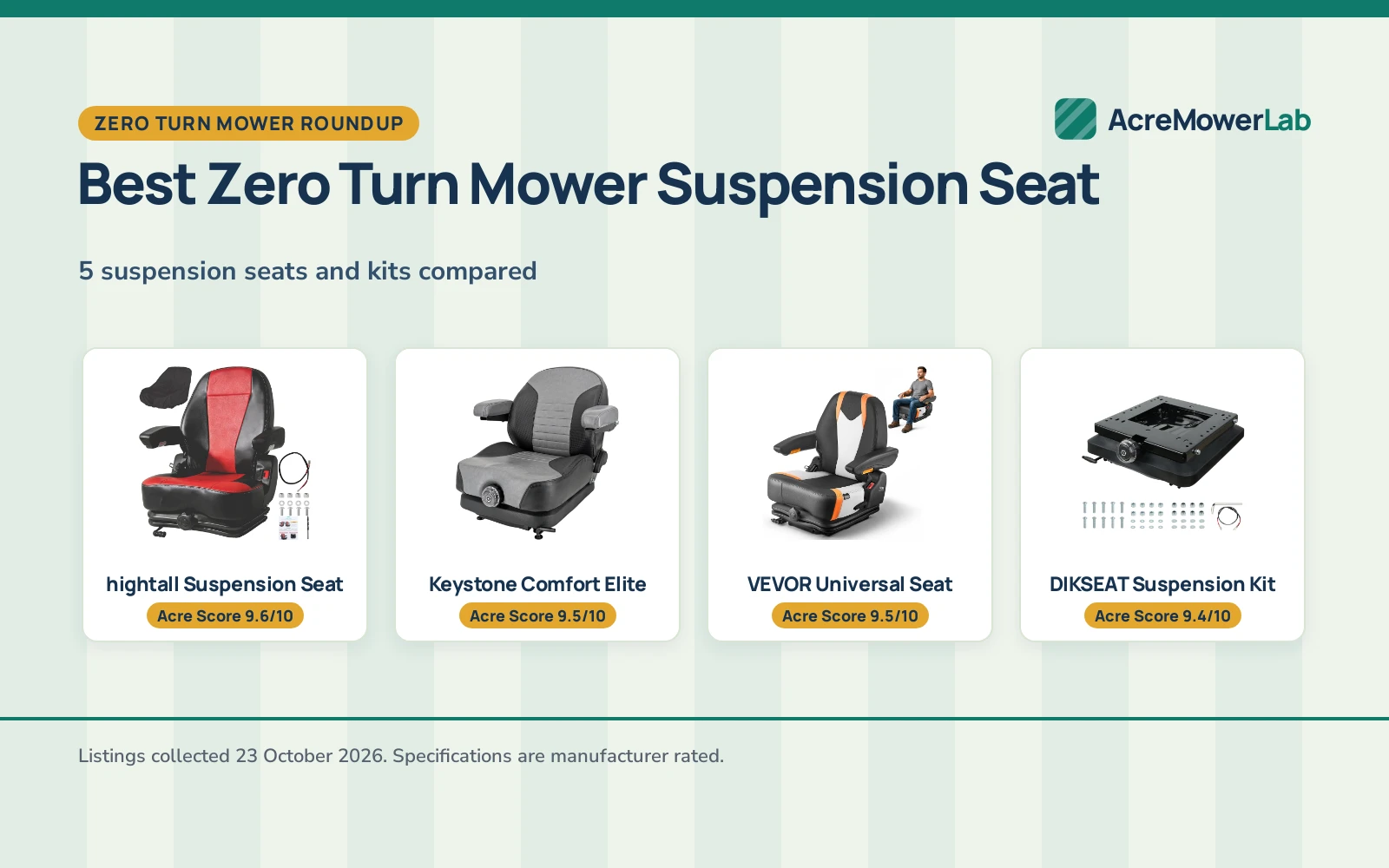
Five suspension seats and bolt-on kits for zero-turn mowers, compared by travel, weight range, mounting fit and warranty.
Zero-turn mowers can use bagger attachments, but clean grass collection requires matching deck width, adding front counterweights, and using high-lift bagging blades.
A practical breakdown of zero-turn mower advantages and drawbacks on acreage: cutting speed, turning agility, slope limits, towing, and upkeep costs.
How zero-turn mowers cut mowing time on acreage through independent steering levers, faster travel speeds, and clean trimming around yard obstacles.
Zero-turns trade a tight turning circle for a different feel and a different set of limits. They save the most time on open ground with many obstacles, and they ask more of the operator on hills. A good zero-turn matches deck width to gate size and acreage, and the operator's comfort with hills. Narrow the field by property size, then use residential or commercial pages for a closer look.