How to Clear Leaves on a Large Property
A five-step plan for leaf cleanup on acreage: tools, timing, wind, mulching and what to do with the pile.

On this page
Top picks at a glance
As an Amazon Associate I earn from qualifying purchases.
- 1
 Ultrasac 39 Gallon 1.0 MIL Clear Drawstring Trash Bags9.6/10View on Amazon
- 2
 Teivio Large Black Trash Bags9.5/10View on Amazon
- 3
 Rake for LeavesView on Amazon
- 4
 GARDEASE Leaf ScoopsView on Amazon
- 5
 Rake for Leaves SetView on Amazon
- 6
 Altdorff Steel Leaf ScoopsView on Amazon
- 7
 Rake for Leaves Heavy DutyView on Amazon
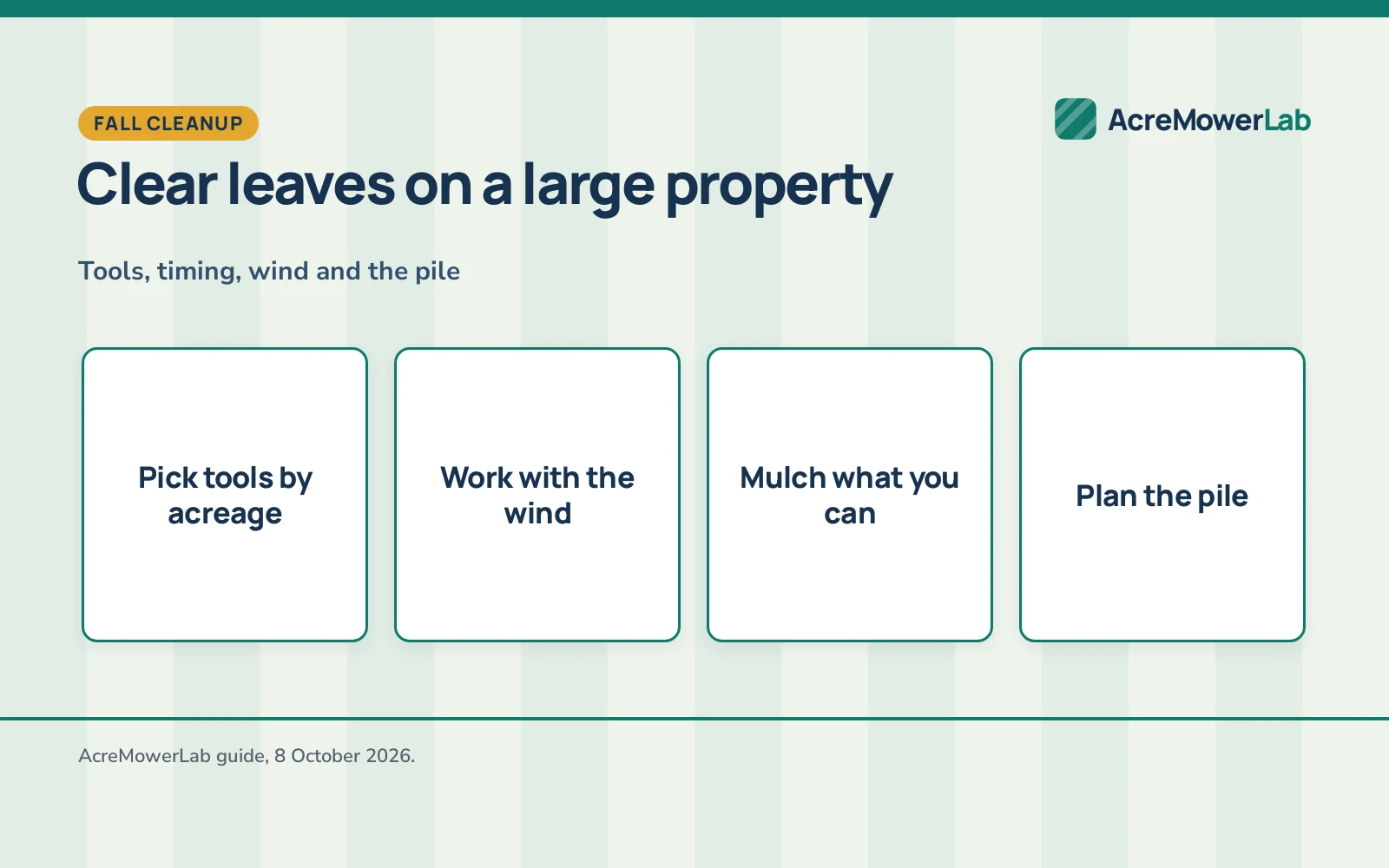
To clear leaves on a large property, make a plan before you start: blow or rake with the wind into wide rows, mulch what your mower can handle, and move the rest to one pile for compost or haul-off. A backpack blower does most of the work on a few acres, and a mulching pass handles the lawn. This guide shows the order that wastes the least time.
Other machines to compare
 Rake for LeavesCheck price on Amazon
 GARDEASE Leaf ScoopsCheck price on Amazon
 Rake for Leaves SetCheck price on Amazon
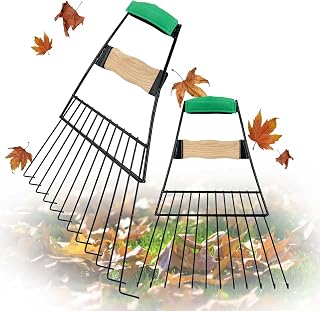 Altdorff Steel Leaf ScoopsCheck price on Amazon
 Rake for Leaves Heavy DutyCheck price on Amazon
AcreMowerLab earns a commission when you shop through links here. It never changes your price. Affiliate disclosure.
How to clear leaves on a large property: pick the right tool
| Tool | Best for | Limit |
|---|---|---|
| Rake and tarp | Beds, tight corners, small areas | Slow past a fraction of an acre |
| Backpack blower | Moving leaves across lawn, driveway and beds on 1 to 10 acres | Noise, fuel, and the weight on your back |
| Mulching mower pass | Light to moderate leaf fall on lawn | Heavy piles can smother the lawn and clog the deck |
| Tow-behind sweeper or vacuum | Big open lawns where you want to collect, not just move | Needs a tractor or zero-turn with a hitch |
Most acreage owners combine two of these. See our best backpack leaf blower roundup for gas options.
Step 2: choose your timing
Dry leaves move easily. Wet leaves are heavy and mat down. Wait for a dry day if you can, and do the main pass after most leaves are down so you do not blow the same area twice. In regions with a long fall, a lighter midseason pass can keep the lawn from being buried.
Step 3: work with the wind
Start on the upwind side and push leaves downwind toward your collection area. Work in wide, overlapping passes instead of chasing single piles. Clear hard surfaces such as the driveway and paths first so you do not blow leaves back onto them later.
Step 4: mulch what you can
On the lawn, a mulching or bagging mower can chop leaves into small pieces. We cover the tradeoffs in our upcoming guide on whether to mulch or bag leaves. If leaf cover is so heavy you cannot see the grass, move some off the lawn first. Raise the deck, mow slowly, and watch for clumping. Keep blade edges sharp: see our mower blade sharpener picks.
Step 5: decide what to do with the pile
Do this before you start, because the pile location sets your blowing direction.
- Compost: build a pile or bin at the edge of the property.
- Garden beds: a layer of shredded leaves can be used as mulch.
- Haul-off: check local pickup or drop-off rules.
- Burning: many counties and states restrict it, so check local rules and burn bans first.
Pick a collection spot
Walk the property once before you start and note where leaves collect naturally, such as against fences, in corners and along drainage lines. Those spots tell you where the wind already wants to push them.
Choose one or two collection points before you start, near where you will compost, tarp or load. Pick flat, dry ground away from drainage ditches and the property boundary so leaves do not wash or blow back. Moving leaves a short distance in many passes beats a long single push. For tree-lined drives or fence lines, push leaves into the open lawn first, then to the collection point.
Match the tool to the leaf type
Oak leaves are tougher and slower to break down than maple. Wet beech or sycamore leaves mat together. Pine needles blow easily but catch in the grass. If most of your leaf fall is oak, plan on collecting more than you mulch. A blower with more airflow helps with heavy or wet leaves. Our trimmer and blower reviews list the options.
Plan the property in zones
Divide a large property into zones, for example driveway and paths, house lawn, orchard or tree line, and field edge. Finish one zone before you move to the next, and start with the zones where leaves return fastest. If you have trees along the property line, plan on a second pass there after the last leaves drop. Keep a tarp or a trailer at the collection point so you are not carrying leaves a long way by hand.
Mind the weather and the ground
Wet ground is slippery under a pack and under tires. Skip steep or soggy ground when you can, and never blow or mow leaves toward a pond, ditch or road. Cold mornings make two-stroke engines harder to start, so give yourself time and follow the manual.
Safety
Wear eye and hearing protection and sturdy shoes. Clear sticks, stones and other debris before you blow or mow, and keep children, pets and bystanders away from the work area. Point blower nozzles away from people and parked cars. Refuel only with the engine off and cool. On slopes, follow your mower’s maximum slope rating, and do not mow wet leaves on a hill. See our Safety Disclaimer.
FAQ: mowing large lots
What is the fastest way to clear leaves on 5 acres?
Use a backpack blower to move leaves into wide rows with the wind, then mulch the lawn or collect the rows. Splitting the property into zones keeps you from re-blowing the same area.
Should I blow leaves wet or dry?
Dry is easier. Wet leaves are heavy and clump, which takes more airflow and more time.
How often should I clear leaves?
As often as it takes to keep the lawn visible. A thick, matted layer left over the lawn for a long time is worse than a few passes.
Can I mulch leaves with a riding mower?
Light to moderate leaf fall, yes, with a mulching setup. Heavy piles are better moved first. Follow your manual for deck settings.
What do I do with all the leaves?
Compost them, use them as bed mulch, haul them off, or check local rules if you are thinking about burning.
More mowing guides
- Best Backpack Leaf Blower: 3 Gas Picks for Acreage Leaf Cleanup
- Best Mower Blade Sharpener: 4 Picks for Riders and Large Lawns
- How Long Does It Take to Mow an Acre? Times by Mower Type
- Best String Trimmer for Acreage: 4 Gas and Battery Picks
Use the Mower Matcher to narrow down choices by acreage, terrain, budget, and power type.