How to Fix Hydrostatic Drive on Riding Mower
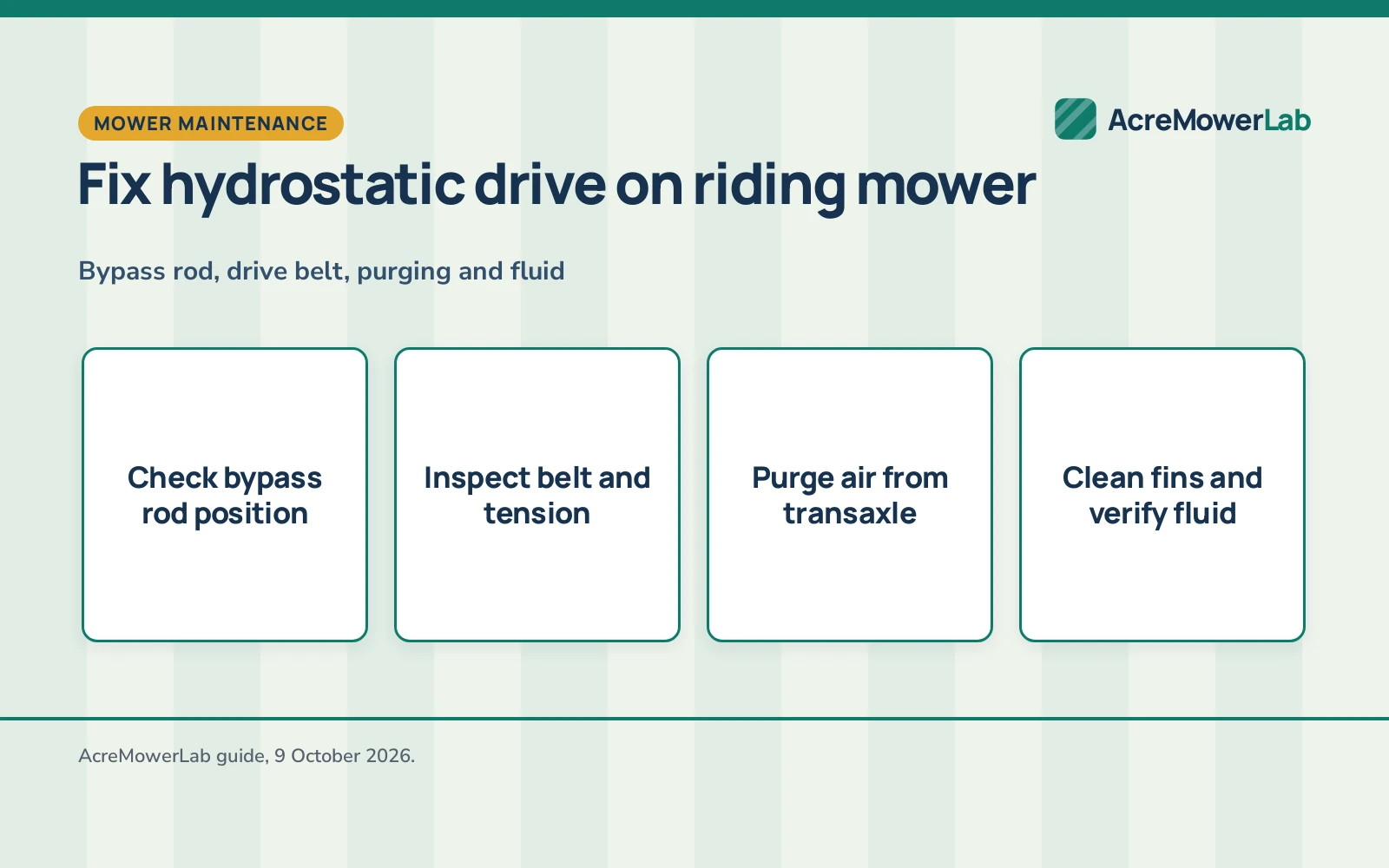
A practical troubleshooting guide to restore pulling power to a riding mower hydrostatic drive by checking the bypass, belt, air and fluid.

On this page
Top picks at a glance
As an Amazon Associate I earn from qualifying purchases.
- 1
 VEVOR Series 4 1-3/8 in 6-Spline Tractor PTO Drive Shaft9.5/10View on Amazon
- 2
 Eparts Riding Mower Garden Tractor Seat9.4/10View on Amazon
- 3
 Greenworks 80V 42" CrossoverT Cordless Riding Lawn Tractor9.5/10View on Amazon
- 4
 Husqvarna Z254F 54 in. 23 HP Kawasaki Zero Hydrostatic TurnView on Amazon
- 5
 5-3103 Drive Disc with Liner Compatible with Sn-apperView on Amazon
- 6
 YOOREAL Digital OEM Maintenance Hour Meter GaugeView on Amazon
- 7
 CRAFTSMAN 42" Gas Riding Lawn Mower with 17.5 HP* Briggs andView on Amazon
- 8
 YOOREAL Digital AC/DC Hour Meter 5-277VView on Amazon
- 9
 AugFir Tow Behind Broadcast SpreaderView on Amazon
To know how to fix hydrostatic drive on riding mower issues, begin with the simplest cause: confirm the freewheel bypass rod at the rear of the tractor is fully pushed in to close the bypass valve so the transaxle can build pressure. When a riding mower loses pulling power, jerks, or refuses to move, the problem usually stems from an open bypass valve, a slipping drive belt, trapped air, or clogged cooling fins. This guide explains how to restore drive power step by step.
Other machines to compare
 Husqvarna Z254F 54 in. 23 HP Kawasaki Zero Hydrostatic TurnCheck price on Amazon
 5-3103 Drive Disc with Liner Compatible with Sn-apperCheck price on Amazon
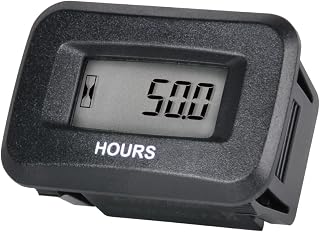 YOOREAL Digital OEM Maintenance Hour Meter GaugeCheck price on Amazon
 CRAFTSMAN 42" Gas Riding Lawn Mower with 17.5 HP* Briggs andCheck price on Amazon
 YOOREAL Digital AC/DC Hour Meter 5-277VCheck price on Amazon
 AugFir Tow Behind Broadcast SpreaderCheck price on Amazon
AcreMowerLab earns a commission when you shop through links here. It never changes your price. Affiliate disclosure.
How to fix hydrostatic drive on riding mower: check the bypass rod
| Symptom | Probable Cause | Primary Fix |
|---|---|---|
| Mower fails to move forward or reverse | Freewheel bypass valve left open | Push bypass rod in to close valve and build pressure |
| Sluggish drive or jerky acceleration | Air trapped in hydraulic fluid | Purge the transaxle by cycling drive controls |
| Slipping on inclines or under load | Worn drive belt or loose tension spring | Inspect belt tension and replace worn drive belts |
| Drive fades as transmission heats up | Oil breakdown or clogged cooling fins | Clear debris from fins and inspect transaxle fluid |
Most hydrostatic riding mowers include a freewheel bypass control, often designed as a pull rod or dump valve. This mechanism connects to an internal bypass valve inside the hydrostatic transaxle. Pulling the rod opens the valve, allowing hydraulic fluid to circulate freely without driving the motor cylinders so you can push the machine by hand without starting the engine. If the tractor was moved by hand and the bypass valve was left open, the transmission cannot build hydraulic pressure. Locate the bypass rod at the rear hitch plate or near the rear wheels, and push it firmly into the operating position to close the valve. For common machine features, review our overview of riding mowers.
Step 2: inspect the drive belt and tension spring
A hydrostatic transaxle relies on mechanical power from the engine before it can generate hydraulic pressure. The engine crankshaft turns a pulley that drives a long V-belt running beneath the chassis back to the transmission input pulley. An idler pulley mounted on a spring-loaded arm keeps the belt tight against the pulleys. If this belt stretches, wears thin, or picks up oil, it slips around the transmission pulley under load.
Belt dimensions depend on deck size and tractor design. For example, a hydrostatic transmission belt specified for 30-inch rear-engine riders from brands such as Craftsman, Troy-Bilt, and Cub Cadet measures 1/2 inch in top width and 38.24 inches in length, matching part numbers 954-05130 and 754-05130. When any drive belt stretches or wears narrower than its stated width, it loses traction in the pulleys. Inspect the idler tension spring to ensure it has not stretched or unhooked, and verify that the idler pulley bearing spins freely without wobble.
Step 3: purge trapped air from the hydraulic transaxle
Air bubbles inside a hydraulic transmission cause cavitation, leading to power loss, sluggish motion, and loud whining noises. Hydrostatic drives depend on non-compressible hydraulic fluid to transfer pressure. When air enters the circuit, the air pockets compress under load, preventing fluid from turning the drive axle. Air often enters after replacing a drive belt, draining fluid, or letting the tractor sit unused through storage.
Purging expels trapped air back into the expansion chamber. Follow this order on level ground:
- Park on level ground, turn the engine off, and chock the front wheels.
- Raise the rear drive wheels and support the frame on sturdy jack stands so the wheels can turn without touching the ground.
- Pull the bypass rod out to open the internal bypass valve.
- Start the engine, set throttle to a low or moderate speed, and release the parking brake.
- Move motion controls smoothly between full forward and full reverse several times. With the bypass open, the wheels will not turn, allowing fluid to circulate and force air pockets into the reservoir.
- Push the bypass rod back in to close the bypass valve.
- Cycle motion controls forward and reverse again. The rear wheels will now turn; continue cycling until rotation is steady, quiet, and responsive.
- Shut off the engine, lower the mower to the ground, and confirm drive engagement.
Step 4: clean cooling fins and inspect transaxle fluid
Hydrostatic transmissions generate friction and heat during continuous mowing. To shed heat, transaxles feature cooling fins across the aluminum housing and a plastic cooling fan mounted above the drive pulley. When dry grass clippings and dust pack onto the transmission housing, they form an insulating blanket that traps heat. As hydraulic fluid overheats, its viscosity thins, causing internal pressure to drop. A mower with overheated fluid moves normally when cool, but slows down or stalls as the transaxle reaches operating temperature.
Clear the transmission cooling fins using compressed air, a leaf blower, or a stiff nylon brush. Adequate cooling is essential for maintaining rated ground speeds. For example, Husqvarna lists a forward ground speed of 5 mph and a reverse speed of 2 mph for its TS 120 and TS 140X lawn tractors equipped with Tuff Torq hydrostatic transmissions. Inspect the fan blades to confirm none are cracked or broken by sticks. If the transaxle has an external reservoir, check fluid level and clarity. Burnt or milky fluid requires replacement.
Step 5: inspect drive linkages and axle keys
If the belt is tight, air is purged, and the bypass rod is in drive position, inspect the mechanical linkage connecting your foot pedals or hand lever to the transaxle control arm. Vibration can loosen linkage ball joints, wear out pivot bushings, or allow adjustment nuts to back off. If pedal travel stops against the floorboard before the transmission control arm reaches full stroke, the machine cannot reach normal speed. Adjust linkage rods until full pedal travel produces complete travel on the transaxle control arm.
Another common mechanical failure is a sheared or missing wheel key. The rear drive wheels mount onto the transaxle axle shafts over square steel keys. If a key shears or slips out when a rear wheel is removed, the axle shaft spins freely inside the wheel hub without turning the tire. Because standard transaxles use an open differential, a missing key on either side prevents the mower from moving. Check each rear axle hub to verify axle keys and retaining clips are firmly in place.
Recognize symptoms of hydrostatic transmission failure
Distinguishing between external issues and internal hydraulic wear saves time and repair costs. Common symptoms point toward specific components:
- Loud whining or buzzing: Whining points to low fluid level, aerated fluid, or a clogged internal intake filter. If purging does not quiet the transaxle, check fluid level.
- Loss of drive power on inclines: Sluggish climbing indicates a glazed belt, loose tension spring, or degraded fluid. See our guide to the best riding mower for hills for slope limits.
- Creeping in neutral: If the mower rolls when pedals are released, the neutral centering spring or linkage bracket needs adjustment.
- Complete drive loss: Check the bypass rod, drive belt, tension spring, and axle keys before assuming internal transaxle failure.
Sealed versus serviceable hydrostatic transaxles
Many residential lawn tractors feature sealed transaxles. Manufacturers build these units without external drain plugs or spin-on filters, designing them to operate without scheduled fluid maintenance under normal residential conditions. However, after extensive mowing hours, heat breaks down factory fluid, leading to loss of drive power when warm.
Servicing a sealed transaxle often requires unbolting the assembly from the frame, removing the unit, inverting it to drain degraded oil through the vent port, and refilling with fresh fluid before reinstalling and purging. For older machines with severe internal piston wear, complete transaxle replacement may be more economical. Replacement assemblies, such as Craftsman riding mower Tuff Torq transaxles matching part numbers 405384 and 426120 from Lawnmowers Parts, provide a direct swap when internal components are worn beyond repair. For routine care advice, visit our guide on mower maintenance.
Maintain transaxle cooling and cleanliness
Periodic cleaning helps prevent common hydrostatic transmission problems. Build a habit of blowing off the transaxle housing after mowing, especially during dry summer and dusty fall months when dry chaff accumulates quickly beneath the frame. Removing grass clippings before putting the mower away prevents trapped moisture from corroding aluminum casing fins.
Avoid washing the transaxle with high-pressure water spray. High pressure can force water past axle seals or through the transmission breather cap. Water mixing with hydraulic fluid emulsifies the oil, turning it milky and damaging internal hydraulic components. Use a dry brush or compressed air instead, and inspect the drive belt area for twigs or debris that could derail the belt.
Operating habits that protect hydrostatic drives
How you operate a riding mower directly influences hydrostatic transmission longevity. Avoid slamming motion controls directly from forward into reverse while the tractor is rolling. Smooth directional changes give hydraulic fluid time to equalize pressure, avoiding violent pressure spikes inside pump cylinders. Allow the mower to come to a stop before changing directions.
Never exceed manufacturer towing limits. Towing overloaded carts up steep slopes places immense strain on hydrostatic transaxles, generating heat that degrades hydraulic oil. Always mow at full engine throttle: hydrostatic cooling fans are engine-driven, and running at partial throttle reduces cooling airflow while the transmission works under full load. Check our seasonal purchase recommendations in our guide on the best time to buy a riding mower.
Safety
Working around riding mower drivetrains requires strict safety precautions. Always park the tractor on a flat, level surface, shut off the engine, set the parking brake, remove the ignition key, and disconnect the spark plug lead before inspecting belts or working beneath the frame. When elevating the machine to purge the transmission or inspect wheel keys, support the frame securely on rated jack stands; never work beneath a mower supported only by a hydraulic jack.
Keep hands, loose clothing, and hair clear of moving belts, pulleys, and fan blades when the engine is running. Disengage the mower cutting deck whenever operating the drive for repair checks, and make sure children, pets, and bystanders remain clear of the work area. Never bypass the seat safety switch or operator presence controls. When evaluating drive power on turf, adhere to manufacturer slope limitations, and refuel only when the engine is off and cool.
FAQ: mowing large lots
Why is my riding mower hydrostatic drive sluggish when hot?
Hydrostatic drive sluggishness that appears as the machine warms up is caused by thinning hydraulic fluid. Heat degrades fluid viscosity, and clogged cooling fins or a broken cooling fan prevent heat dissipation, resulting in internal pressure loss.
How do I know if my hydrostatic drive needs purging?
If your riding mower whines loudly, hesitates, jerks during direction changes, or lacks pulling power after belt replacement or seasonal storage, air is likely trapped inside the hydraulic circuits and must be purged.
Where is the freewheel bypass lever located on a riding mower?
On most riding lawn tractors, the bypass rod extends through the rear hitch plate below the seat, or directly behind the rear axle. Pulling the rod opens the bypass valve so the mower can be pushed by hand, while pushing it in closes the valve so the transaxle can drive the wheels.
Can you change the oil in a sealed hydrostatic transaxle?
Yes. Although sealed transaxles lack traditional drain plugs, the unit can be unbolted from the tractor frame, drained through the vent port, refilled with fresh fluid to the specified level, and purged upon reinstallation.
Why does my riding mower roll slowly when the pedal is in neutral?
Creeping in neutral happens when the linkage connecting the drive pedals to the transaxle swashplate drifts out of adjustment or the centering spring wears loose. Adjusting the linkage turnbuckle restores true neutral.
More mowing guides
- Best Riding Mower for Hills: 4 Picks and How to Read Slope Ratings
- Best Time to Buy a Riding Mower
- How to Check if Your Mower Is Recalled
- Best Gifts for Riding Mower Owners: 6 Useful Picks for 2026
Use the Mower Matcher to narrow down choices by acreage, terrain, budget, and power type.