Hose End Sprayer vs Tank Sprayer: Which One Should You Buy?
A hose-end sprayer mixes concentrate at the hose, while a tank sprayer carries its own mixed solution, and this guide compares the two with four hose-end sprayers as examples.

On this page
Top picks at a glance
As an Amazon Associate I earn from qualifying purchases.
- 1
 Chapin G364D 32-Ounce Hose-End Sprayer with 6 Mixing Ratios9.8/10View on Amazon
- 2
 Chapin 97714 25-Gallon Tow-Behind ATV/UTV Tank Sprayer with9.6/10View on Amazon
- 3
 Chapin G390 Hose-End Sprayer for Water-Soluble Fertilizer9.6/10View on Amazon
- 4
 RL Flo-Master Chameleon Hose End Sprayer for use withView on Amazon
- 5
 Garden Hose End SprayerView on Amazon
- 6
 Chapin International G6015 Wet/Dry Hose-End SprayerView on Amazon
- 7
 CHAPIN 22541 1-Gallon Foaming Pump Sprayer for Lawn & GardenView on Amazon
- 8
 NorthStar ATV SprayerView on Amazon
- 9
 CHAPIN 10022 48-Oz Hand Pump Sprayer for Lawn & GardenView on Amazon
A lawn with beds to feed and weeds along the fence needs a sprayer that matches the job, not just the bottle on the shelf. Hose end sprayer vs tank sprayer comes down to where the mixing happens: a hose-end sprayer mixes concentrate at the hose as you spray, while a tank sprayer carries a mixed solution in its own tank. This guide explains both types and features four hose-end sprayers as examples, so you can pick by ratio, pattern and capacity.
Other machines to compare
 RL Flo-Master Chameleon Hose End Sprayer for use withCheck price on Amazon
 Garden Hose End SprayerCheck price on Amazon
 Chapin International G6015 Wet/Dry Hose-End SprayerCheck price on Amazon
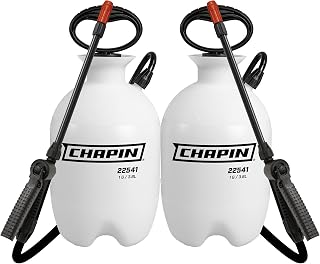 CHAPIN 22541 1-Gallon Foaming Pump Sprayer for Lawn & GardenCheck price on Amazon
 NorthStar ATV SprayerCheck price on Amazon
 CHAPIN 10022 48-Oz Hand Pump Sprayer for Lawn & GardenCheck price on Amazon
AcreMowerLab earns a commission when you shop through links here. It never changes your price. Affiliate disclosure.
Hose End Sprayer vs Tank Sprayer: How Each One Works
| Type | Best for | Limit |
|---|---|---|
| Hose-end sprayer | Lawns and beds where a garden hose reaches, and jobs using concentrate bottles | Needs a hose nearby, and mixing is set by the sprayer dial or ratio |
| Tank sprayer | Jobs away from a hose, where you carry a mixed solution with you | You mix, fill and carry the tank, then refill when it runs out |
A hose-end sprayer attaches to the end of a garden hose. Water flowing through the sprayer draws concentrate from the bottle and mixes it as you spray, so the bottle stays separate from the hose water until use. The RL Flo-Master listing describes this as three easy steps with no pouring, measuring or mixing, and the Chapin listing describes automatic mixing with no pre-mixing required. A tank sprayer works the other way: you mix the solution in the tank first, then spray from the tank until it needs refilling. That makes a tank sprayer the pick where no hose reaches, while a hose-end sprayer suits quick lawn and bed jobs from a hose. See our backpack vs tow-behind sprayer guide for larger tank options.
Hose-End Sprayers: The Gear
The Chapin G364D leads this gear list. Its 32-ounce chemical-resistant poly tank sprays up to 320 gallons per fill, with a comfort-grip handle, a removable fan nozzle and a built-in anti-siphon valve that helps prevent backflow into the hose and water supply. The title lists 6 mixing ratios and the bullets list 16 dial settings, so both figures are shown here. The listing states a lifetime limited warranty, a universal fit for any standard garden hose, and a weight of 1.2 pounds.
The RL Flo-Master Chameleon is next. Its 32-ounce refillable bottle attaches directly to a hose and to most concentrate bottles, with an instant on-off trigger, a hose-end quick connect and an adjustable dial for the amount of product needed. It lists 3 spray patterns: fan for general areas, shower for delicate flora, and stream for high places. The listing states a weight of 10.2 ounces and a resin body, with no warranty term stated.
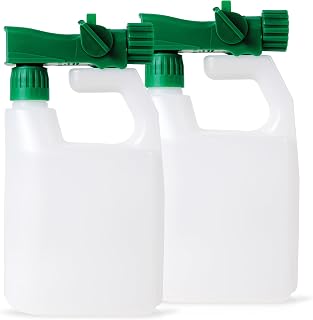
The Andersons sprayer comes as a pack of 2 refillable 32-ounce bottles with a K1 spray head at a 20:1 spray ratio. The head has three adjustments: off, water only, and water plus product, and the listing says to fill the bottle with your product or mixture, attach it to a hose, and spray. The spec table lists a unit count of 12, while the title and bullets describe a pack of 2, so both figures are shown here. The listing states a plastic body in green and white, with no warranty term stated.
The Humboldts Secret sprayer also comes as a pack of 2, with 32-ounce bottles, a K1 head and a 100:1 mixing ratio. Its simple dial offers off, water only, or water plus product, and the listing describes even coverage across lawn and garden. The listing says the unit is calibrated to work with Humboldts Secret products and other concentrated solutions, and it states a plastic body in green, with no warranty term stated.
Choosing Between the Two
Start with the hose. If a garden hose reaches the whole area, a hose-end sprayer keeps the job simple: attach, set the dial and spray, with no tank to fill or carry. If the area sits beyond hose reach, or you want one mixed solution carried through the whole job, a tank sprayer fits better, since it does not depend on a hose at all. Either way, check what the listing states before buying: bottle size, mixing ratio and spray patterns, since those decide how much mixed solution one fill makes and how precisely the mix is set, and check any anti-siphon valve, which guards the hose and water supply against backflow.
Mixing ratios deserve a close look. A ratio figure, such as 20:1 or 100:1, describes how dilute the mix is: a higher first number means a more dilute mix. The Andersons lists 20:1 and the Humboldts lists 100:1, while the Chapin lists 6 mixing ratios with 16 dial settings and the RL lists an adjustable dial without a ratio figure. Patterns matter too: a fan pattern suits general areas, a shower pattern suits delicate plants, and a stream pattern reaches high places, all as listed for the RL sprayer. Pick the pattern set that matches the plants and surfaces you spray most.
Safety
Wear eye protection when spraying, and keep children, pets and bystanders away from the area while you work. Never spray toward people or pets, and follow the label on the product you use for handling and storage. An anti-siphon valve, as listed for the Chapin, helps prevent backflow into the hose and water supply, which matters whenever concentrate sits in a bottle attached to a hose. Store concentrates where children and pets cannot reach them.
FAQ: mowing large lots
Do hose-end sprayers need mixing before spraying?
No pre-mixing is listed for the Chapin and RL models: the Chapin lists automatic mixing with no pre-mixing required, and the RL lists three easy steps with no pouring, measuring or mixing. The Andersons and Humboldts listings say to fill the bottle with your product or mixture first, then attach it to a hose and spray.
What mixing ratios do these hose-end sprayers use?
The Andersons lists 20:1, the Humboldts lists 100:1, and the Chapin title lists 6 mixing ratios with 16 dial settings in its bullets. The RL listing states an adjustable dial with no ratio figure.
Can a hose-end sprayer reach high places?
Yes, as listed: the RL sprayer lists a stream pattern for high places. A hose-end sprayer still needs a hose that reaches the area.
Does a hose-end sprayer fit any garden hose?
The Chapin lists a universal fit for any standard garden hose, and the RL lists a hose-end quick connect for easy installation to a garden hose. The Humboldts lists connection to a standard hose.
Which hose-end sprayer has a warranty?
Only the Chapin states a warranty, a lifetime limited warranty. The other three listings state no warranty term.