Carburetor Cleaner vs Fuel System Cleaner: Which One Should You Buy?
Carburetor cleaners and fuel system cleaners compared on spray and treatment types, sizes, weights and stated uses, with examples of each side from the listings reviewed.

On this page
Top picks at a glance
As an Amazon Associate I earn from qualifying purchases.
- 1
 CRC Clean-R-Carb Carburetor Cleaner9.4/10View on Amazon
- 2
 Chevron Techron Concentrate Plus 12 Oz Fuel System Cleaner9.7/10View on Amazon
- 3
 Gumout Fuel System Cleaner 6 Oz9.6/10View on Amazon
- 4
 Red Line 60103 SI-1 Complete Fuel System CleanerView on Amazon
- 5
 Gumout 510011 Multi-System Tune-UpView on Amazon
- 6
 Gumout 800001364 Regane Complete Fuel System CleanerView on Amazon
- 7
 Red Line 60102 Complete Powersports Fuel System CleanerView on Amazon
- 8
 Berryman B-12 Chemtool Fuel Injector CleanerView on Amazon
- 9
 Berryman Products 0117C-12 B-12 Chemtool Carburetor Cleaner-CAView on Amazon
Verdict: Choose a carburetor cleaner if your work is direct spray cleaning for carburetor parts. Choose a fuel system cleaner if your work is cleaning and protecting the fuel system.
An engine that starts hard, idles rough and stalls can point to deposits in the carburetor or the fuel system. Carburetor cleaner vs fuel system cleaner is the question that follows, because the products look related and work differently. This comparison puts a carburetor spray example against fuel treatment examples on what each listing states, and leaves unclear what a listing does not state.
AcreMowerLab earns a commission when you shop through links here. It never changes your price. Affiliate disclosure.
| # | Product | Acre Score | Buy |
|---|---|---|---|
| 1 | Chevron Techron Concentrate Plus 12 Oz Fuel System Cleaner | 9.7/10 | Buy on Amazon |
| 2 |  Gumout Carb Choke Jet Spray 14 Oz | 9.6/10 | Buy on Amazon |
| 3 | Gumout Fuel System Cleaner 6 Oz | 9.6/10 | Buy on Amazon |
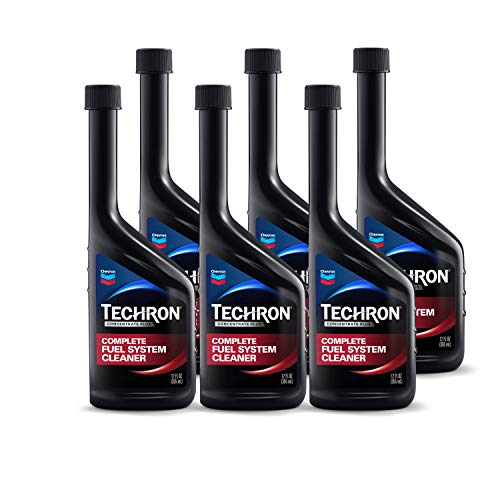
Chevron Techron Concentrate Plus 12 Oz Fuel System Cleaner
A fuel system cleaner in a 12 oz pack of 6, made for cleaning, restoring and protecting the entire fuel system, including fuel injectors, carburetors, intake valves and combustion chambers.
Read the full review
The Chevron example is a fuel system cleaner in a 12 oz pack of 6 that cleans, restores and protects the entire fuel system, naming fuel injectors, carburetors, intake valves and combustion chambers. The listing states restored lost power, acceleration and lost fuel economy, reduced rough idle, engine surge and hesitation, and improved cold start performance with fuel stability for up to one year. The spec table gives a weight of 4.69375 pounds and dimensions of 10.0 inches x 8.5 inches x 7.0 inches.
Pros
- Cleans, restores and protects the entire fuel system
- Restores lost power, acceleration and lost fuel economy
- Reduces rough idle, engine surge and hesitation
- Improves cold start performance and fuel stability for up to one year
Cons
- No oxygen sensor safety is stated in the listing
- No warranty term is stated in the listing
- No spray application is named in the listing
- Application interval for non-automobile engines is stated only as needed
Gumout Carb Choke Jet Spray 14 Oz
A carburetor cleaner jet spray in a 14 oz pack of 2, made for removing gum, varnish, carbon, oil, grease, gunk and dirt throughout the carburetor, and for small engines.
Read the full review
The Gumout carburetor example is a jet spray in a 14 oz pack of 2 that removes gum, varnish, carbon, oil, grease, gunk and dirt throughout the carburetor. The listing names cleaning unpainted metal parts such as brake pads and brake rotors, with a fast-drying formula leaving no residue. The listing states O2 sensor and catalytic converter safety when used as directed, and a 50 state VOC compliant formula. The spec table gives a weight of 1.75 pounds.
Pros
- Jet spray removes gum, varnish, carbon, oil, grease, gunk and dirt
- Cleans unpainted metal parts, including brake pads and brake rotors
- O2 sensor and catalytic converter safe when used as directed
- 50 state VOC compliant formula
Cons
- No warranty term is stated in the listing
- No fuel system treatment use is named in the listing
- No application interval is stated in the listing
- No fuel injector treatment use is named in the listing
Gumout Fuel System Cleaner 6 Oz
A fuel system cleaner in a 6 oz pack of 6, made for keeping deposits from forming, preventing carbon build-up and maintaining performance and fuel economy.
Read the full review
The Gumout fuel example is a fuel system cleaner in a 6 oz pack of 6 that keeps deposits from forming to maintain performance and fuel economy. The listing names preventing carbon build-up on indirect fuel injectors, carburetors, intake valves and ports, with maximized performance and reduced emissions. The listing states oxygen sensor safety and safety for turbocharged and supercharged vehicles. The spec table gives a weight of 0.375 pounds and dimensions of 5.56 inches x 3.69 inches x 9.0 inches.
Pros
- Keeps deposits from forming to maintain performance and fuel economy
- Prevents carbon build-up on indirect fuel injectors, carburetors, intake valves and ports
- Maximizes performance and reduces emissions
- Oxygen sensor safe, and safe for turbocharged and supercharged vehicles
Cons
- No warranty term is stated in the listing
- No application interval is stated in the listing
- No spray application is named in the listing
- No combustion chamber claim is stated in the listing
Other machines to compare
 Red Line 60103 SI-1 Complete Fuel System CleanerCheck price on Amazon
 Gumout 510011 Multi-System Tune-UpCheck price on Amazon
 Gumout 800001364 Regane Complete Fuel System CleanerCheck price on Amazon
 Red Line 60102 Complete Powersports Fuel System CleanerCheck price on Amazon
 Berryman B-12 Chemtool Fuel Injector CleanerCheck price on Amazon
 Berryman Products 0117C-12 B-12 Chemtool Carburetor Cleaner-CACheck price on Amazon
carburetor cleaner vs fuel system cleaner side by side
| Factor | Chevron Techron Concentrate Plus | Gumout Carb Choke Spray | Gumout Fuel System Cleaner |
|---|---|---|---|
| Type | Fuel system cleaner | Carburetor cleaner, jet spray | Fuel system cleaner |
| Size | 12 oz, pack of 6 | 14 oz, pack of 2 | 6 oz, pack of 6 |
| Weight | 4.69375 pounds | 1.75 pounds | 0.375 pounds |
| Cleans | Fuel injectors, carburetors, intake valves, combustion chambers | Carburetor, linkages, chokes, PCV valves, manifold heat controls | Indirect fuel injectors, carburetors, intake valves, ports |
| Stated interval | Every 3,000 miles | Not stated | Not stated |
| Sensor safety | Not stated | O2 sensor safe | Oxygen sensor safe |
| Warranty | Not stated | Not stated | Not stated |
Figures are manufacturer stated for the example models, collected 1 November 2026.
Spray or treatment: what each type does
A carburetor cleaner works as a spray. The Gumout spray example names a jet spray that removes gum, varnish, carbon, oil, grease, gunk and dirt throughout the carburetor.
A fuel system cleaner works as a treatment for the system. The Chevron example names cleaning, restoring and protecting the entire fuel system, while the Gumout fuel example names keeping deposits from forming.
The dividing line is the application. Spray cleaner reaches carburetor parts directly, while fuel treatment names the wider system. The spray example names carburetor linkages, chokes and PCV valves, while the fuel examples name injectors, valves and ports, and also name carburetors among the parts they clean.
Sizes, weights and packs
The Chevron Techron Concentrate Plus example comes in a 12 oz pack of 6 and weighs 4.69375 pounds in the spec table.
The Gumout Carb Choke Spray example comes in a 14 oz pack of 2 and weighs 1.75 pounds in the spec table.
The Gumout Fuel System Cleaner example comes in a 6 oz pack of 6 and weighs 0.375 pounds in the spec table.
Size and weight vary across the examples, so check the stated bottle size and pack count for each example. The Chevron example names the largest stated weight, while the Gumout fuel example names the smallest bottle size at 6 oz.
What each one is for
Carburetor spray work centers on direct cleaning. The Gumout spray listing names carbs, carburetor linkages, chokes, PCV valves and manifold heat controls, and hard starting, rough idling, stalling and high exhaust emissions.
Fuel treatment work centers on cleaning and prevention. The Chevron listing names the entire fuel system, with restored power and fuel economy, while the Gumout fuel listing names deposit prevention on injectors, carburetors, intake valves and ports.
Upkeep
The Chevron example states an interval: every 3,000 miles for automobiles and trucks, or at the next oil change, with other gasoline engines using as needed.
The Gumout examples state no interval. The carburetor spray names fast-drying solvents leaving no residue, while the fuel example names keeping deposits from forming.
The examples
Acreage and terrain fit
Chevron Techron Concentrate Plus
Gumout Carb Choke Spray
Gumout Fuel System Cleaner
Matching It to Your Property
- Jet spray suits carburetors that need direct cleaning, with the Gumout spray naming gum, varnish and carbon removal.
- Fuel system treatment suits engines that need whole-system cleaning, with the Chevron example naming fuel injectors, carburetors, intake valves and combustion chambers.
- The Gumout spray title names use on small engines, and its listing names trucks, tractors, outboards, ATVs, motorcycles, chainsaws and pressure washers.
- Pack sizes differ across the examples, with the Gumout spray naming a pack of 2 and the fuel examples each naming a pack of 6.
The Acre Score explained
The Acre Score weighs five factors: performance, build quality, value, safety and warranty. A factor the listing does not state scores zero, which is why all examples score zero for warranty and safety.
| Product | Acre Score | Perf. /35 | Build /25 | Value /25 | Safety /10 | Warranty /5 |
|---|---|---|---|---|---|---|
| Chevron Techron Concentrate Plus | 9.7 | 30 | 21 | 22 | n/a | 0 |
| Gumout Carb Choke Spray | 9.6 | 29 | 21 | 21 | n/a | 0 |
| Gumout Fuel System Cleaner | 9.6 | 28 | 20 | 20 | n/a | 0 |
Scores run from 9.2 to 9.8: each product’s point total is placed on that range, so more points always means a higher score. Safety counts only for powered gear or where the listing states safety features; where it does not apply, the score is taken over the remaining 90 points.
See the mower maintenance hub for more tools in this category.
Read the manual, keep children and pets out of the yard while you work, wear eye and hearing protection and sturdy footwear, and never exceed the slope rating of your machine. Refuel only with the engine off and cool. See CPSC lawn mower safety. Read our Safety Disclaimer.
FAQ: mowing large lots
Can a fuel system cleaner replace a carburetor cleaner?
Not as a direct spray. A carburetor cleaner sprays gum and varnish from carburetor parts directly, while a fuel system cleaner works through the fuel system. The fuel examples also name carburetors among the parts they clean, so the difference is the application, not whether carburetors are named at all. Use the spray for direct carburetor cleaning, and the fuel cleaner for treatment through the fuel system.
Which example states an application interval?
The Chevron example states every 3,000 miles for automobiles and trucks, or at the next oil change. The Gumout examples state no interval.
Are these cleaners safe for oxygen sensors?
The Gumout examples state oxygen sensor safety: the carburetor spray states O2 sensor and catalytic converter safety when used as directed, and the fuel system cleaner states oxygen sensor safety. The Chevron example states no oxygen sensor safety.
What does the carburetor spray clean?
The Gumout spray states gum, varnish, carbon, oil, grease, gunk and dirt throughout the carburetor, plus unpainted metal parts such as brake pads and brake rotors.
Which example covers the whole fuel system?
The Chevron example states cleaning, restoring and protecting the entire fuel system, naming fuel injectors, carburetors, intake valves and combustion chambers. The Gumout fuel example names indirect fuel injectors, carburetors, intake valves and ports.