Cordless vs Gas Cultivator: Which One Should You Buy?
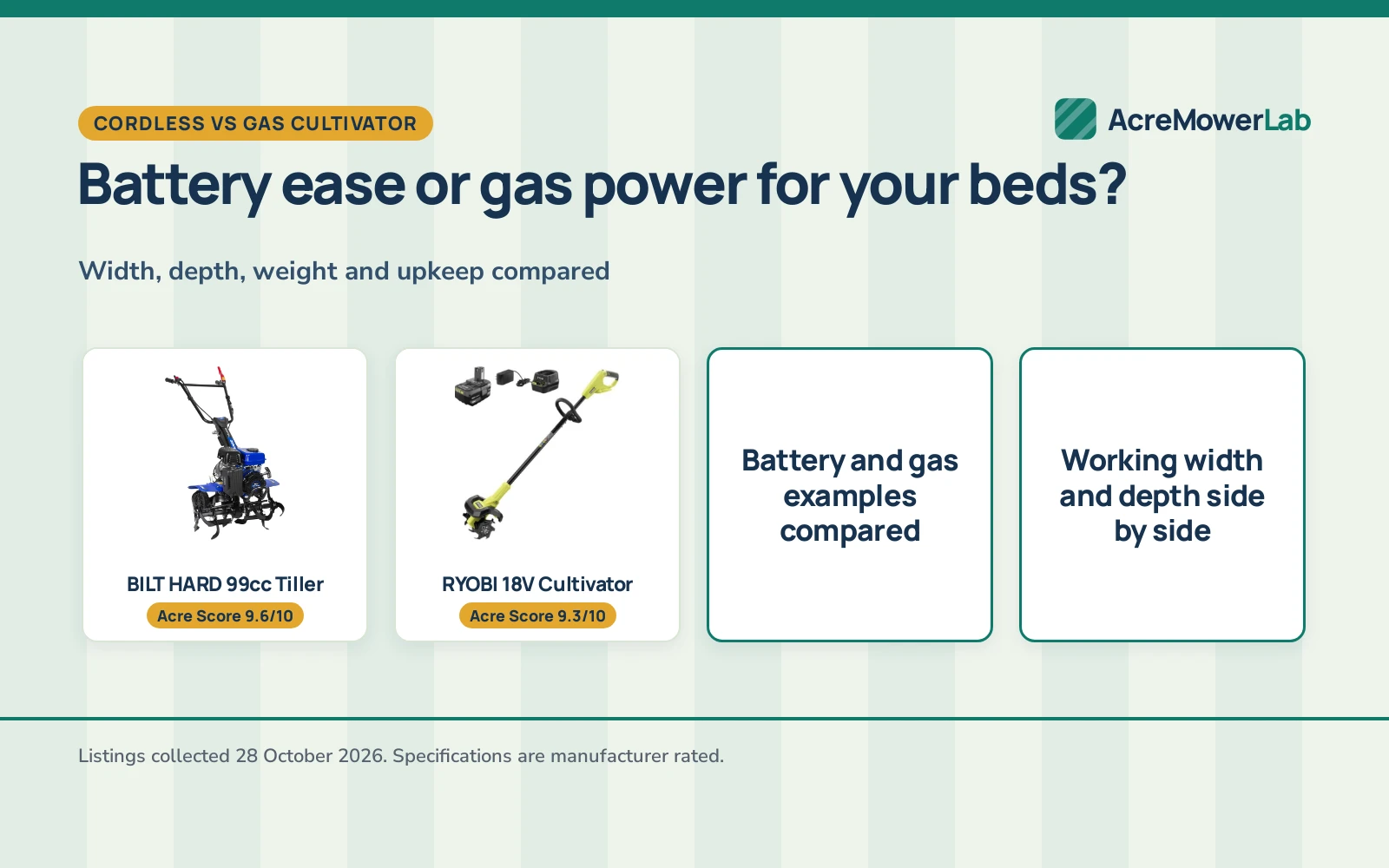
Cordless and gas cultivators compared on power, working width, working depth, weight and upkeep, with one example of each from the listings reviewed.

On this page
Top picks at a glance
As an Amazon Associate I earn from qualifying purchases.
- 1
 Greenworks 40V 10" Cordless Tiller / Cultivator9.6/10View on Amazon
- 2
 BILT HARD 99cc 4-Cycle Gas Tiller Cultivator9.6/10View on Amazon
- 3
 BILT HARD 46cc 4-Cycle Gas Tiller Cultivator9.4/10View on Amazon
- 4
 Earthwise TC70020IT 20V 7.5" Cordless Electric Garden TillerView on Amazon
- 5
 Honda FG110 Mini Tiller CultivatorView on Amazon
- 6
 VEVOR Tiller Cultivator Gas PoweredView on Amazon
- 7
 SuperHandy RotoTiller Cultivator 27” Inch Tilling Width 7HPView on Amazon
- 8
 Echo 9 in. 21.2 cc Gas Tiller/Cultivator Front-Tine ForwardView on Amazon
- 9
 Sun Joe Cordless Scarifier & Dethatcher w/ 5 Depth PositionsView on Amazon
Verdict: Choose a cordless cultivator if your work is loosening beds and weeding between rows and you want a simple battery tool with no fuel. Choose a gas cultivator if you work dense, compacted soil and want the stated 99cc engine figures, and you can handle a 51 pound tool with fuel and engine care.
The cordless vs gas cultivator choice comes down to how the tool gets its power and what that means for a garden bed. A cordless cultivator runs on a battery pack, so it needs charging between sessions. A gas cultivator runs on fuel, so it needs refuelling and engine care but keeps going while fuel remains. This comparison looks at the differences, then at a cordless example and a gas example from the listings reviewed.
AcreMowerLab earns a commission when you shop through links here. It never changes your price. Affiliate disclosure.

BILT HARD 99cc 4-Cycle Gas Tiller Cultivator
A 99cc 4-cycle gas tiller cultivator with front rotating tines, an adjustable handle, adjustable rear wheels, and a dual-action safety system.
Read the full review
The BILT HARD example is a gas tiller cultivator built around a 99cc 4-cycle engine rated 3HP (1.8kW) and 3600 RPM, with an EPA-Certified engine. The listing describes front rotating tines, a handle that adjusts to three height settings, and vertically adjustable 8 in rear wheels in 2 positions. Its dual-action safety system halts tine rotation when the clutch grip is released, and the throttle switch moves to the STOP position during pauses.
Pros
- 99cc 4-cycle engine rated 3HP (1.8kW) at 3600 RPM
- EPA-Certified engine with a dual-action safety system
- Handle adjusts to three height settings for comfort
- Vertically adjustable 8 in rear wheels for transport and control
Cons
- Title and bullets disagree on working width and depth
- 51 pounds is heavy to move and store
- Gas upkeep means fuel and engine care
- Warranty is not stated on the listing

RYOBI ONEAND 18V 8 in. Cordless Cultivator
An 18V cordless cultivator with an 8 in working width, a 4.0Ah battery and charger, and an alloy steel build.
Read the full review
The RYOBI example is an 18V cordless cultivator with an 8 in working width, a 4.0Ah battery and a charger. The spec table lists alloy steel construction, model P2750VNM and part number P2750. The listing is thin beyond that: the bullets talk about replacement parts in general rather than this cultivator's own features, so the title and spec table carry most of the usable detail.
Pros
- 18V battery platform with a 4.0Ah battery and charger included
- 8 in working width suits beds and rows
- No fuel to buy and no engine care
- Alloy steel build stated in the spec table
Cons
- Bullets describe replacement parts, not this cultivator
- Working depth is not stated on the listing
- Weight is not stated on the listing
- Warranty is not stated on the listing
Other machines to compare
 Earthwise TC70020IT 20V 7.5" Cordless Electric Garden TillerCheck price on Amazon
 Honda FG110 Mini Tiller CultivatorCheck price on Amazon
 VEVOR Tiller Cultivator Gas PoweredCheck price on Amazon
 SuperHandy RotoTiller Cultivator 27” Inch Tilling Width 7HPCheck price on Amazon
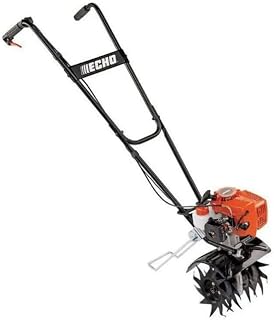 Echo 9 in. 21.2 cc Gas Tiller/Cultivator Front-Tine ForwardCheck price on Amazon
 Sun Joe Cordless Scarifier & Dethatcher w/ 5 Depth PositionsCheck price on Amazon
Cordless vs gas cultivator side by side
| Factor | BILT HARD 99cc Tiller | RYOBI 18V Cultivator | Takeaway |
|---|---|---|---|
| Power | 99cc 4-cycle gas engine, 3HP (1.8kW) | 18V battery, 4.0Ah battery and charger | Gas states engine figures; battery states a 4.0Ah pack |
| Working width | 24” in the title; 17 inches in the bullets | 8 in | The gas example states a wider working width |
| Working depth | 11.8” max in the title; at least 3.94 inches in the bullets | Not stated | Only the gas example states a working depth |
| Weight | 51 pounds | Not stated | Only the gas example states a weight |
| Engine speed | 3600 RPM | Not stated | Only the gas example states an engine speed |
| Handle and wheels | Three height settings; 8 in rear wheels, 2-position | Not stated | Only the gas example states handle and wheel details |
| Safety features | EPA-Certified engine; clutch grip tine stop and throttle STOP switch | Not stated | Only the gas example states safety features |
| Upkeep | Fuel and engine care | Charge the 4.0Ah battery | Battery upkeep is simpler; gas upkeep is heavier |
Figures are manufacturer stated for the two example models, collected 28 October 2026.
Power: battery or gas
The cordless example runs on an 18V battery, with a 4.0Ah battery and charger in the box. That is the whole power story the listing states: no fuel, no engine, no stated runtime. The gas example runs a 99cc 4-cycle engine rated 3HP (1.8kW) at 3600 RPM, with an EPA-Certified engine. On stated figures alone, the gas side gives a fuller power picture, while the cordless side gives a simpler one.
Power also decides upkeep. A battery tool needs charging and battery care. A gas tool needs fuel, plus the engine care that comes with a small gasoline engine. If you dislike engine upkeep, that alone may settle the choice, even though the gas listing states engine figures the cordless listing does not.
Working width and depth
Working width decides how much ground each pass covers. The RYOBI example states an 8 in working width, which suits beds and rows where a narrow tool can pass between plantings. The BILT HARD example states its width in two different ways: 24” in the title and 17 inches in the bullets. Either figure is wider than the cordless example, but the listing leaves the exact width unclear.
Working depth is where the gap in the listings is widest. The BILT HARD title states an 11.8” max working depth, while its bullets state a tilling depth of at least 3.94 inches. The RYOBI listing states no working depth at all. So the gas example is the only one with any depth figure, and even that figure comes in two forms that do not agree.
Weight and handling
Weight decides how easy a tool is to move, turn and store. The BILT HARD example states a weight of 51 pounds, with a handle that adjusts to three height settings and vertically adjustable 8 in rear wheels in 2 positions for transport and tilling control. The RYOBI listing states no weight, so there is no fair weight comparison to make between the two examples.
Handling also follows from the power source. A cordless tool has no fuel tank and no pull start, which keeps the routine simple. A gas tool carries its engine and fuel, which adds steps before each session. Call your local utility marking service before digging, and keep children and pets out of the work area while the tines run.
Upkeep
A cordless cultivator needs a charged battery and a clean tool. A gas cultivator needs fresh fuel, engine care, and attention to the tines and wheels over a season. The BILT HARD listing adds a dual-action safety system: releasing the clutch grip halts tine rotation, and the throttle switch moves to the STOP position during pauses. Refuel with the engine off and cool, and never run a gas tool indoors.
The examples
Acreage and terrain fit
BILT HARD 99cc Tiller
RYOBI 18V Cultivator
Matching It to Your Property
- Flat beds and rows: the 8 in cordless example fits narrow passes between plantings, while the wider gas example covers more ground with each pass.
- Obstacles and tight rows: a narrow cordless tool is easier to steer around plantings where a wider gas tool may not fit.
- Dense, compacted soil: the 99cc gas example states the engine figures for that work, while the cordless listing states no depth figure.
- Storage: the gas example measures 51.2 in D x 24.1 in W x 43.3 in H and weighs 51 pounds, so plan space for a 51 pound tool.
Buried utility lines are a real risk: in the US, call 811 a few days before you dig or till new ground. Wear eye protection and sturdy boots, keep feet and hands away from the tines, and start on clear, rock-free soil. Refuel only with the engine off and cool. Read our Safety Disclaimer.
The Acre Score explained
The Acre Score weighs five factors: performance (power, width and what it can loosen), build quality (materials, handle and wheels), value (what comes in the box), safety (certifications or operator controls the listing states) and warranty (terms the listing states). A factor the listing does not state scores zero, which is why both examples score zero for warranty.
| Product | Acre Score | Perf. /35 | Build /25 | Value /25 | Safety /10 | Warranty /5 |
|---|---|---|---|---|---|---|
| BILT HARD 99cc Tiller | 9.6 | 29 | 20 | 20 | 7 | 0 |
| RYOBI 18V Cultivator | 9.3 | 23 | 16 | 19 | 0 | 0 |
Scores run from 9.2 to 9.8: each product’s point total is placed on that range, so more points always means a higher score.
For more ground care options, see our tillers and cultivators hub for the wider range of tools in this category.
FAQ: mowing large lots
Which side suits a vegetable garden?
Both can suit one, for different reasons. The cordless example suits beds and rows where an 8 in width passes between plantings. The gas example suits larger beds and dense soil, with a 99cc engine and a stated working width and depth, though its width and depth figures disagree between title and bullets.
Does the gas example till wider than the cordless example?
Yes, on stated figures. The gas example states 24” in its title and 17 inches in its bullets, while the cordless example states 8 in. The exact gas width is unclear because the listing states it two ways, but both stated gas figures are wider than the cordless figure.
Is the cordless example easier to live with?
For routine care, yes. It runs on an 18V battery with a 4.0Ah battery and charger, so there is no fuel to buy and no engine to maintain. The trade is thinner listing detail: no stated working depth, no stated weight and no stated warranty term.
What does the gas example weigh?
The listing states 51 pounds. That weight, plus dimensions of 51.2 in D x 24.1 in W x 43.3 in H, matters for moving the tool to the bed and storing it after the session.
Do either of the listings state a warranty?
No. Neither listing states a warranty term, so both examples score zero for warranty. Check the listing at purchase time if warranty cover matters to you.