Garden Hose Reel Guide
A garden hose reel guide moves the hose across the drum as you wind, so the hose lays in even layers, and this guide covers reel types, mounting, winding and storage.

On this page
Top picks at a glance
As an Amazon Associate I earn from qualifying purchases.
- 1
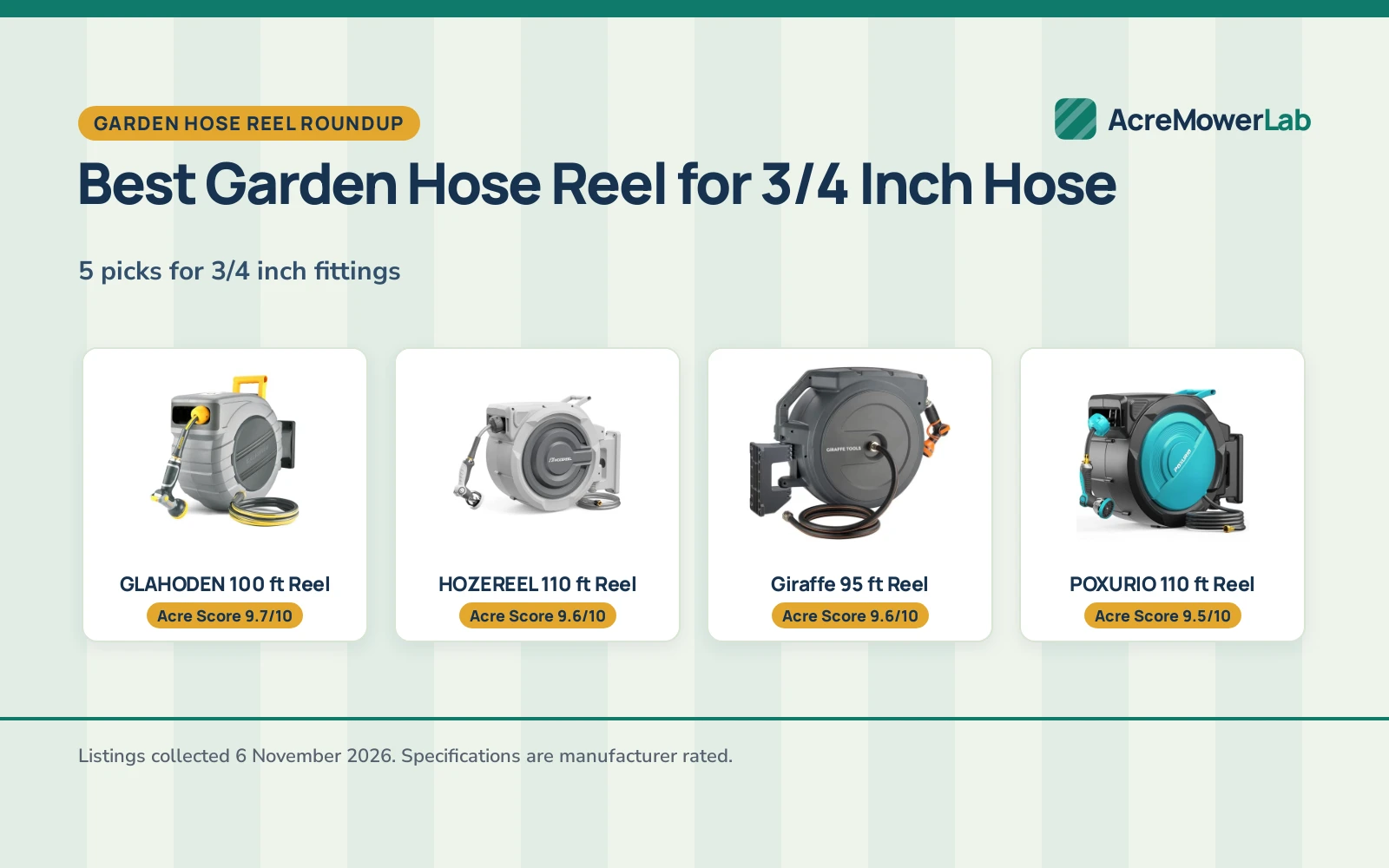
 GLAHODEN Retractable Garden Hose Reel9.7/10View on Amazon
- 2
 HOZEREEL Retractable Garden Hose Reel9.6/10View on Amazon
- 3
 Giraffe Tools Retractable Garden Hose Reel9.6/10View on Amazon
Across a large property, the hose has to reach beds, trees and far corners, and a tangled hose wastes the morning before the watering starts. A garden hose reel guide is the arm or roller on the reel that moves the hose back and forth across the drum as you wind, so the hose lays down in even layers instead of piling up in the middle and kinking. This guide explains how the guide works, which reel types suit a large property, and how to mount, wind and store a hose so it stays ready to use.
AcreMowerLab earns a commission when you shop through links here. It never changes your price. Affiliate disclosure.
Garden hose reel guide: how the guide works
A reel drum is wider than the hose, so a hose wound without a guide piles up in the middle of the drum, where it pinches and kinks. The guide is a small arm or roller that sits ahead of the drum and moves from side to side as you wind, laying each wrap beside the last. The result is a flat, even coil that pulls off the reel with fewer snags and winds back on without a fight. Some guides you move by hand as you wind, and some move on their own as the drum turns; either way, the job of the guide is to keep the wraps side by side.
| Reel | Best for | Limit |
|---|---|---|
| Wall-mount reel | A fixed watering spot beside the spigot | Stays where it is mounted |
| Hose reel cart | Moving the hose between beds and far corners | Needs firm, level ground to roll |
| Retractable reel | Tidy storage with the hose out of sight | The rewind spring adds moving parts |
For a large property, the reel type sets how much carrying you do. See the best outdoor hose reel roundup for yard options, and the best hose reel cart picks if you want to roll the hose to far beds.
Pick a reel type for your property
Start with where the water comes from and where it has to go. A wall-mount reel belongs beside the spigot, where the hose can reach the nearest beds without crossing paths and driveways. A cart reel rolls across the lawn on its wheels, so it suits beds and trees spread across the property. A retractable reel suits a tidy spot by the house where the hose should stay out of sight between waterings. If you plan to mount on a wall, see the best wall mounted hose reel picks.
Mount the reel
Wall reels need a solid wall or post and a spigot close by, with room for the drum to turn and for the hose to swing clear of paths and beds. Set the reel at a height where the crank turns without scraping the ground and the hose feeds straight onto the drum. Keep the reel out of the mower path so the hose and the reel stay clear of blades. Check the mount after a few waterings, since a full drum pulls harder on its fixings than an empty drum.
Wind the hose with the guide
Walk the hose out straight before you wind, so kinks and loops do not travel onto the drum. Shut the water off at the spigot and ease the pressure out of the hose before you wind, so the hose coils without fighting pressure. Turn the crank at a steady pace and let the guide move the hose across the drum, instead of holding the hose in a fixed spot. Keep light tension on the hose so each wrap sits beside the last, and pause if the hose starts to ride up over the wraps. Unhook the nozzle once the pressure is out.
Store the hose without kinks
A hose left in a heap kinks where it folds, and a kink can choke the flow at that spot. On the reel, the hose rests in even layers, and the guide keeps the wraps from cutting into each other. Drain the hose before cold weather, and keep the reel out of standing water so the drum and the fixings stay dry. A shaded spot keeps the sun off the hose between waterings.
Safety
Keep the hose off paths and driveways when it is not in use, so nobody trips over it. Wear gloves when you wind a hose that has been lying in rough ground, and keep hands clear of the crank and the drum while it turns. Keep children and pets away from the reel while you wind. Shut the water off before you disconnect a hose, and point the nozzle away from people when you ease the pressure out.
FAQ: mowing large lots
What does the guide on a garden hose reel do?
The guide moves the hose back and forth across the drum as you wind, so each wrap lays beside the last instead of piling in the middle. Even wraps pull off the reel without snags and wind back on without kinks.
Should I mount a hose reel on the wall or use a cart?
Mount on the wall when the watering stays near the spigot and you want the reel in a fixed spot. Use a cart when beds and trees are spread across the property and you want to roll the hose to the work.
How do I wind a hose so it does not kink?
Shut the water off at the spigot and ease the pressure out of the hose, then walk the hose out straight and turn the crank at a steady pace, letting the guide move the hose across the drum. Keep light tension on the hose so each wrap sits beside the last, and pause if the hose starts to ride up over the wraps.
Can I leave a hose on the reel over winter?
Drain the hose before cold weather sets in, since water left inside can freeze and split the hose. Store the reel where water does not pool around the drum, and check the hose for cracks before you water again in spring.
What kind of hose works with a reel guide?
A standard garden hose winds on a reel with a guide when the drum takes its length and diameter. A heavy rubber hose takes more effort to crank than a light vinyl hose, so match the hose to the reel and to how far you carry it. See the water hose guide for hose types and fittings.