Hedge Trimmer Manual: How to Read and Use It
A plain guide to reading a hedge trimmer manual: safety, starting, cutting, care and storage, in the order the book gives them.

On this page
Top picks at a glance
As an Amazon Associate I earn from qualifying purchases.
- 1
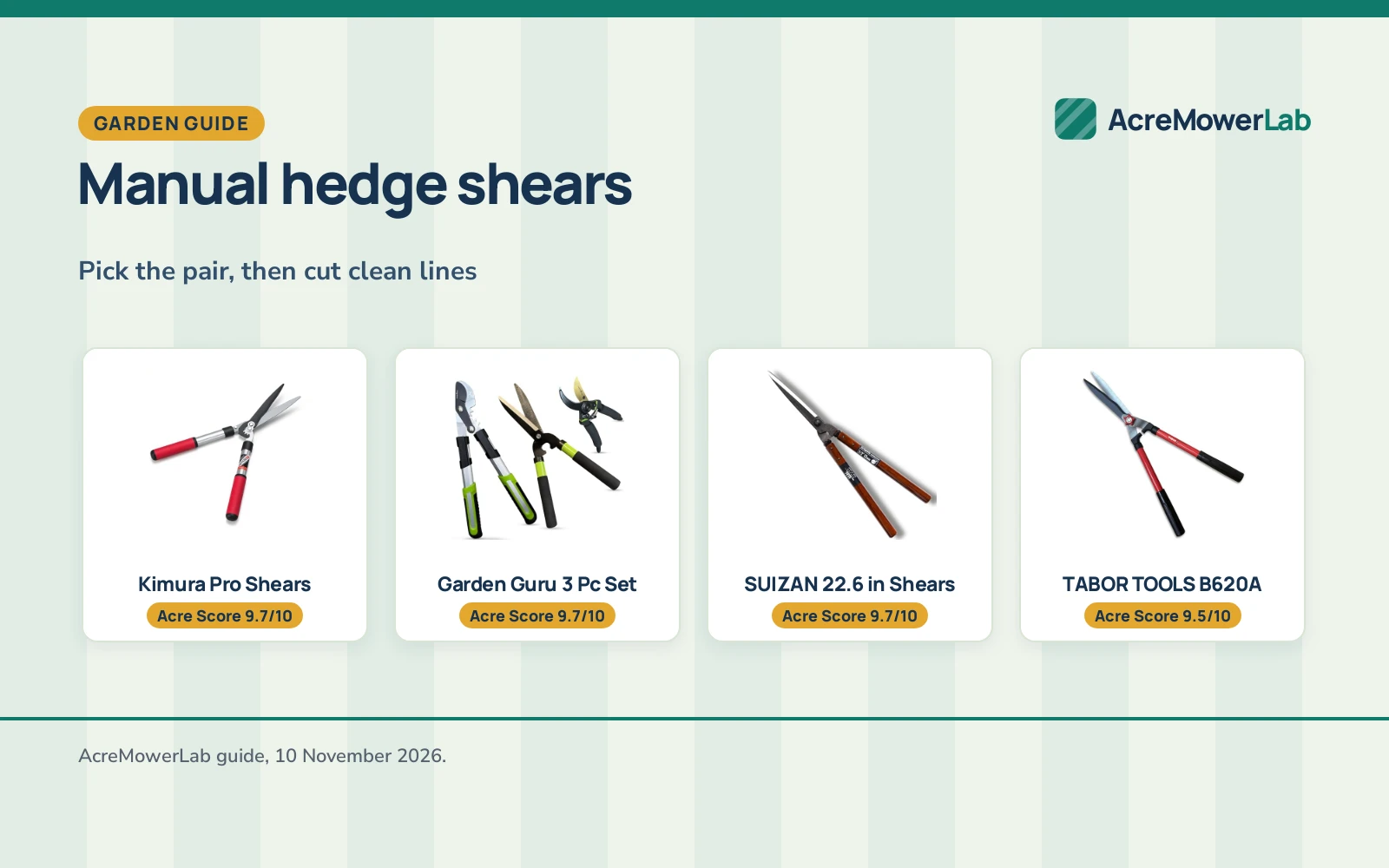
 Kimura Pro 22 in Hedge Shears with SK5 Steel Blades9.7/10View on Amazon
- 2
 Garden Guru 3 Pc Hedge Shears9.7/10View on Amazon
- 3
 SUIZAN 22.64 in Hedge Shears with 7.68 in Japanese Steel9.7/10View on Amazon
A hedge that has grown past the fence line and a trimmer still in its box make a familiar pair on acreage: the job looks simple until the blades meet thick growth, the cord snags, or the engine will not start. A hedge trimmer manual is the book that came with the tool, and it answers those questions in the order the maker meant them to be asked. This guide shows how to read it and use it from the opening page to the last.
AcreMowerLab earns a commission when you shop through links here. It never changes your price. Affiliate disclosure.
Hedge trimmer manual: what the book covers
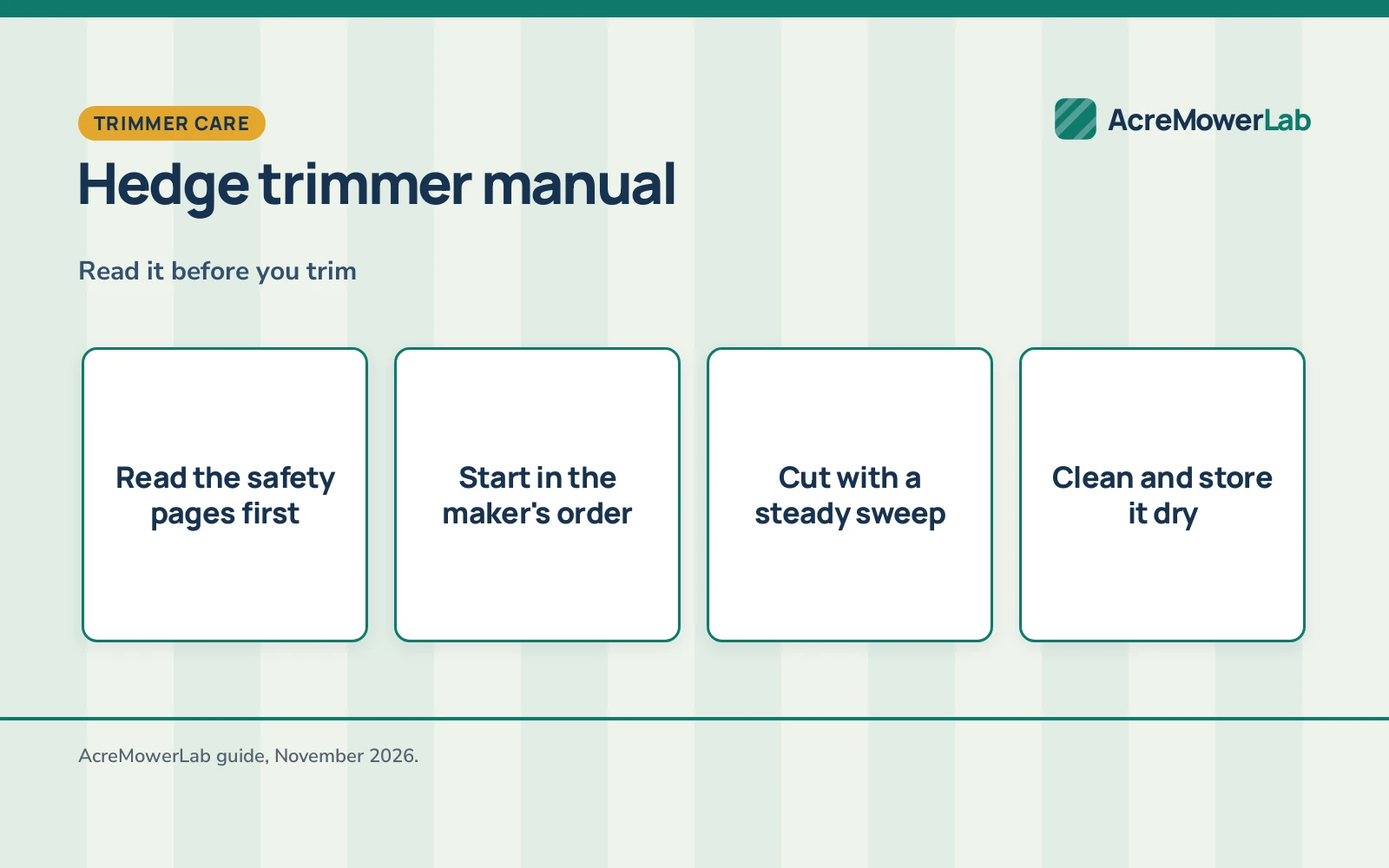
Most manuals follow the same order, even when the trimmer type differs: safety first, then assembly, starting, cutting, and care. Reading from the front saves time later, since the starting steps often refer back to a safety lock or a fuel mix described pages earlier.
| Section | What it covers | Why it matters |
|---|---|---|
| Safety | Protection, clear work area, safe handling | Keeps hands and bystanders clear of the blades |
| Assembly | Handles, guards and covers in place | A loose guard can catch or slip |
| Starting | Fuel, charge or cord, then the start steps | Wrong fuel wastes a morning |
| Cutting | Blade angle, sweep and growth limits | Clean cuts keep the hedge healthy |
| Care and storage | Cleaning, blade care and dry storage | A clean tool starts easier next season |
Blade length and reach change how the tool handles, so check the sizes guide before choosing a trimmer for tall hedges: see the hedge trimmer sizes guide.
Step 2: check the tool before starting
Look the trimmer over before it is switched on. Check that the blade cover is off, the guard is in place, and nothing is caught between the blades. For a corded trimmer, check the cord for cuts and keep it behind the cutting line. For a battery trimmer, check that the battery is seated. For a gas trimmer, check fuel and look for leaks. A blunt blade tears growth instead of cutting it, so look along the blade edge for nicks and bent teeth.
Step 3: follow the starting steps in order
The starting steps are written in the order the maker wants them done, and skipping one is a common reason a trimmer will not start. For a gas trimmer, switch the trimmer on, work the primer or choke as the book directs, and pull the starter as shown. If the engine catches and dies, move the choke to the open or run position and pull the starter again without priming.
For a battery trimmer, charge the battery and lock it in place before pressing the switch. For a corded trimmer, plug in, keep the cord clear of the blades, and hold the trimmer with both hands before switching on. See the extension cord guide for electric hedge trimmers for cord choice.
Step 4: cut with a steady sweep
Cut from the bottom of the hedge upward, so cut growth falls clear of the blades. Sweep the blades in a slow arc and let the teeth do the work instead of forcing the trimmer through thick stems. Thick stems that resist the blades belong to loppers or a saw, not to the trimmer.
Keep the blades level for a flat top and follow the top surface as a guide. Work in passes, stepping back to check the shape, and stop often to clear cut growth from the blades with the tool switched off.
Step 5: clean, care and store the trimmer
When the work is done, switch the trimmer off and wait for the blades to stop before setting it down. Brush cut growth from the blades, wipe the body clean, and oil the blades as the care section directs. See the hedge trimmer maintenance guide for the full care routine.
Store the trimmer with the blade cover on, in a dry place out of reach of children. Drain fuel or remove the battery as the manual directs before long storage, and keep the book with the tool.
Match the manual to the trimmer type
Gas, battery and corded trimmers share the same manual shape, but the details differ: gas manuals cover the fuel mix and the starter; battery manuals cover charging and battery care; corded manuals cover cord length and outdoor outlets. Read the part that matches the tool on the bench.
When the manual covers more than one model, find the model name on the tool and read only the pages marked for that model.
Plan the work in passes
Divide a long hedge into short runs and finish one run before moving to the next. Start with the side that faces the road, where the shape shows most, and leave the hidden side for last. A tarp under the hedge catches cut growth and makes cleanup quick.
Mind the weather and the ground
Wet growth is heavy and clogs the blades, so wait for a dry day when the choice is open. Wet ground is slippery underfoot, so wear sturdy shoes and take care on slopes. Never trim near overhead lines, and keep the cord clear of fences, wire and hidden stakes.
Safety
Wear eye and hearing protection and sturdy shoes. Clear sticks, stones and debris from the hedge before cutting, and keep children, pets and bystanders away from the work area. Hold the trimmer with both hands and keep hands and feet clear of the blades. Switch off and wait for the blades to stop before clearing a jam. Refuel only with the engine off and cool. On slopes, watch your footing and keep a steady stance.
FAQ: mowing large lots
Where is the safety section in a hedge trimmer manual?
Near the front of the book, before assembly and starting. It covers protection, safe handling and the work area, and the starting steps often refer back to it.
What should I check before starting a hedge trimmer?
Check that the guard is in place, the blades are clear, and the blade cover is off. Check the cord on a corded trimmer, the battery seating on a battery trimmer, and fuel and leaks on a gas trimmer.
Why will a hedge trimmer not start?
A common cause is a skipped starting step: the switch position, the primer or choke on a gas trimmer, or a battery that is not seated. Read the starting pages again and follow them in order; if it still will not start, look for a fouled plug on a gas trimmer or a flat battery on a battery trimmer.
How do I clean a hedge trimmer after use?
Switch off, wait for the blades to stop, then brush cut growth from the blades and wipe the body clean. Oil the blades as the care section directs and fit the blade cover before storage.
Where should I store a hedge trimmer?
In a dry place with the blade cover on, out of reach of children, where nothing can fall on the blades. Remove the battery or drain fuel as the manual directs before long storage, and keep the book with the tool.