How to Clear an Overgrown Field
A practical step-by-step plan to clear an overgrown field: site inspection, selecting brush equipment, cutting passes, and cleanup.

On this page
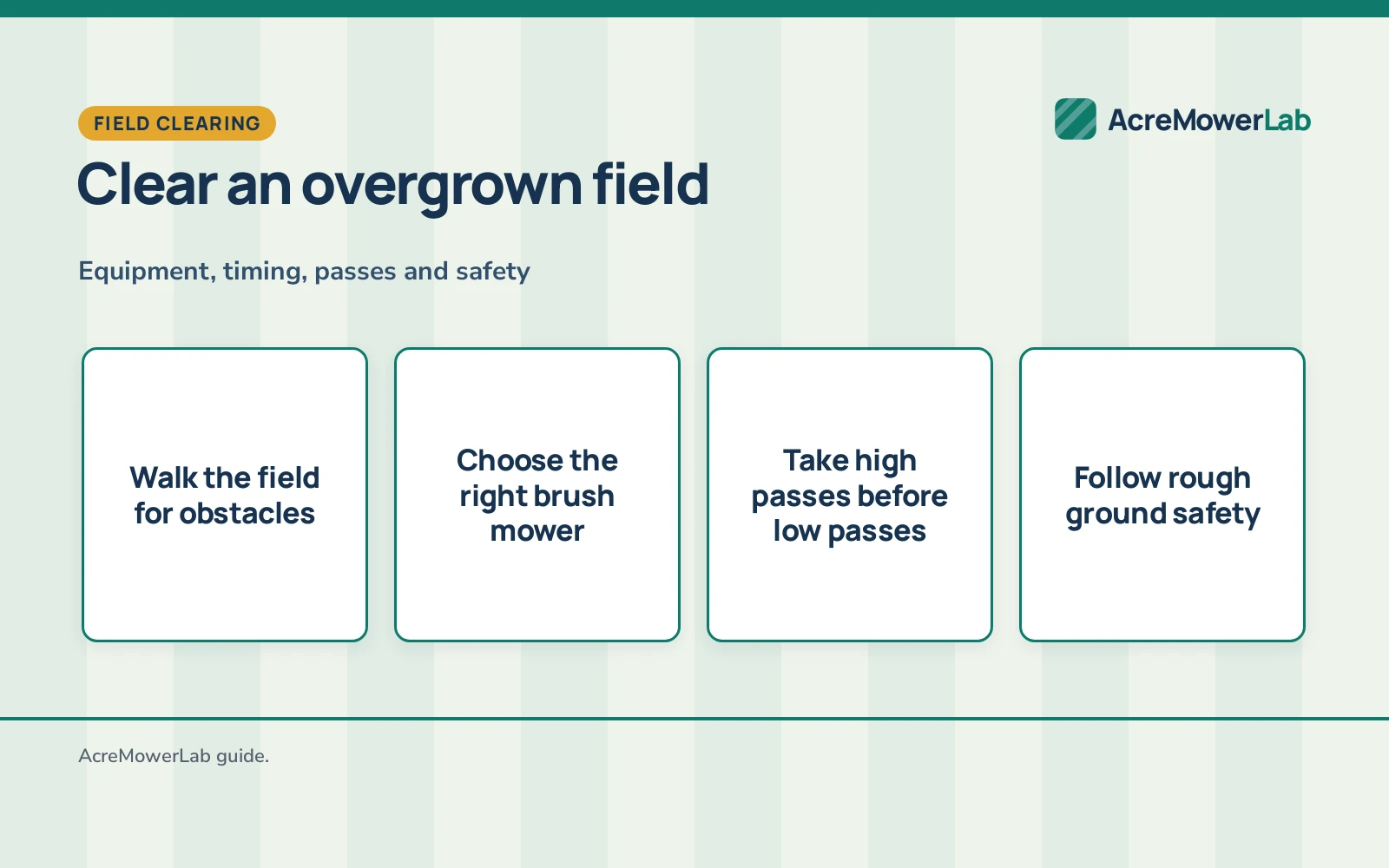
To clear an overgrown field, walk the ground to remove hidden obstacles, select a dedicated walk-behind brush mower or heavy-duty cutting equipment, cut tall vegetation in a high initial pass, and finish with a lower clearing pass. Clearing overgrown acreage requires matching your machinery to stem thickness and navigating rough terrain methodically. This guide explains how to clear an overgrown field safely without damaging your equipment.
As an Amazon Associate I earn from qualifying purchases. AcreMowerLab earns a commission when you shop through links here. It never changes your price. Affiliate disclosure.
How to clear an overgrown field: pick the right equipment
| Equipment | Best for | Limit |
|---|---|---|
| String trimmer with brush blade | Fence lines, ditch banks, tight borders, and small saplings | Slow for open acreage and tiring over long clearing sessions |
| Walk-behind brush mower | Thick brush, heavy weeds, woody saplings, and rough uneven ground | Requires walking behind the machine and physical steering |
| Tow-behind rotary cutter | Expansive pastures and open fields behind a tractor | Requires a utility tractor with a hitch and power takeoff capability |
| Heavy tractor with forestry mulcher | Dense woods, dense sapling stands, and severe neglected overgrowth | High equipment cost and limited maneuverability in tight quarters |
Most acreage owners rely on a dedicated rough-cut machine for clearing overgrown acreage. Standard lawn mowers and residential zero-turn mowers lack the deck clearance, blade strength, and spindle protection needed for heavy brush. See our guide to the best walk-behind brush mower models for rough ground.
Step 2: choose your timing
Timing your clearing project makes a major difference in effort and traction. Clearing during dry conditions prevents drive wheels from spinning and avoids tearing up wet topsoil. Late fall or dormant season is often the ideal window for field reclamation. Cooler weather reduces insect activity, tall weeds have dried out, and deciduous brush drops its foliage, exposing hidden ground contours and tree stumps. If you must clear during peak growing periods, wait for consecutive rainless days so vegetation dries thoroughly before cutting.
Step 3: walk the ground and flag obstacles
Never drive clearing machinery into unfamiliar, overgrown grass without walking the property beforehand. Tall briars, dense goldenrod, and brush can conceal severe hazards that destroy mower decks, bend spindles, or throw dangerous projectiles. Walk the entire cutting area in overlapping lines. Look for hidden boulders, old fence wire, t-posts, discarded metal, erosion ruts, fallen tree limbs, and animal burrows. Mark every immovable hazard with high-visibility surveyor flags or tall wooden stakes so you can spot them easily from behind the controls.
Step 4: make a high cutting pass
Attempting to chop tall brush down to ground level in an initial run bogs down engines, jams discharge chutes, and risks striking unseen rocks. Set your mower deck or cutting height to its highest position for the initial pass. Work at a steady, deliberate pace to allow the cutting chamber to process dense stalks without lugging the motor. For dense patches of thick brambles or woody saplings, push the machine forward slowly, disengage drive assist if necessary, and let the blades chew through the material. If material begins to accumulate under the deck, stop forward travel and allow the cutting chamber to clear while stationary, or disengage the blades before backing out.
Step 5: finish with a lower clearing pass
After the initial high pass has knocked down the canopy and exposed the soil line, lower your deck height for a finishing pass. This lower pass chops remaining woody stubble, shreds fallen stalks into fine mulch, and creates an even surface that can be maintained with conventional mowing equipment later in the season. Keep blades sharp to maintain clean cutting performance and reduce engine strain: see our guide to the best mower blade sharpener models.
Choose a clearing pattern
Planning your mowing path prevents unnecessary turning and keeps cut debris from piling up in uncut vegetation. On open ground, mowing in perimeter laps with the discharge chute pointed toward previously cleared ground prevents clippings from piling up in uncut brush. If you are using a walk-behind machine on rolling terrain, cutting across gentle slopes in straight, parallel swaths provides predictable balance and traction. When clearing along property lines or wooded borders, make perimeter passes initially to establish a wide buffer before tackling the center of the field.
Match the equipment to the vegetation
Overgrown fields vary widely in plant composition, ranging from soft pasture grass to woody sapling thickets. Light grass and broadleaf weeds yield readily to heavy-duty string mowers and flail cutters. Heavy briar patches, multiflora rose, and woody saplings require heavy-duty steel brush blades or swinging rough-cut blades that cut fibrous stems without bogging down the spindle. For tight edges around fences and rocks, a brush cutter with blade handles woody stems that string line cannot cut. Explore our full brush and field mowers overview to compare machine types for your property.
Plan the field in sections
Tackling an entire expanse in a single session can quickly lead to fatigue and rushed work. Divide your acreage into distinct working zones based on natural boundaries, such as access roads, tree lines, ditches, or terrain elevation. Complete the inspection, high cut, and low cut on each zone before moving to the next. Prioritize primary access paths and open, flat sections before attempting steep banks or heavily wooded edges. Breaking the project into manageable sections also ensures you can service equipment and refuel between zones without losing momentum.
Mind the weather and the ground
Ground moisture and weather dictate clearing safety and machine performance. Wet grass mats down under tires rather than cutting cleanly, causing the deck to drag and wheels to lose traction. Avoid operating heavy equipment on saturated soil where tires can create deep ruts that complicate future maintenance. Be alert to hidden ground depressions, sinkholes, and steep drop-offs obscured by vegetation. Never operate machinery on inclines that exceed manufacturer limits, and avoid clearing along steep ditch banks when morning dew or damp conditions make footing slick.
Safety
Operating heavy clearing machinery requires strict personal protection and situational awareness. Always wear shatterproof safety glasses, hearing protection, heavy leather work boots with non-slip soles, and durable work gloves. Clear loose rocks, branches, and foreign debris before mowing. Keep children, pets, and bystanders far outside the clearing radius to avoid thrown debris. Refuel equipment only with the engine switched off and completely cool to prevent fuel vapor ignition on hot engine blocks. When operating near slopes, follow manufacturer guidelines, keep safety guards in place, and disengage mower blades before reversing or traveling across rocky tracks. See our Safety Disclaimer.
FAQ: mowing large lots
What equipment is best for clearing an overgrown field?
A walk-behind brush mower is the most versatile tool for overgrown acreage with heavy weeds, brush, and saplings. Larger pastures with tractor access benefit from a tow-behind rotary cutter, while tight fence lines are best handled with a heavy-duty brush cutter or blade attachment.
Can a regular lawn mower clear an overgrown field?
No. Standard lawn mowers and residential zero-turn mowers are engineered for maintained turf. Attempting to mow tall field brush can bend thin blades, overheat spindles, snap belts, and cause severe deck damage from hidden debris.
Should you clear an overgrown field wet or dry?
Clearing in dry conditions is strongly recommended. Dry stems cut cleanly and discharge without clogging, whereas wet vegetation clumps inside the deck and damp ground causes drive wheels to lose traction.
How do you handle hidden obstacles in tall brush?
Walk the field on foot before cutting. Search for rocks, wire, stumps, and discarded metal, and mark every stationary obstacle with brightly colored marker flags or tall stakes so they remain visible above the vegetation canopy.
What should you do with brush and debris after clearing?
Brush mowers chop vegetation into mulch that can be left in place to decompose naturally and nourish the soil. Heavier woody limbs and branches can be gathered into wildlife brush piles along property edges or hauled away for chipping.
More mowing guides
- Best Walk-Behind Brush Mower: 4 Picks for Rough Ground
- Best Brush Cutter with Blade (2026): 5 Top Picks Compared
- Best String Trimmer for Acreage: 4 Gas and Battery Picks
- Best Mower Blade Sharpener: 4 Picks for Riders and Large Lawns
Use the Mower Matcher to narrow down choices by acreage, terrain, budget, and power type.