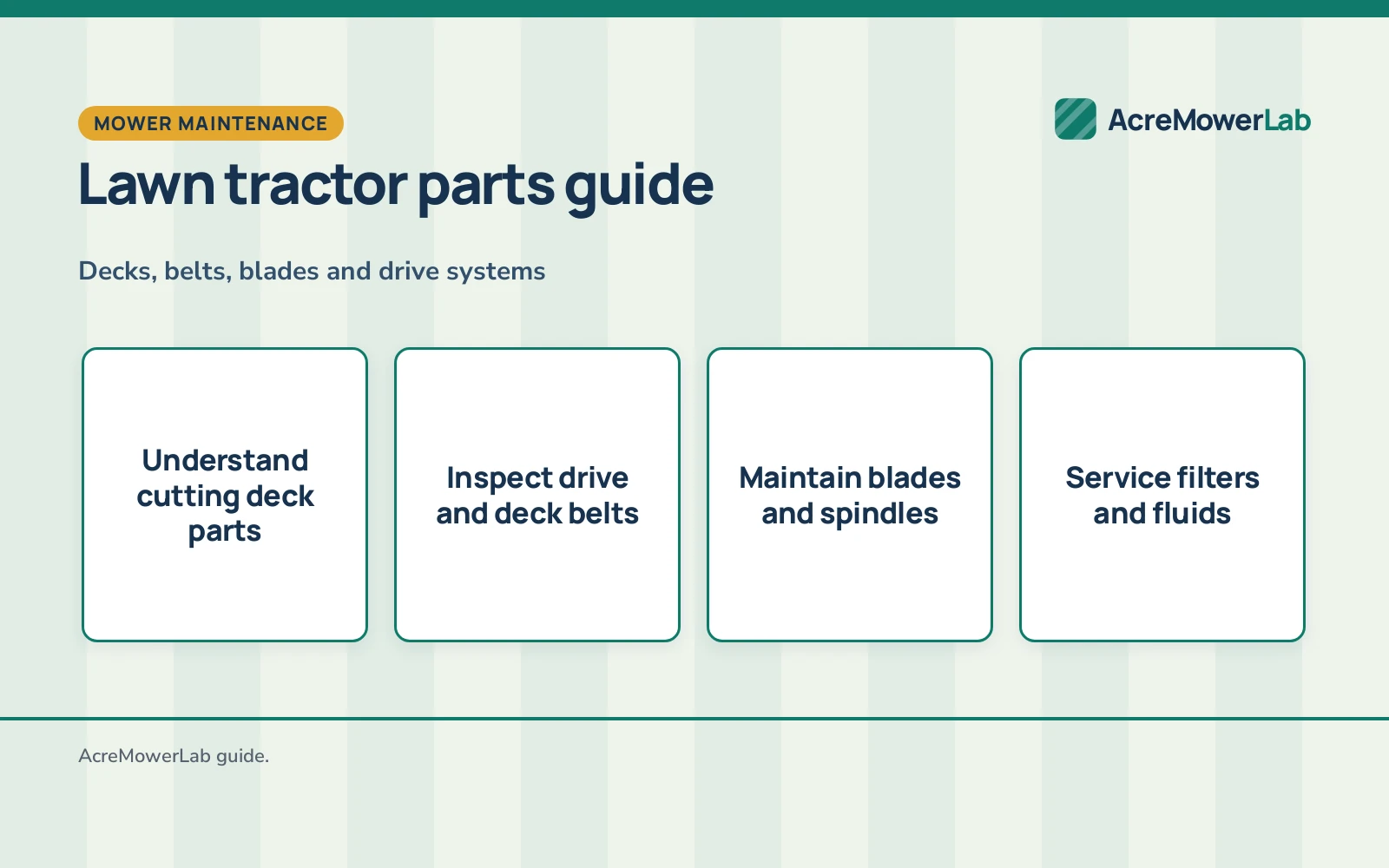
Lawn Tractor Parts: Maintenance and Replacement Guide
A practical guide to lawn tractor parts: how cutting decks, drive belts, hydrostatic transmissions, blades, and engine filters work together.

On this page
Top picks at a glance
As an Amazon Associate I earn from qualifying purchases.
- 1
 EGO Power+ Electric Riding Lawn Mower9.5/10View on Amazon
- 2
 Husqvarna TS 140X9.5/10View on Amazon
- 3
 Husqvarna TS 154X9.5/10View on Amazon
Lawn tractor parts make up the mechanical, cutting, and electrical systems that keep a riding mower operating cleanly. These components include the cutting deck, blades, drive belts, spindles, hydrostatic transmission, engine filters, and battery. Understanding how each assembly works helps you identify worn items before minor wear causes expensive mechanical damage. This guide breaks down essential replacement components step by step so you can maintain reliable mowing performance across your property.
AcreMowerLab earns a commission when you shop through links here. It never changes your price. Affiliate disclosure.
Lawn tractor parts: core assemblies and maintenance signs
| Assembly | Key components | Common wear signs |
|---|---|---|
| Cutting deck | Blades, spindles, pulleys, deck belt | Vibration, ragged grass tips, uneven cut |
| Drive system | Drive belt, hydrostatic transmission, idler pulleys | Sluggish uphill travel, jerky motion, slipping |
| Engine intake and fuel | Air filter, fuel filter, spark plug, fuel lines | Rough idle, hard starting, stalling under load |
| Electrical system | Starter solenoid, battery, ignition switch, safety switches | Clicking starter, dead battery, sudden stall |
| Steering and chassis | Tie rods, drag links, front axle bushings, steering gears | Loose steering, wandering travel, tire wear |
Routine maintenance involves servicing cutting components and inspecting drive belts each season, while checking chassis hardware whenever steering or tracking changes. If you maintain multiple machines or a zero-turn alongside your tractor, see our companion guide on zero-turn mower parts for comparison.
Step 2: inspect and replace drive belts
Drive belts transfer rotational power from the engine crankshaft to the transmission and cutting deck. Most lawn tractors employ separate belts for motion drive and blade engagement. The motion drive belt loops around the engine pulley, idler pulleys, and the transmission input pulley. Because drive belts operate under tension, heat and continuous flexing cause rubber wear over time.
Inspect belts by checking sidewalls and bottom surfaces for glazed friction edges, cracking, fraying cords, or missing rubber chunks. A stretched motion belt slips under load, reducing travel speed on inclines, while a worn deck belt slips and causes blades to bog down in heavy grass. Spin idler pulleys by hand to verify bearings rotate smoothly without wobble. If your tractor experiences forward movement issues despite an intact belt, see our guide on how to fix hydrostatic drive on a riding mower for diagnostic steps.
Step 3: maintain cutting blades and spindles
Mower blades directly determine cutting quality and lawn health. Sharp blades slice cleanly through grass foliage, whereas dull blades tear grass tips, leaving ragged edges that invite turf disease. Property owners can choose standard side-discharge blades, high-lift bagging blades that generate upward airflow, or mulching blades designed to recirculate clippings inside the deck chamber.
Spindle assemblies support the blades and absorb massive rotational stress. Check spindles by grasping the blade near the center hub with thick gloves and checking for vertical or lateral play in the spindle shaft; noticeable looseness indicates bearing wear that requires rebuilding bearings or replacing the spindle assembly. Regularly dress blade edges using a dedicated mower blade sharpener to restore clean cutting bevels. When servicing blades, using a secure lift for working on a lawn mower provides safe, stable access to the underside of the deck.
Step 4: service engine filters and fuel lines
The engine requires clean air, uncontaminated fuel, and reliable spark to deliver full mowing power. The air filter assembly serves as the primary barrier against abrasive dust and grass chaff kicked up by the deck. Most engines utilize a dual-stage system featuring a washable foam pre-cleaner wrapped around a pleated paper filter cartridge. When paper pleats clog with dust, airflow drops, causing rough running and reduced power.
Fuel delivery parts require equal care. Inline fuel filters capture rust specks and sediment before fuel enters the carburetor. Replace the inline filter whenever trapped particles appear inside the clear casing. Inspect flexible rubber fuel lines for softening or cracking caused by ethanol fuel blends, replacing hardened lines promptly to prevent fuel leaks above hot engine components.
Step 5: check electrical wiring and battery
The electrical network powers engine starting, PTO blade clutch engagement, and vital operator safety interlocks. The starting battery provides the surge necessary to spin the starter motor. Terminal posts accumulate corrosion from acid fumes, which creates resistance and prevents proper charging from the tractor alternator. Clean terminal posts with a wire brush and apply protective grease. If the battery fails to hold a charge between weekly mowing passes, review our lawn mower battery recommendations for a durable replacement.
Safety interlock switches form a crucial protective network. These switches monitor operator presence on the seat, brake pedal position, reverse gear selection, and cutting deck engagement. If an interlock switch sticks or fails internally, it can prevent the engine from cranking entirely, or shut down ignition spark the moment blades are engaged.
Inspect the steering and chassis
The chassis and steering linkages bear the physical stress of traversing uneven ground. Over seasons of mowing, vibrations loosen steering gear assemblies, leading to excess play in the steering wheel. The steering mechanism typically features a pinion gear meshing with a toothed sector gear attached to drag links and steering arms. Inspect gear teeth for rounding or dirt buildup that causes jerky steering response.
Front axle assemblies pivot on a central pin and support steering spindles. Heavy cast iron axles handle ground impacts better than stamped steel assemblies, but both styles rely on spindle bushings and wheel bearings that require regular grease lubrication. Lubricate grease fittings on wheel hubs and axle pivot points until fresh grease purges old lubricant. Inspect front tie rod ends for loose ball joints to keep tires tracking straight.
Match parts to your mower deck size
Cutting deck dimensions influence blade sizes and deck drive belt specifications. Manufacturer listings illustrate how component configurations vary across machine sizes. For example, the Husqvarna TS 120 listing specifies a 46-inch stamped deck with a 2-blade layout, paired with a 22 hp engine, a 2.5 gallon fuel capacity, and ground speeds reaching 5 mph forward and 2 mph reverse. In comparison, the Husqvarna TS 140X listing features a 54-inch stamped deck using a 3-blade design, matched with a 24 hp engine and a 3 gallon fuel tank. For trail clearing behind a tractor, tow-behind equipment such as the Earthquake model 42795 rough-cut mower uses an 11-gauge steel deck across a 44-inch cutting width with an independent 17.5 hp engine. Always check your tractor model tag and operator manual rather than assuming parts interchange between different deck sizes.
Track replacement intervals by season
Organizing maintenance by seasonal milestones keeps your machine reliable and avoids unexpected breakdowns during peak growing months. In spring, complete a comprehensive tune-up: install freshly sharpened blades, replace the fuel filter and spark plug, verify belt tension, and ensure tire pressures match operator manual specifications. Adjust deck leveling side to side and set front-to-back pitch per manufacturer specifications so grass cuts cleanly without blade drag.
During the heavy mowing season, focus on inspection and cleaning. Scrape accumulated grass buildup from beneath the mower deck after mowing damp turf, as rotting clippings trap moisture against the steel shell and promote rust perforation. Inspect the air filter regularly during dry, dusty conditions. In fall, check drive belts for wear after heavy leaf bagging passes. Before winter storage, add fuel stabilizer, run the engine to circulate treated fuel, remove the battery for indoor storage, and thoroughly clean the tractor exterior.
Mind operating conditions and wear
Operating conditions directly affect how quickly components wear down. Mowing across rough acreage with hidden rocks, tree roots, or exposed pipes subjects blades, spindle housings, and deck shells to sudden shock loads that can bend spindle shafts or crack housings. Walk unfamiliar ground prior to mowing to clear debris and mark stationary obstacles.
Slopes and damp ground demand extra attention to drive components and tires. Navigating hills places sustained load on hydrostatic transmissions and transaxles, increasing oil temperatures and belt strain. Keep cooling fins on the transmission clean and clear of grass clippings to maintain airflow. On wet grass, drive wheels slip easily, tearing the turf and reducing traction on slopes. Always mow slopes according to manufacturer instructions and avoid traversing soggy drainage areas.
Safety
Always disconnect the spark plug wire or remove the ignition key before inspecting or replacing lawn tractor parts, especially underneath the mower deck. Wear heavy gloves and eye protection when handling sharp mower blades. Never bypass safety interlock switches, including seat presence sensors and reverse blade shut-off mechanisms. When operating the tractor, never exceed the maker’s maximum slope rating, as tractors can lose traction or tip on steep inclines. Keep children, pets, and bystanders completely clear of the mowing area, never carry passengers, and disengage mower blades when driving in reverse or crossing gravel drives. Allow the engine to cool completely before refuelling or servicing fuel lines, and work outdoors or in a well-ventilated space away from open flames. Follow all maintenance procedures and safety precautions published in your operator manual.
FAQ: mowing large lots
Which lawn tractor parts wear out fastest?
Mower blades, drive belts, and deck belts experience the highest rate of mechanical wear due to continuous friction, tension, and impact with turf debris. Air filters and engine oil also require regular renewal because mowing environments generate heavy dust.
How often should mower blades be sharpened or replaced?
Blades should be sharpened whenever grass tips show fraying or browning rather than a clean cut. Replace blades immediately if they develop severe cracks, deep gouges from rocks, or thin sails from sandy soil abrasion.
What causes lawn tractor drive belts to slip or snap?
Belts slip or break when idler pulleys seize, tension springs stretch, or foreign debris lodges into pulley grooves. Oil or fuel leaks onto belt surfaces will also degrade the rubber compound and cause immediate slippage.
Can generic parts be used instead of original manufacturer parts?
Standard maintenance items like fuel filters, spark plugs, and common bearings can be replaced with quality aftermarket equivalents that match manufacturer dimensions. However, deck belts and drive belts often feature specific bevel angles and cords that perform best with exact specification replacements.
How do you know when a hydrostatic transmission needs service?
Symptoms of a failing or slipping hydrostatic drive include sluggish movement when climbing slopes, whining noises during acceleration, jerky forward motion, or loss of drive power as transmission oil heats up during extended mowing sessions.
More mowing guides
- Best Lawn Tractor Mirror (2026): 5 Magnetic Picks
- Best Voltmeter for Lawn Tractor (2026): 5 Picks Compared
- Lawn Tractor Snow Blade vs Snowblower: Which One Should You Buy?
- Best Bucket for Lawn Tractor (2026): 4 Picks Compared
- Best Utility Cart for Lawn Tractor (2026): 5 Carts Compared
- Zero Turn Mower Parts: Maintenance and Replacement Guide
- How to Fix Hydrostatic Drive on Riding Mower
- Best Mower Blade Sharpener: 4 Picks for Riders and Large Lawns
- Best Lawn Mower Battery (2026): 5 Top Picks Compared
Explore our complete library of maintenance walkthroughs and machinery guides across our riding mowers section to keep your equipment running smoothly season after season.