Post Hole Digger vs Auger: Which One Should You Buy?
Post hole diggers and augers compared on how they dig, power, hole size, weight and upkeep, with two examples of each side from the listings we reviewed.


On this page
Top picks at a glance
As an Amazon Associate I earn from qualifying purchases.
- 1
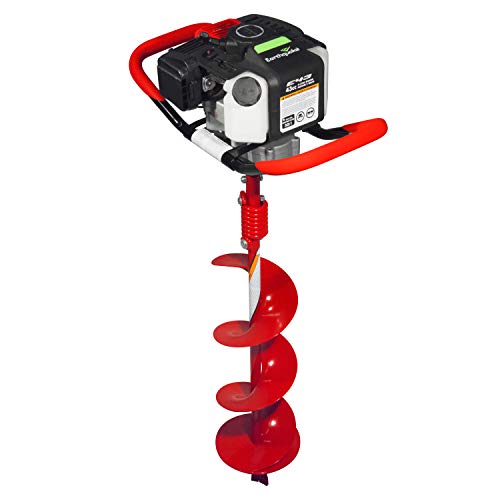 Earthquake E43 1-Person Earth Auger Powerhead9.7/10View on Amazon
- 2
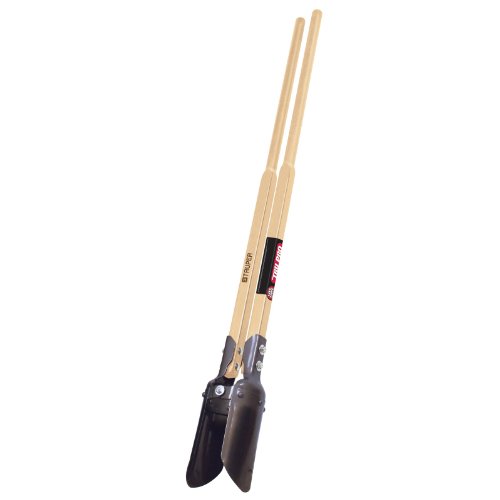 Truper Tru Pro Heavy Duty Post Hole Digger, 48-Inch9.6/10View on Amazon
- 3
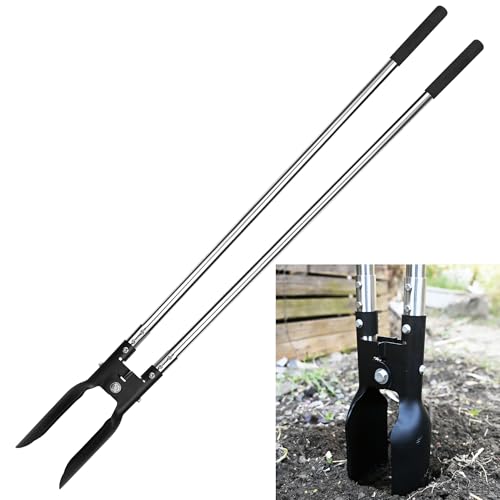 YEELOR Post Hole Digger with Carbon Steel Digging Blade9.6/10View on Amazon
- 4
 Seymour S500 Industrial IWAN Auger, 6-Inch Diameter9.6/10View on Amazon
Verdict: Choose a post hole digger if you dig a few holes by hand for fence posts, mailboxes or gate posts and want a light tool with no fuel. Choose an auger if you dig a run of holes and want the bit to do the turning, whether by hand with the Seymour or by engine with the Earthquake.
A fence line that needs new posts, a mailbox that leans after a storm, a gate post that has rotted at the ground: sooner or later the property needs holes dug, and the post hole digger vs auger choice decides whether the work goes by hand or by engine. A post hole digger is a two-handled manual tool that bites, lifts and drops soil out of the hole. An auger is a screw-shaped bit that turns into the ground, by hand or by engine, and carries the soil up as it turns. This comparison covers the differences, then two examples of each side from the listings we reviewed.
AcreMowerLab earns a commission when you shop through links here. It never changes your price. Affiliate disclosure.
The examples
Earthquake E43 1-Person Earth Auger Powerhead
A 1-person gas earth auger with a 43cc 2-cycle engine, a 30:1 transmission and an included 8-inch steel auger bit on a 36-inch auger.
Who it's for: owners with a fence line or a run of holes who want the engine to do the turning.
Who should skip it: anyone who only digs a hole or two and wants no fuel to mix.
The Earthquake E43 is the only powered tool here: a 43cc 2-cycle Viper engine on a powerhead with a 30:1 transmission, steel welded handlebars and anti-vibration foam-grip handles. The included 8-inch steel auger is 36 inches long, with a fishtail point, a Flex Coil Shock absorber and replaceable blades, and industrial air filtration keeps dirt out of the engine.
Pros
- 43cc 2-cycle engine with a 30:1 transmission
- Included 8-inch steel auger bit with fishtail point
- Anti-vibration foam-grip handles with fingertip throttle
- 5-year limited warranty stated
Cons
- Heaviest example here at 34.0 pounds
- Needs mixed fuel and engine upkeep
- Only the 8-inch bit is included
- The bit color varies, red or black, and is not fixed
Truper Tru Pro Heavy Duty Post Hole Digger, 48-Inch
A heavy-duty manual post hole digger with 48-inch North American white ash handles, built for commercial, industrial and farm use.
Who it's for: owners who want a light, pro-grade manual digger for fence posts and farm work.
Who should skip it: anyone who wants an adjustable handle or a powered auger.
The Truper 30379 is a classic manual post hole digger: 48-inch premium North American white ash handles, a professional grade design, and a build the maker lists for commercial, industrial, agricultural, dairy, farm and ranch use. The spec table lists the weight at 4.785 pounds, the lowest weight example here.
Pros
- 48-inch premium white ash handles
- Professional grade design for commercial and farm use
- Lowest weight here at 4.785 pounds
- Ash handles give resistance and flexibility
Cons
- Manual digging only, no power assist
- Blade material is not stated
- No warranty term is stated
- Handles are a fixed 48 inches, with no stated adjustment
YEELOR Post Hole Digger with Carbon Steel Digging Blade
A manual post hole digger with a one-piece carbon steel blade, an adjustable 55-inch stainless steel handle and a bolted handle-to-blade connection.
Who it's for: owners who want an adjustable-handle manual digger for posts, mailboxes and fencing.
Who should skip it: anyone who wants a powered auger for a long run of holes.
The YEELOR digger is a manual post hole digger with a one-piece carbon steel blade and a 55-inch stainless steel handle that adjusts in length. The handle and blade join with eight bolts and a turning thread connection, which the listing says prevents loosening during hard digging. The listing says it suits digging post holes, installing mailboxes and fencing.
Pros
- One-piece carbon steel blade with an integrated design
- Adjustable handle length for different heights
- Handle and blade joined with eight bolts
- Instruction manual and assembly tools included
Cons
- Manual digging only, no power assist
- Simple assembly is required before use
- No warranty term is stated
Seymour S500 Industrial IWAN Auger, 6-Inch Diameter
A manual auger with a 6-inch diameter steel blade riveted to an iron yoke, a steel shaft and a welded steel T-handle, made in the USA.
Who it's for: owners who want a simple hand auger for general purpose holes in varied soils.
Who should skip it: anyone who wants a powered auger or a stated digging depth.
The Seymour S500 is a manual auger: a 6-inch diameter steel blade riveted to a tough pliable iron yoke, on a steel shaft with a welded steel T-handle. The listing designs it for general purpose use in a variety of soils, and it is made in the USA.
Pros
- 6-inch diameter steel blade for general purpose use
- Blade riveted to a tough pliable iron yoke
- Steel shaft with a welded steel T-handle
- Made in the USA
Cons
- Manual turning only, no power assist
- No overall length is stated
- No warranty term is stated
- Only a 6-inch diameter is offered in this listing
Other machines to compare
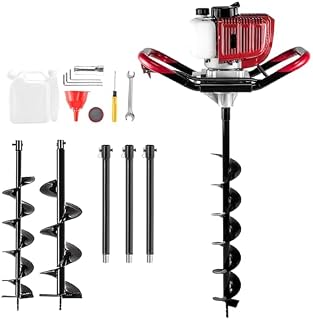 52CC Gas Post Hole Digger with 3 Auger Bits & 3 ExtensionsCheck price on Amazon
 PROYAMA 54cc Post Hole DiggerCheck price on Amazon
 WORKIT 72CC Post Hole DiggerCheck price on Amazon
 DC HOUSE 52cc 1800W Gas Powered Earth Auger EPA CertifiedCheck price on Amazon
 62CC Gas Powered Post Hole DiggerCheck price on Amazon
 72CC Auger Post Hole Digger Gas Powered w/ 3" & 5" & 8" AugerCheck price on Amazon
Post hole digger vs auger side by side
| Acre Score | Side | Power | Notes | |
|---|---|---|---|---|
| Earthquake E43 | 9.7/10 | Auger | 43cc 2-cycle gas | 8-inch bit, 36-inch auger, 5-year warranty |
| Truper Tru Pro 48-Inch | 9.6/10 | Post hole digger | Manual | 48-inch ash handles, 4.785 lb |
| YEELOR 55-Inch Digger | 9.6/10 | Post hole digger | Manual | Adjustable handle, one-piece steel blade, 7.9 lb |
| Seymour S500 Auger | 9.6/10 | Auger | Manual | 6-inch diameter, steel blade, 7.4 lb |
Figures are manufacturer stated for the example models, collected 13 November 2026.
How each one digs
A post hole digger works like a pair of jaws. You push the two handles apart to open the blades, drive them into the ground, close the handles to bite a plug of soil, then lift it out and drop it beside the hole. The YEELOR example has a one-piece carbon steel blade, and the Truper example lists its ash handles for resistance and flexibility. An auger works like a screw: the bit turns into the ground and lifts soil out as it turns. The Seymour example turns by hand on a T-handle, while the Earthquake example turns its 8-inch bit with a 43cc engine, so the engine does the turning instead of the operator.
Power: manual or gas
The two post hole diggers and the Seymour auger are manual tools. They need no fuel, no charging and no engine upkeep, and the work comes from the operator. The Earthquake example is the only powered tool here, with a 43cc 2-cycle Viper engine and a 30:1 transmission. It weighs 34.0 pounds, against 4.785 pounds for the Truper example, 7.9 pounds for the YEELOR example and 7.4 pounds for the Seymour example. The engine does the turning, but it needs mixed fuel and engine upkeep, and it is the heaviest tool here.
What each one can dig
A post hole digger digs a hole for a fence post, a mailbox or a gate post. The YEELOR listing names digging post holes, installing mailboxes and fencing, and the Truper listing names commercial, industrial, agricultural, dairy, farm and ranch use. An auger digs the same kind of hole, and the Seymour listing designs it for general purpose use in a variety of soils. The Earthquake listing says its 36-inch auger makes drilling easy standing upright and suits larger projects. Neither side states a digging depth, so the listings leave that comparison unclear: the Earthquake example states a 36-inch auger, and the manual tools state handle lengths, not depths.
Handling and weight
The Truper example has the lowest weight here at 4.785 pounds, with 48-inch ash handles. The YEELOR example weighs 7.9 pounds with an adjustable 55-inch handle, and the Seymour example weighs 7.4 pounds. The Earthquake example weighs 34.0 pounds and is held by steel welded handlebars with anti-vibration foam grips and a fingertip throttle.
Upkeep
The manual tools here state no fuel and no engine upkeep. The YEELOR example includes an instruction manual and assembly tools, and its eight-bolt connection is stated to prevent loosening. The Truper and Seymour examples state no upkeep and no warranty term. The Earthquake example needs mixed fuel, and its listing names industrial air filtration, a Flex Coil Shock absorber and replaceable blades.
Acreage and terrain fit
Earthquake E43
Truper Tru Pro 48-Inch
YEELOR 55-Inch Digger
Seymour S500 Auger
Matching It to Your Property
- A few holes on flat ground near the house: either manual digger or the Seymour hand auger does the job with no fuel to carry.
- A fence line or a run of holes: the Earthquake powerhead turns an 8-inch bit, and its 36-inch auger lets you drill standing upright.
- Varied soils: the Seymour auger is made for general purpose use in a variety of soils, and the YEELOR blade is made to cope with various soil conditions.
- Storage: the manual tools have no engine or fuel to look after, while the 43cc powerhead needs mixed fuel and engine care.
The Acre Score explained
The Acre Score weighs performance (power, what it can dig and how it digs), build quality (blade, handle and connection), value (what comes in the box), safety (certifications or operator controls the listing states) and warranty (years and coverage). A factor the listing does not state scores zero, which is why only the Earthquake example scores for warranty.
| Product | Acre Score | Perf. /35 | Build /25 | Value /25 | Safety /10 | Warranty /5 |
|---|---|---|---|---|---|---|
| Earthquake E43 | 9.7 | 32 | 22 | 21 | n/a | 3 |
| Truper Tru Pro 48-Inch | 9.6 | 30 | 21 | 21 | n/a | 0 |
| YEELOR 55-Inch Digger | 9.6 | 29 | 21 | 20 | n/a | 0 |
| Seymour S500 Auger | 9.6 | 28 | 20 | 20 | n/a | 0 |
We show weighted point totals as scores from a 9.2 base up to a 9.8 peak, and a larger total can never read lower. Powered machines get safety points, as do listings that name safety features; manual items are scored out of 90.
A manual digger covers a few holes near the house, and a gas auger covers a fence line. If the ground needs turning before planting, see our tillers and cultivators hub.
Read the manual, keep children and pets out of the yard while you work, wear eye and hearing protection and sturdy footwear, and never exceed the slope rating of your machine. Refuel only with the engine off and cool. See CPSC lawn mower safety. Read our Safety Disclaimer.
FAQ: mowing large lots
Which is better for fence posts, a post hole digger or an auger?
Either digs a fence post hole. A manual post hole digger suits a few holes and needs no fuel, while an auger suits a run of holes: the Seymour example turns by hand and the Earthquake example turns its bit with a 43cc engine. Pick the side that matches the holes you face and the ground you dig in.
Can an auger dig in rocky soil?
The Seymour listing designs its auger for general purpose use in a variety of soils, but no listing here states a rocky-soil rating, so the listings leave that question unclear.
How deep can a post hole digger dig?
The listings do not state a digging depth for either manual digger. The YEELOR example has a 55-inch handle and the Truper example has 48-inch handles, but handle length is not a digging depth. The Earthquake example states a 36-inch auger, which is the auger length, not a stated digging depth.
Do I need a gas auger for a few holes?
No. A manual digger or a hand auger covers a few holes with no fuel to mix. The Earthquake powerhead suits a run of holes or larger projects, where the engine does the turning.
What size auger bit do I need for a fence post?
The listings state two bit sizes: the Seymour auger is 6 inches in diameter and the Earthquake example includes an 8-inch bit. Neither listing states which post size each bit suits, so check the post and the hole size the job needs.
More mowing guides
- Best Post Hole Digger for Fence Posts (2026)
- Best Gas Post Hole Digger (2026): 5 Picks for Fences and Planting
- Best Earth Auger for Planting Trees (2026): 5 Picks Compared
- Gas vs Electric Post Hole Digger: Which One Should You Buy?
Use the digging tools hub to compare more digging tools for the property.