Stick Edger vs Wheeled Edger: Which One Should You Buy?
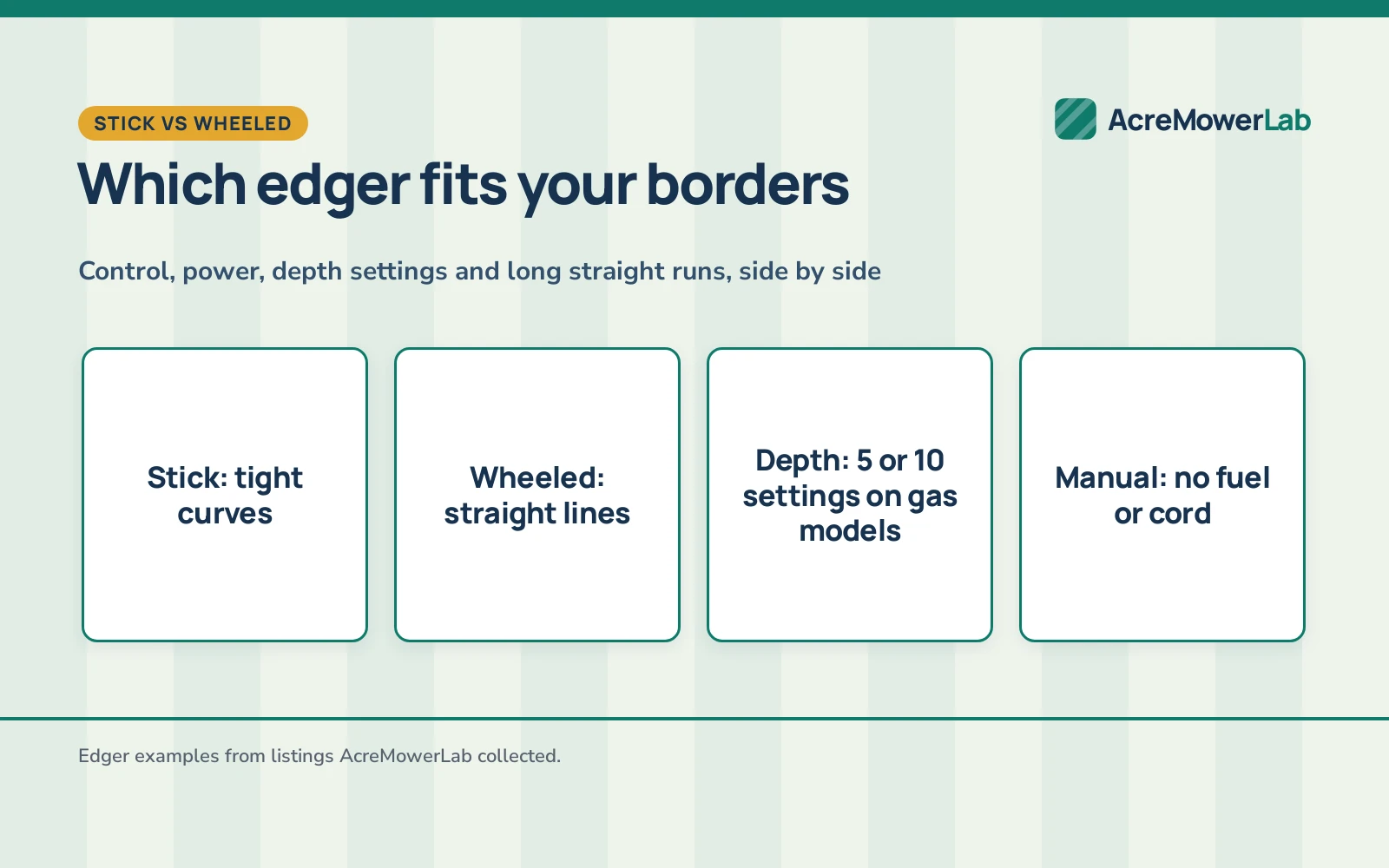
A stick edger suits tight curves and short runs, while a wheeled walk-behind edger holds a straight line on long sidewalks and driveways.

On this page
Top picks at a glance
As an Amazon Associate I earn from qualifying purchases.
- 1
 CKLT 40-Inch One-Piece Manual Lawn Edger with Spring Steel9.6/10View on Amazon
- 2
 Walensee 69.7-Inch Wheeled Rotary Manual Lawn Edger9.5/10View on Amazon
- 3
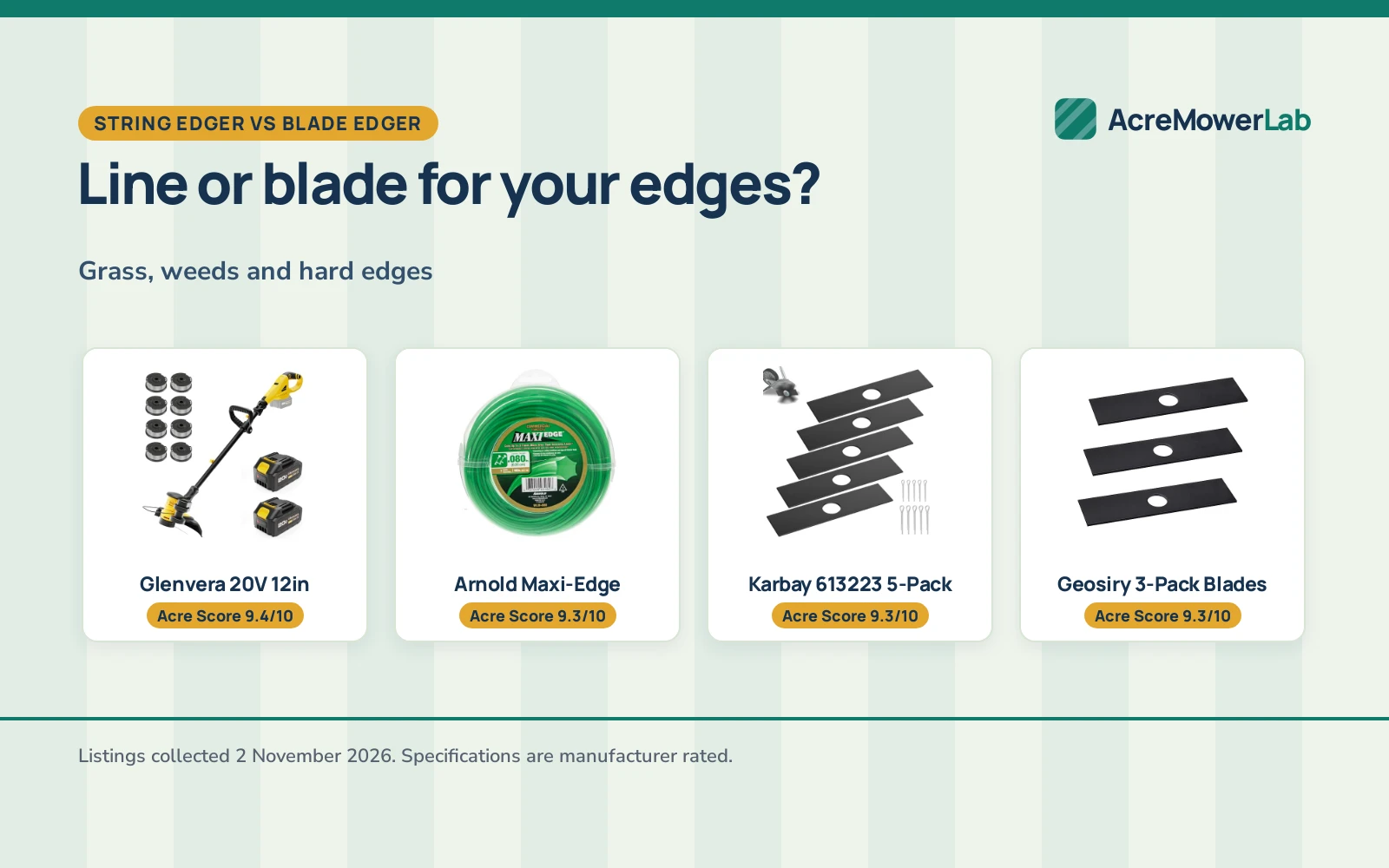
 BLACK+DECKER 20V MAX 12 in Trimmer and Wheeled Edger9.5/10View on Amazon
A driveway edge gone ragged, a sidewalk line buried under grass, a curb that has lost its edge: each makes the whole property look unkempt. That is where stick edger vs wheeled edger matters. A stick edger is carried in the hands and steered along curves and short runs, while a wheeled edger rolls along the ground and holds a straight line on long borders. For long sidewalks and driveways, a gas wheeled design offers walk-behind control and depth settings, while a stick edger still suits tight curves and quick touch-ups. This guide compares the two, then walks through several edgers from current listings to show what the wheeled side offers.
AcreMowerLab earns a commission when you shop through links here. It never changes your price. Affiliate disclosure.
stick edger vs wheeled edger: the difference
| Design | Best for | Limit |
|---|---|---|
| Stick edger | Tight curves, flowerbeds, short runs and quick touch-ups | Harder to hold a straight line and steady depth on long borders |
| Wheeled edger | Long straight sidewalks, driveways and curbs | Less nimble around tight curves and beds |
| Manual wheeled edger | Light touch-ups with no fuel and no cord | No engine power for roots and overgrown borders |
The two gas wheeled models here offer 5 and 10 depth settings, so depth control is a strength of those gas models. No stick edger is featured in these listings, and the manual wheeled models here state no depth settings.
When a stick edger is the better choice
- Tight curves. Around flowerbeds and mulch borders, a handheld tool turns more easily in tight spots than a wheeled design.
- Short runs. A few feet of edge after mowing does not need a wheeled machine rolled out of storage.
- Light touch-ups. Where grass has barely crossed the edge, a quick handheld pass restores the line.
When a wheeled edger is the better choice
- Long straight borders. Wheels help follow sidewalks, driveways and curbs, which helps keep the line clean.
- Steady depth. Depth settings let the operator choose the cut depth for the task, rather than relying on hand height alone.
- Overgrown edges. Gas wheeled models offer more power than handheld edgers, and the EARTHQUAKE listing cuts up to 2.5 inches deep into roots.
- Beveled cuts. The EARTHQUAKE listing pivots its blade up to 20 degrees in either direction for decorative edging around mulch and flowerbeds.
4 edgers from the listings
EARTHQUAKE 41273 Walk-Behind Edger. The strongest gas unit here, with a 79cc 4-cycle Viper engine that needs no mixing of gas and oil. Its multi-position pivoting blade moves up to 20 degrees in either direction for straight cuts or beveled cuts, and it offers 10 edging depths, cutting up to 2.5 inches deep into roots to slow regrowth. The tri-tip blade is high-strength steel, a variable-speed throttle gives precise speed control around corners, and 4 wheels keep it stable where 3-wheeled designs wobble. A built-in cup and tool holder stores garden shears or a hand trowel, and the listing states it can also handle smaller trenching jobs such as electric fence installation or an underground cable run to a garage or shed. It states a 5-Year Limited Warranty, a weight of 57.0 pounds and dimensions of 38.96 inches x 19.47 inches x 39.67 inches.
Wild Badger Power 31cc Walk-Behind Edger. A lighter gas unit at 29.8 pounds, with a 31cc 4-cycle full-crank engine delivering up to 9,800 blade RPM without mixing gasoline and oil. Its 9.5-inch 2-tooth steel blade separates turf from hardscape along sidewalks, driveways and curbs, with 5 cutting depths for routine touch-ups or deeper seasonal edging. Three handle-height positions support a comfortable working posture, digital ignition supports starting, and tool-free air-filter access simplifies regular upkeep. The listing states a 3-year limited warranty backed by 24-hour customer support, and dimensions of 42.1 inches x 18.0 inches x 40.0 inches. The listing advises starting shallow on hard soil, roots or heavily overgrown borders.
Walensee Wheeled Rotary Manual Lawn Edger. A manual wheeled rotary edger, 69.7 inches long from its title. With no engine, there is no fuel to mix and no cord to manage, which suits light touch-ups. The listing states no further details, so treat power, depth settings and weight as not stated.
BARAYSTUS Wheeled Rotary Manual Lawn Edger. A manual wheeled rotary edger from its title, with no further details stated in the listing data. Like the Walensee, it is a manual wheeled rotary edger, and its specs are not stated.
How to pick between them
Start with the borders themselves. Long straight sidewalks and driveways favor a gas wheeled edger, while beds and curves favor a stick edger. For properties with both, the gas wheeled models here cover the long runs, and a stick edger covers the curves. Next, weigh the growth: routine touch-ups suit a manual rotary edger, while roots and overgrown borders call for a gas wheeled model with depth settings. Storage matters too: check the listed dimensions of the gas wheeled models before buying, since they are walk-behind machines. See our best manual lawn edger picks and our best lawn edger for sidewalks picks for more options.
Safety
Wear eye and hearing protection and sturdy shoes. Clear sticks, stones and other debris before edging, and keep children, pets and bystanders away from the work area. Refuel only with the engine off and cool. On hard soil or roots, start shallow and deepen gradually rather than forcing a deep cut on the first pass.
FAQ: mowing large lots
Can a wheeled edger cut curves?
It can handle beveled cuts: the EARTHQUAKE listing pivots its blade up to 20 degrees in either direction for decorative edging around mulch and flowerbeds. For tight curves, a stick edger turns more easily. Match the tool to the sharpest curve on the property.
How deep should edging go?
The listings do not state one depth for every edge. The EARTHQUAKE listing offers up to 2.5 inches deep, for cutting into roots to slow regrowth, while the Wild Badger listing advises starting shallow on hard soil, roots or heavily overgrown borders and deepening gradually. Set the depth for the task at hand, using the 5 or 10 settings on the gas models here.
Do wheeled gas edgers need mixed fuel?
No, on the models here. Both gas listings state 4-cycle engines that run without mixing gasoline and oil. Check and add engine oil as directed instead, since a 4-cycle engine has its own oil supply.
Can a wheeled edger dig a trench?
For smaller jobs, yes on the EARTHQUAKE listing, which states it can handle trenching such as electric fence installation or an underground cable run to a garage or shed. It is a second use, not a replacement for a dedicated trencher on long runs.
Is a manual edger enough for a large property?
For light touch-ups, a manual rotary edger needs no fuel and no cord. For long borders, roots or overgrown edges, a gas wheeled model with depth settings is the stronger choice on the models here. A manual edger is not a substitute for a gas model on overgrown borders, since the manual listings here state no engine power.