Synthetic vs Conventional 2 Cycle Oil: Which One Should You Buy?
A guide to synthetic, semi-synthetic and blend 2-cycle oils, with mix ratios, stabilizer life and four listed oils to compare.

On this page
Top picks at a glance
As an Amazon Associate I earn from qualifying purchases.
- 1
 STA-BIL 22404 Full Synthetic 2-Cycle Oil9.6/10View on Amazon
- 2
 Briggs & Stratton 100036 2-Cycle Engine Oil9.6/10View on Amazon
- 3
 STP 18587 2-Cycle Oil with Fuel Stabilizer9.5/10View on Amazon
- 4
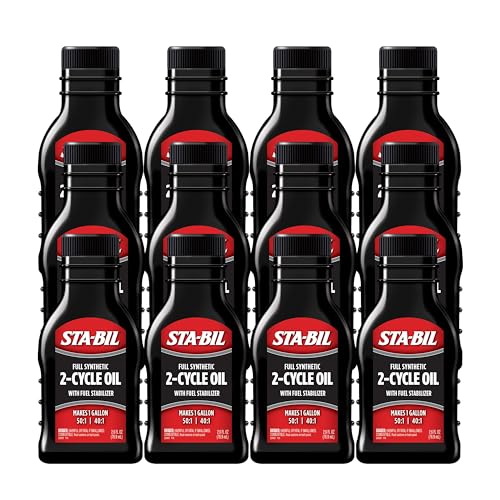 STA-BIL Full Synthetic 2-Cycle OilView on Amazon
- 5
 Husqvarna 3-Pack XP Synthetic Blend 2-Cycle Oil 2.6oz BottlesView on Amazon
- 6
 Power Performance Premium 2-Cycle Oil 16oz Easy to MeasureView on Amazon
- 7
 Stihl 3 Pack Synthetic Oil Mix 50:1 HP Ultra 2-Cycle 1 BottleView on Amazon
- 8
 TRIAX Power Sport 2T Full SyntheticView on Amazon
- 9
 Lucas Oil 10115 Semi-Syn 2-Cycle Motor OilView on Amazon
On a property where trimmers, blowers and saws all drink mixed fuel, a shelf of oil has to serve every tool, and the synthetic vs conventional 2 cycle oil question comes down to what the oil is made of and what else it does in the can. The oils in the gear section below are all synthetic, semi-synthetic or a blend, so this guide compares the listed synthetic family against the conventional baseline and shows how to match an oil to a mix ratio and a storage habit.
Other machines to compare
 STA-BIL Full Synthetic 2-Cycle OilCheck price on Amazon
 Husqvarna 3-Pack XP Synthetic Blend 2-Cycle Oil 2.6oz BottlesCheck price on Amazon
 Power Performance Premium 2-Cycle Oil 16oz Easy to MeasureCheck price on Amazon
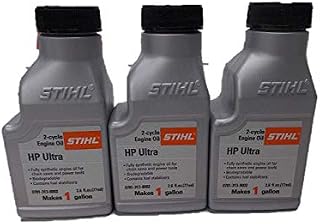 Stihl 3 Pack Synthetic Oil Mix 50:1 HP Ultra 2-Cycle 1 BottleCheck price on Amazon
 TRIAX Power Sport 2T Full SyntheticCheck price on Amazon
 Lucas Oil 10115 Semi-Syn 2-Cycle Motor OilCheck price on Amazon
AcreMowerLab earns a commission when you shop through links here. It never changes your price. Affiliate disclosure.
Synthetic vs conventional 2 cycle oil: what changes in the can
A conventional oil is the baseline: a mineral oil that lubricates and burns with the fuel. A full synthetic oil is built from synthesized base stocks instead, and the listed full synthetics add more: the STA-BIL oil adds a fuel stabilizer, and the Stihl oil is described as highly biodegradable with outstanding cleaning characteristics. Between them sit the semi-synthetic and blend oils, which mix synthetic and conventional stocks: the ECHO Red Armor is semi-synthetic, and the Husqvarna XP is a synthetic blend.
That position on the scale matters less than the mix ratio and the storage habit. A synthetic oil does not change the ratio the tool manual calls for, and a stabilizer does not rescue fuel that has already gone stale. The sections below use the four listings in the gear section, and every figure comes from that oil’s own listing.
| Oil type | Listed example | What the listing adds |
|---|---|---|
| Full synthetic | STA-BIL Full Synthetic 2-Cycle Oil | Fuel stabilizer, one-shot 2.6 oz bottles |
| Full synthetic | Stihl High Performance Ultra | Cleaning characteristics, biodegradable |
| Semi-synthetic | ECHO Red Armor | Detergents, stabilizers, 128 fl oz bottle |
| Synthetic blend | Husqvarna XP Synthetic Blend | 2.6 oz bottles, 3-pack |
| Conventional | No conventional oil in the gear section | Baseline mineral oil |
See the two stroke fuel mix picks for a related comparison.
Mix ratios: 50:1 and 40:1
The STA-BIL listing states the bottle plainly: one 2.6 oz bottle is a one-shot pour listed to treat 1 gallon, and the multi-mix technology is described as safe for all two cycle engines at 50:1 or 40:1. A 40:1 mix needs more oil per gallon than a 50:1 mix, so the one-shot bottle covers a gallon at the 50:1 ratio, not at 40:1. The Husqvarna listing states the same bottle logic: each 2.6 oz bottle mixes with 1 gallon of gas, in a 3-pack. The Stihl listing gives a 2.6 oz size without a stated gallon figure in the bullets, and the ECHO listing gives a 128 fl oz bottle, which the title calls 1 gallon.
Follow the tool manual ratio first. If the manual calls for 50:1 or 40:1, the STA-BIL bottle is listed for both. Measure by the bottle, not by eye, and mix only what the season will use, since mixed fuel does not improve with age.
Stabilizer life and storage
Stabilizer life is where the listings differ most. The STA-BIL oil adds a fuel stabilizer that keeps fuel fresh for up to 12 months, and the listing adds that STA-BIL products are good for use up to 2 years after the bottle was opened. The ECHO Red Armor lists unique fuel stabilizers that keep fuel fresh up to 2 years when properly stored. The Stihl and Husqvarna listings state no stabilizer term.
Mark the date on the bottle when it is opened, as the STA-BIL listing advises, and store mixed fuel as the listing directs. A bottle that has sat open past its stated life is a poor place to save money, since a bad mix costs more in engine trouble than a fresh bottle.
Gear section: the oils in the order this guide favors
The oils below are listed from the fullest listing to the sparsest. STA-BIL Full Synthetic 2-Cycle Oil, 2.6 oz, 12-pack, comes first. It is a full synthetic oil with added fuel stabilizer, in one-shot pour bottles listed to treat 1 gallon each, with multi-mix technology listed as safe at 50:1 or 40:1. The low smoke formula is designed to keep startups smoke free, and the listing states fuel stays fresh for up to 12 months. The 12-pack suits a shelf that serves several tools.
Stihl High Performance Ultra 2 Cycle Engine Oil, 2.6 oz, 6-pack, comes next. It is a fully synthetic oil with ultra lubricating qualities, described as highly biodegradable and suited for high performance chain saws and power tools, with outstanding engine cleaning characteristics. The listing states no stabilizer term and no warranty term.
ECHO Red Armor Oil Mix, 128 fl oz, follows. It is a semi-synthetic oil that meets ISO-L-EGD and JASO FD standards, with detergents that help clean the engine and anti-oxidants that help prevent carbon build-up. The 1 gallon bottle carries unique fuel stabilizers for up to 2 years when properly stored, and the listing states a 1 year warranty.
Husqvarna XP Synthetic Blend 2-Cycle Oil, 2.6 oz bottles, 3-pack, closes the section. It is a synthetic blend where each bottle mixes with 1 gallon of gas. The listing is short: no stabilizer term, no warranty term and no weight are stated, so it suits a buyer who already knows the blend and the ratio.
Safety
Wear eye and hearing protection and sturdy shoes. Clear sticks, stones and other debris before work, and keep children, pets and bystanders away from the work area. Refuel only with the engine off and cool. See the Safety Disclaimer.
FAQ: mowing large lots
Can one oil serve trimmers, blowers and saws?
The STA-BIL listing describes its oil as safe for all two cycle engines at 50:1 or 40:1. Check the manual ratio for each tool before mixing, since the ratio decides the pour.
What does 50:1 mean on the bottle?
It is the fuel-to-oil mix ratio: 50 parts fuel to 1 part oil. The STA-BIL listing describes its 2.6 oz bottle as a one-shot pour that treats 1 gallon, with multi-mix technology listed as safe at 50:1 or 40:1. Use the ratio the tool manual calls for.
How long does stabilized fuel stay fresh?
The STA-BIL listing states up to 12 months with its added stabilizer, and the ECHO listing states up to 2 years when properly stored. Once opened, the STA-BIL listing adds that its products are good for use up to 2 years after the bottle was opened.
Is a 2.6 oz bottle enough for a gallon?
For the Husqvarna listing, yes: each 2.6 oz bottle is listed to mix with 1 gallon of gas. For STA-BIL, the listing calls the 2.6 oz bottle a one-shot pour that treats 1 gallon and lists its multi-mix technology as safe at 50:1 or 40:1; at 40:1 a gallon needs more oil than one 2.6 oz bottle, so follow the manual ratio. The Stihl listing gives a 2.6 oz size without a stated gallon figure.
Which listed oil meets ISO-L-EGD and JASO FD?
The ECHO Red Armor listing states it meets ISO-L-EGD and JASO FD standards. The other listings state no standard.