The Groundskeeper II Rake Review (2026)
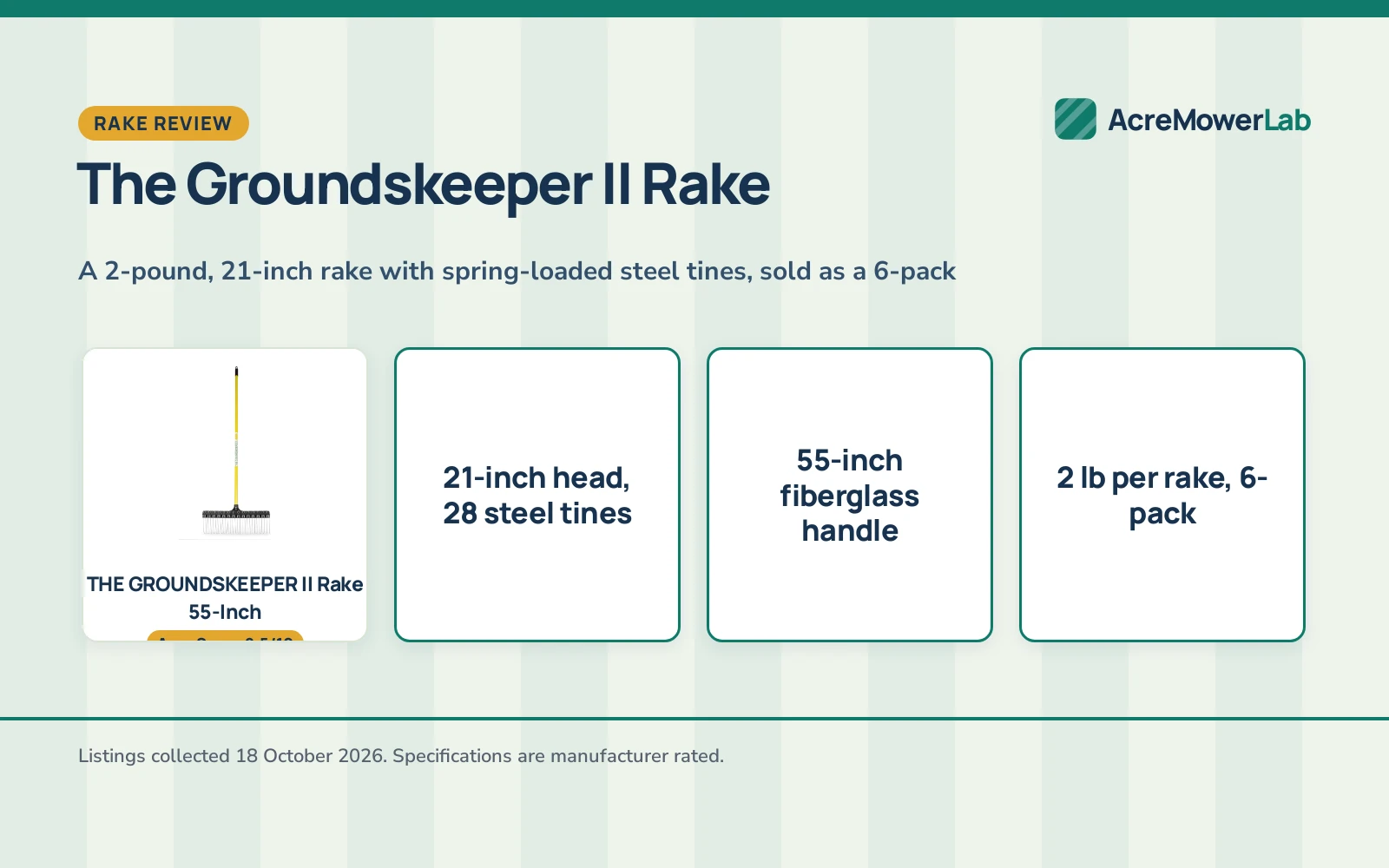
The Groundskeeper II rake review: a 21-inch, 2-pound rake with 28 spring-loaded steel tines on a 55-inch fiberglass handle, sold as a 6-pack.

On this page
This the groundskeeper ii rake review is a research-based review: we have not used the rake, and every figure below comes from its Amazon listing. The Groundskeeper II is a 21-inch leaf and thatch rake with 28 round, stiff, spring-loaded steel tines on a 55-inch fiberglass handle, weighing a stated 2 pounds per rake. It is sold as a 6-pack. The design claim is that the angled tines dig in without down pressure, letting you rake standing up, and that flipping the rake over and pulling it toward you self-cleans the tines.
As an Amazon Associate I earn from qualifying purchases. AcreMowerLab earns a commission when you shop through links here. It never changes your price. Affiliate disclosure.
The Groundskeeper II rake review: at a glance
- Head: 21 inches wide, no-break co-polymer head
- Tines: 28 round, stiff, spring-loaded torsion steel tines, replaceable
- Handle: 55 inches, fiberglass, with swivel hanger for storage
- Weight: 2 pounds per rake; 12 pounds for the 6-pack
- Model: 32230, made in the USA
- Assembly: some assembly required
What the specs mean
The tines are the whole story. Most leaf rakes use flat, flexible tines that skim the surface; the Groundskeeper II uses round, stiff tines set at an angle, spring-loaded so they dig in and spring back. The listing says this means no down pressure is needed and you can rake standing up, taking pressure off your back. Round tines also explain the versatility claim: leaves, mulch, pine straw, sticks, acorns, gravel, animal bedding, and de-thatching without damaging grass, with green stems passing through the tines unharmed. The 21-inch head is wide for a hand rake, which suits larger yards, and the 55-inch fiberglass handle fits taller users without stooping. At 2 pounds the rake is genuinely light, and the tines being replaceable means the wear parts can be renewed instead of the whole rake being thrown out.
The self-cleaning claim
The listing says the rake self-cleans when flipped over and pulled toward you, letting leaves, thatch and needles slip out of the tines, and claims this cuts raking time by up to 25 percent. We have not used it, so treat the 25 percent as the maker’s claim, but the mechanism is plausible: round stiff tines release debris more readily than flat flexible ones, which tend to trap it. For pine needles and thatch, which clog ordinary rakes fast, this is the feature that would matter most.
Who the Groundskeeper II suits
It suits owners of larger yards who rake leaves, pine straw or thatch by hand and want a light, wide rake that does not demand down pressure. The 6-pack format suits crews, landscaping teams or anyone who wants spares on hand. The made-in-USA build, fiberglass handle and replaceable tines suit buyers tired of disposable rakes. See also our best leaf rake for large yards and best leaf rake for pine needles guides for alternatives.
Who should skip it
Skip it if you only need one rake and do not want a 6-pack: the listing is for six, and the 12-pound package weight is the whole set. Skip it if your work is mostly heavy soil or gravel moving rather than raking; stiff tines dig, but a rake is still a rake. And skip it if you need the rake assembled out of the box, since some assembly is required.
Listing gaps and contradictions
The listing is thin on a few points. No warranty is stated. The “up to 25%” time saving is a marketing claim with no method behind it. The 2-pound weight is per rake while the package is 12 pounds, which is clear in the spec table but easy to misread. And while the tines are called replaceable, no replacement tine price or part number is given. None of these are deal-breakers, but they are the questions the listing leaves open.
The 6-pack, honestly assessed
The listing is for six rakes, model 32230-Y6, 12 pounds for the package. That format makes sense for landscaping crews who hand a rake to every worker, for property owners who want spares so a broken rake never stops a fall weekend, and for anyone splitting the set with neighbors. It makes little sense if you need one rake: there is no single-rake option in this listing, and six 61-inch rakes need wall space. The swivel hanger and hang hole on each handle are there for exactly this reason, so plan the storage before the box arrives. For a crew, the replaceable tines matter more: the wear part can be renewed across all six instead of replacing six rakes.
Assembly and first use
Some assembly is required, which on a rake means joining the head to the 55-inch fiberglass handle. The listing does not detail the joint, so check the hardware in the box before you start. Once together, each rake stands 61 inches tall, and the yellow handle is easy to spot leaning against the shed. The hang hole and swivel hanger give you options to store it off the floor. On first use, the technique the listing describes is worth practicing: rake normally, then flip the head over and pull it toward you to shed the load. That is the pass the maker credits for the up-to-25-percent time saving, which remains the maker’s claim.
Where it earns its keep through the year
Spring brings de-thatching, which the listing calls out as a strength, with green stems passing through the tines unharmed. The same stiff tines that lift thatch also pull debris out of long grass and from around bushes and shrubs. Summer brings mulch beds and gravel touch-ups, both named in the versatility list, plus animal bedding in the barn. Fall brings leaves and pine straw, the core job, where the 21-inch width and the self-cleaning pass pay off. Winter brings the oddest named use: removing leaves and debris from snow. Few hand rakes claim a year-round job list. Whether one rake truly does all of it well is the question the listing’s own breadth raises, and the honest answer is that the stiff-tine design is the common thread: it digs where flat flexible tines skim.
Read the manual, keep children and pets out of the yard while you work, wear eye and hearing protection and sturdy footwear, and never exceed the slope rating of your machine. Refuel only with the engine off and cool. See CPSC lawn mower safety. Read our Safety Disclaimer.
Matching It to Your Property
- Leaf-heavy fall cleanup: the 21-inch head and 28 stiff tines suit lawns with heavy leaf drop, and the self-cleaning pass matters most with pine needles and thatch that clog ordinary rakes.
- Pine straw country: the listing names pine straw explicitly; the angled tines dig under it while green stems pass through unharmed.
- Barns and beds: animal bedding, mulch and gravel are all named uses, so the same rake covers the barn aisle and the driveway edges.
- Flat ground: a hand rake is a flat-ground tool, and the 55-inch handle lets taller users work standing up without stooping.
- Storage: each rake hangs by its swivel hanger or hang hole; at 61 inches assembled, all six need a real wall, not a closet corner.
FAQ: mowing large lots
Is the Groundskeeper II good for de-thatching?
The listing says it excels at de-thatching lawns without damaging grass, crediting the stiff angled tines. For heavy thatch on large lawns, a tow-behind is the faster tool; see our best tow-behind dethatcher guide.
How does the self-cleaning work?
Flip the rake over and pull it toward you; the listing says leaves, thatch and needles slip out of the round tines in one pass.
What does the 6-pack mean?
The listing is for six rakes: 12 pounds total, 2 pounds each. It suits crews or anyone who wants spares, not a buyer who needs one rake.
Is it really only 2 pounds?
Per rake, yes, according to the listing. The fiberglass handle and co-polymer head keep the weight down.
Does it need assembly?
Yes. The listing notes some assembly is required, presumably attaching the head to the handle.
Can it handle gravel and sticks?
The listing names gravel, sticks and acorns among its uses, crediting the stiff steel tines. It is still a leaf rake, not a shovel: expect touch-up work on gravel paths, not moving piles of it.
More mowing guides
Compare rakes in our best pine straw rake guide, and for machine-scale thatch work see the best tow-behind dethatcher for Bermuda grass.