Tiller Types and Uses: Guide for Acreage and Gardens
A guide to tiller types and uses for acreage and garden soil: cultivators, front-tine tillers, rear-tine machines and tow-behind implements.

On this page
Top picks at a glance
As an Amazon Associate I earn from qualifying purchases.
- 1
 EARTHQUAKE Victory Rear Tine Tiller9.8/10View on Amazon
- 2
 Earthquake® 46059 Pioneer™ Dual Direction Rear Tine Tiller9.7/10View on Amazon
- 3
 NOVUS Dual Direction Rear Tine Tiller9.7/10View on Amazon
Maintaining garden plots and open acreage means managing different ground conditions, from soft vegetable rows and raised beds to compacted clay, thick sod, and rocky soil. Choosing the right equipment comes down to understanding tiller types and uses: cultivators weed and aerate loose topsoil, front-tine tillers turn established garden beds, rear-tine tillers dig deep to break new ground and heavy turf, and tow-behind implements cultivate large acreage plots behind a garden tractor. Selecting the proper machine matches engine or motor power, tine rotation, and working depth to your specific soil workload.
AcreMowerLab earns a commission when you shop through links here. It never changes your price. Affiliate disclosure.
Tiller types and uses: pick the right tool for your soil
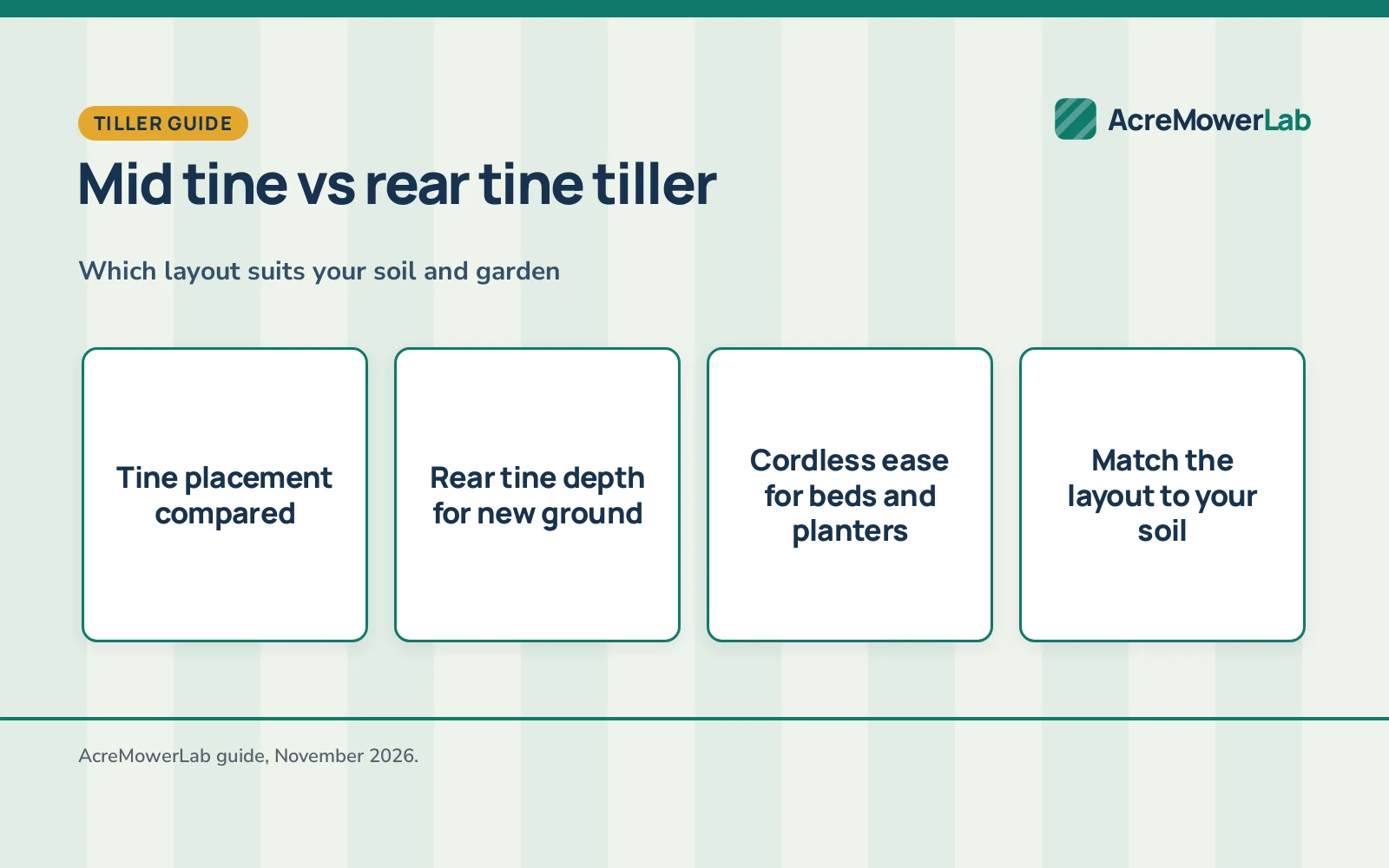
| Tiller Type | Best for | Limit |
|---|---|---|
| Cultivator | Weeding raised beds, aerating soft soil, mixing in fertilizer | Cannot break hard soil or cut through thick sod |
| Front-tine tiller | Established garden plots, loosened soil, seasonal bed prep | Tines pull forward and bounce on hard ground |
| Rear-tine tiller | Breaking compacted sod, virgin soil, large garden acreage | Heavy machine to transport and turn in tight corners |
| Tow-behind tiller | Large acreage food plots, extensive garden rows, field work | Requires a tractor or utility vehicle with hitch |
Most rural property owners match their tool choice to the stage of ground preparation. For breaking new sod or dense clay, see our best rear tine tiller guide. For lighter bed maintenance, our best front tine tiller comparison covers intermediate options, while small plots benefit from the models in our best electric tiller for small garden guide.
Cultivators handle shallow surface tillage, weed control between rows, and bed aeration. Manual hand tools provide fine control in tight spots. BARAYSTUS lists a rotary cultivator weighing 2.2 pounds and a manual twist tiller weighing 3.7 pounds with a 4.7-inch depth and a 7.5-inch width. GINMIC lists a manual hand cultivator with handle settings of 38, 52, and 66 inches. Small powered models reduce physical effort. LawnMaster lists a 24V cordless tiller with a 9-inch cutting width, a 7-inch depth, and 30 minutes of runtime. For gas power, Earthquake lists a mini cultivator with a 40cc engine, a tilling width between 6 and 10 inches, and an 8-inch depth, weighing 32 pounds.
Front-tine tillers position rotating tines forward beneath the engine, with transport wheels situated in the back. As the tines rotate forward, they dig into the dirt while pulling the machine ahead. The operator controls depth and forward travel by pressing down on the handlebars to sink a rear drag stake into the soil. These machines suit established garden beds and sandy loam. Electric models offer continuous power without fuel storage. EWORK lists a 10-amp motor with a 14-inch tilling width and a 7-inch depth, weighing 18.3 pounds. Excited Work lists an electric model with a 10-amp motor, 380 RPM, a 14-inch tilling width, and a 9-inch depth. For wider plots, AIVOLT lists an electric tiller with an 1800W, 15-amp motor, 400 RPM, a 19-inch tilling path, 24 steel tines, a 9-inch depth, and a weight of 25 pounds.
Rear-tine tillers provide heavy-duty capability for breaking virgin ground and sod. Engine-driven wheels pull the machine forward while heavy tines rotate behind the axle under a protective shield. Separating drive wheels from tines prevents the machine from lurching forward over hard patches. Counter-rotating tines spin backward against the drive wheels to dig aggressively into dense clay and slice sod roots. Standard-rotating tines turn in the travel direction, blending organic matter into established soil.
Tow-behind tillers connect to a garden tractor or utility vehicle hitch. Powered by an onboard gas engine or tractor power take-off, tow-behind models feature broad tilling paths that prepare extensive food plots and acreage gardens without walk-behind fatigue.
Step 2: choose your timing
Soil moisture governs ground preparation. Tilling wet ground smears clay particles together, forming dense clods that dry as hard as brick and hinder root growth. Tilling dry dirt pulverizes soil into fine dust, damaging natural structure and increasing erosion risks.
Season also shapes timing. Spring tilling prepares garden plots after the soil thaws and dries, aerating packed ground and warming the seedbed. Fall tilling incorporates crop residue, leaves, and compost, allowing winter moisture and soil biology to break down organic matter before spring planting.
Step 3: prepare the ground
Walk the property before tilling to identify hidden obstacles. Remove rocks, fallen branches, wire, and debris that could strike tines or wrap around the drive shaft. Hitting a large stone can damage tine assemblies or shear drive pins, while wire can tear axle seals.
Mow tall weeds and brush close to the dirt with a field mower so long plant stalks do not wrap around the rotor. When converting thick turfgrass into a garden, removing or slicing through the top sod layer helps prevent grass from re-rooting.
Step 4: make your passes
Begin at a shallow depth instead of sinking tines deep on an initial run. Setting tines too deep on hard ground causes walk-behind machines to buck or stall. Adjust the rear drag stake or wheel setting so the tines scrape only the upper layer during the primary pass. See our how to use a rear tine tiller guide for operating instructions.
Make parallel passes across the plot with slight overlap. After completing the initial pass, lower the drag stake to increase depth. Run the next pass crosswise to your original direction. This crisscross pattern breaks remaining clods and blends soil evenly.
Step 5: finish the seedbed
Deep tilling leaves ridges and loose pockets across the plot. Spread compost or organic soil amendments across the tilled area before making a final finishing pass.
Use a light cultivator or set your tiller wheels for a shallow run to blend amendments into the root zone without disturbing dormant weed seeds buried deep below. Finish by smoothing high spots with a garden rake to create a level seedbed ready for sowing.
Pick a working pattern
Plan your travel pattern before starting the engine. On rectangular plots, working back and forth along the longest edge minimizes turning. Sharp turns strain the transmission and scuff boundary turf. Leave open headland strips at each end of the plot to turn smoothly, tilling those strips on your final pass.
For square or irregularly shaped gardens, working in concentric loops from the outer boundary toward the center keeps turns gradual and reduces operator effort.
Match the tool to the soil type
Matching equipment to soil texture ensures efficient ground preparation. Heavy clay requires substantial machinery: a rear-tine model with counter-rotating tines provides the downforce and cutting action needed to slice through dense ground. Review our tiller sizes guide for details on widths and working depths.
Sandy soil loosens easily and requires less power. Lightweight front-tine tillers or electric cultivators work well in sandy loam without sinking or over-working the soil. On rocky ground, run the machine at moderate engine speed to avoid throwing stones.
Plan the garden in zones
Divide acreage ground into zones according to task. Raised beds and narrow walkways call for compact hand cultivators or narrow cordless mini-tillers that maneuver without damaging crop roots or bed frames.
Main vegetable patches benefit from mid-size front-tine or electric tillers that turn wide rows quickly. Large acreage plots and pumpkin patches require rear-tine machines or tow-behind tractor attachments to manage extensive square footage. Clean soil and debris off equipment when moving between zones to prevent spreading weed seeds: see our tiller maintenance guide.
Mind the moisture and the ground
Check soil moisture by taking a handful of dirt from several inches deep and squeezing it into a ball. If moisture drips out, or if the ball forms a sticky clump that will not crumble when pressed, the ground is too wet to till. Wait for the soil to dry.
If the ball crumbles easily under thumb pressure, moisture is suitable for tilling. If the dirt is powdery and hard to form into a ball, wait for rain or irrigate lightly before working. Avoid steep slopes where tillers can slide sideways, and maintain solid footing across rough ground.
Safety
Wear eye protection, hearing protection around gas engines, sturdy gloves, and heavy work boots. Clear sticks, stones, and wire from the work area before starting, and keep children, pets, and bystanders away from operating equipment.
Contact local underground utility locator services before breaking ground on new plots to identify and mark buried utility lines, electrical wiring, and water pipes. Striking an underground cable or pipe presents serious danger.
Stop the motor or engine and wait for tines to halt completely before clearing tangled weeds, adjusting wheels, or leaving the controls. For gas models, allow the engine to cool before refueling, and refuel outdoors. For corded electric tillers, keep extension cords routed behind the machine away from rotating tines.
FAQ: mowing large lots
What is the difference between a cultivator and a tiller?
A cultivator is designed for shallow soil work, including weeding between rows, aerating the top layer of dirt, and mixing amendments into established beds. A tiller uses larger, more powerful tines to dig deep into the ground, break up hard clay, and turn unworked soil.
When should you use a front-tine tiller instead of a rear-tine tiller?
Front-tine tillers are ideal for established garden plots, raised beds, and loose sandy soil where ground has been cultivated previously. They are lighter and easier to turn than rear-tine units. Rear-tine tillers are preferred for breaking unbroken sod, heavy clay, and large acreage plots.
Can a tiller break new ground with thick sod?
A heavy rear-tine tiller with counter-rotating tines can break new ground and slice through sod. Mowing surface grass short and making multiple shallow passes in crosswise patterns prevents the tines from stalling.
Is a gas or electric tiller better for a large garden?
Gas tillers provide mobility and sustained power for remote acreage plots where electrical outlets are unavailable. Electric tillers provide quiet operation and minimal maintenance, making them practical for garden plots located near house power.
How often should garden soil be tilled?
Most gardens benefit from seasonal tilling: an initial pass in spring to prepare the seedbed, and an optional pass in autumn to mix in compost and crop residue. Frequent tilling breaks down soil structure and encourages weed growth.
More mowing guides
- Best Rear Tine Tiller: 4 Gas Picks for New Ground
- Best Front Tine Tiller (2026): 5 Picks Compared
- Tiller Sizes: Width, Depth, and Ground Guide
- Tiller Maintenance: Seasonal Care and Tune-Up Guide
Explore our tillers and cultivators section to compare equipment and maintenance guides for your acreage and garden plots.