What Is a String Mower?
An introduction to string mowers for acreage: how wheeled trimmers work, what vegetation they cut, and when to choose string over a steel blade.

On this page
Top picks at a glance
As an Amazon Associate I earn from qualifying purchases.
- 1
 Earthquake Walk-Behind String Mower9.6/10View on Amazon
- 2
 YARDMAX YL2250 22 in. 170cc Gas Walk Behind String Trimmer9.6/10View on Amazon
- 3
 Earthquake 60V Walk Behind String Mower9.5/10View on Amazon
- 4
 30 Pack Universal Walk Behind String Trimmer Mower 21.25"View on Amazon
- 5
 PowerSmart 18-Inch 144cc Push Gas Lawn Mower & 16-Inch 25.4ccView on Amazon
A string mower is a walk-behind machine on large wheels that uses thick nylon trimmer line instead of a steel blade to cut tall grass, dense weeds, and light brush. If you are asking what is a string mower, it is a heavy-duty trimmer head on a rolling frame. This guide explains how string mowers work step by step.
Other machines to compare
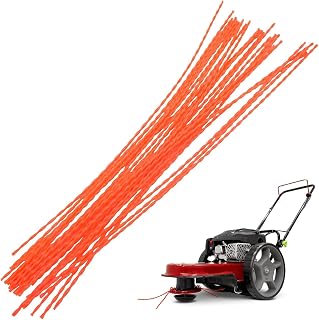 30 Pack Universal Walk Behind String Trimmer Mower 21.25"Check price on Amazon
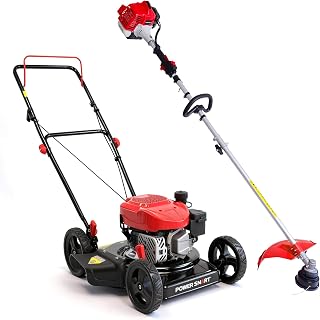 PowerSmart 18-Inch 144cc Push Gas Lawn Mower & 16-Inch 25.4ccCheck price on Amazon
AcreMowerLab earns a commission when you shop through links here. It never changes your price. Affiliate disclosure.
What is a string mower: pick the right cutting tool
Standard lawn mowers use rigid steel blades that bend when striking rocks, roots, or boundary posts. Carried string trimmers protect against impacts, but cause fatigue over large areas. A string mower combines a rolling frame with impact-tolerant cutting line.
| Tool | Best for | Limit |
|---|---|---|
| Standard string trimmer | Tight trimming around posts, garden beds, and borders | Carried weight causes fatigue on large parcels |
| Walk-behind string mower | Dense weeds, tall grass, and rough fence lines | Cannot produce a manicured turf finish |
| Walk-behind lawn mower | Finished lawn turf and level residential grass | Overgrown weeds and hidden rocks stall blades |
| Walk-behind brush mower | Woody saplings and dense thickets | Heavier frame and rigid steel blades risk impact damage |
Acreage owners often pair equipment depending on vegetation density. See our best string mower roundup for models designed for field maintenance.
Step 2: understand how thick line cuts heavy weeds
Instead of an enclosed steel blade, the spindle spins durable nylon trimmer line. Centrifugal force holds the lines rigid, whipping through vegetation and shredding coarse weed stalks on contact.
Striking an obstacle causes flexible line to deflect rather than transmitting shock into the engine crankshaft. When a lawn mower blade hits a rock, the sudden stop can bend the shaft. A string mower bounces off posts and stones without mechanical damage.
The trade-off is finish quality. Spinning line tears stems, leaving frayed ends suitable for pastures, fence rows, and ditches rather than manicured lawns.
Step 3: compare engine displacement and drive options
String mowers rely on gas-powered 4-cycle overhead valve engines running on straight fuel. Reference models include the SENIX with a 160cc 4-cycle professional-grade engine, the BILT HARD with a 170cc OHV 4-cycle engine, and the PROYAMA with a 170cc 4-cycle OHV engine delivering 5HP at 3600 rpm with 6.64 foot-pounds torque and 450ml engine oil. PowerSmart lists a 170cc engine in bullets, but its spec table lists 161cc.
Drive systems divide into manual push and self-propelled systems. Manual push models, like the PowerSmart DB6222, require manual propulsion. On rolling slopes, self-propelled systems reduce fatigue. BILT HARD lists a self-propelled drive system moving at 1.9 mph (3.06 km/h).
Step 4: check wheel diameter and cutting height adjustment
String mowers utilize large rear wheels to roll smoothly over bumps and roots. PowerSmart, SENIX, and PROYAMA equip machines with 14-inch rear wheels. BILT HARD lists 10-inch flat-free wheels. Large wheels make it easy to tilt the head over obstacles.
Height adjustment adapts the cut to ground conditions. SENIX lists 5 height settings from 1.57 inches to 3 inches. BILT HARD lists 8 cutting heights from 1.6 inches to 3.7 inches, with a maximum cutting height of 3.7 inches. PowerSmart lists an adjustable cutting range of 1.90 inches to 3.90 inches across 2 positions. Higher settings handle taller weeds without scalping soil, while lower settings clear along level borders.
Step 5: match the machine to your property
PowerSmart states a recommended yard size rating of 1/2 Acre for its push string trimmer. SENIX and PROYAMA design 22-inch cutting swath machines to maintain large properties and farms.
Along long fence lines, a wheeled frame eliminates arm strain. PowerSmart lists an item weight of 56 pounds in its spec table and 57 lb in its bullets. Large wheels support the weight so operators avoid the fatigue of a shoulder harness.
See our guide on how long it takes to mow an acre to plan field maintenance schedules.
Wheeled trimmer line versus steel mower blades
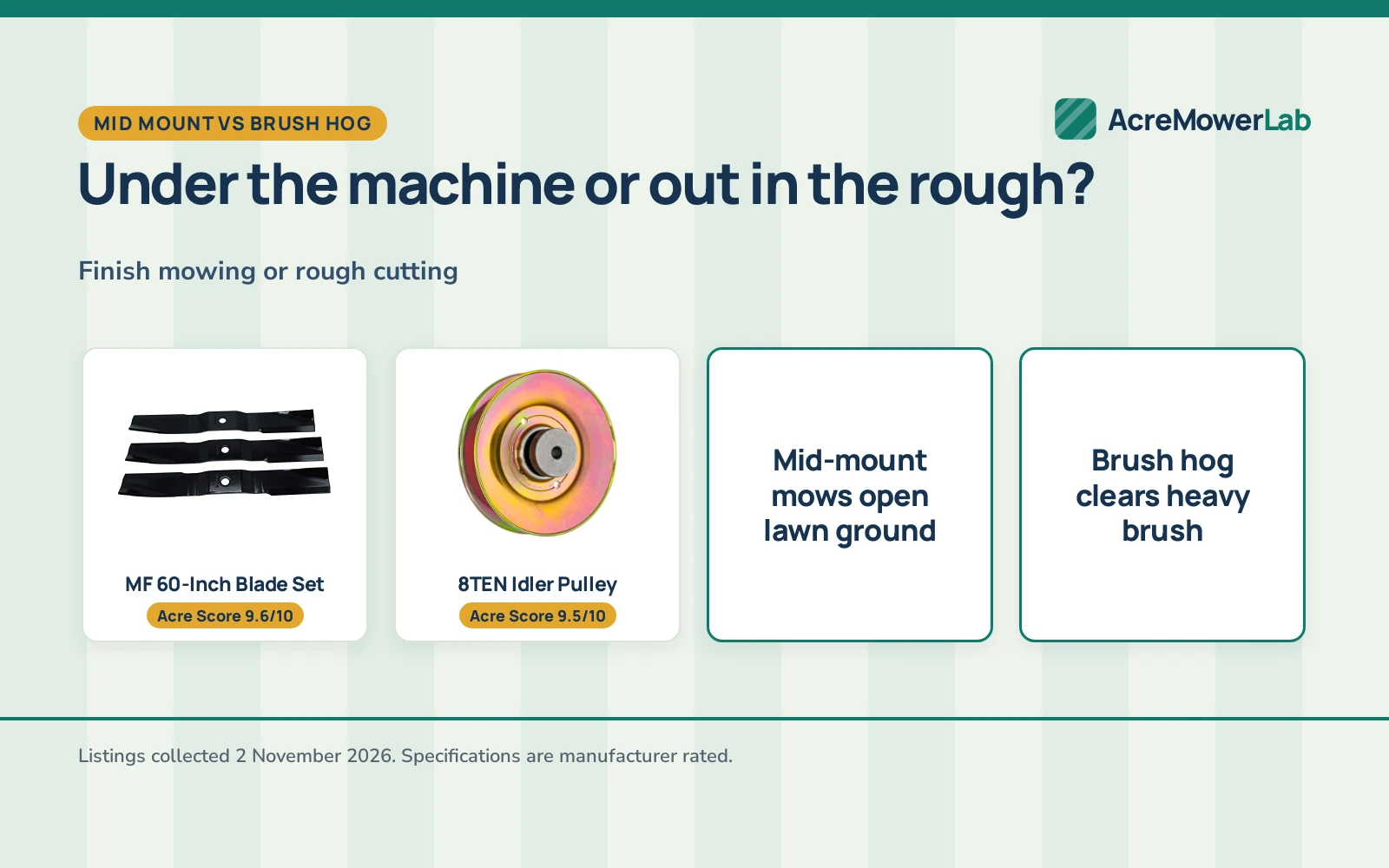
Walk-behind brush mowers use heavy steel blades to chop woody saplings. However, rigid blades risk damage when hitting boulders, fence posts, or buried wire. For thickets with saplings, see our walk-behind brush mower guide.
A string mower uses flexible nylon line across a 22-inch cutting width on models from SENIX, PowerSmart, BILT HARD, and PROYAMA. Striking chain-link fence, stone, or pipe whips around obstacles without harming equipment or barriers. String mowers excel along fence rows and rock walls, though thick line cannot cut hard woody stems.
Trimmer line diameter and reloading
Carried string trimmers use thin line that snaps in coarse field weeds. String mowers use commercial line. PowerSmart and SENIX list 0.155-inch diameter trimmer line, while PROYAMA lists 0.155-inch and 0.16-inch line diameter to shred dense growth. PowerSmart includes 10 pieces of 0.155-inch trimmer line, and SENIX includes a 20-inch trimmer line spool of 0.155-inch line.
Wheeled trimmers use manual fixed-line heads where operators insert pre-cut lines into gripping cams. PROYAMA includes a side storage bag on the handle for spare line.
Clearing fence lines and ditch banks
Fence lines collect weeds where tractors cannot reach. A string mower rolls beside the boundary. Because line reaches beyond the front deck, operators guide spinning cord through wire mesh without blade strikes. Fencing and posts remain undamaged while weeds are trimmed cleanly.
Ditch banks and culverts present similar challenges where tractors risk tipping. A walk-behind wheeled unit provides firm footing while steering the head along drainage inclines.
Ground conditions and slope management
In dry conditions, vegetation cuts cleanly and wheels grip firmly. Damp growth accumulates under the deck and reduces traction.
Avoid steep pitches or wet ground where footing is compromised. Inspect terrain for ruts and drop-offs, and consult the manual for slope limits. Check engine oil levels before operating on inclines, as 4-cycle engines require proper oil levels.
Explore our brush and field mowers hub for equipment advice.
Safety
Spinning nylon line throws pebbles and debris at high velocity. Always wear wrap-around eye protection, hearing protection, long pants, and sturdy boots.
Clear loose stones, wire, and branches before starting. Keep children, pets, and bystanders away from the work zone. Direct discharge away from vehicles and windows.
Refuel outdoors with the engine off and cool. Disconnect the spark plug wire before inspecting the cutting head or replacing line. See our Safety Disclaimer.
FAQ: mowing large lots
What is the difference between a string trimmer and a string mower?
A string trimmer is a carried tool for light edging. A string mower is supported on large rear wheels, using a 4-cycle gas engine and heavy nylon line to clear dense weeds across large areas without back fatigue.
Can a string mower cut small trees and saplings?
String mowers cut dense weeds and light brush. Flexible line frays against solid wood. For woody saplings, a walk-behind brush mower with a steel blade is the proper tool.
Can a string mower replace a standard lawn mower?
A string mower will cut tall grass, but spinning line tears stems and leaves frayed brown tips. It is built for pastures, fence lines, and field borders rather than manicured turf.
What diameter trimmer line does a string mower use?
String mowers use heavy commercial line. Reference models from PowerSmart and SENIX specify 0.155-inch diameter line, while PROYAMA also accommodates 0.16-inch line to shred tough stalks.
Do string mowers have self-propelled drive?
Many units are manual push. However, self-propelled options exist: BILT HARD lists a model moving at a stated speed of 1.9 mph, reducing effort on slopes and uneven ground.
More mowing guides
- Best String Mower (2026): 5 Top Picks Compared
- Best Walk-Behind Brush Mower: 4 Picks for Rough Ground
- Best String Trimmer for Acreage: 4 Gas and Battery Picks
- How Long Does It Take to Mow an Acre? Times by Mower Type
Use the Mower Matcher to narrow down choices by acreage, terrain, budget, and power type.