80w90 vs 75w90 Gear Oil: Which One Should You Buy?
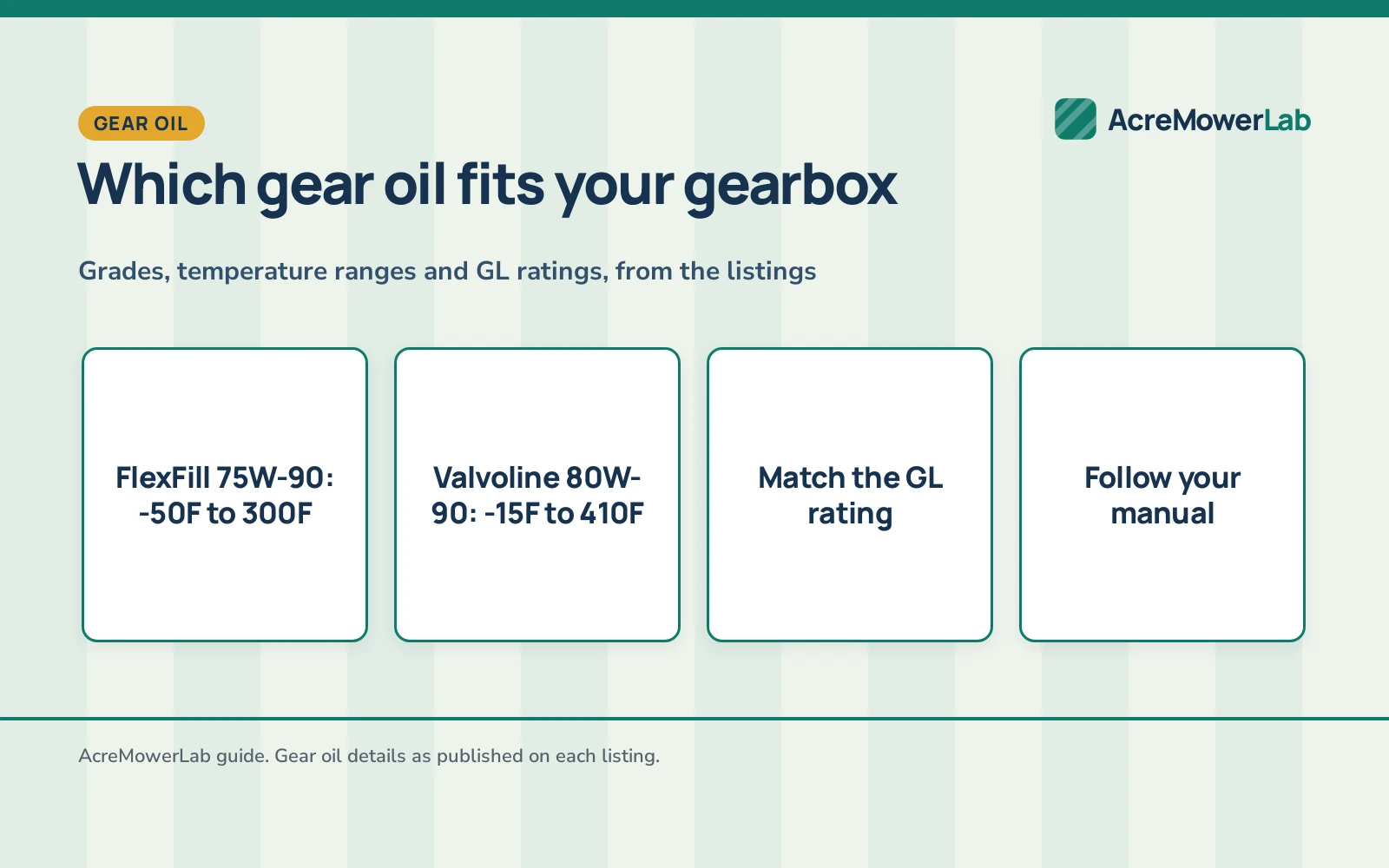
The 75W-90 example covers -50F to 300F and the 80W-90 example covers -15F to 410F, so match the grade and the GL rating to your manual.

On this page
Top picks at a glance
As an Amazon Associate I earn from qualifying purchases.
- 1
 Generic 80W90 Driveshaft Hypoid Gear Oil 8oz Bottle for Honda9.3/10View on Amazon
- 2
 Royal Purple Max Gear 75W-90 Gear Oil9.5/10View on Amazon
- 3
 Kawasaki Gear and Final Drive Oil With Limited Slip Additive9.2/10View on Amazon
- 4
 Valvoline FlexFill Advanced Full Synthetic 75W-90 Gear Oil 1View on Amazon
- 5
 Valvoline High Performance SAE 80W-90 Gear Oil 1 QT 32 Fl OzView on Amazon
- 6
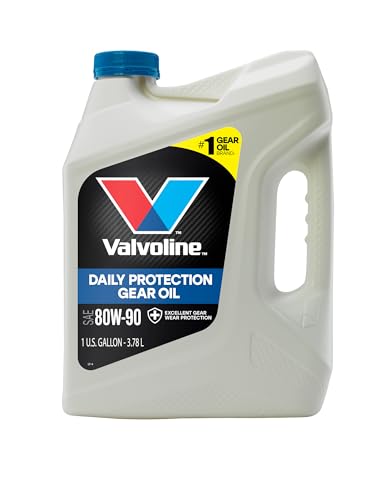 Valvoline High Performance SAE 80W-90 Gear Oil 1 GAView on Amazon
- 7
 Lucas Oil 10046 Heavy Duty 80W-90 Gear OilView on Amazon
- 8
 VP Classic Gear Oil GL4 SAE 80W-90View on Amazon
- 9
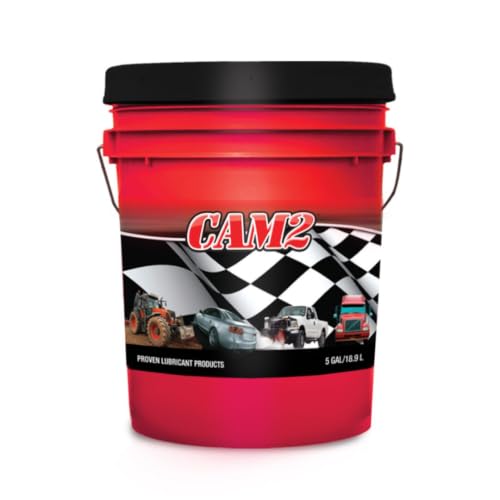 CAM2 80W-90 LS GL-5 Gear OilView on Amazon
In the 80w90 vs 75w90 gear oil question, the answer is the temperature range your gearbox works in and the grade your manual calls for: the 75W-90 example in this guide suits colder starts, the 80W-90 example suits hotter running, and the GL rating on the bottle matters as much as the grade. This guide explains what each grade means, what the listings state for temperature range and GL rating, and which of the gear oils below fits your gearbox.
Other machines to compare
 Valvoline FlexFill Advanced Full Synthetic 75W-90 Gear Oil 1Check price on Amazon
 Valvoline High Performance SAE 80W-90 Gear Oil 1 QT 32 Fl OzCheck price on Amazon
 Valvoline High Performance SAE 80W-90 Gear Oil 1 GACheck price on Amazon
 Lucas Oil 10046 Heavy Duty 80W-90 Gear OilCheck price on Amazon
 VP Classic Gear Oil GL4 SAE 80W-90Check price on Amazon
 CAM2 80W-90 LS GL-5 Gear OilCheck price on Amazon
AcreMowerLab earns a commission when you shop through links here. It never changes your price. Affiliate disclosure.
80w90 vs 75w90 gear oil: what the grades mean
A gear oil grade has a W number and a second number. The W number describes cold flow, and the number after the dash describes flow at operating temperature. A lower W number flows better when cold, and a higher second number holds its film when hot. The grade alone does not tell you the GL rating or whether the oil suits a limited slip differential: those come from the listing, and this guide covers them below.
The grades in this guide come from the Valvoline examples: a 75W-90 full synthetic in a squeezable pouch, and an 80W-90 high performance oil in a pack of 2 quarts. The Lucas and VP examples are both 80W-90. What separates them is the temperature range each listing states, the GL rating, and the pack size.
Temperature range: what the listings state
The Valvoline FlexFill 75W-90 listing states a temperature range from -50F to 300F for cold temperature fluidity and high temperature performance. The Valvoline High Performance 80W-90 listing states a range from -15F to 410F for dependable year-round coverage. The Lucas and VP listings state no temperature range, so there is nothing to compare on that point for the Lucas and VP listings.
Read the range as a pair: the low end tells you how cold the oil still flows, and the high end tells you how hot it still protects. The 75W-90 example reaches colder, and the 80W-90 example reaches hotter. Neither range means the oil fits every gearbox: the manual’s grade call still wins.
GL ratings and limited slip
The FlexFill 75W-90 listing states it meets or exceeds SAE J2380, MACK GO-J, Meritor 0-94 Rev Level A, API GL-5 and GMW 16445, and that it contains limited slip for the clutch pack, with no supplemental friction modifier required. It also states it can be used in non-synchronized manual transmissions calling for API GL-4. The Valvoline High Performance 80W-90 listing states it meets or exceeds API GL-5 and non-synchronized manual transmissions calling for GL-4. The VP Classic listing names GL4 in its title. The Lucas listing states no GL rating.
Match the GL rating to your manual before you match the grade. A GL-5 oil is not the same as a GL-4 oil, and a limited slip differential needs the friction modifier the listing states, or one the manual calls for.
The gear oils
| Gear oil | Grade | Size | Temperature range | GL rating |
|---|---|---|---|---|
| Valvoline FlexFill Full Synthetic | 75W-90 | 1 Quart pouch | -50F to 300F | API GL-5, GL-4 |
| Valvoline High Performance | 80W-90 | 1 Quart, pack of 2 | -15F to 410F | API GL-5, GL-4 |
| Lucas Oil Heavy Duty | 80W-90 | 1 Gallon | Not stated | Not stated |
| VP Classic Gear Oil GL4 | 80W-90 | 1 Quart | Not stated | GL-4 |
Ranked by what each listing states, the FlexFill 75W-90 comes first: full synthetic, the coldest low end in this guide at -50F, limited slip included, and a squeezable pouch the listing states releases 2X more fluid with less effort for 3X faster filling than traditional bottle packaging. The listing also claims 30% better protection against towing and heavy loads and 1.5X better gear wear protection, reported here as the maker’s claim.
The Valvoline High Performance 80W-90 comes next: extreme pressure additives for towing and hauling, a range from -15F to 410F, API GL-5 and GL-4 coverage, and a pack of 2 quarts at 3.96 pounds. The listing states it is American made and formulated, from a brand trusted for more than 150 years.
The Lucas Oil Heavy Duty 80W-90 follows: a 1 gallon jug with anti-wear and lubricity agents that the listing states help control heat, for high performance and heavy-duty applications. The listing states no temperature range and no GL rating, and its spec table weight of 0.000625 pounds does not match a gallon jug, so trust the title and bullets over the spec table here.
The VP Classic Gear Oil GL4 SAE 80W-90 closes the list: a 1 quart bottle with GL-4 in the title and almost nothing else stated. The bullets give package dimensions of 11.5 x 3.25 x 3.25 inches and a package weight of 2.01 pounds, while the spec table lists 1.95 pounds, so the weight differs between the two parts of the listing.
How to pick for your gearbox
Start with the manual: it names the grade and the GL rating. Then match the temperature range to your seasons: the 75W-90 example covers colder starts, the 80W-90 example covers hotter running. Then match the pack size to the job: a pouch or a quart for a top-up, a gallon where the gearbox takes more. If the listing states no temperature range or GL rating, the manual’s call is all you have, so weigh that listing lower.
Do not mix grades in the same gearbox unless the manual allows it, and do not use a GL-4 oil where the manual calls for GL-5. When the manual is silent, the listing with the fullest stated specs is the safer pick: here, the FlexFill 75W-90.
Safety
Work on a cool gearbox and follow the manual for the grade, the fill amount and the drain plug. Keep used oil off the ground and catch it for recycling, and keep children and pets away from the work area.
FAQ: mowing large lots
Can I use 75W-90 where the manual calls for 80W-90?
Follow the manual’s grade. The listings state different temperature ranges, so the grade your manual calls for wins.
What temperature range does the Valvoline 75W-90 list?
From -50F to 300F, for cold temperature fluidity and high temperature performance.
What temperature range does the Valvoline 80W-90 list?
From -15F to 410F, for dependable year-round coverage.
Do these gear oils work in limited slip differentials?
The FlexFill 75W-90 listing states it contains limited slip for the clutch pack and needs no supplemental friction modifier. The other listings state no limited slip claim.
Can I use gear oil in a non-synchronized manual transmission?
The FlexFill 75W-90 and Valvoline High Performance 80W-90 listings both state they can be used in non-synchronized manual transmissions calling for API GL-4.
Which gear oil comes in a gallon?
The Lucas Oil Heavy Duty 80W-90, in a 1 gallon jug, with a 1 quart size also listed.