Zero Turn Mower Parts: Maintenance and Replacement Guide
An owner guide to zero turn mower parts: identifying wear items, inspection schedules, replacement intervals and deck maintenance on acreage.

On this page
Top picks at a glance
As an Amazon Associate I earn from qualifying purchases.
- 1
 Husqvarna MZ619.7/10View on Amazon
- 2
 EGO Power+ Z6 Zero Turn Electric Riding Lawn Mower9.6/10View on Amazon
- 3
 EGO Power+ Z6 Zero Turn Electric Riding Lawn Mower9.6/10View on Amazon
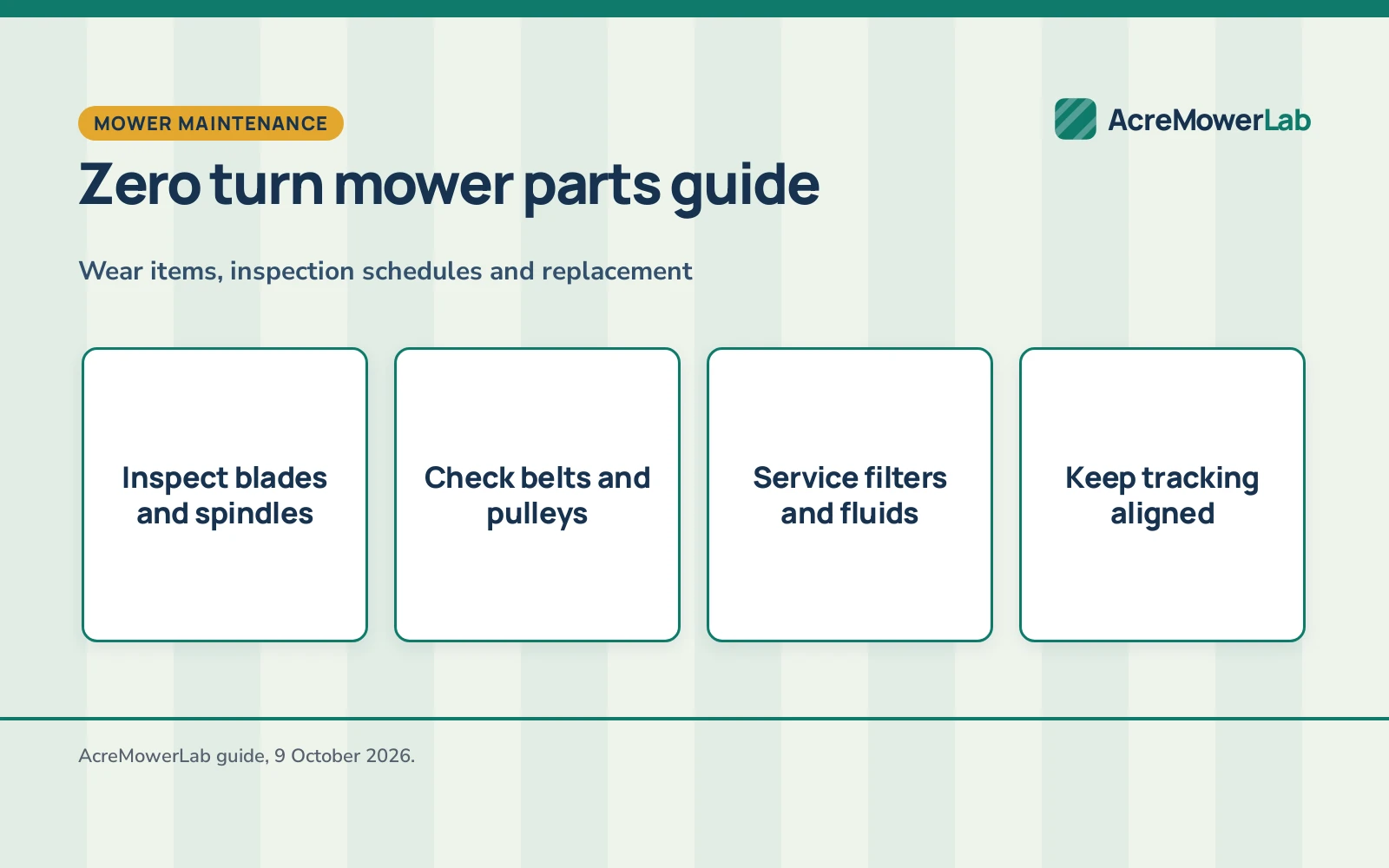
Zero turn mower parts include the cutting deck assemblies, drive belts, hydrostatic transaxles, engine service filters, and electrical components that keep your machine operating cleanly across large acreage. The most common wear items are blades, deck belts, fuel filters, air filters, and spindle bearings, which require periodic inspection and replacement to prevent uneven cuts and unexpected downtime. Finding the right zero turn mower parts starts with matching exact manufacturer model numbers, tracking routine wear, and addressing mechanical vibration early. This guide explains key replacement components step by step, outlines inspection schedules, and shows how to keep your machine in dependable working order.
AcreMowerLab earns a commission when you shop through links here. It never changes your price. Affiliate disclosure.
Zero turn mower parts: pick the right replacement components
| Component Group | Primary Wear Items | Common Symptoms of Wear |
|---|---|---|
| Cutting deck | Blades, spindle bearings, deck belts, idler pulleys | Uneven grass height, deck vibration, scalping |
| Hydrostatic drive | Drive belts, tensioner springs, cooling fans | Sluggish overall speed, loss of pulling power on slopes, belt slippage |
| Engine and fuel | Air filters, pre-cleaners, spark plugs, fuel filters | Rough idling, surging under load, hard starting |
| Chassis and steering | Control dampeners, front caster bearings, tracking stop bolts | Machine pulling to one side, wandering steering, jerky lever response |
| Electrical system | Ignition switches, PTO clutches, safety interlocks | PTO blade clutch slips, starter clicks without cranking |
Maintaining zero turn lawn mower parts requires understanding how individual systems interact during long mowing sessions. Deck vibration often stems from bent blades or failing spindle bearings, while sluggish wheel response points toward stretched drive belts or worn tensioner springs. Keeping spare blades, belts, and service filters in your storage shed prevents lost mowing days during peak summer growth. See our guide to the best battery for zero turn mower options and our reviews of the best mower blade sharpener tools.
Step 2: inspect cutting blades and spindle assemblies
Mower blades endure substantial friction, abrasive dust, and impacts with yard obstacles. High-lift blades create upward vacuum to stand grass tall, mulching blades recut clippings under deck baffles, and discharge blades push volume through the side chute. When replacing blades, match length, width, thickness, and center hole diameter exactly. For example, Maxpower lists a 3-blade commercial mulching blade set for 54-inch decks measuring 18.5 inches long, 2.5 inches wide, with a 5/8-inch center hole diameter, weighing 7.68 pounds to replace OEM numbers 797704, 797712, and 438-0001-00. Similarly, Husqvarna configures fabricated steel cutting decks with a 3-blade arrangement on 54-inch platforms, such as the Z254FX which provides 6 height positions between 39 millimeters and 10.2 centimeters with an overall weight of 780 pounds, while the Z254F provides 6 height positions and a weight of 595 pounds. Greenworks documents a 10-gauge fabricated steel deck engineered for a blade tip speed of 17,900 feet per minute, offering a 60-inch width with 8 height positions and a 54-inch width with 14 positions adjusting from 1.5 inches to 4.5 inches. When spindle bearings develop play or rumbling, rebuild the spindle with fresh bearings or install a complete replacement spindle assembly to prevent deck shell distortion.
Step 3: check hydrostatic drive belts and tensioner pulleys
Zero-turn machines rely on separate hydrostatic wheel drives to turn, brake, and reverse each drive wheel. The drive belt transfers rotational torque from the engine crankshaft or electric motor to hydrostatic transaxles. A slipping drive belt reduces ground speed, causes sluggish transmission response, and generates burning rubber odors. Inspect belt sidewalls regularly for glazing, cracks, or missing chunks, and check idler pulley tension springs for fatigue. If the mower pulls toward one side while steering levers are pushed evenly, check rear tire pressures and inspect steering control linkage alignment before suspecting hydraulic pump failure. For troubleshooting hydraulic systems, read our companion guide on how to fix hydrostatic drive on riding mower issues. Steering lever friction dampeners keep controls smooth. In aftermarket controls, Greater Zero publishes a Zero-Turn Bar steering accessory requiring 11.25 inches of horizontal mounting bar width, weighing 2.12 pounds, and carrying a 2-year warranty.
Step 4: service engine filters and spark plugs
Combustion engines powering zero-turn mowers require clean air, uncontaminated fuel, and fresh lubricant during acreage mowing. Air filters capture grass chaff and dust before debris enters the intake manifold. Heavy-duty air cleaners use a foam pre-cleaner over a pleated paper cartridge, shielding cylinders against abrasive scoring. For instance, Husqvarna specifies a 726 cc engine rated at 24 hp on the Z254F, while the Z254FX features a 726 cc engine rated at 22 hp. Remote-controlled commercial crawler platforms feature robust powerplants as well: Tyzar lists a 459 cc commercial engine on a slope machine weighing 826 pounds with a 39.4-inch cutting width capable of operating on 55-degree slopes under 5 psi of ground pressure. Replace engine oil and oil filters according to the engine operator manual, inspect spark plug ceramic for carbon fouling, and replace in-line fuel filters according to the engine maintenance schedule to stop sediment from reaching carburetor jets.
Step 5: check electrical switches and battery connections
Electrical components on zero-turn mowers endure heat, vibration, and flying grass debris. Key electrical parts include the battery, starter solenoid, ignition module, electric blade clutch, and operator presence safety switches. Electric zero-turn mowers replace fuel filters and spark plugs with lithium battery packs, inverters, and high-torque brushless motors. For instance, Greenworks publishes a 60-volt 60-inch platform delivering the equivalent of 31 hp gas output with a 300-pound towing capacity and a weight of 1120 pounds, alongside an 80-volt 54-inch model delivering 41 hp equivalent output at a weight of 848.8 pounds, both utilizing multi-battery kits and fast charging. When performing underside electrical checks, belt inspections, or blade changes, safe elevation is mandatory. TRUCFUSION lists a zero-turn mower jack with an 800-pound load capacity that raises the machine frame up to 19 inches using a 2-inch lifting tooth, built from carbon steel weighing 33 pounds and supported by a 1-year warranty. Never rely on lifting teeth without engaging mechanical safety locking arms.
OEM versus aftermarket replacement parts
Selecting replacement parts for zero turn lawn mower upkeep often comes down to choosing between original equipment manufacturer components and aftermarket alternatives. Original parts match factory blueprints, ensuring proper clearance, pulley offset, and electrical connector compatibility. Aftermarket brands frequently manufacture heavy-duty alternatives, including commercial mulching blades made from thicker hardened steel, Kevlar-wrapped drive belts, and greaseable spindle assemblies. While aftermarket wear parts often reduce overall operating expense, verify that manufacturer part numbers cross-reference precisely to your machine model. Using an incorrectly sized belt or a blade with an improper center hole diameter can cause severe spindle damage, belt slip, and uneven cutting across turf.
How to read part numbers and model tags
Every zero-turn mower chassis carries a model identification plate stamped with a serial number, full model designation, and manufacturing date code. Because manufacturers update pulleys, belts, and deck linkages across production runs, ordering parts by marketing name alone frequently leads to mismatched parts. Always locate the metal data plate, typically positioned beneath the operator seat, on the frame rail near the rear engine mount, or adjacent to the hydrostatic fluid reservoirs. Record the complete model code before ordering replacement parts. When replacing engine-specific components such as spark plugs, oil filters, or fuel pumps, locate the distinct model and specification code stamped directly into the engine valve cover or crankcase rather than relying on the chassis tag.
Preventive maintenance schedules for acreage
Maintaining parts for zero turn lawn mower machinery across multiple acres demands a systematic inspection routine. Prior to every mowing session, clear loose grass build-up from around the hydrostatic drive pumps, check engine oil levels, and inspect tire pressures. After mowing, clear the underside of the cutting deck to prevent dried grass accumulation that traps moisture against spindle bearings and accelerates deck corrosion. Inspect blade cutting edges periodically for nicks, dullness, or bent blade tips. Greasing caster fork pivots, deck lift linkages, and greaseable spindle assemblies equipped with grease zerks flushes out grit and moisture, extending bearing and bushing service life. For operational guidance, explore our guide on how to use zero turn mower equipment safely across large acreage.
Storage and off-season part care
Preparing your machine for winter storage protects rubber belts, electrical circuits, and fuel systems against off-season degradation. Untreated gasoline deteriorates over storage months, forming varnish that clogs carburetor jets and fuel shutoff solenoids. Add a fuel stabilizer to the tank and run the engine long enough to circulate treated fuel through lines, or drain the fuel system completely according to your operator manual. Disconnect the negative battery terminal and connect a maintenance charger to prevent deep discharge in cold weather. Relieve tension from deck belts where manual quick-release tensioners are provided, and inspect the deck shell for paint chipping or surface rust. Coating bare metal underside areas with corrosion inhibitor keeps the deck solid for spring.
Safety
Zero-turn mowers deliver high ground speeds and responsive maneuverability, but operating and servicing them requires strict adherence to manufacturer safety rules. Never exceed the maker’s maximum slope rating, because zero-turns lose steering traction on slopes and can slide uncontrollably near ponds, drainage ditches, and steep embankments. When operating on rolling terrain, deploy the roll-over protective structure and fasten your seat belt where equipped. Never carry passengers under any circumstances, and ensure children, pets, and bystanders remain completely clear of the mowing yard. Always disengage the cutting blades before operating in reverse. Before performing maintenance, inspecting belts, or handling blades, park the machine on level ground, engage the parking brake, stop the engine, remove the ignition key, and disconnect the spark plug wire or battery pack to prevent accidental starting. Allow the engine and exhaust components to cool completely before refueling, and store spare fuel in approved containers away from living quarters and ignition sources. Wear eye protection, hearing protection, and slip-resistant footwear whenever operating or servicing equipment.
FAQ: mowing large lots
Which zero turn mower parts wear out fastest?
Cutting blades and deck drive belts endure the highest continuous stress, making them the most frequently replaced zero turn mower parts. Operating across dusty ground accelerates blade edge dulling, while engaging blades in tall grass places heavy friction on deck belts. Engine air filters and fuel filters also require periodic replacement to maintain smooth engine performance.
How do I know when zero turn mower blades need replacement?
Inspect blades whenever you notice torn, brown grass tips rather than crisp, clean cuts. While dull cutting edges can be restored with a sharpener, blades that exhibit bent tips, deep gouges from rocks, severe sail erosion, or cracked metal around the center hole must be replaced immediately to prevent deck failure and hazardous imbalance.
Should I buy OEM or aftermarket zero turn mower parts?
Both options serve useful roles. Original manufacturer parts ensure exact factory fitment and protect existing equipment warranties. High-grade aftermarket parts from reputable makers provide durable alternatives, particularly for mulching blades and heavy-duty belts, provided you confirm exact model number cross-references prior to purchase.
Why does my zero turn mower pull to one side while driving?
Uneven tracking commonly stems from mismatched rear tire pressures, misadjusted steering lever tracking stop bolts, worn control dampeners, or uneven control linkage rod lengths. Always verify equal tire inflation on both drive tires before adjusting tracking stop bolts on the steering control levers.
What replacement parts should I keep on hand for mowing season?
Acreage owners benefit from stocking spare sharp mower blades, a spare deck drive belt, an engine air filter, a fuel filter, and spare ignition spark plugs. Having these basic replacement items in your workshop eliminates downtime when a belt snaps or a blade strikes an unseen obstacle during mowing.
More mowing guides
- How to Use Zero Turn Mower: Beginner Operation and Safety Guide
- Best Battery for Zero Turn Mower (2026): 5 Picks Compared
- How to Fix Hydrostatic Drive on Riding Mower
- Best Commercial Zero-Turn Mower: 4 Picks for 5 to 10 Acres
Use the Mower Matcher to narrow down choices by acreage, terrain, budget, and power type.