Is It Better to Mulch or Bag Leaves?
A practical comparison of mulching versus bagging leaves: soil benefits, mower setups, heavy leaf volume, and when to bag.

On this page
Top picks at a glance
As an Amazon Associate I earn from qualifying purchases.
- 1
 Serqd 18-Inch 25-Tine Leaf Rake Set with 73-Inch Handle and9.7/10View on Amazon
- 2
 Dntorx 1 Pack 53 Gallon Reusable Yard Waste BagView on Amazon
- 3
 GARDEASE Leaf ScoopsView on Amazon
- 4
 SENIX 21" Gas Lawn Mower 144ccView on Amazon
- 5
 AMERISUN 21" Self-Propelled Gas Lawn MowerView on Amazon
- 6
 PowerSmart EasyDrive Pro 22-Inch 170cc Self Propelled GasView on Amazon
- 7
 LawnMaster BV1210 Electric Leaf BlowerView on Amazon
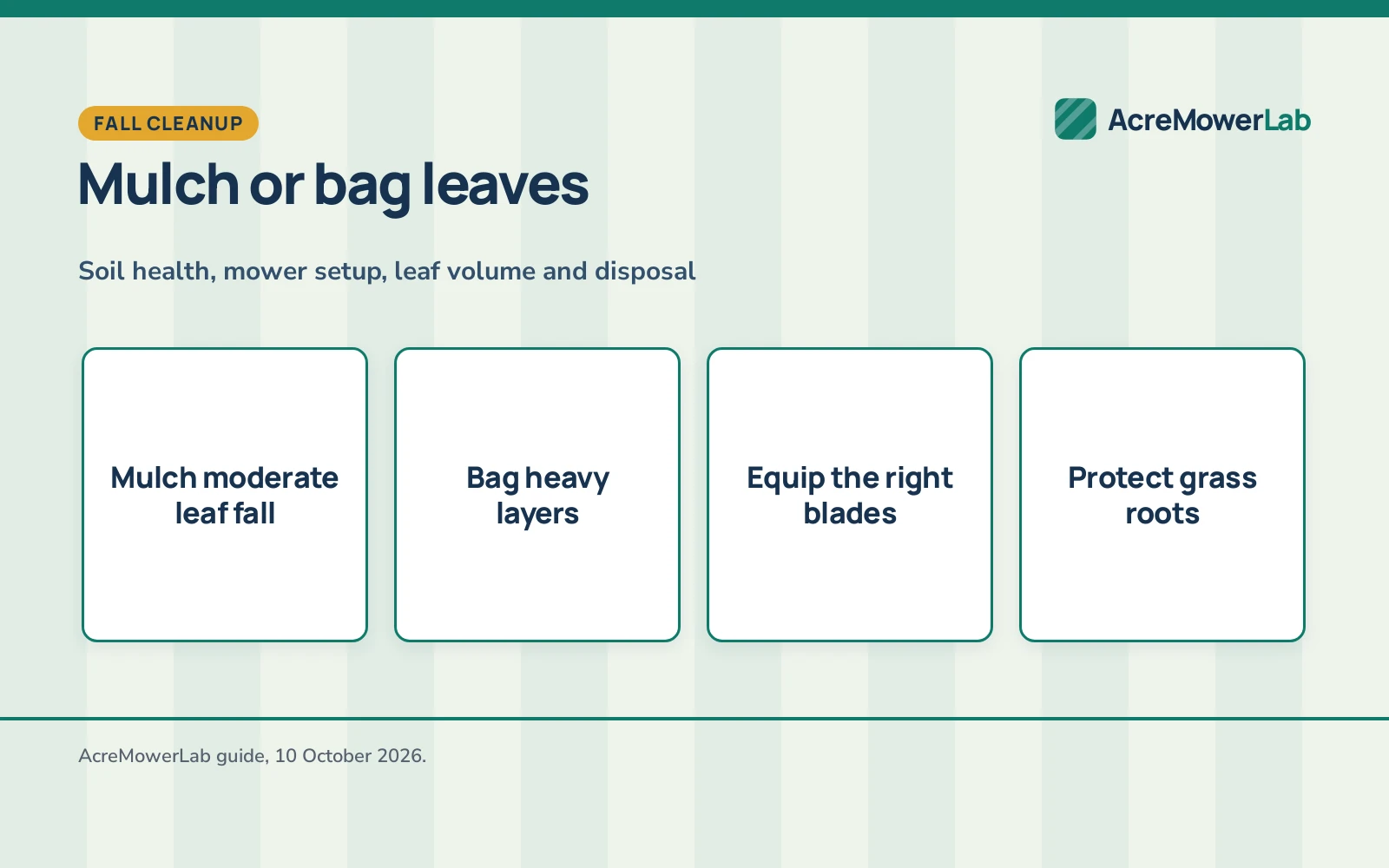
If you wonder whether is it better to mulch or bag leaves, mulching is generally the superior choice for your lawn: chopping fallen leaves directly on the turf returns organic nutrients into the soil, retains moisture, and eliminates the heavy physical labor of bagging and hauling yard waste. However, bagging is better when a thick layer of autumn leaves completely buries the grass, when fallen leaves are wet and matted into soggy clumps, or when trees suffer from foliar fungal diseases that could persist across winter. On properties ranging from 1 to 10 acres, the most practical approach combines both methods: mulch light to moderate leaf fall during regular mowing passes, and bag or collect heavy accumulations along dense tree lines.
Other machines to compare
 Dntorx 1 Pack 53 Gallon Reusable Yard Waste BagCheck price on Amazon
 GARDEASE Leaf ScoopsCheck price on Amazon
 SENIX 21" Gas Lawn Mower 144ccCheck price on Amazon
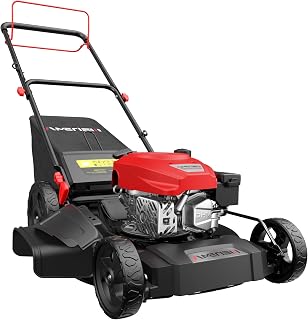 AMERISUN 21" Self-Propelled Gas Lawn MowerCheck price on Amazon
 PowerSmart EasyDrive Pro 22-Inch 170cc Self Propelled GasCheck price on Amazon
 LawnMaster BV1210 Electric Leaf BlowerCheck price on Amazon
AcreMowerLab earns a commission when you shop through links here. It never changes your price. Affiliate disclosure.
Is it better to mulch or bag leaves: direct comparison
| Method | Best for | Key limitation |
|---|---|---|
| Mulching | Routine leaf fall where grass blades remain visible | Excessive leaf volume can smother grass crowns |
| Bagging | Deep leaf cover, wet matted layers, and diseased foliage | Requires physical bagging labor and yard waste disposal |
| Combination approach | Acreage with dense tree lines and large open lawns | Requires both mulching blades and collection equipment |
Choosing between mulching and bagging depends on how many trees you have, how fast leaves drop, and what equipment you own. For moving deep drifts away from fence lines or driveways before mowing, see our best backpack leaf blower roundup for powerful cleanup options.
Step 1: evaluate leaf depth and lawn coverage
The total volume of leaves covering your turf is the primary factor in deciding your cleanup strategy. When grass blades remain visible through scattered leaves, mulching is the clear winner. A mower slices dry leaves into tiny flakes that sift down between grass blades to the soil surface. Soil microbes and earthworms consume this fragmented matter, breaking it down into natural nourishment for the root system.
Conversely, when deciduous trees dump a heavy canopy that hides every blade of grass beneath a solid blanket, mulching all of that foliage in a single mowing run creates problems. Even high-lift mulching decks leave a thick layer of shredded debris when leaf depth is excessive. If that mulch blanket exceeds the turf canopy, it blocks sunlight and restricts airflow, creating conditions that can kill underlying grass. In heavy areas, rake or blow the top layer into collection rows before attempting to mow.
Step 2: check grass health and leaf moisture
Moisture content dramatically changes how leaves interact with mower blades and turf grass. Crisp, dry leaves shatter easily inside the deck chamber, distributing finely across the lawn. Wet leaves act completely differently: damp foliage clumps together, sticks to the mower deck interior, clogs discharge chutes, and drops onto the grass in dense, suffocating patties.
Mowing wet leaves also risks compacting damp soil and rutting turf under heavy mower tires. If autumn rain or heavy morning dew has soaked your yard, wait for afternoon sun and wind to dry the leaves before starting your equipment. In addition, examine the condition of your tree foliage. If your trees showed signs of fungal leaf spot, anthracnose, or powdery mildew during the growing season, bagging those leaves is far healthier for your property. Shredding diseased leaves scatters fungal spores across the lawn where they can overwinter and reinfect plants next spring.
Step 3: set up your mower and blades
Successful leaf mulching requires proper mower configuration. Standard mower blades are designed primarily for side discharge or bagging, featuring moderate lift to eject clippings. Dedicated mulching blades feature curved cutting surfaces, serrated edges, and high-lift kickers that circulate leaves within the deck so the blade edge strikes each leaf multiple times. Install a mulch plug to seal the discharge opening and contain the debris during operation.
Blade sharpness is critical when shredding tough foliage. Dull blades tear rather than slice, battering leaf matter into stringy pulp that mats together. Keep your blade edges keen throughout the autumn season using a mower blade sharpener. If you decide to bag instead, install a dedicated lawn mower blade for bagging to produce the airflow needed to pack collection hoppers without clogging. Always raise the mower cutting deck to its highest settings on the initial pass to avoid bogging the engine.
Step 4: decide when to bag instead
While mulching should serve as your default maintenance method, several specific situations make bagging the smarter choice for your yard:
- Late autumn cleanup before winter: leaving unmulched leaf piles or thick mats under snow cover promotes snow mold and crown rot.
- Excessive leaf volume: when massive hardwood trees shed all their leaves simultaneously, bagging prevents turf smothering.
- Gravel driveways and delicate landscape beds: mulching mowers cannot run across stone pathways without throwing hazardous rocks. Gathering leaves with blowers or rakes protects your equipment.
- Clean garden mulch: gardeners who want uniform carbon material for compost bins or vegetable patch insulation can collect shredded leaves. For dedicated garden preparation, a standalone leaf mulcher chops bagged leaves into fine bedding material.
Step 5: plan leaf disposal and collection
When bagging becomes necessary, using the right containers keeps cleanup moving smoothly. Standard disposable paper yard waste bags provide a 30-gallon capacity. For example, Lowe’s and Necessia manufacture 30-gallon paper bags with dimensions of 16 inches by 12 inches by 35 inches built from 2-ply paper for tear resistance. Home Depot supplies 30-gallon paper bags in a 30 count, while Rocky Mountain Goods sells 30-gallon bags in a pack of 5. A 10-count package of Lowe’s paper bags weighs 5.2 pounds and the listing notes that 10 bags hold up to 300 gallons of waste in total. To keep paper bags standing open during filling, the Luster Leaf A650 chute weighs 1.5 pounds and the maker states it allows filling a bag with up to 20% more yard waste.
For acreage properties where disposable paper bags fill too rapidly, heavy-duty reusable yard bags offer greater volume and durability. Gardzen produces dustpan-style garden bags with a 53-gallon capacity made from 150g/m2 polypropylene fabric that carry a maximum weight rating of 110 pounds per bag. For larger cleanup tasks, Dntorx makes 72-gallon reusable bags equipped with 4 reinforced handles, while Pilntons manufactures extra-large 137-gallon bags with a double bottom rated to hold up to 264 pounds of material across dimensions of 34.3 x 34.3 x 34.3 inches.
Mulching leaves with a riding mower
Managing fallen leaves across 1 to 10 acres is far easier when mulching leaves with a riding mower or zero-turn tractor. Riding mowers provide the deck width and horsepower required to process wide swaths of fallen leaves efficiently. When operating a riding mower in heavy leaf cover, reduce your ground speed while keeping the throttle at full operating RPM. This maintains maximum blade tip speed, ensuring that each leaf is pulverized before exiting the deck.
On large properties, plan your mowing route systematically. Start in the center of the lawn and mow outward, or work in overlapping rows so each pass re-cuts any stray leaf fragments left behind. If a single pass leaves visible clumps on the lawn, make a second pass perpendicular to the first. For broad acreage layouts, our practical guide on how to clear leaves on a large property details how to organize your yard into manageable zones.
Match the method to the tree species
Different tree species produce leaves with unique physical and chemical characteristics that affect how they decompose:
- Maple, birch, and ash: these species produce thin, pliable leaves that shatter easily under mower blades. They break down rapidly into the soil, making them ideal candidates for mulching.
- Oak: oak leaves are leathery, fibrous, and packed with tannins that resist decomposition. While a few oak leaves can be mulched if chopped finely, large amounts of oak foliage take much longer to decompose and are often better bagged.
- Pine needles: pine needles are acidic, narrow, and fibrous. Rotary mower blades cannot cut pine needles effectively, and thick pine needle beds block moisture from reaching grass roots. Raking or bagging needles protects lawn health.
- Black walnut: walnut foliage contains juglone, a natural compound that can inhibit growth in tomatoes, potatoes, and other sensitive garden plants. Bag walnut leaves rather than mulching them near garden beds.
Check our trimmer and blower reviews to select tools that make managing dense tree lines easier.
Safety
Leaf cleanup involves flying debris, spinning mower blades, and slippery ground. Always wear wrap-around eye protection, hearing protection, and sturdy work boots. Before mowing or blowing, walk the lawn to clear sticks, fallen branches, rocks, and toys that could become dangerous projectiles when struck by blades.
Keep children, pets, and bystanders far away from the work area. When operating riding mowers or zero-turn machines on slopes, always follow the manufacturer’s maximum slope rating. Never mow across steep hills, and never attempt to mow or mulch wet leaves on an incline where tires can slide. Disengage the mower blades when crossing gravel driveways or operating in reverse. When using gas-powered equipment, allow the engine to cool completely before refilling fuel tanks. See our Safety Disclaimer.
FAQ: mowing large lots
Can mulching leaves damage your lawn?
Mulching only damages your lawn if the leaf layer is too thick and creates a solid mat that blocks sunlight and air. When shredded into small flakes that filter down to the soil, mulched leaves break down quickly and nourish the grass without harming turf crowns.
Can you mulch leaves with a riding mower?
Yes, riding mowers and zero-turn tractors mulch leaves effectively when equipped with a mulch plug and sharp mulching blades. Drive at a slow forward speed with the engine at full throttle to allow the blades sufficient time to shred the leaf volume.
When is it better to bag leaves instead of mulching?
Bagging is better when leaf cover completely hides the grass, when foliage is wet and clumping, or when trees suffer from foliar fungal diseases like tar spot or powdery mildew that could spread across the turf.
Do mulched leaves cause thatch buildup?
No, mulched leaves do not cause thatch buildup. Lawn thatch consists of woody grass crowns and stems that break down slowly. Chopped autumn leaves are composed of cellulose and carbon that soil microbes and earthworms decompose rapidly.
What size leaf bag do you need for yard cleanup?
Standard paper yard waste bags provide a 30-gallon capacity, which fits municipal pickup rules. For larger acreage cleanup, heavy-duty reusable fabric bags range from 53-gallon models up to 137-gallon capacities for hauling bulk debris.
More mowing guides
- Best Backpack Leaf Blower: 3 Gas Picks for Acreage Leaf Cleanup
- How to Clear Leaves on a Large Property
- Best Lawn Mower Blade for Bagging (2026): 5 Picks Compared
- Best Leaf Mulcher: 5 Top Picks Compared (2026)
Use the Mower Matcher to narrow down choices by acreage, terrain, budget, and power type.