How to Store a Riding Mower for Winter
A complete checklist for winterizing and storing a riding mower: fuel stabilization, battery care, deck cleaning and sheltered storage.

On this page
Top picks at a glance
As an Amazon Associate I earn from qualifying purchases.
- 1
 2win2buy 600D Riding Lawn Mower Cover9.7/10View on Amazon
- 2
 Himal Outdoors Pro 600D Riding Lawn Mower Cover9.7/10View on Amazon
- 3
 RocVanc 880 Lbs Riding Mower Lift Jack9.6/10View on Amazon
- 4
 YOOREAL Digital OEM Maintenance Hour Meter GaugeView on Amazon
- 5
 CRAFTSMAN 42" Gas Riding Lawn Mower with 17.5 HP* Briggs andView on Amazon
- 6
 YOOREAL Digital AC/DC Hour Meter 5-277VView on Amazon
- 7
 Husqvarna Z254F 54 in. 23 HP Kawasaki Zero Hydrostatic TurnView on Amazon
- 8
 AugFir Tow Behind Broadcast SpreaderView on Amazon
- 9
 EGO Power+ Rear Bumper for Z6 Zero Turn Riding Lawn MowersView on Amazon
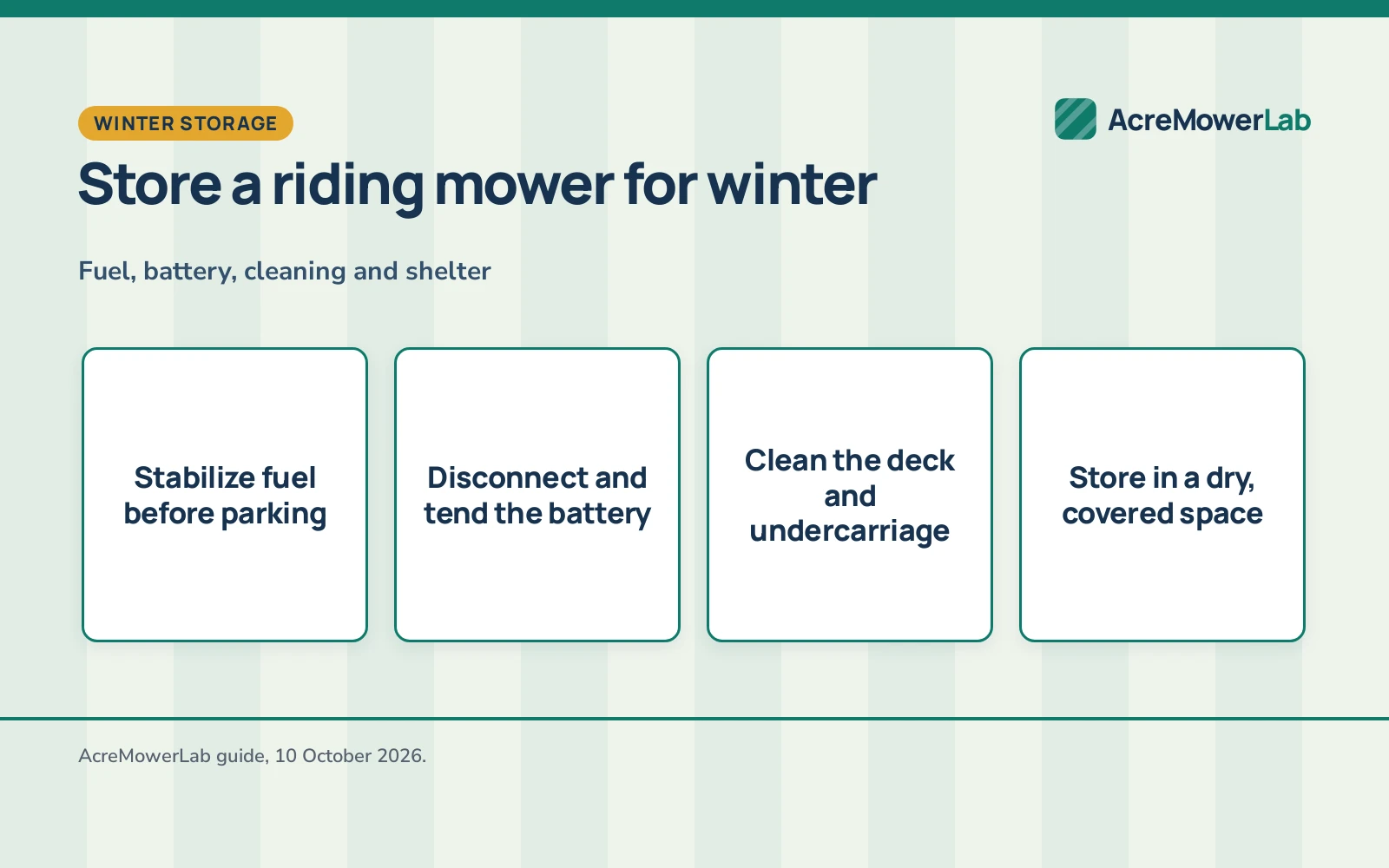
To store a riding mower for winter, stabilize the fuel system, clean the deck and undercarriage, disconnect the battery, lubricate moving parts, and park inside a dry shelter with a breathable cover. Completing these preventative steps in autumn prevents stale fuel from gumming the carburetor, stops trapped grass from corroding the deck, and preserves battery charge. This guide covers each storage phase so your riding lawn tractor or zero-turn mower remains protected until spring.
Other machines to compare
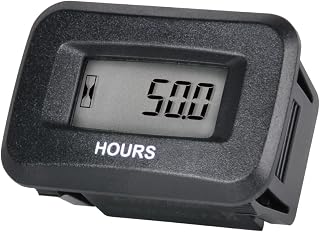 YOOREAL Digital OEM Maintenance Hour Meter GaugeCheck price on Amazon
 CRAFTSMAN 42" Gas Riding Lawn Mower with 17.5 HP* Briggs andCheck price on Amazon
 YOOREAL Digital AC/DC Hour Meter 5-277VCheck price on Amazon
 Husqvarna Z254F 54 in. 23 HP Kawasaki Zero Hydrostatic TurnCheck price on Amazon
 AugFir Tow Behind Broadcast SpreaderCheck price on Amazon
 EGO Power+ Rear Bumper for Z6 Zero Turn Riding Lawn MowersCheck price on Amazon
AcreMowerLab earns a commission when you shop through links here. It never changes your price. Affiliate disclosure.
How to store a riding mower for winter: prepare the fuel system
Fuel degradation causes most spring starting issues. Untreated gasoline contains ethanol, which absorbs moisture and oxidizes over months of inactivity, leaving gummy varnish inside fuel lines and carburetor passages. Adding stabilizer keeps fuel fresh throughout winter. Learn about fuel storage in our review of gas for mowers.
Add fuel stabilizer to a nearly full tank according to the container directions. A full tank prevents moist air from condensing on interior walls. Run the engine outdoors for several minutes so stabilized fuel circulates through the fuel filter and carburetor bowl. If your mower has a fuel shutoff valve, close it while running until the engine stalls. For tractors without a shutoff valve, consult the owner manual regarding running the carburetor dry.
Step 2: clean the mower deck and undercarriage
Late-season mowing leaves wet turf packed beneath the mower deck. Decomposing clippings hold moisture against steel stampings, promoting rust perforation over winter and creating pest harborage.
Disconnect the spark plug wire before reaching under the deck. Safely elevate the front axle using ramps or a dedicated tractor jack; see our review of lift for working on lawn mower options. Scrape turf and soil from the deck underside using a plastic scraper. Wash away remaining grime with a garden hose, avoiding direct water pressure on spindle bearings. Let the deck dry completely. Inspect blade edges and sharpen dull steel before storage; view our guide on choosing a mower blade sharpener for acreage maintenance. Coating bare metal with a light layer of vegetable oil helps prevent surface corrosion.
Step 3: disconnect and maintain the battery
Mower batteries lose charge over time through self-discharge, and freezing ambient temperatures can crack a discharged battery case. Disconnecting the battery prevents parasitic electrical drain during storage.
Disconnect the negative black cable before removing the positive red cable. Clean terminal corrosion using a wire brush and a baking soda paste, then wipe the posts dry and coat with dielectric grease. On tractors parked in unheated sheds during cold winters, remove the battery and store it on a wooden shelf in a temperature-controlled space. Connect a smart battery maintainer to regulate voltage automatically; see our evaluation of the best battery maintainer for winter storage picks.
Step 4: lubricate chassis and protect engine cylinders
Used motor oil holds acids, moisture, and soot that corrode internal bearings during storage. Draining warm oil removes suspended debris before it settles in the sump.
Warm the engine briefly, shut it down, drain the crankcase, install a clean filter, and refill with fresh oil specified in your operator manual. To protect cylinder walls, remove the spark plug and spray fogging oil into the cylinder aperture. Turn the flywheel by hand to spread the protective film across the cylinder sleeve and piston rings, then reinstall the plug loosely. Apply multipurpose grease to steering zerks, deck pivots, and wheel spindles until fresh grease purges old residue.
Step 5: select a protective cover and storage space
A durable storage cover shields panels, wiring, belts, and seating from dust, moisture, UV rays, and nesting rodents. Dedicated covers use synthetic fabrics designed to block precipitation while letting condensation escape.
| Brand | Deck Compatibility | Dimensions | Fabric Rating | Fasteners and Features |
|---|---|---|---|---|
| Tough Cover | Up to 42in deck | 75in L x 47in W x 49in H | 600D Oxford polyester | 2 adjustable drawstring closures, weight 3 pounds |
| Tough Cover | Up to 60in deck | 79in L x 63in W x 55in H | 600D Oxford polyester | 2 locking buckles, 2 drawstring closures, 18-month warranty |
| Himal Outdoors | Up to 54 inches | 72″L x 54″W x 46″H | 420D Oxford cloth | Elastic hem, 2 quick-release buckles, hook-and-loop straps |
| Eventronic | Up to 54 inches | 72″L x 54″W x 46″H | 420D polyester oxford | Elastic hem, rear vents, 2,000PA water resistance, 45 mph wind rating |
| Kipiea | Up to 54 inches | 72″L x 54″W x 46″H | 600D Oxford fabric | 4 wheel buckles, 2 drawstrings, weight 1.3 kg, 3-year replacement service |
For standard lawn tractors, Tough Cover lists a 600D polyester cover sized at 75in L x 47in W x 49in H to fit decks up to 42 inches. For broader zero-turn units, Tough Cover provides a cover measuring 79in L x 63in W x 55in H for decks up to 60 inches, backed by an 18-month warranty. Universal models from Himal Outdoors, Eventronic, and Kipiea measure 72″L x 54″W x 46″H to cover tractors with decks up to 54 inches. Eventronic lists water resistance of 2,000PA (8 inches of rain) and wind resilience against 45 mph gusts. Kipiea equips its 600D cover with 4 wheel buckles and 2 drawstrings, backed by a 3-year replacement service. Verify clearance in our guide to riding lawn mower sizes before ordering.
Prevent rodent and pest damage during storage
Mice and small rodents seek sheltered nesting spots inside equipment during cold weather. Rodents chew electrical wiring insulation, gnaw fuel lines, and pack dried foliage into cylinder cooling fins, creating severe engine overheating hazards when operation resumes.
Clean the engine bay thoroughly before covering the mower. Cover exhaust pipe outlets and air intake openings with coarse wire mesh to block access without damaging components. Avoid leaving grain or grass seed nearby. Placing aromatic peppermint deterrent pouches around the mower perimeter discourages nesting without placing poison baits inside the chassis.
Choose the right storage location
An enclosed garage or equipment shed provides optimal winter shelter. When parking on a concrete slab, place a heavy vapor barrier, rubber mat, or plywood board beneath the tires and deck to block ground moisture from condensing against cold metal.
If indoor space is unavailable and the tractor must sit beneath a carport or lean-to, park on elevated, well-drained ground away from roof runoff and damp turf. Ensure adequate ventilation around the cover so evaporating humidity can disperse freely.
Prepare tires and parking brake for the off-season
Cold weather causes pneumatic mower tires to lose pressure. Resting heavy machinery on underinflated tires can cause rubber sidewall cracking. Check tire casings for wear and inflate each tire to the pressure stamped on the sidewall.
Park on level ground and chock the wheels securely with rubber or wood chocks. Leave the mechanical parking brake released during long storage to prevent brake pads from seizing against drums or rotors due to humidity. If placing the chassis on stands to relieve tire load, support structural frame points rather than the deck.
Post-winter spring startup preparation
Careful spring recommissioning ensures your winter preparation delivers a smooth start. Remove the cover and inspect wiring, fuel lines, and belts for damage or fluid leaks beneath the transaxle.
Reinstall the charged battery, connecting the red positive cable before the black negative ground cable. Check the engine oil dipstick to confirm proper level. Remove any protective mesh from the exhaust and air intake. Reconnect the spark plug wire, open the fuel valve, set the choke, and crank the engine. Allow the motor to idle smoothly for several minutes so oil circulates before engaging cutting blades.
Safety
Follow strict safety precautions when storing equipment. Disconnect the spark plug wire and remove the ignition key before cleaning under the deck or servicing parts. Refuel with the engine off and cool, and handle fuel outdoors away from open flames. Wear sturdy work gloves, eye protection, and hearing protection during maintenance tasks. Keep children, pets, and bystanders away from machinery. Never carry passengers on a riding mower. When driving into a shed or trailer, never exceed the maker maximum slope rating; zero-turn mowers can lose traction on slopes and near ditches. Ensure rollover protective structures (ROPS) remain deployed and wear the seat belt where equipped. Keep cutting blades disengaged and ensure blades remain off when reversing. Consult your equipment operator manual for specific procedures.
FAQ: mowing large lots
Should I drain the gas or use fuel stabilizer for winter?
Using fuel stabilizer in a full tank of fresh fuel is the preferred method for most riding mowers. Stabilizer prevents gum and varnish from forming while keeping rubber seals, O-rings, and gaskets moist. Draining the system completely can dry out carburetor diaphragms. If your tractor features a fuel shutoff valve, closing the valve and running the carburetor dry while storing treated fuel in the tank provides ideal protection.
Should I remove the battery from my riding mower in winter?
Removing the battery is recommended when storing equipment in unheated spaces through subfreezing winters. Low temperatures accelerate self-discharge, and a depleted battery can freeze, cracking its case. Store the battery on a wooden shelf in a temperature-moderated space, and connect a float maintainer.
Can I store my riding mower outside under a tarp?
Storing a riding mower beneath a non-breathable plastic tarp traps rising ground moisture, accelerating rust on the deck and electrical switches. If outdoor storage is necessary, park on an elevated vapor barrier and use a breathable, water-resistant cover with air vents.
Do I need to change the engine oil before winter storage?
Changing engine oil before winter storage is strongly recommended. Spent oil contains acidic combustion byproducts and soot that corrode internal bearings during months of rest. Fresh oil coats internal components with clean lubricant throughout the dormant period.
How do I keep mice and rodents out of my stored riding mower?
Clear all grass clippings and debris from the deck and engine shroud before parking. Block the exhaust outlet and air cleaner intake with wire mesh to deny entry. Place peppermint repellent pouches around the mower perimeter, and store grass seed elsewhere.
More mowing guides
- Best Battery Maintainer for Winter Storage (2026): 5 Picks Compared
- Riding Lawn Mower Sizes: Deck Width, Dimensions and Storage Guide
- Best Mower Blade Sharpener: 4 Picks for Riders and Large Lawns
Explore our mower maintenance guides to keep your equipment in peak operating condition throughout every season.