Can Robotic Mowers Handle Hills?
Learn how robotic mowers handle hills, what slope ratings mean, and how drive systems, wheels, and lawn conditions affect hillside mowing.

On this page
Top picks at a glance
As an Amazon Associate I earn from qualifying purchases.
- 1
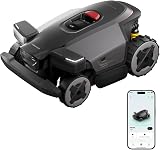 roborock RockMow X130H Robot Lawn Mower9.6/10View on Amazon
- 2
 DREAME Robot Lawn Mower Decal for A3 AWD Series9.5/10View on Amazon
- 3
 WORX Robot Lawn Mower for 1/2 Acre9.7/10View on Amazon
Can robotic mowers handle hills? Yes, robotic mowers can handle hills, but climbing depends on manufacturer slope ratings, drive systems, wheel traction, and grass moisture. Published slope ratings for residential robot mowers range up to 45%, while all-wheel-drive and track-driven units climb steeper grades from 60% up to 100% (45°). Success requires matching a machine’s published rating to your steepest incline, setting safe buffer zones around hazards, and mowing only when grass is dry.
AcreMowerLab earns a commission when you shop through links here. It never changes your price. Affiliate disclosure.
Can robotic mowers handle hills: check the slope rating
Every robotic lawn mower comes with a manufacturer slope rating that defines the maximum incline it can safely climb and mow. Operating beyond that slope limit causes wheel slippage, uneven cutting, navigation errors, or tipping. Manufacturers publish these ratings in either percent slope or angular degrees.
| Model | Drive system | Stated slope rating | Rated lawn capacity | Cutting width |
|---|---|---|---|---|
| Husqvarna 410iQ | Wheel drive | 45% | 1/2 Acre | 9.4 inches |
| SUNSEEKER X5 | All-Terrain AWD | 30° / 60% | 0.5 Acre | 8.7 inches |
| WORX WR342 Landroid Vision Cloud | Vision Cloud 4WD | 84% (~40°) | 1/2 Acre | 8.7 inches |
| Mowrator S1 | 1000W 4WD system | 75% (37°) | 0.75 acre | 21 inches |
| LYMOW One Plus | Track Drive System | 45° (100%) | 1.73 Acres daily coverage | 16 inches |
| YARBO Y40 Core | Multi-terrain tracks | 70% (35°) | 6-Acres | 20 inches |
| ANTHBOT M9 | Wheel drive | 45% | 1/4 Acre | 7.9 inches |
| Roborock RockNeo Q110H | Wheel drive | 45% | 1/4 Acre | 8.7 inches |
Published listings show wheel-driven units rated for slopes up to 45%, while all-wheel-drive and tracked machines climb steeper grades from 60% up to 100% (45°). If you manage a large property with rolling terrain, see our guide to the best robotic mower for large lawns to compare wire-free coverage options.
Step 2: measure the slope of your yard
Before shopping, measure the steepest incline on your property. Slopes vary across a lawn, and a mower that handles gentle swales can spin out on a steep ditch bank. See our guide on how to measure the slope of your yard for measurement steps.
Slope ratings use percent grade or degrees. Percent grade measures vertical elevation change over horizontal distance, while degrees measure angular pitch from flat ground. For example, SUNSEEKER specifies a slope rating of 30° / 60%, while LYMOW lists a 45° (100%) slope capability. Measure using the same unit as your machine to avoid underestimating slope steepness.
Step 3: match drive traction to the grade
A mower’s drive system determines hill-climbing traction. Robot mowers use distinct drive setups for slopes:
- Wheel drive: Traditional models use drive wheels paired with caster wheels. The Husqvarna 410iQ, ANTHBOT M9, and Roborock RockNeo Q110H feature wheel drive rated for 45% slopes, suited for smooth residential lawns.
- All-wheel drive: All-wheel drive maintains continuous traction over uneven grades. The SUNSEEKER X5 uses all-terrain AWD for slopes up to 30° / 60%, the WORX WR342 uses Vision Cloud 4WD for inclines up to 84% (~40°), and the Mowrator S1 uses a 1000W 4WD system for grades up to 75% (37°).
- Track drive: Rubber tracks distribute weight over a wide contact area. The LYMOW One Plus uses tracks for slopes up to 45° (100%), while the YARBO Y40 Core uses tracks to climb slopes up to 70% (35°).
On terraces, ditch banks, or rough turf, all-wheel drive and tracks provide greater stability than caster setups.
Step 4: inspect boundary runout zones
Pay careful attention to what sits at the bottom of an incline. If a robot mower slips while descending a slope, it needs flat runout space to stop or turn safely.
Establish virtual boundaries or perimeter wire well back from retaining walls, garden ponds, roads, and drainage ditches. Keep boundary lines on level ground rather than halfway down a slope. If a machine encounters a boundary line traveling downhill on slick turf, momentum can carry it past the limit before drive motors stop travel.
Step 5: verify navigation signal across slopes
Wire-free robot mowers rely on satellite positioning, vision, or LiDAR to navigate sloped terrain:
- Satellite visibility: RTK systems require clear sky views. Steep embankments or retaining walls can block satellite reception along lower slope borders.
- Sensor fusion: Combined navigation maintains position when satellite signals weaken. Roborock pairs RTK with VSLAM navigation, and LYMOW combines RTK with VSLAM visual mapping.
- Reference antenna placement: Mount RTK reference antennas in open areas with clear sky views rather than under dense canopies to ensure signal coverage across slopes.
- Zone boundaries: Split hillsides into dedicated app sub-zones to customize mowing schedules, cut heights, and path angles for sloped sections.
See our guide on RTK vs LiDAR robotic mower navigation for sensor comparisons.
Pick a safe charging station location
Docking on a slope is difficult for any robot mower. The charging station belongs on flat, stable ground. Returning to charge with depleted batteries requires traction and alignment to enter contacts smoothly.
Placing a dock on an incline leads to missed connections. Drive wheels spin on sloped grass as the mower approaches, causing misalignment. Choose a level spot near an outdoor outlet on flat lawn, away from runoff paths where water pools.
Match wheel tread and chassis weight to terrain
Chassis weight and tire profile shape hillside performance. Light machines can spin drive wheels on thick turf, while heavier machines demand more braking force on descents.
Weights vary widely in published listings: the SUNSEEKER X5 weighs 26 pounds, the Roborock RockNeo Q110H weighs 27 pounds, the Husqvarna 410iQ weighs 59 pounds, and the Mowrator S1 weighs 132 pounds. Heavier platforms pair wide tires or rubber tracks to spread weight and maintain grip across steep inclines.
Choose aggressive lug or chevron treads over smooth wheels. For severe slopes where robot mowers reach their limits, compare traditional equipment in our guide to the best riding mower for hills.
Plan mowing zones on sloping ground
App-based zone control allows you to customize schedules, cutting heights, and paths for hills.
Isolate steep slopes from flat lawn areas. Schedule hillside zones for afternoon hours after morning dew evaporates. Raise cutting heights on slopes to preserve root depth, stabilizing turf and aiding wheel grip. Adjust travel angles and patterns to avoid repetitive turning on steep inclines, minimizing turf wear and wheel spin.
Mind grass moisture and soil conditions
Moisture alters slope traction. Damp grass reduces tire grip, causing drive wheels to spin and slide.
Mow hillside zones only during dry weather. Morning dew, rain, or sprinkler cycles create slick grass that causes sliding. On clay soils, wet earth packs into tire lugs, turning treaded wheels into smooth rollers. Use rain sensors or app weather delays to pause mowing until turf dries thoroughly.
Safety
Never exceed the manufacturer’s maximum published slope rating. Operating beyond rated limits causes rollover, mechanical strain, and sliding.
Keep all safety systems active on slopes. Robotic mowers use built-in tilt and lift sensors that stop blade rotation if the unit tilts or lifts. PIN code locks and anti-theft alarms protect against unauthorized use. Keep children, pets, and bystanders off the lawn during operation. Clear sticks, stones, and debris from slopes so wheels do not lose traction. Maintain generous safety buffers around retaining walls, ditches, and water hazards.
FAQ: mowing large lots
Can robotic mowers handle steep hills?
Yes, when paired with the right drive system. Published wheel-drive listings rate up to 45% grade, while all-wheel-drive and tracked units climb steeper slopes: the Mowrator S1 handles up to 75% (37°), the WORX WR342 reaches 84% (~40°), and the LYMOW One Plus climbs slopes up to 45° (100%). Match published ratings to your steepest grade.
What happens if a robot mower loses traction on a hill?
Onboard sensors detect drive wheel slip. The mower stops blade rotation and pauses or alters travel direction. If the machine tilts past safe thresholds, tilt sensors shut down operation.
Should robotic mowers mow hills in the rain?
No. Wet grass drastically cuts tire grip, causing wheels to slide and tear turf. Use app rain delays or rain sensors to pause mowing until slopes dry.
What is the difference between percent slope and degree slope?
Percent slope measures vertical rise over horizontal run, while degrees measure the angular pitch. A 45° angle equals a 100% slope. Makers publish limits in either format, such as SUNSEEKER listing 30° / 60% and YARBO listing 70% (35°).
Do robot mowers require perimeter wire on slopes?
Not all models require wire. Wire-free units use RTK satellite navigation, cameras, or LiDAR to map boundaries virtually, allowing you to set sloped buffer zones in an app without trenching wire.
More mowing guides
- Best Robotic Mower for Large Lawns: 4 Wire-Free Picks
- How to Measure the Slope of Your Yard
- Best Robotic Mower Under 3000 (2026): 5 Wire-Free Picks
- Best Riding Mower for Hills: 4 Picks and How to Read Slope Ratings
Explore our walk-behind and robotic mowers section to compare models by acreage capacity, navigation technology, and slope capabilities.