Garden Tractor Hitch Types: Complete Guide for Acreage Owners
A guide to garden tractor hitch types for acreage owners: drawbar pin, sleeve, receiver and 3-point hitches explained for towing and ground work.

On this page
Top picks at a glance
As an Amazon Associate I earn from qualifying purchases.
- 1
 Husqvarna TS 375XD Riding Lawn Mower 24Hp 54 inches Deck9.5/10View on Amazon
- 2
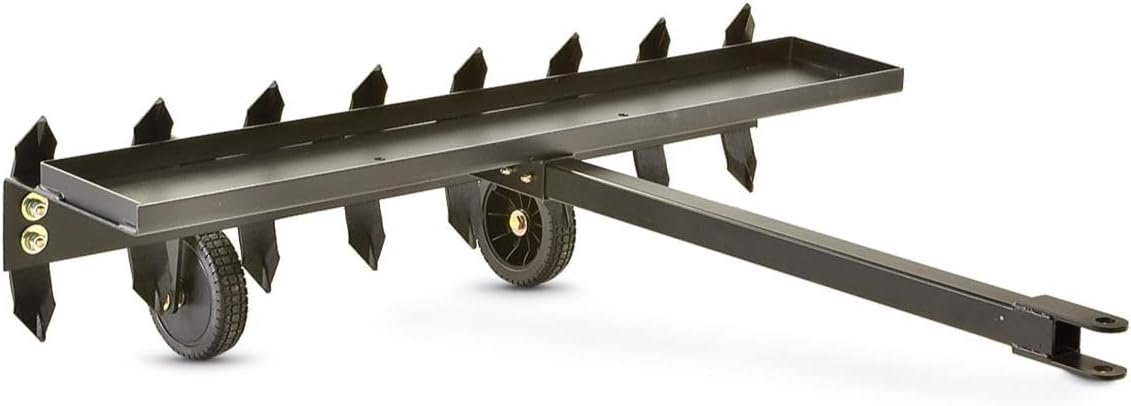 Guide Gear 48 in Tow-Behind Garden Tractor Plow Attachment9.5/10View on Amazon
- 3
 Eparts Riding Mower Garden Tractor Seat9.4/10View on Amazon
Managing acreage with rolling pasture and rough ground requires more than just mowing. Garden tractor hitch types determine what implements your machine can handle, dividing into drawbar pin hitches for towing, sleeve hitches for soil working, 3-point hitches for heavy implements, and receiver hitches for utility cargo. Choosing the right connection protects your tractor transaxle and matches your property’s workload.
AcreMowerLab earns a commission when you shop through links here. It never changes your price. Affiliate disclosure.
Garden tractor hitch types: pick the right connection
Garden tractors feature heavy steel channel frames and ground-rated transaxles that allow them to pull soil-engaging attachments. The rear hitch bridges engine torque and soil resistance. Using the wrong hitch style can bend mounting plates or overload the transmission gears.
| Hitch type | Best for | Limit |
|---|---|---|
| Drawbar pin hitch | Tow-behind carts, spreaders, aerators, and rollers | No lift control and cannot handle ground-engaging tools |
| Sleeve hitch | Grading blades, cultivators, and moldboard plows | Requires a compatible lift linkage to raise tools |
| 3-point hitch | Heavy rear blades, box scrapers, and soil implements | Needs compatible lift arms and a heavy tractor frame |
| Receiver hitch | Standard ball mounts, cargo carriers, and moving utility trailers | Only carries tow or tongue weight without draft tool lift |
Most owners rely on a pin hitch for mowing but add a sleeve hitch or rear bracket for soil work or grading. See our best garden tractor for attachments guide to review machines built for heavy rear equipment.
Step 2: evaluate drawbar pin hitches for basic towing
The drawbar pin hitch is the standard connection found on garden tractors. It consists of a flat steel plate with a vertical hole. You attach equipment by dropping a steel hitch pin through the aligned hitch holes and securing it with a cotter clip.
Drawbar hitches handle rolling tow-behind equipment such as a pull-behind dump cart, a spreader, a lawn roller, or a tow-behind aerator. Because the drawbar offers no mechanical lift, implements roll at fixed height or use their own wheel levers. Never mount plows or rippers to a drawbar plate, as digging leverage can bend the frame plate or damage the transmission.
Step 3: examine sleeve hitches for ground engagement
A sleeve hitch is the classic connection for garden tractor soil preparation. It bolts to the rear chassis and features a heavy steel bracket that accepts an implement sleeve collar. A vertical pin drops through the bracket and sleeve, while side-stabilizing bolts clamp the collar to prevent sway.
The defining advantage is lift control. Linked to a manual lever, electric actuator, or hydraulic cylinder, the hitch lowers moldboard plows, disc harrows, cultivators, and grading blades into the soil, then raises them clear for transport and turns. For acreage owners working large garden plots or grading driveways, a sleeve hitch provides real soil-working capability.
Step 4: look at 3-point hitches for heavy implements
A 3-point hitch is the most capable connection on heavy garden tractors. Adapted from farm machinery, it uses lower lift arms to carry and pull the tool, paired with an adjustable top link to control pitch. This triangular setup holds wide implements rigid, eliminating lateral sway.
The lift arms raise and lower via hydraulic cylinders, electric actuators, or manual linkages. The hitch provides precise depth control, relying on tool weight to penetrate soil while floating over uneven terrain. Typical implements include box blades with scarifiers, landscape rakes, and dirt scoops. Because of high draft forces, 3-point hitches require reinforced tractor frames and ground-rated transaxles.
Step 5: consider receiver hitches for utility hauling
A receiver hitch features a square steel tube mounted to the rear frame, similar to truck hitches. Many owners bolt an aftermarket receiver hitch over the factory drawbar plate to expand towing versatility.
The primary benefit is versatility. You can slide in ball mounts to move utility trailers, log splitters, and boat trailers without starting a truck. You can also insert tow loops for straps or cargo carriers for tools and firewood. While convenient for towing, a receiver hitch provides no vertical implement lift for soil working unless paired with a motorized sleeve adapter.
Check tractor transaxle and frame strength
Before upgrading a hitch, verify your chassis and transaxle ratings. Mounting ground-engaging hitches to ordinary lawn tractors risks severe damage: lightweight stamped frames and light-duty hydrostatic transaxles are designed only for mowing and light carts. Plowing or grading forces will overheat hydraulic drive fluid and break internal gears.
True garden tractors feature heavy-gauge ladder frames and ground-rated transaxles with large axle shafts and differential locks built for sustained draft load. Check our guide on how much does a garden tractor weigh to see how frame build corresponds to pulling muscle.
Match the hitch to your ground implements
Your property tasks determine your hitch requirements. For routine lawn care like spreading seed, hauling firewood, and sweeping debris, a pin hitch handles standard tow-behind attachments simply and reliably.
When expanding into earthmoving and tillage, you need a lift-capable hitch. Grading a gravel driveway requires a box blade or rear scraper on a sleeve or 3-point hitch to control cut depth and lift when backing up. Garden plots require plows or disc harrows that penetrate deep soil. Pasture maintenance can use a drag harrow on a drawbar, though lifting over obstacles requires a 3-point frame.
Manage ballast and tongue weight on slopes
Rear implements shift your tractor’s balance. Lifting a heavy rear blade or box scraper levers weight off the front steering tires, reducing steering grip.
Install front suitcase counterweights on the bumper bracket to balance the rear load and keep steering tires planted. When towing trailers downhill, trailer momentum pushes against the hitch, risking jackknifing. Loading cargo too far back lifts tractor drive tires, while loading too far forward unweights steering tires. Balance cargo over the trailer axle, keep tongue weight moderate, and descend slopes slowly to retain control.
Mind soil moisture and ground resistance
Soil moisture sets draft resistance. Wet clay causes wheel spin and turf ruts while straining drive belts. Conversely, dry hardpan creates severe draft resistance that can stall the tractor or twist hitch brackets.
Work ground when soil crumbles easily and provides firm tire traction. If drive wheels spin, stop immediately. Raise your sleeve or 3-point hitch slightly to take shallower passes, and add rear wheel weights or tire chains to improve mechanical grip.
Safety
Operating hitches and heavy attachments requires strict safety habits. Never exceed your tractor maker’s maximum slope rating; towed loads and heavy implements increase rollover and slide risks on hills. Travel straight up and down slopes at slow speeds, avoiding sharp turns.
Keep children, pets, and bystanders clear of the work area. Always use a proper steel hitch pin with a locking cotter clip, never makeshift bolts that can vibrate loose. Disengage mower blades and attachment drives before reversing. Keep ROPS upright and seat belts buckled where equipped. Lower implements to the ground, set the brake, and let the engine cool before refueling or maintenance. See our overview of riding mowers for property operation rules.
FAQ: mowing large lots
What is the difference between a sleeve hitch and a drawbar hitch?
A drawbar hitch is a flat plate with a pin hole for pulling rolling carts, spreaders, and aerators without lift control. A sleeve hitch has an adjustable bracket and lift linkage to raise and lower ground-engaging tools like plows and blades.
Can a lawn tractor use the same hitches as a garden tractor?
Lawn tractors can pull rolling carts from a drawbar pin hitch, but cannot run sleeve or 3-point hitches. Their light frames and transaxles cannot handle the draft resistance of digging tools.
Do I need a 3-point hitch for pulling a dump cart or sweeper?
No. Rolling carts and sweepers attach directly to the standard drawbar pin hitch. A 3-point hitch is reserved for heavy soil implements requiring dedicated lift arms.
Can I add a sleeve hitch to a tractor that only has a pin hole?
Yes, if your tractor has a true garden tractor frame and ground-rated transaxle. Manufacturers and aftermarket suppliers provide bolt-on sleeve hitch kits that link to manual levers or electric actuators.
How do I know if an attachment requires a ground-engaging hitch?
Any tool designed to dig or grade soil, such as a plow, cultivator, disc, or box blade, is ground-engaging and requires a sleeve or 3-point hitch with lift control.
More mowing guides
- Best Garden Tractor for Attachments (2026)
- How Much Does a Garden Tractor Weigh?
- Best Pull Behind Dump Cart: 5 Picks for Lawn Tractors and UTVs (2026)
- Best Tow-Behind Aerator: 4 Plug Aerators for 1 to 10 Acres
Explore our garden tractor guide to compare models, transmission ratings, and attachment capabilities for your acreage.