How Much Does a Garden Tractor Weigh?
An overview of garden tractor weight, explaining the difference between base machine weight and total working weight with attachments, fuel, and operators.

On this page
Top picks at a glance
As an Amazon Associate I earn from qualifying purchases.
- 1
 Husqvarna TS 375XD Riding Lawn Mower 24Hp 54 inches Deck9.5/10View on Amazon
- 2
 Guide Gear 48 in Tow-Behind Garden Tractor Plow Attachment9.5/10View on Amazon
- 3
 Eparts Riding Mower Garden Tractor Seat9.4/10View on Amazon
Managing open acreage, rolling pastures, and rough ground requires machinery with substantial mass to maintain traction and handle heavy ground-engaging implements. A garden tractor weighs substantially more than a standard lawn tractor or residential riding mower because of its heavy-gauge welded channel steel frame, cast-iron front axle, heavy-duty ground-engaging transaxle, and large rear drive wheels. The question of how much does a garden tractor weigh comes down to the clear difference between bare shipping weight, machine weight with cutting equipment, and total working field weight. A bare garden tractor already carries significant structural heft, but adding a heavy cutting deck, rear wheel weights, liquid tire ballast, front suitcase weights, and an operator substantially increases operating mass. Knowing full working weight helps you manage soil compaction and shed storage floor loads, while machine and implement mass determines trailer hauling requirements.
AcreMowerLab earns a commission when you shop through links here. It never changes your price. Affiliate disclosure.
How much does a garden tractor weigh: bare machine versus working weight
| Machine Category | Frame and Chassis Build | Transmission and Axle | Weight Contribution |
|---|---|---|---|
| Lawn tractor | Stamped channel steel | Light hydrostatic aluminum case | Lightest build for grass cutting and light utility carts |
| Garden tractor | Welded heavy channel steel | Ground-engaging heavy-duty transaxle | Substantial mass for plowing, tilling, and ground contact |
| Sub-compact tractor | Cast-iron structural chassis | Heavy hydraulic drive with power take-off | Heaviest frame for front loaders and agricultural tillage |
When researching tractor specifications, published figures often state the shipping weight of the bare machine without fuel or wheel ballast, while other listings include a standard cutting deck. In the field, total operating weight differs significantly from bare specifications. Everyday working weight combines the bare tractor with engine oil, hydraulic fluids, a full tank of fuel, a heavy cutting deck, and the operator. When pulling soil-engaging attachments, working weight climbs further through added wheel weights, liquid tire fill, and rear ballast needed to keep drive tires from slipping. Understanding these equipment tiers helps you select the right machine for your acreage. Explore our guide on the lawn tractor versus riding mower difference to see how structural builds diverge across categories.
Evaluating the chassis and frame construction
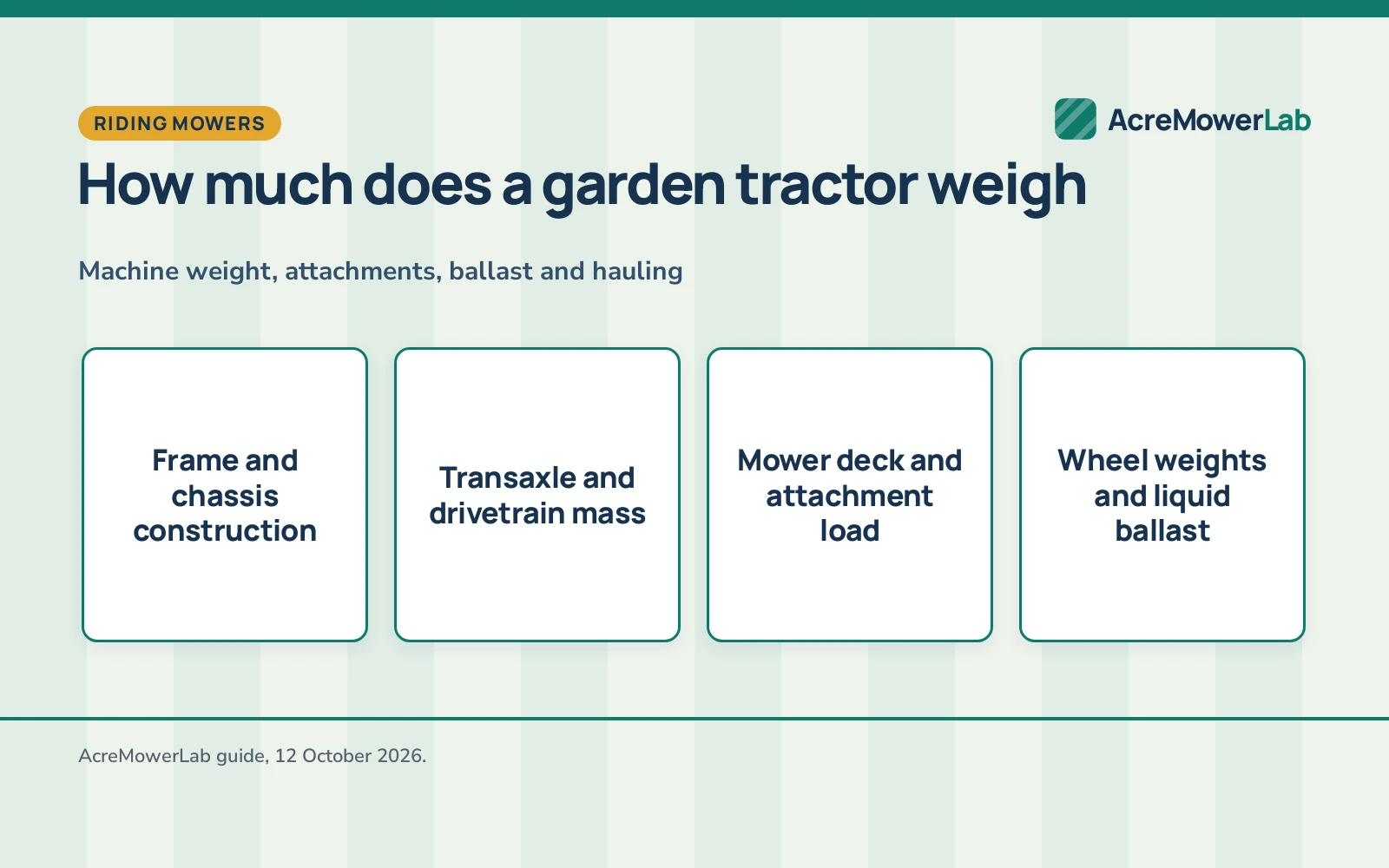
The foundation of garden tractor weight begins in the structural frame. While lighter lawn mowers typically use lighter-gauge stamped steel frames, garden tractors employ heavier-gauge welded channel steel or thick plate steel to handle heavy drawbar loads. This rigid backbone resists twisting forces when ground-engaging attachments bite into compacted earth. The front axle assembly adds further low-slung mass, constructed from solid cast iron with heavy steering knuckles and greaseable kingpins rather than stamped steel brackets. Heavy steel front bumper plates, rear hitch mounting plates, and structural crossmembers ensure the chassis can pull ground-engaging implements without bending, adding considerable base heft to the machine.
Factoring in the transaxle and drivetrain mass
The transmission represents a massive portion of garden tractor weight. Residential lawn tractors use lightweight hydrostatic transaxles designed solely for rolling flat turf. In contrast, garden tractors feature heavy-duty hydrostatic or mechanical transaxles built specifically for ground-engaging work. These units feature reinforced housings, heavy steel bull gears, thick splined axles, differential locking mechanisms, and high-flow charge pumps capable of delivering sustained pulling torque. These components also require greater fluid capacities, holding hydraulic oil that further increases total chassis weight while keeping operating temperatures stable during heavy tillage work.
Accounting for the mower deck and lift linkage
A mower deck adds substantial weight to the center of the tractor. Garden tractors carry heavy-gauge cutting decks built from thick stamped steel or fabricated from welded steel plate. The deck shell features reinforced mounting plates around spindle mounts, thick steel discharge baffles, heavy scalp rollers, and reinforced spindle housings with greaseable bearings. The lifting linkage also contributes significant mass: heavy steel draft arms, lift rods, and either mechanical spring-assisted levers or hydraulic lift cylinders firmly support the deck beneath the chassis frame.
Calculating the load of ground-engaging attachments
Hitching equipment to the rear or front of a garden tractor dramatically alters its working weight. Ground-engaging implements require substantial structural steel to penetrate untilled dirt without buckling. Heavy rear sleeve hitches or rear implement linkages bolt directly into the tractor frame. Attachments such as rear rototillers with independent engines, heavy moldboard plows, disc harrows, box scrapers, and front snow blowers add immense localized weight. For details on capable implements, visit our guide on the garden tractor for attachments.
Adding wheel weights, suitcase weights, and liquid ballast
A garden tractor requires ballast to convert engine power into drawbar pull. Without extra mass over the drive wheels, tires simply spin and tear turf when pulling heavy plows or box blades. Owners add ballast through several common methods. Cast-iron wheel weights bolt directly into the dished steel rims of the rear drive wheels. Liquid ballast, such as non-corrosive beet juice or rim fluid, can be pumped into the rear tires to add low-slung unsprung weight without stressing axle bearings. Front bracket racks carry cast-iron suitcase weights to counterbalance heavy rear implements and keep front steering tires firmly planted on the ground.
Including operator weight and operating fluids
Published equipment weights omit fluids and the driver, yet these factors directly affect field performance. A garden tractor carries a fuel tank, an engine crankcase filled with motor oil, and a hydraulic transaxle reservoir filled with fluid. Combined with an adult operator seated on the tractor, these working elements add substantial downward force during mowing and tillage. When evaluating field ground pressure or equipment stability on slopes, always account for the operator and full fluid reservoirs. For trailer hauling, calculate the payload based on the machine, attached implements, ballast, and fuel without the driver.
Managing ground pressure and soil compaction
Heavy machine mass provides necessary traction, but it also increases the risk of soil compaction across lawns, orchards, and wet pastures. Operating a heavy garden tractor over damp spring ground presses air out of the root zone, stunting grass growth and leaving deep ruts. To distribute this mass, garden tractors feature wide flotation rear tires with broad footprints. On acreage with heavy clay soil, regular core aeration helps relieve compaction caused by heavy equipment passes. See our recommendations for a tow-behind aerator to maintain healthy turf density.
Hauling and trailer transport requirements
Transporting a garden tractor between properties, woodlots, or repair shops demands proper trailering equipment. Lighter lawn mowers fit onto basic light-duty utility trailers with mesh ramps, but a heavy garden tractor outfitted with attachments and ballast can easily overload light trailer axles. You must check trailer payload capacity, tongue weight distribution, and ramp ratings. Heavy-gauge arched loading ramps prevent bottoming out under the deck. Explore our roundup of the trailer for riding lawn mower options and sturdy mower ramps built to support heavy riding equipment.
Working safely on slopes and rough ground
Weight distribution directly influences tractor stability on hillsides and uneven ground. A garden tractor carries a higher center of gravity than a low-profile zero-turn mower, making slope operation a matter of strict caution. When mowing hills with a garden tractor, travel straight up and straight down the slope rather than driving across the face of the hill, which increases the risk of tipping over sideways. Adding heavy rear attachments shifts weight backward, which can cause front steering wheels to lighten and lose directional control when heading uphill. When driving downhill, weight shifts forward onto the steering wheels, reducing traction on the rear drive tires where braking occurs. Maintain a safe distance from retaining walls, ditches, and water hazards. Consult our guide on choosing a riding mower for hills for slope-handling considerations.
Maintenance access and workshop lifting
Servicing the underside of a garden tractor requires heavy-duty shop tools. Cleaning packed grass clippings from beneath a thick cutting deck or removing dull cutting blades cannot be accomplished by tipping the tractor sideways. Stamped residential mower lifts may buckle under the concentrated front-axle weight of a heavy garden tractor. Owners should use rated hydraulic lifts or heavy floor jacks with mechanical jack stands before reaching beneath the machine with service tools. Read our guide on mower lift equipment to maintain heavy equipment safely.
Safety
Operating heavy outdoor power equipment requires disciplined safety habits across the property. Always follow the manufacturer guidelines and observe the following rules:
- Never exceed the manufacturer stated maximum slope rating for your machine. Heavy tractors can lose braking traction, slide down steep grades, or tip over sideways.
- Tractors lose traction quickly on wet turf, loose gravel, and near pond banks or drainage ditches. Maintain a safe setback from all drop-offs and water hazards.
- Always use the roll-over protective structure and fasten the seat belt when operating a machine equipped with rollover protection.
- Never carry passengers on the tractor, on attachments, or inside utility dump carts.
- Keep children, pets, and bystanders completely clear of the mowing and operating area before engaging the engine or blades.
- Disengage all cutting blades and power attachments before shifting into reverse, and look down and behind the tractor before backing up.
- Wear eye protection, hearing protection, and sturdy steel-toe work footwear. Clear sticks, rocks, wire, and debris from the mowing zone before starting.
- Refuel only outdoors with the engine switched off and completely cool to prevent fuel vapor ignition on hot exhaust manifolds.
FAQ: mowing large lots
Why is a garden tractor heavier than a lawn tractor?
A garden tractor is built with a heavy welded channel-steel frame, a cast-iron front axle, and a heavy-duty transaxle with large internal steel gears capable of handling ground-engaging resistance. Lawn tractors use lighter stamped steel components and light-duty transaxles meant only for cutting grass.
Does the weight of a garden tractor damage the lawn?
On dry, firm turf, wide flotation tires spread the weight to avoid damage. However, driving across soft or wet ground can cause rutting and soil compaction. Avoid operating heavy tractors on saturated soil.
How do attachments change the balance of the machine?
Heavy rear attachments like tillers or box blades shift the center of gravity backward, taking downward pressure off the front steering axle. Adding front suitcase weights restores balance and steering control.
Can a garden tractor be hauled on a lightweight utility trailer?
Standard lightweight utility trailers with light axles and wire mesh ramps are often inadequate for a fully outfitted garden tractor with deck and ballast. Always verify trailer payload ratings and ramp capacities before loading.
When should liquid ballast or wheel weights be added?
Ballast should be added when performing ground-engaging work such as tilling, plowing, or pushing heavy snow. Extra wheel mass provides necessary tire bite without straining structural transaxle bearings.
More mowing guides
- Best Garden Tractor for Attachments (2026)
- Best Trailer for Riding Lawn Mower (2026): 5 Top Picks Compared
Use the Mower Matcher to narrow down choices by acreage, terrain, budget, and power type.