Do Zero Turn Mowers Have Baggers?
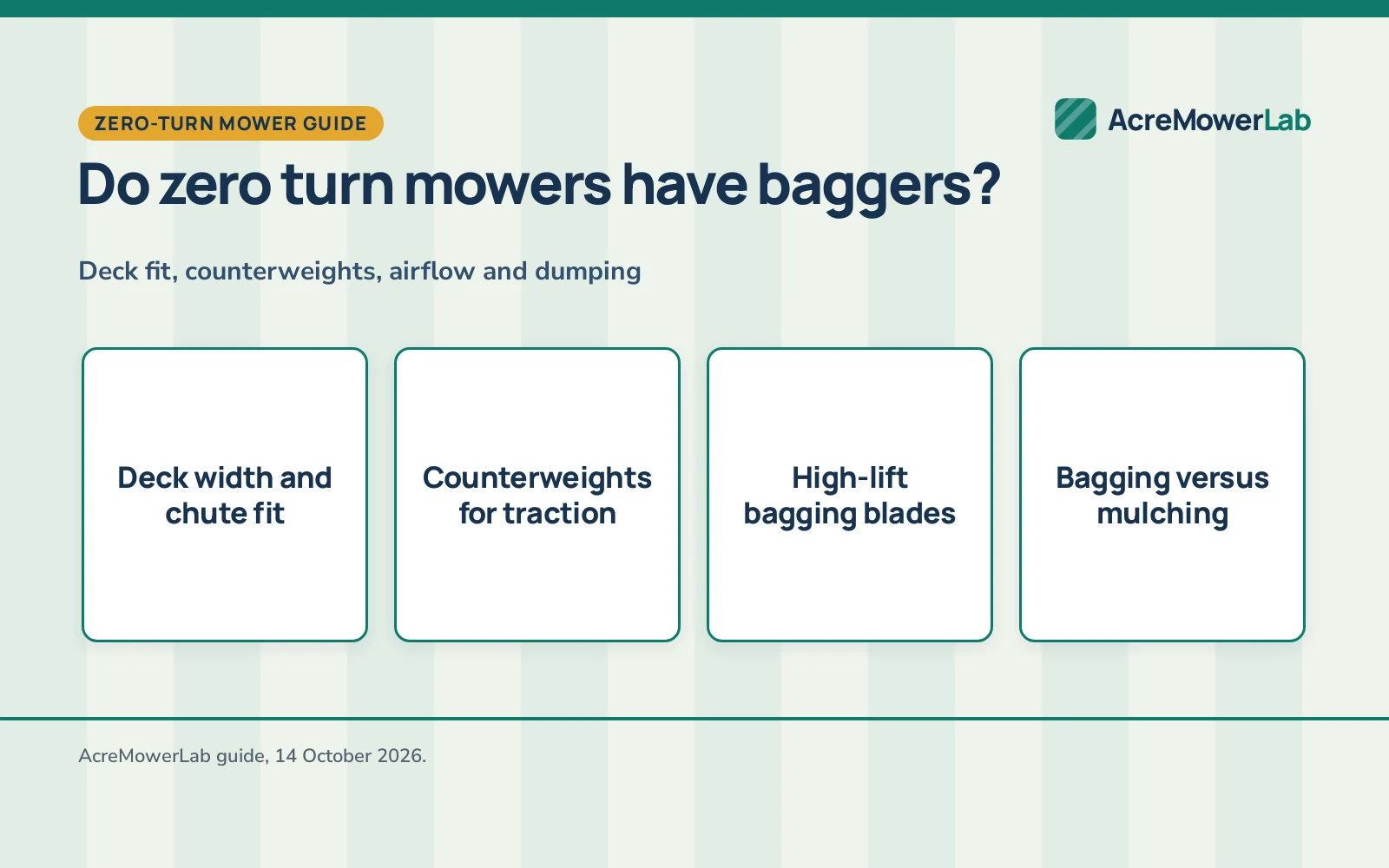
Zero-turn mowers can use bagger attachments, but clean grass collection requires matching deck width, adding front counterweights, and using high-lift bagging blades.

On this page
Top picks at a glance
As an Amazon Associate I earn from qualifying purchases.
- 1
 Husqvarna MZ619.7/10View on Amazon
- 2
 EGO Power+ Z6 Zero Turn Electric Riding Lawn Mower9.6/10View on Amazon
- 3
 EGO Power+ Z6 Zero Turn Electric Riding Lawn Mower9.6/10View on Amazon
- 4
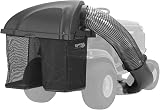 MTDView on Amazon
- 5
 Husqvarna Triple Lawn Mower BaggerView on Amazon
When maintaining acreage turf around fence lines and ornamental trees, property owners often ask: do zero turn mowers have baggers? Yes, zero turn mowers can have baggers, but they rarely come standard from the factory crate. Manufacturers build dedicated rear-mounted bagging kits that bolt directly to the frame and connect to the discharge chute. Because zero-turn machines steer through independent rear drive wheels, hanging loaded grass bins off the rear bumper alters machine balance, steering grip, and slope handling. This guide explains how bagging kits connect to zero-turn decks, why front counterweights are required, and how to collect clippings cleanly across your acreage.
Other machines to compare
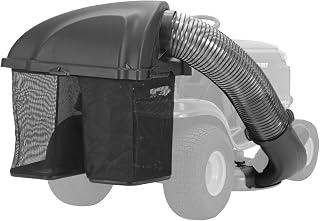 MTDCheck price on Amazon
 Husqvarna Triple Lawn Mower BaggerCheck price on Amazon
AcreMowerLab earns a commission when you shop through links here. It never changes your price. Affiliate disclosure.
Do zero turn mowers have baggers: how collection systems work
Zero-turn baggers rely on a sealed deck boot, a flexible discharge tube, and a rear hopper assembly holding two collection bags. Unlike lawn tractors with a front-mounted engine that naturally balances rear attachments, a zero-turn places its engine or battery bay over or behind the rear drive wheels. When grass fills the hopper, the added tail weight can lift the front caster wheels off the ground, causing the front end to float and lose steering control. To counter this, complete bagging kits include front suitcase weights or weight plates that bolt over the front casters.
| Manufacturer and Kit | Compatible Deck Width | Stated Capacity and Setup | Published Weight |
|---|---|---|---|
| EGO Power+ ABK4200 | 42 inches | Bagger with bagging blades and counterweights | 98.8 pounds |
| Greenworks 42BAG4B | 42 inches | Dual bin with 6 bushel capacity | 55.1 pounds |
| Cub Cadet 19B70054100 | 42 and 46 inches | Two bags with 6.5 bushel capacity and weight plates | 120 pounds |
| 8TEN TURFBUCKET Mishon | 42 inches | Twin bagger with quick-connect hose adapter | 125 pounds |
As shown above, factory and aftermarket kits vary widely in stated weight and capacity. Greenworks lists a 55.1-pound dual-bin kit with 6 bushel capacity for 42-inch electric zero-turns across 60V, 80V, and 82V systems. Cub Cadet lists a 120-pound double bagger offering 6.5 bushel capacity for 42-inch and 46-inch decks, including front weight plates. EGO Power+ lists its 42-inch bagger kit at 98.8 pounds with counterweights and bagging blades included. For older machines, aftermarket makers such as Kerlista provide replacement components, listing a 4-pound hood and chute assembly fitting 42-inch, 46-inch, 50-inch, and 54-inch decks. Review our guide to zero-turn mower sizes to match deck dimensions to your property layout.
Step 1: check deck width and mounting brackets
Baggers are engineered around specific mower decks and frame designs. You cannot simply clamp a universal collection bag to a zero-turn frame. The discharge chute must mate flush with the deck opening to prevent grass from blowing out around the seams. Furthermore, the rear frame brackets must mount to pre-drilled holes in your mower frame. For instance, Kerlista notes that its double bagger kit fits 42-inch to 46-inch decks but requires brackets purchased separately for specific mower frames. Before purchasing any collection system, check your mower model number and deck width to confirm exact fitment.
Step 2: understand airflow and high-lift bagging blades
Zero-turn mowers run high blade tip speeds, but standard cutting blades prioritize side discharge or mulching rather than vertical lift. Bagging relies entirely on aerodynamic lift to propel green clippings through the curved discharge chute into the rear bins. Standard blades can leave clumps on the lawn or plug the lower chute elbow before clippings reach the hopper. Dedicated kits address this by bundling high-lift blades. The EGO Power+ ABK4200 kit explicitly includes bagging blades to generate the required air velocity. If your kit uses existing blades, inspect them frequently to maintain sharp cutting edges and clean sails. Explore our picks for the lawn mower blades for bagging to see how blade designs influence collection.
Step 3: add front counterweights for steering balance
Weight distribution is the most critical mechanical factor when adding a bagger to a zero-turn mower. On a traditional lawn tractor, the heavy gas engine sits directly over the front axle, keeping the front wheels planted. On a zero-turn mower, the operator, engine, and drive hydro transmissions sit over or behind the rear axle. When you hang two collection bins off the rear bumper, each bin accumulates dense, moisture-laden clippings. Without ballast, the front caster wheels lift, resulting in lost steering control, wandering turns, and reduced hill stability.
To counteract this lever effect, mower manufacturers require front counterweights. Cub Cadet packages weight plates with its 120-pound double bagger kit, while EGO Power+ includes counterweights with its 98.8-pound kit. These metal weights bolt securely onto the front caster frame. Never operate a zero-turn mower with a rear bagger attached unless the manufacturer’s recommended front weights are properly installed.
Step 4: manage bin capacity and dumping routine
Residential zero-turn bagging kits typically offer 6 bushel or 6.5 bushel collection volume divided between two removable bins. While larger commercial setups exist, residential hoppers are sized so property owners can manually lift and dump each bin without mechanical hoists. A full 6.5 bushel hopper of damp spring grass can weigh heavily, making manual dumping a workout across large acreage.
Many kits feature visual monitoring aids to prevent overfilling. Greenworks includes a clear cross-check tube on its bagger kit so operators can watch grass flow, while Cub Cadet incorporates a sight window into the hood assembly. Empty the bins as soon as the sight gauge indicates a full load. Allowing the bags to overfill backs grass into the discharge tube, requiring you to disengage the deck, shut down the engine, and clear the chute by hand.
Step 5: decide between bagging and mulching on acreage
Collecting grass clippings produces a clean, manicured finish suitable around homes, patios, and swimming pools. Bagging also removes weed heads before seeds can scatter across your turf. However, on large rural parcels, bagging demands substantial time and physical effort to empty bins repeatedly. Mulching, by contrast, chops clippings into fine particles that decompose quickly, returning nitrogen and organic matter to the soil without disposal stops. Compare the seasonal tradeoffs in our detailed analysis of whether to mulch or bag leaves and lawn debris. Many acreage owners bag only during early spring flushes or fall leaf drop, relying on side discharge or a dedicated mulch kit during dry summer months.
Managing weight and traction on slopes
Adding a loaded bagger drastically alters how a zero-turn handles rolling terrain. Zero-turn mowers steer solely through tire traction on the two rear drive wheels. When moving across a slope with loaded collection bins, the center of gravity shifts backward and downhill. This weight shift can cause the uphill drive tire to lose traction, leading to an uncontrollable slide or sudden spin.
Always observe your manufacturer’s stated slope limitations. If your property features slopes, read our guide on whether zero-turn mowers are safe on hills before mounting a bagger. Never mow across steep banks, and avoid bagging wet turf on slopes where damp grass reduces tire adhesion. If the front casters begin to feel light or steering feels sluggish, immediately steer downhill toward level ground and empty the collection bins.
Airflow management and chute clogging
A bagging system functions like a high-volume air pump. For clippings to reach the rear hopper, air entering beneath the cutting deck must exhaust freely through the hood vents. If the fabric mesh on the collection bags or the hood exhaust screen becomes caked with dried grass juice and dirt, air velocity drops immediately, causing clippings to drop out of suspension and clog the chute elbow.
To maintain consistent airflow, wipe down hood exhaust baffles after each mowing session. When bagging damp grass, check the chute regularly and operate the mower engine at full throttle to maintain maximum blade tip speed. Aftermarket systems like the 8TEN TURFBUCKET feature quick-disconnect hose adaptors specifically designed to speed up chute removal and clearing when damp clogs occur.
Planning grass disposal on your property
Before you begin bagging on acreage, establish dedicated collection and disposal points. Dumping collection bags randomly creates messy piles that smother grass and generate foul odors as clippings decompose. Choose convenient composting locations situated on flat, dry ground away from property boundaries, drainage ditches, and open waterways.
Spread dumped clippings into thin layers on your compost pile or work them around garden beds as soil-enriching organic mulch. If you maintain multiple acres, consider staging a utility cart or tow-behind trailer near your mowing zones so you can dump bags directly into a central hauler rather than driving the mower back and forth to your compost site.
Safety
Operating a zero-turn mower with a heavy rear bagger requires strict adherence to operating safety protocols. Never exceed the maker’s maximum slope rating, as zero-turn mowers lose traction on slopes and near ponds, ditches, or embankments. Maintain a wide safety buffer around water hazards and retaining walls. Always keep the rollover protective structure (ROPS) locked in the upright position and fasten your seat belt where equipped. Never carry passengers or pets on the machine, and keep children, pets, and bystanders completely out of the yard while mowing. Disengage the mower deck and ensure blades are completely off when reversing. Clear sticks, wire, stones, and fallen branches from the lawn before cutting, and always wear sturdy footwear, eye protection, and hearing protection. On gas-powered models, refuel only when the engine is turned off and completely cool. For battery-powered models, inspect wiring and battery connectors before attaching bagging hardware.
FAQ: mowing large lots
Can you put a bagger on any zero-turn mower?
No. Baggers require compatible mounting brackets and specific deck discharge shapes. Manufacturers engineer bagging kits for particular deck widths and frame series, such as 42-inch or 46-inch decks. Always verify kit compatibility against your mower’s exact model number before purchasing.
Do zero-turn mowers need special blades for bagging?
Most zero-turn mowers perform significantly better with high-lift bagging blades installed. Standard side-discharge or mulching blades lack the vertical sail height required to propel heavy clippings up the discharge chute, which can lead to frequent chute plugging.
Why do zero-turn baggers require front counterweights?
Zero-turn mowers have their engines mounted over the rear drive axle. Hanging loaded grass bins off the rear bumper adds substantial tail weight, which can lift the front caster wheels off the turf. Front counterweights maintain tire contact so you retain steering control.
Is it better to mulch or bag grass on a zero-turn?
Mulching is faster and recycles nutrients back into the soil, making it the preferred choice for regular acreage maintenance. Bagging is best when clearing heavy fall leaves, managing tall spring flushes, or preventing weed seed heads from spreading across manicured lawn areas.
Can a zero-turn mower bag wet grass or fallen leaves?
Zero-turn baggers can collect dry leaves and moderately damp grass, but mowing soaking-wet turf frequently plugs the chute elbow and coats the hopper screens. For best results, wait for dry afternoon conditions and run the mower engine at full throttle.
More mowing guides
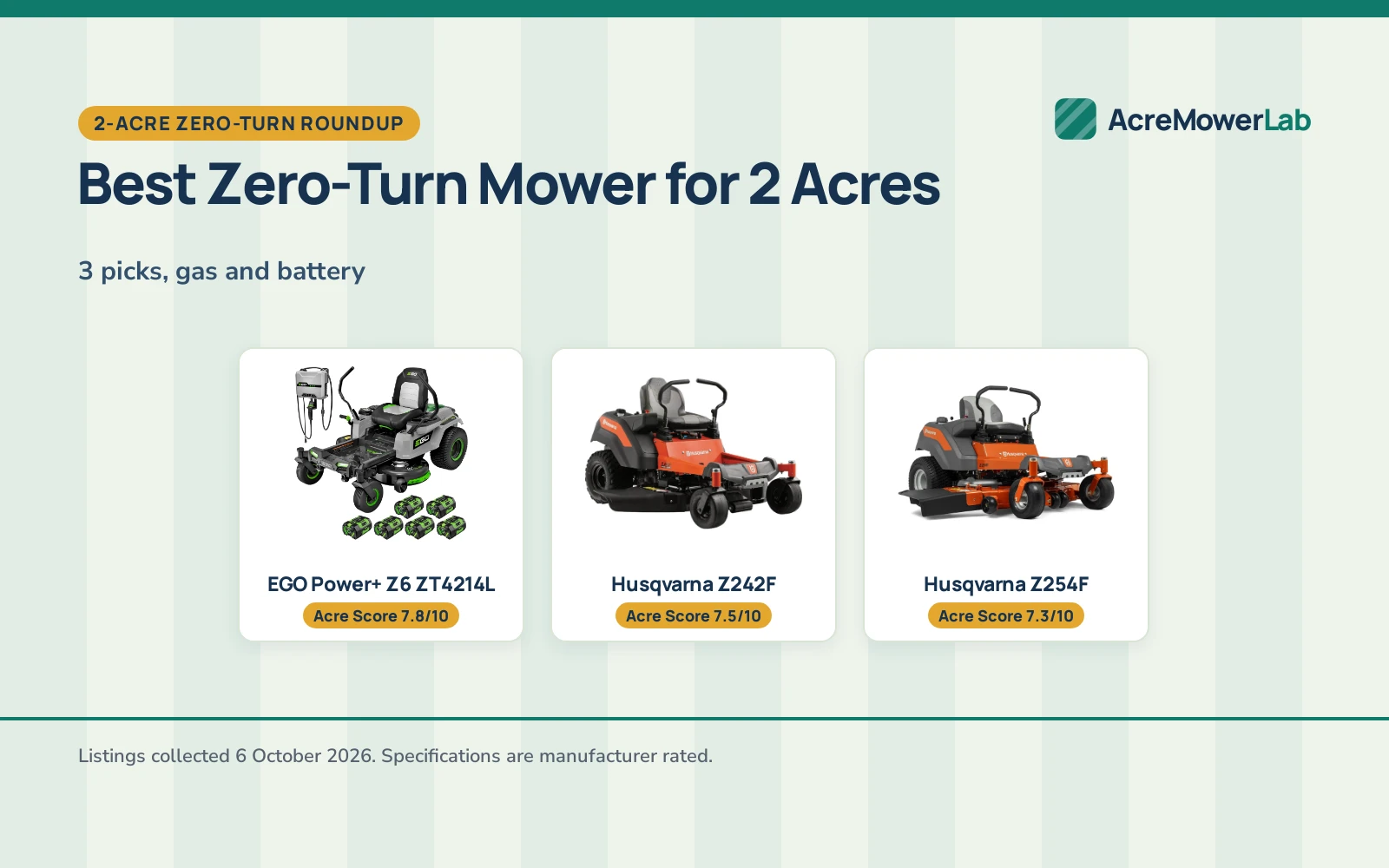
- Best Zero-Turn Mower for 2 Acres: 3 Picks by Deck Size
- Are Zero Turn Mowers Safe on Hills?
- Zero Turn Mower Sizes: Deck Width and Footprint Guide
- Best Lawn Mower Blade for Bagging (2026): 5 Picks Compared
Use the Mower Matcher to narrow down choices by acreage, terrain, budget, and power type.