Backpack Blower Weight: How Heavy Is a Backpack Blower
Backpack blower weight explained for acreage cleanup, from dry weight and fuel or battery load to harness fit, storage and carried weight on hills.

On this page
On acreage with tree lines, long driveways, fence lines and beds that catch leaves, backpack blower weight is the load carried on shoulders, back and hips while moving leaves across lawn, paths and hard surfaces. A pack that feels manageable at the shed can feel very different after a long pass along a fence or up a slope, so weight belongs in the choice alongside airflow, fuel or battery setup, harness fit and storage space.
As an Amazon Associate I earn from qualifying purchases. AcreMowerLab earns a commission when you shop through links here. It never changes your price. Affiliate disclosure.
Backpack blower weight: what you carry
| Part of the pack | What it adds | What to check |
|---|---|---|
| Engine or motor | The main power unit carried on the frame | Power source and the size of the unit |
| Fuel tank or battery | Working load carried through the session | Whether listed weight includes fuel or battery |
| Frame and harness | Straps, padding and back support | Fit across shoulders, back and hips |
| Tube and nozzle | Reach and control at the end of the pack | Length, balance and storage space |
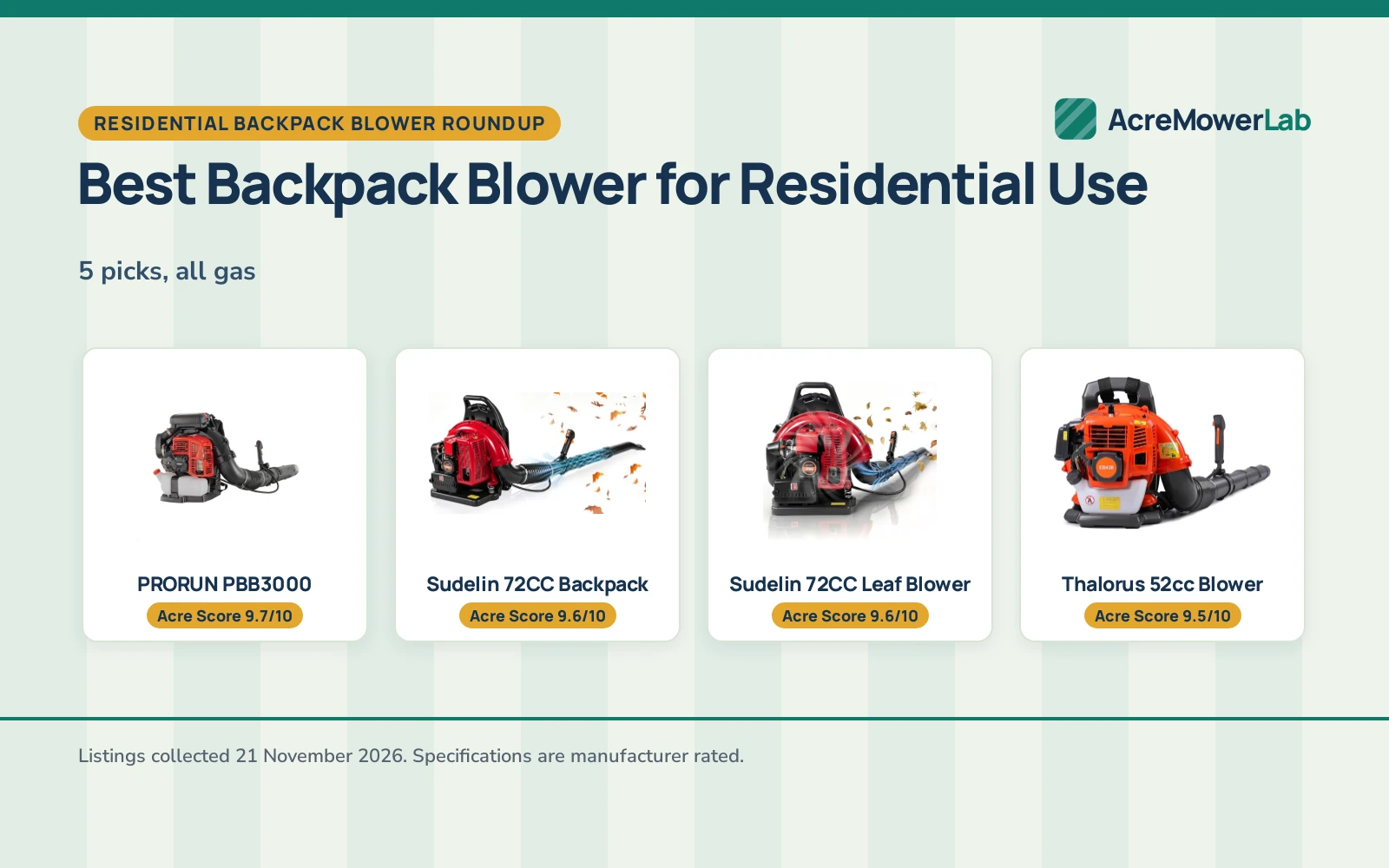
Weight is easier to judge when each part is named. See the best backpack leaf blower roundup for gas options, and the leaf blower types guide for handheld, backpack and cordless formats.
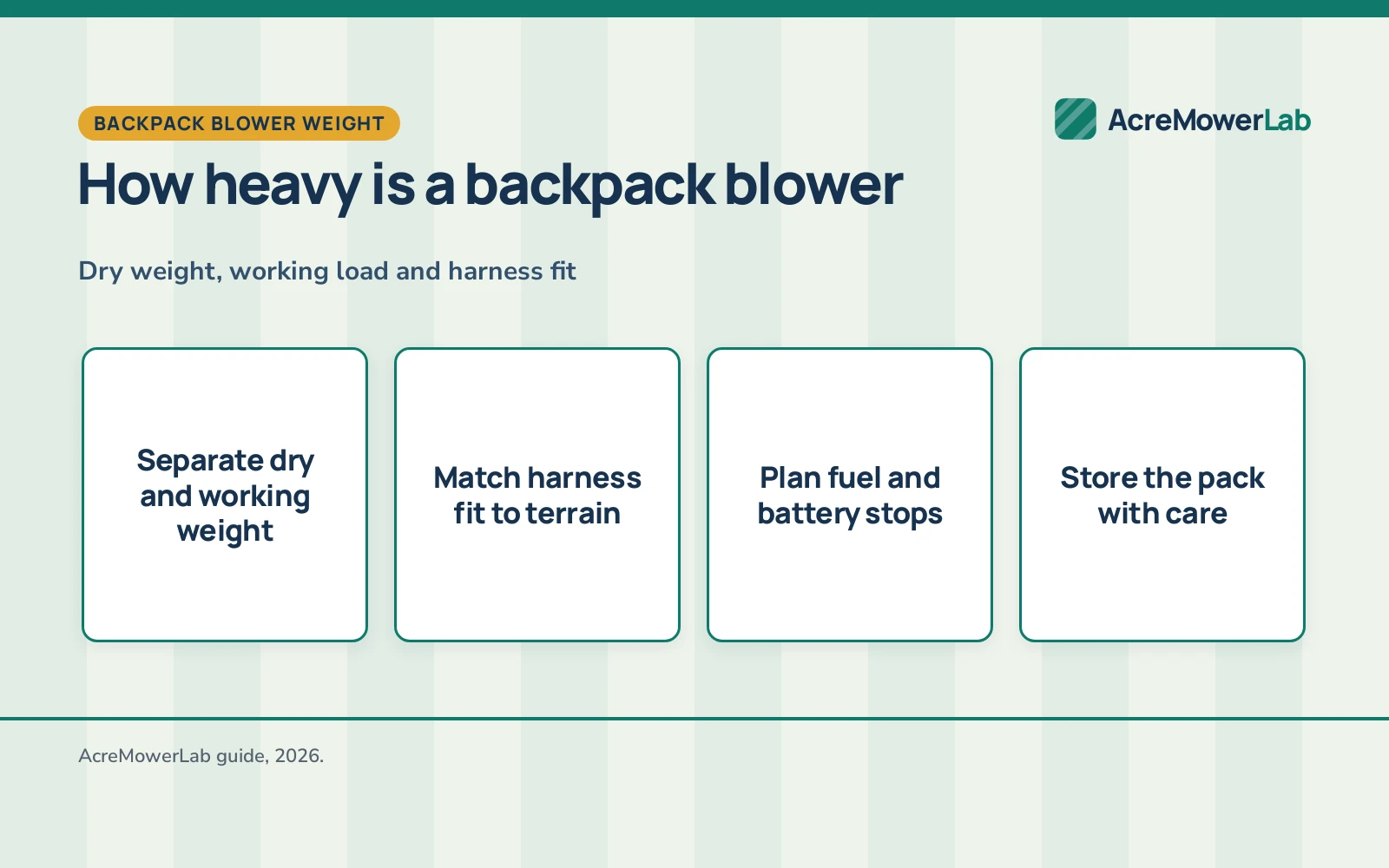
Step 2: separate dry weight from working weight
Dry weight describes the pack without fuel in the tank or without a battery fitted, depending on how a maker lists the figure. Working weight is what is carried during cleanup, with fuel, battery, tube and nozzle in place. Those figures can differ in feel even when the listed figure looks close on paper, because liquid fuel and a battery add load in different places on the frame. Read the listed weight with care, note what the maker includes, and compare packs on the same basis before choosing.
Step 3: match the harness to the property
A harness spreads load across shoulders and back, and padding changes how that load feels over a long session. Adjustable straps help the pack sit close to the body, which matters on slopes and rough ground. Try the harness fit with the tube in hand, walk a short stretch, turn, bend and reach, and check whether straps dig in or slide.
Step 4: plan fuel, battery and storage
Fuel and battery choices change carried weight during the day. A gas pack grows lighter as fuel is used, while a battery pack carries battery weight from start to finish. Storage matters as well: a long tube needs shed space where it will not be bent or left in damp conditions. Plan refill or charging stops at a flat, clear spot.
Step 5: decide where the pack rests between zones
Do this before you start, because rest spots shape the route across the property.
- Collection point: set the pack down on flat, dry ground near the pile.
- Driveway edge: keep the pack clear of vehicles, tools and foot traffic.
- Shed or garage: store the pack where the tube and harness stay dry.
- Refill area: use a clear, level spot away from leaves and debris.
Pick a collection spot
Note where leaves collect naturally, such as against fences and in corners. Choose collection points near where you will compost, tarp or load, on flat, dry ground away from drainage ditches so leaves do not wash or blow back. Short passes also give natural moments to set the pack down and reset straps.
Match the tool to the leaf type
Dry leaves move easily and need less airflow than wet leaves that mat down on lawn and paths. Oak leaves are tougher and slower to break down than maple, wet leaves clump together, and pine needles catch in grass. A pack with more airflow can move heavy or wet material with fewer passes, while a lighter pack can suit dry leaves, beds and tight corners where control matters more than force. The trimmer and blower reviews list the options by category.
Plan the property in zones
Divide a large property into zones, for example driveway and paths, house lawn, and tree line. Finish a zone before you move to the next. Zone work helps with carried weight: shorter carries, clear rest spots and a planned route reduce time spent walking with a full pack across cleared ground.
Mind the weather and the ground
Wet ground is slippery underfoot. Skip steep or soggy ground when you can, and never blow leaves toward a pond, ditch or road. Blowing with the wind moves leaves toward the collection point with less effort, while blowing against the wind can scatter leaves back across cleared ground.
Safety
Wear eye and hearing protection and sturdy shoes. Clear sticks, stones and other debris before you blow, and keep children, pets and bystanders away from the work area. Point blower nozzles away from people and parked cars. Refuel only with the engine off and cool. On slopes, keep your footing, take shorter passes, and avoid steep or soggy ground when you can. See the Safety Disclaimer.
FAQ: mowing large lots
How heavy is a backpack blower?
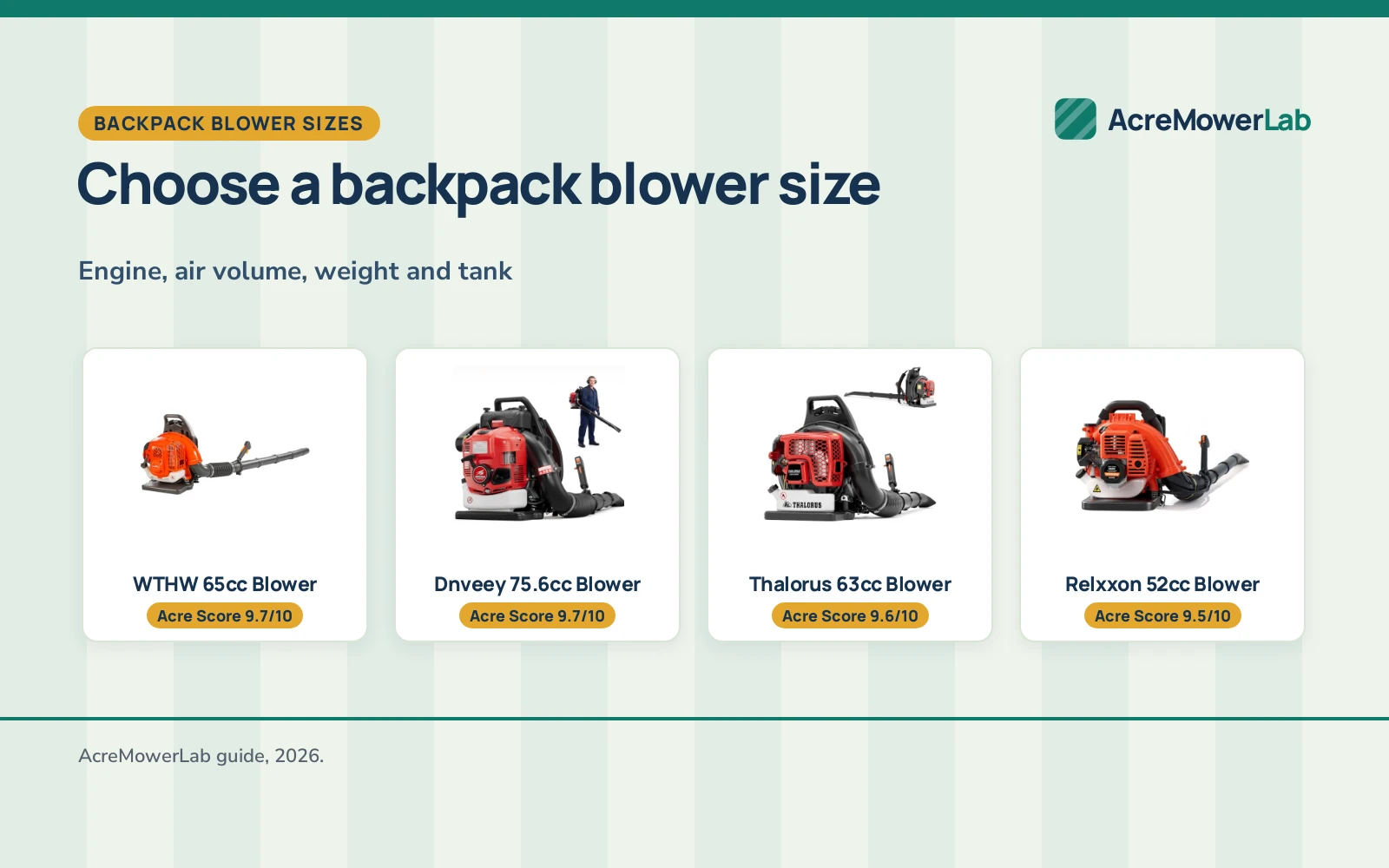
Backpack blower weight depends on the power source, the size of the engine or motor, fuel or battery load, frame, harness and tube. Check the maker listed weight and note whether fuel or battery is included, because working weight during cleanup is the load that matters on the property.
Does fuel or a battery add to carried weight?
Yes. Fuel adds weight that falls as the tank empties during a session, while a battery adds a steady load from start to finish. A spare battery, fuel container or extra nozzle carried by hand adds to the total load, so plan where those items rest between zones.
Is a lighter pack easier on hills?
A lighter pack can feel easier on slopes and rough ground, but harness fit and balance matter as much as the listed figure. A pack that sits close to the back and stays settled while turning can feel steadier than a lighter pack with loose straps on uneven ground.
How does harness fit affect carried weight?
Padded straps and a back pad spread load across shoulders and back, and adjustable straps help the pack sit close to the body. A poor fit concentrates load on shoulders and can make a pack feel heavier during long passes along fences, beds and driveways.
Where should a backpack blower be stored?
Store the pack in a dry shed or garage on flat ground, with the tube supported so it is not bent or crushed. Keep fuel and batteries in the places the manual allows, away from heat and damp, and leave clear space around the harness so straps stay dry and ready for the next session.
More mowing guides
- Best Backpack Leaf Blower: 3 Gas Picks for Acreage Leaf Cleanup
- Leaf Blower Types: Handheld, Backpack and Cordless
- Best Backpack Blower for Large Properties (2026)
- Best Backpack Blower Harness (2026)
Use the Mower Matcher to narrow down choices by acreage, terrain, budget, and power type.