Light Weight Electric Snow Blower for Small Driveways
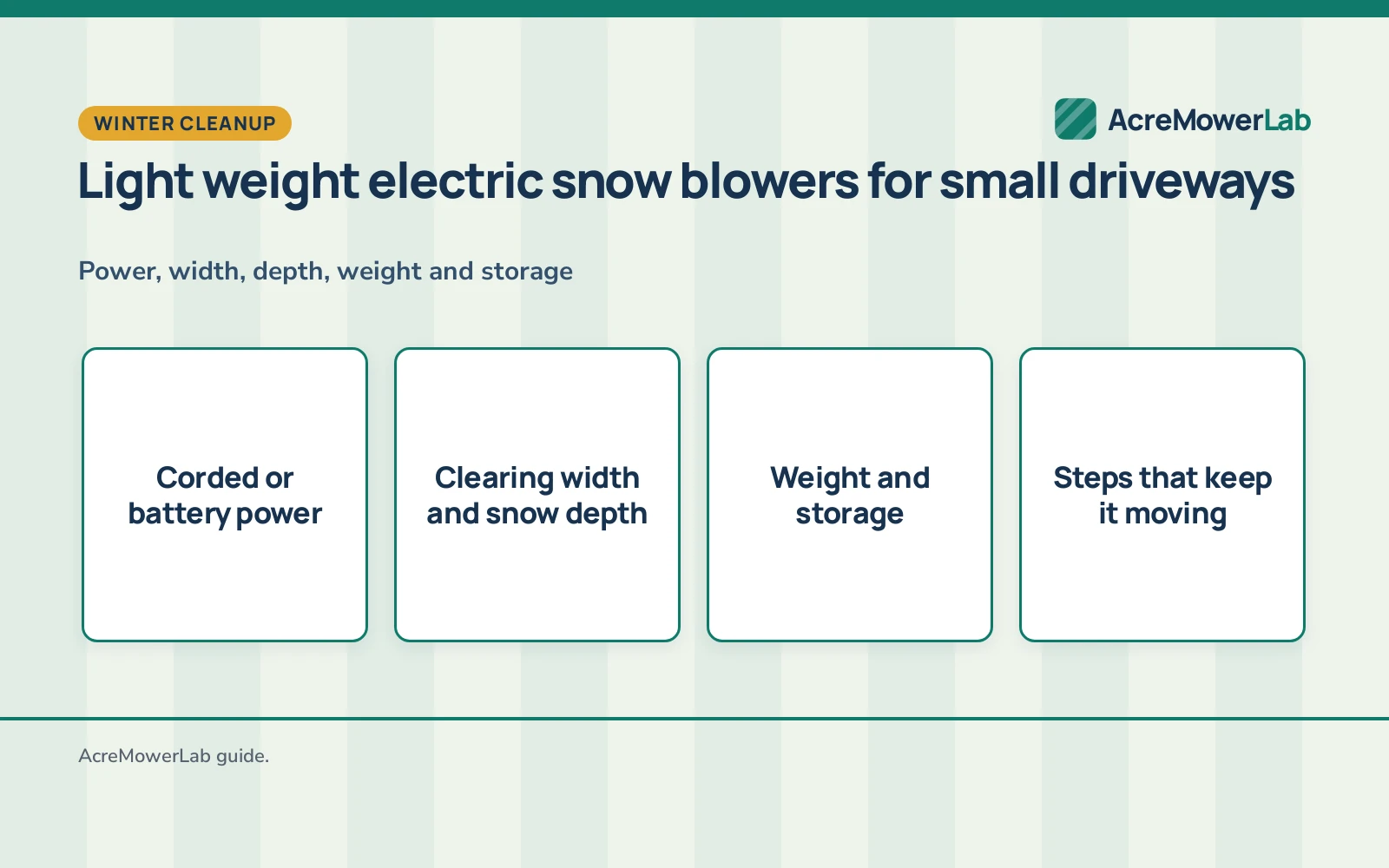
A plain guide to light weight electric snow blowers for small driveways: corded or battery power, clearing width, snow depth, weight, and storage.

On this page
Top picks at a glance
As an Amazon Associate I earn from qualifying purchases.
- 1
 Corded Snow Blower:15A MotorView on Amazon
- 2
 Snow Master ProView on Amazon
- 3
 PowerSmart 24-Inch Gas Snow Blower with 212cc EngineView on Amazon
- 4
 Yard Force 13A Electric Leaf Blower YF13JBL with 14000 RPMView on Amazon
- 5
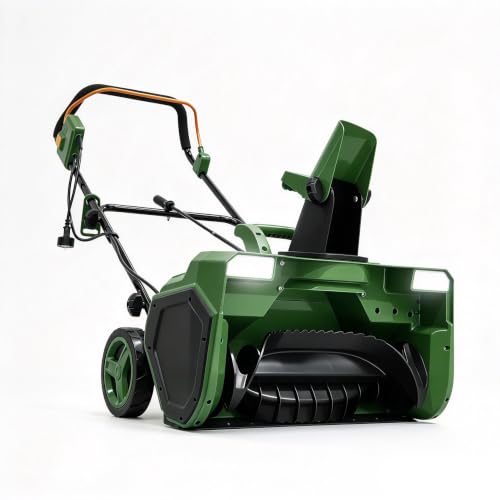 SPEEDOM 23 Inch Corded Electric Snow BlowerView on Amazon
- 6
 Massimo Snow Blower 30" Inch Clearing WidthView on Amazon
A light weight electric snow blower is a small, plug-in or battery-powered machine that clears snow from a small driveway and walkway without gas or oil. It suits a homeowner with a short drive and light to moderate snow, where a heavy gas blower would be more machine than the job needs. This guide walks through power, clearing width, snow depth, weight and storage, so the blower fits the driveway and the winter ahead.
Other machines to compare
 Corded Snow Blower:15A MotorCheck price on Amazon
 Snow Master ProCheck price on Amazon
 PowerSmart 24-Inch Gas Snow Blower with 212cc EngineCheck price on Amazon
 Yard Force 13A Electric Leaf Blower YF13JBL with 14000 RPMCheck price on Amazon
 SPEEDOM 23 Inch Corded Electric Snow BlowerCheck price on Amazon
 Massimo Snow Blower 30" Inch Clearing WidthCheck price on Amazon
AcreMowerLab earns a commission when you shop through links here. It never changes your price. Affiliate disclosure.
Light weight electric snow blower: corded or battery
| Power | Best for | Limit |
|---|---|---|
| Corded electric | Driveways near an outlet, steady power | Cord reach and cord care |
| Battery | Drives away from an outlet, no cord to manage | Charge time and cold-weather run time |
A corded blower plugs into an outdoor outlet and runs as long as it stays plugged in, so it suits a short drive near the house. A battery blower runs on a charged pack and suits a drive where a cord would tangle or fall short. Pick the power source by the distance from the house to the far end of the drive, and by whether a charged pack is already on the shelf. For a closer look at wheeled shovels, see the best electric snow shovel with wheels guide.
Pick the clearing width
Clearing width is the width of snow the blower takes in a pass. A narrow width suits a walkway and a small drive, while a wider width clears a broad drive in fewer passes. Match the width to the drive: a narrow walkway and tight gaps are easier with a narrow blower, and a broad drive rewards a wider blower. Measure the drive with a tape before shopping, and check the width the maker lists for the blower. The snow blower size guide explains how to pick the right width.
A walkway is usually narrower than a drive, so plan the route before the snow falls. Clear the walkway and the path to the door, then move to the drive. A narrow blower also turns more easily in the gaps between parked cars, where a wide blower may not have room to turn. On a small property, turning room often matters as much as power, since a blower that cannot turn in a tight gap wastes more time than a less powerful one that can.
Mind the snow depth
Snow depth is the depth of snow the blower can take in a pass. Light, fluffy snow moves easily, while wet, heavy snow packs down and slows the blower. Clear early and often during a storm, so the blower never faces a drift deeper than it can handle. If the snow piles past the intake, clear the top layer with a shovel, then run the blower. Deep drifts call for a shovel pass before the blower, or for a larger machine.
Mind the weight
Weight decides how the blower handles on the drive. A light blower lifts over a curb and turns at the end of a pass with little effort, and it is easier to lift onto a shelf for storage. A heavy blower pushes through deep snow with more grip, but it takes more effort to turn and lift. Pick the weight by who pushes it and where it stores: a light blower suits a homeowner who wants to lift it with ease, while a heavier blower suits a flat drive where it stays on the ground.
Store it for the season
Store the blower in a dry spot in the garage or shed, with the cord coiled and the battery charged for storage if the manual calls for it. Clean the intake and the chute before storage, and check the cord for nicks. A cover keeps dust off the blower through the warm months. At the start of winter, charge the battery, check the cord, and run the blower on a clear patch before the snow arrives.
Clear in passes
Work in straight, overlapping passes from the far end of the drive toward the street, so the blower throws snow onto the lawn and not back onto cleared ground. Overlap each pass a little, so no strip of snow stays behind. Clear the walkway, then the drive, and finish with the apron where the drive meets the street. Take a break when the snow gets heavy, and let the blower cool if the manual calls for it.
Safety
Wear eye and hearing protection and sturdy shoes. Clear sticks, stones and other debris before you run the blower, and keep children, pets and bystanders away from the work area. Keep hands and feet away from the intake and the chute while the blower runs, and switch the blower off before clearing a clog. For a corded blower, keep the cord behind the blower and away from the intake. See the snow shovel safety tips guide for more winter safety habits.
FAQ: mowing large lots
What size driveway suits a light weight electric snow blower?
A short, flat drive and the walkway around it. A light electric blower suits a drive where the snow stays light to moderate and the cord or battery reaches the far end. A long drive or a steep drive calls for a larger machine. Measure the drive before shopping, and match the blower to the ground it must clear.
Can a light weight electric snow blower clear wet snow?
Wet snow is heavy and slow to move, so a light blower works harder in it. Clear wet snow early, in shallow passes, and let the blower run at its own pace. If the snow packs and the blower clogs, switch it off and clear the intake before running it again.
Corded or battery: which fits a small driveway?
A corded blower fits a short drive near an outlet, where the cord reaches the far end without strain. A battery blower fits a drive where a cord would tangle, or where no outlet sits near the drive. Pick by the distance from the house to the far end of the drive, and by whether a charged pack is already on the shelf.
How do I store an electric snow blower for the summer?
Clean the intake and the chute, coil the cord, and store the blower in a dry spot in the garage or shed. Charge the battery for storage if the manual calls for it, and cover the blower to keep dust off through the warm months. Check the cord and the battery at the start of winter.
What should I clear before I run the blower?
Sticks, stones, ice melt bags, and any debris the snow hides. Walk the drive before the snow falls and mark the edges with driveway markers, so the blower stays on the drive and off the lawn. Clear the walkway of toys and tools before the blower runs.
More mowing guides
- Best Cordless Snow Shovel with Wheels (2026): 5 Picks for Driveways and Walks
- Best Electric Snow Shovel with Wheels (2026): 5 Picks Compared
- Snow Blower Size: How to Pick the Right Width
- How to Use a Snow Thrower Safely and Effectively
Browse the trimmer and blower reviews for more yard tools.