Brushless vs Brushed Lawn Mower: Which One Should You Buy?
A brushless motor brings longer motor life and steadier torque, while a brushed motor still suits a modest lawn with simpler upkeep.

On this page
Top picks at a glance
As an Amazon Associate I earn from qualifying purchases.
- 1
 Greenworks 60V 21in Self-Propelled Lawn Mower9.6/10View on Amazon
- 2
 Dreame A3 AWD LiDAR Robot Lawn Mower9.8/10View on Amazon
- 3
 Greenworks 80V 21in Self-Propelled Lawn Mower9.6/10View on Amazon
- 4
 Litheli 18" Electric Lawn Mower CordlessView on Amazon
- 5
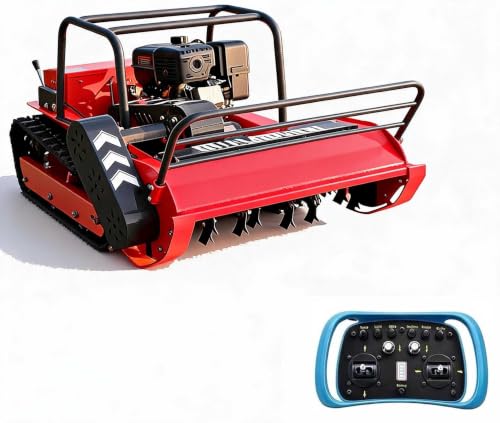 Tyzar 459cc Remote Control Flail MowerView on Amazon
- 6
 Infront Remote Control Lawn Mower with Enclosed CabinView on Amazon
- 7
 DareDevil Mower Remote Control Tracked Lawn MowerView on Amazon
- 8
 LIGIANT 9'' Cordless Lawn MowerView on Amazon
- 9
 BLACK+DECKER Electric Lawn MowerView on Amazon
For a brushless vs brushed lawn mower choice, the short answer is that a brushless motor usually suits a buyer who wants longer motor life, steadier torque and quieter running, while a brushed motor can still suit a buyer who mows a modest lawn and wants a simpler, lower upkeep machine. The difference sits in the motor itself: a brushed motor uses carbon brushes that wear as they pass current to the spinning part, while a brushless motor uses electronics to do that job without brushes rubbing away. That design change shapes how long the motor lasts, how it handles thick grass, and how much care it asks for over time.
Other machines to compare
 Litheli 18" Electric Lawn Mower CordlessCheck price on Amazon
 Tyzar 459cc Remote Control Flail MowerCheck price on Amazon
 Infront Remote Control Lawn Mower with Enclosed CabinCheck price on Amazon
 DareDevil Mower Remote Control Tracked Lawn MowerCheck price on Amazon
 LIGIANT 9'' Cordless Lawn MowerCheck price on Amazon
 BLACK+DECKER Electric Lawn MowerCheck price on Amazon
AcreMowerLab earns a commission when you shop through links here. It never changes your price. Affiliate disclosure.
Brushless vs Brushed Lawn Mower: How the Motors Differ
| Motor type | How it works | Tradeoff |
|---|---|---|
| Brushless | Electronics switch current without brushes | Longer motor life and steadier torque, with more electronics inside |
| Brushed | Brushes pass current to the spinning part | Simpler design, but brushes wear and need attention over time |
The listings in this guide all describe brushless motors. A brushed motor is not a poor motor by itself. It is an older, simpler design, and on a small lawn with light grass it can cut well. The brushless advantage shows up in harder work: thick or tall grass and longer mowing sessions, where steady torque and less wear matter more than simple construction.
What a Brushless Motor Changes on a Lawn
The Greenworks listings describe strong torque and consistent cutting performance for their brushless motors, with less noise and longer motor life compared with brushed models. That combination matters on a property where the grass grows fast in spring and summer, or where the lawn mixes open stretches with shaded, damp corners that cut harder.
On battery mowers, runtime is where the Greenworks 24V listing makes the direct comparison: it describes extended runtime compared with brushed models. The Greenworks listing for its combined battery mower states up to 45 Minutes of run time with two fully charged 4.0Ah batteries, and notes that run time varies with grass condition and operator technique.
What a Brushed Motor Still Does Well
A brushed motor has fewer electronic parts, which can make it easier to understand. For a buyer with a modest lawn who mows on a steady routine, that simplicity can be enough. The tradeoff is wear: brushes are a wearing part, so a brushed motor asks for more attention as the hours add up, and its performance can fade as the brushes wear down.
That is why the choice is not about which motor is good and which is poor. It is about matching the motor to the workload. A small, flat lawn mowed weekly in the growing season puts modest demands on either motor. A larger lawn, or one with thick grass and obstacles to work around, rewards the steadier torque and longer life of a brushless design. See our battery mower compared with gas guide for how battery power as a whole stacks up against gas.
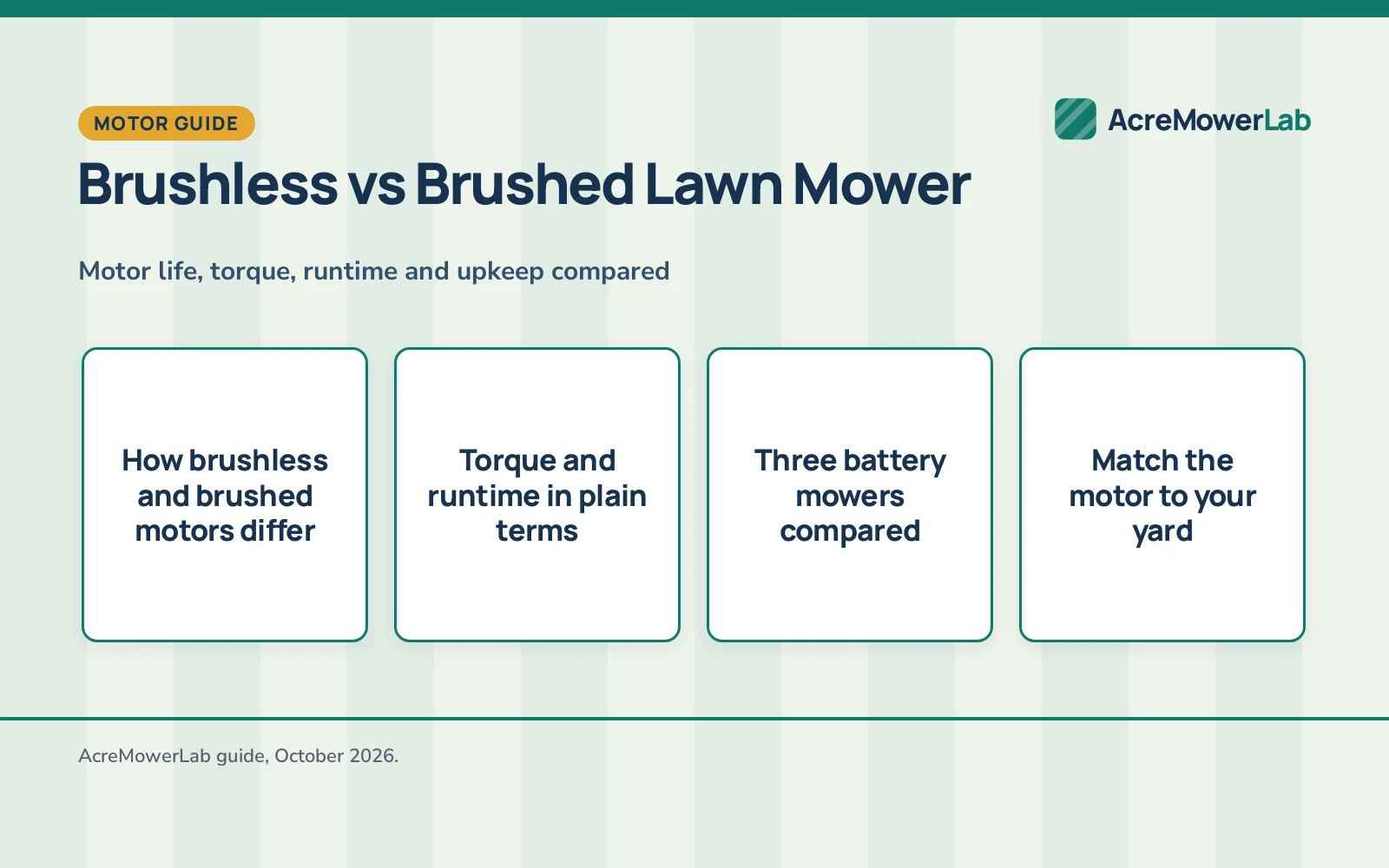
Three Battery Push Mowers That Show the Difference
Greenworks 48V push mower. The listing describes two Greenworks 24V batteries combining for 48V of power, a durable steel 20 in. cutting deck, a brushless motor with more torque, quiet operation and longer life, and a dual port charger. The listing states up to 45 Minutes of run time with two fully charged 4.0Ah batteries, with run time varying by grass condition and operator technique. With the widest deck of the three mowers here, it covers more grass per pass across an open lawn. The listing also states a 3-year limited tool and battery warranty, and compatibility with 200+ Greenworks 24V tools.
Wild Badger Power 40V push mower. The listing describes an 18-in brushless push mower for small-to-medium lawns, with a motor reaching up to 3,400 RPM, five cutting heights, and three clipping modes: bagging, mulching or rear discharge. The included 11-gallon bag helps collect clippings for a clean finish, and the listing states the mower weighs 37.5 pounds with a folding handle that reduces storage space. Runtime varies with grass, terrain, temperature and mowing pace, and the listing states a 3-year limited warranty with 24-hour customer support. This is the middle ground of the three: a wider deck than the compact Greenworks model, with a balance of coverage and maneuverability around beds and trees.
Greenworks 24V push mower. The listing describes a 14 in. brushless push mower with a 5.0Ah USB-C battery, a 65W Type-C fast charger, and a foldable design that stores upright to save garage space. The listing states long runtime for yards up to 1/4 acre, with an LED fuel gauge and compatibility with 200+ Greenworks 24V tools. It offers 2-in-1 mulching and bagging options and a 3-year limited tool and battery warranty. For a buyer with a modest lawn and tight storage, the compact deck and upright storage matter more than raw cutting width, and the brushless motor still brings the longer life and quieter running described above.
Match the Motor to Your Yard
- Deck width: a 20 in. deck covers more grass per pass than an 18-in or 14 in. deck, but a narrower deck turns more easily around beds and trees.
- Battery platform: staying inside one battery platform, such as the Greenworks 24V tools described here, lets one battery serve mowers, trimmers, blowers and chainsaws.
- Clipping choice: bagging, mulching or rear discharge suit different lawns; the Wild Badger listing offers all three, while the compact Greenworks listing offers mulching and bagging.
- Storage: a folding handle or upright storage helps where garage space is tight, and the compact Greenworks listing stores upright.
- Charging: a dual port charger or a fast charger shortens the wait between sessions, and the compact Greenworks listing includes a 65W Type-C fast charger.
Upkeep and Ownership
Brushless motors ask less of the owner on motor care, since there are no brushes to wear out, but the rest of the mower still needs routine care. Keep the deck clear of packed clippings, keep the blade sharp, and store the battery as the manual directs. All three listings here state a 3-year limited warranty. Wear eye and hearing protection, clear sticks, stones and other debris before mowing, and keep children, pets and bystanders away from the work area. On slopes, follow the mower manual.
Voltage alone does not settle the choice. A 40V mower and a 48V mower differ in deck width and battery setup as well as voltage, so compare the whole listing, not one figure. Our voltage comparison explains how voltage bands relate to mower size and workload.
FAQ: mowing large lots
Is a brushless lawn mower worth it for a small lawn?
For a small lawn, a brushless motor still brings longer motor life and quieter running, and the compact Greenworks listing shows the design at a 14 in. deck size for yards up to 1/4 acre. A brushed motor can also cut a small lawn well, so the gain is in longevity and steady torque.
Do brushless mowers run longer on a charge?
The Greenworks 24V listing describes extended runtime compared with brushed models. Actual run time still varies with grass condition, terrain, temperature and mowing pace, as the listings state.
What does a brushed motor need that a brushless motor does not?
A brushed motor uses brushes that wear as they pass current, so it asks for more attention over time as those parts wear down. A brushless motor uses electronics instead of brushes, which removes that wearing part from the design.
Which deck width suits a lawn with beds and trees?
A narrower deck, such as the 14 in. or 18-in sizes here, turns more easily around beds and trees, while a 20 in. deck covers open grass faster. Match the deck to how much of the lawn is open and how much needs steering around obstacles.
How do I choose between the battery mowers in this guide?
Start with lawn size and storage: the compact Greenworks model suits yards up to 1/4 acre with tight storage, the Wild Badger model suits small-to-medium lawns, and the wider Greenworks model suits open lawns where fewer passes matter. Then compare clipping modes, charger type and warranty.
More mowing guides
- Battery Lawn Mower vs Gas: Which One Should You Buy?
- Best Battery Electric Lawn Mower: 5 Picks Compared (2026)
- 20v vs 40v Lawn Mower: Which One Should You Buy?
- AGM vs Lithium Mower Battery: Which One Should You Buy?
See our battery electric mower options for more battery mowers to compare.