Chainsaw Roller File Guide: How to Use One
How a chainsaw roller file guide holds the file at the right depth and angle, how to match it to your chain, and where the depth gauge fits in.

On this page
Top picks at a glance
As an Amazon Associate I earn from qualifying purchases.
- 1
 Oregon 25892 7/32-Inch Chainsaw File Guide with File9.7/10View on Amazon
- 2
 Oregon 23820 Sure Sharp Chainsaw Manual Filing Guide9.6/10View on Amazon
- 3
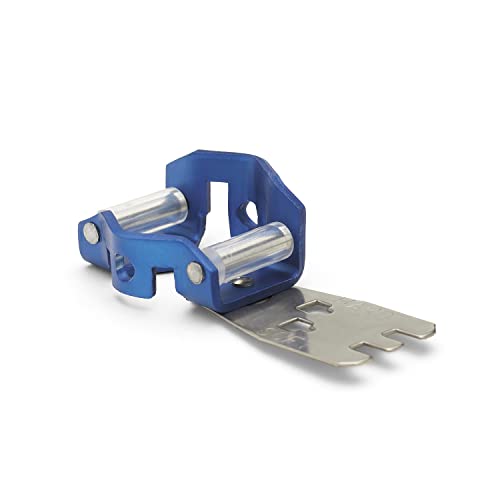 Husqvarna Combi File Guide 3/8 Mini S93G9.5/10View on Amazon
- 4
 Suwzuqn Chainsaw Depth Gauge File Guide Tool 4 Pcs9.5/10View on Amazon
A chainsaw roller file guide helps hold the round file at a consistent height on the cutter while you file, so each cutter is shaped the same way; the filing angle itself is still aligned by hand using the guide marks. On a wooded property where storm limbs and firewood rounds keep the saw busy, a dull chain slows every cut. This guide explains how the guide is used, how to match it to your chain, and where the depth gauge fits in.
AcreMowerLab earns a commission when you shop through links here. It never changes your price. Affiliate disclosure.
Oregon 25892 7/32-Inch Chainsaw File Guide with File
File guide with a 7/32-inch file included that grips the file and keeps it at the correct depth for the filing step.
Who it's for: owners whose chain takes a 7/32-inch file and who want the guide and file together.
Who should skip it: owners whose chain takes a different file size, or anyone who wants the depth gauge check built into the same tool.
The Oregon 25892 pairs the guide with a 7/32-inch file, so it handles the filing step itself. The maker lists it as gripping the file firmly at the correct depth, with frame lines for alignment, a wood handle, and a filing chart on the back of the package.
Pros
- File included, so the filing step can start without a separate file purchase
- Guide grips the file and keeps it at the correct depth, per the maker
- Lines on the frame help align the file consistently on each cutter
- Wood handle provides comfort during filing, per the maker
Cons
- Sized for a 7/32-inch file, so chains that take another file size need a different guide
- No warranty term is stated
- At 0.217 pounds it is heavier to carry than the 0.11 pound depth gauge set here
- At 11.95 inches long it takes more toolbox room than the compact gauges here
Oregon 23820 Sure Sharp Chainsaw Manual Filing Guide
Manual filing guide that locks in filing angles and depth setting, with a maker-stated universal fit for all pitch saw chains, covering the angle step of the job.
Who it's for: owners with saws of different pitches who want the angle held for them.
Who should skip it: anyone who wants a file included in the box, since file inclusion is not stated for this guide.
The Oregon 23820 Sure Sharp handles the angle and depth-setting part of filing: the maker lists it as locking in filing angles and depth setting, with built-in instructions and a filing chart on the package. The maker states a universal fit for all pitch saw chains.
Pros
- Locks in filing angles and depth setting for consistent filing, per the maker
- Maker states a universal fit for all pitch saw chains
- Built-in instructions are stated on the guide
- Filing chart on the back of the package helps file the chain properly, per the maker
Cons
- A file is not stated as included, so the right file for your chain may be a separate purchase
- At 2.55 inches deep it is the bulkiest guide here for storage
- Universal fit is the maker's claim, so the file size for your chain still has to be matched by you
- No concrete warranty period in years, months or days is stated
Husqvarna Combi File Guide 3/8 Mini S93G
Combination gauge with a file gauge and depth gauge setter in a combined tool, made for the 3/8-inch Mini S93G chain.
Who it's for: owners running the 3/8-inch Mini S93G chain who want the file gauge and depth setter together.
Who should skip it: owners of any other chain, since the gauge is made specifically for that chain.
The Husqvarna Combi File Guide covers the measurement part for a specific chain: the maker describes a file gauge and depth gauge setter in a combined tool, made for 3/8-inch Mini S93G chains and used with round and flat files. The stated warranty is 90 days.
Pros
- File gauge and depth gauge setter are combined in a combined tool, per the maker
- Made specifically for 3/8-inch Mini S93G chainsaw chains, per the maker
- Compact at 4.0 inches x 2.0 inches x 1.0 inches for a small toolbox
- Warranty stated as 90 days
Cons
- Made specifically for the 3/8-inch Mini S93G chain, so other chains call for a gauge made for them
- Round and flat files are not stated as included and are used with the gauge
- Warranty term is short at 90 days
- Covers the gauge checks only; the filing itself uses round and flat files with the gauge
Suwzuqn Chainsaw Depth Gauge File Guide Tool 4 Pcs
Depth gauge file guide set for the raker-depth check, listed at 0.65mm/0.026in with 4 pieces in silver metal.
Who it's for: owners who file with a separate guide and want a dedicated raker-depth check.
Who should skip it: anyone who wants a combined tool that also holds the file at the filing angle.
The Suwzuqn set handles the depth gauge step: the maker describes a 4-piece set for maintaining raker depth, at 0.65mm/0.026in in silver metal, and states compatibility with Oregon chainsaws and various other models. It pairs with a file guide rather than replacing it.
Pros
- Set of 4 pieces in silver metal, per the maker
- Listed at 0.65mm/0.026in for maintaining raker depth, per the maker
- Compact at 5.12 inches x 0.59 inches x 0.27 inches and 0.11 pounds
- Maker states compatibility with Oregon chainsaws and various other models
Cons
- Handles the depth gauge check only, so cutters still need a file and file guide
- No warranty term is stated
- A single stated size of 0.65mm/0.026in may not suit chains that call for a different depth setting
- File inclusion is not stated for this set
How to use a chainsaw roller file guide
Set the saw on a steady surface with the engine off and the bar clamped. Place the guide over the cutter, with the file seated in the guide. On a frame guide, the frame grips the file at a set depth, and its lines help you align the file the same way on every cutter. Push the file forward in smooth strokes, lifting it clear on the return. Work around the chain cutter by cutter, then check the depth gauges.
Match the file and guide to your chain
File size has to match the chain. A guide sold for a stated file size, such as the 7/32-inch size listed below, suits chains that take that file. A combination gauge made for a named chain, such as the 3/8-inch Mini S93G chain below, suits that chain only. A guide described as fitting all pitch saw chains covers a wider range, but you still need the right file. Our chainsaw file size chart helps you line up file size and pitch before you order.
Check the chain marking and the saw manual rather than guessing from the bar, because a guide built around the wrong file size will not put the edge where it needs to be.
Set the depth gauge as part of the same job
Sharp cutters still cut poorly when the depth gauges, also called rakers, stand too high, because the depth gauge limits how much wood each cutter takes; rakers filed too low let the cutter take too large a bite. A depth gauge tool rests across the cutters and shows whether the raker needs filing down. The set below is listed at 0.65mm/0.026in for maintaining raker depth. With a flat file held across the gauge, file only the material that stands above the gauge, then round the front corner of the raker.
Gear for the filing step
The filing step above needs a guide that holds the file at a consistent depth while the angle is aligned by hand, and the depth check needs a gauge matched to the chain. None of the four picks below is described by its maker as a roller guide; they cover the same filing and gauge steps as a file guide, an angle guide, a combination gauge and a depth gauge set.
Keep the chain cutting evenly
File a little and often. A chain that throws dust instead of chips points to dull cutters, and a cut that pulls to the side points to uneven cutter length or sharpness from side to side. Keep the file clean and replace a worn file instead of pressing harder. For the wider routine, see our chainsaw chain maintenance guide.
Safety
File only with the engine off and cool, the bar clamped, and the chain held still. Wear gloves against sharp cutters, keep the file handle in place, and keep children, pets and bystanders away from the work area. Put the bar cover back on for storage, follow the manual for chain tension, and wear eye and hearing protection while cutting.
FAQ: mowing large lots
What does a chainsaw roller file guide do?
It helps hold the file at a consistent height on the cutter while you file, and its marks help you repeat the same angle, so each cutter is shaped the same way.
How do I know which file size my chain needs?
Check the chain marking and the saw manual for the stated file size, then match the guide to that size. A guide listed for a 7/32-inch file suits chains that take that file, and a combination gauge made for a named chain suits that chain.
Do I still need to check the depth gauge when I file?
Yes. As cutters are filed back, the depth gauges need checking so each cutter still takes the right bite. A depth gauge tool rests across the cutters and shows whether the raker stands too high.
How often should I file the chain?
File when the chain throws dust instead of chips, pulls to the side, or needs extra pressure. Short, regular touch-ups take less filing than restoring a badly dulled chain.