Do Tow Behind Plug Aerators Work?
Tow-behind plug aerators effectively relieve soil compaction on large lawns when paired with adequate tray weight, moist ground, and proper tractor operation.

On this page
Top picks at a glance
As an Amazon Associate I earn from qualifying purchases.
- 1
 Brinly PA-482BH-A2 Tow Behind Plug Aerator with Universal9.7/10View on Amazon
- 2
 Craftsman 40 Inch Tow Behind Lawn Plug Aerator with 249.7/10View on Amazon
- 3
 Agri-Fab 48 In Tow Behind Lawn Plug Aerator with 329.6/10View on Amazon
- 4
 Brinly Tow Behind Combination Aerator Spreader with WeightView on Amazon
- 5
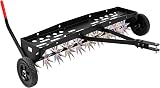 Suchtale 40-Inch Tow Behind Spike Aerator with GalvanizedView on Amazon
- 6
 Brinly Tow Behind Spike Aerator with Double Tow Bar and 3DView on Amazon
- 7
 Titan 3 FT Tow-Behind Drum Spike Aerator Holds up to 25 GalView on Amazon
Do tow behind plug aerators work? Yes, tow-behind plug aerators work well to relieve compacted soil on large lawns when properly weighted and pulled across moist ground. Unlike spike aerators that simply push soil outward, a tow-behind plug aerator uses hollow spoons or coring tines to pull physical soil plugs out of the lawn, opening channels for air, water, and nutrients to reach grass roots. Match the aerator to your tractor, add adequate ballast to the weight tray, and ensure the soil has proper moisture to avoid muddy rutting.
Other machines to compare
 Brinly Tow Behind Combination Aerator Spreader with WeightCheck price on Amazon
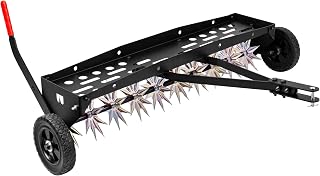 Suchtale 40-Inch Tow Behind Spike Aerator with GalvanizedCheck price on Amazon
 Brinly Tow Behind Spike Aerator with Double Tow Bar and 3DCheck price on Amazon
 Titan 3 FT Tow-Behind Drum Spike Aerator Holds up to 25 GalCheck price on Amazon
AcreMowerLab earns a commission when you shop through links here. It never changes your price. Affiliate disclosure.
Do tow behind plug aerators work: aerator types compared
Lawn aerators use distinct mechanical designs that treat soil compaction differently. Hollow spoon models extract dirt plugs, whereas solid spikes only pierce holes while pressing surrounding dirt tighter.
| Aerator Type | Working Action | Best Application | Key Limitation |
|---|---|---|---|
| Tow-Behind Plug Aerator | Hollow spoons or coring tines extract soil plugs | Acreage lawns, large turf areas, heavy clay soil | Requires towing machine and tray ballast |
| Tow-Behind Spike Aerator | Solid spikes pierce soil without removing cores | Light turf maintenance, sandy soil | Can increase compaction along hole sidewalls |
| Walk-Behind Commercial Aerator | Powered mechanical tines drive into soil | Tight residential yards, gated lawns | Heavy walk-behind operation, slow on acreage |
| Manual Core Aerator | Foot-step hollow tines extract cores | Small problem spots, tight garden paths | Exhausting manual labor past small patches |
On acreage, towing a core aerator covers ground far faster than walk-behind units. To see specific models, read our best tow-behind aerator guide.
Why weight tray ballast is essential for soil penetration
A tow-behind plug aerator relies on downward ballast weight to press its tines into the ground. Without added load, tines tend to skate across hard ground without pulling plugs. Most tow-behind models feature a built-in steel weight tray directly above the tine axle.
Published tray capacities vary across models and widths. For example, VEVOR lists a 100 lbs capacity on its 32-inch model and a 120 lbs capacity on its 40-inch model. Brinly designs its 40-inch aerator with a fully enclosed steel weight tray that holds up to 150 pounds of extra ballast. Heavy-duty options support more load: JFHID lists a 250 lbs capacity on its 48-inch frame, while Garvee specifies a tray holding up to 330 lbs on its 40-inch and 48-inch units.
Concrete cinder blocks or sandbags work well as ballast. Always fasten ballast with straps through the tray slots so weights do not slide off on slopes.
Why soil moisture determines core depth
Soil moisture is just as critical as ballast weight. Pulling an aerator across dry, sun-baked clay will yield shallow holes and can bend steel tines. Saturated mud causes wet dirt to jam inside hollow spoons, tearing turf instead of extracting clean plugs.
The ideal window occurs when soil is moist throughout the root zone but firm enough that tractor tires leave no ruts. Aerating after steady rainfall provides the right balance. If dry conditions persist, irrigate the lawn deeply ahead of time.
Matching working width to your towing machine
Tow-behind aerators typically measure 32 inches, 40 inches, or 48 inches wide. Selecting the right width depends on yard acreage, gate clearances, and towing vehicle power.
Compact 32-inch models, listed by VEVOR and Garvee, suit smaller yard sections and narrow gates. Medium 40-inch units, from Brinly, Volkmi, and Garvee, balance coverage and maneuverability. Wide 48-inch aerators, from Garvee and JFHID, maximize coverage per pass on multi-acre properties.
Implement empty weights range from 27.6 pounds on the 32-inch VEVOR and 29.5 pounds on the 32-inch Garvee to 52.9 pounds on the 40-inch Volkmi, 58.2 pounds on the 40-inch VEVOR, 63.9 pounds on the 40-inch Brinly, and 65 pounds on the 48-inch Garvee. For example, Brinly features a single pin universal hitch that attaches to lawn tractors, garden tractors, and zero-turn mowers. Ensure your vehicle has adequate drawbar capacity for both empty implement weight and tray ballast.
Hollow spoons versus solid spikes: core penetration depth
Solid spikes punch narrow indentations by compressing surrounding soil sideways, which can increase compaction along hole sidewalls. Hollow spoons slice into the earth and pull out plugs of soil, leaving open cavities that relieve subsoil density.
In published listings, terminology often overlaps. Volkmi titles its implement a plug aerator but refers to its 24 penetration points as 2-inch spikes while stating they pull out soil plugs to relieve compaction. Garvee describes its 32 plug tines as steel nails with teeth reaching a penetration depth of 3 inches, and VEVOR titles its 32-inch model a spike aerator while listing 2-inch coring tines in its bullets. True plug aeration relies on hollow coring action, such as the 24 heat-treated spoons made from 16-gauge steel on the Brinly 40-inch aerator, that physically removes dirt cores.
Coring depth reaches up to 3 inches on models from Brinly, Garvee, JFHID, and VEVOR, while VEVOR lists a 2-inch penetration depth on its 32-inch implement and Volkmi lists 2-inch penetration on its 40-inch assembly.
Operating speed and turning technique to protect turf
Tow the aerator at a steady walking pace. Driving too fast causes the implement to bounce, producing shallow plugs. Moving at a controlled speed allows spoons to sink to full depth under tray weight.
Sharp turns with engaged spoons will slice turf sideways and tear grass roots. Brinly uses three independently rotating welded tine sections to reduce turf tearing on turns. For aerators with a single rigid axle, take wide, gentle turns. When towing with a zero-turn mower, never execute a zero-radius spin with tines in the ground.
On paved drives or rocky paths, steel tines must not drag across hard surfaces. Brinly provides a single transport lever to engage transport mode using its 10-inch semi-pneumatic rubber tread tires, and Garvee notes that transport wheels on its 32-inch aerator lift tines for transit. Other listings describe supporting wheels that roll alongside the frame, including 8-inch tires on the JFHID, 10.6-inch pneumatic tires on the VEVOR 40-inch model, and 12-inch pneumatic wheels on the Garvee 48-inch aerator. On models without a lever-activated transport lift, avoid crossing pavement with tines engaged.
What to do with soil plugs and follow-up care
After aerating, leave the extracted soil plugs on the lawn. Over the following days, sun, wind, rain, and routine mowing will break the plugs down naturally. Beneficial microbes and organic matter filter back into the thatch layer without adding compaction.
Aeration creates an ideal window to overseed and fertilize. Distribute seed and amendments across acreage using a tow behind spreader with auto stop so seed drops directly into open soil cavities. While property owners sometimes use a lawn roller for tractor towing in early spring to level winter frost heaves, avoid rolling immediately after core aerating: a heavy roller crushes open cavities and re-compacts loosened soil.
Safety considerations when towing an aerator
Follow your mower manufacturer’s maximum slope rating, and never tow a weighted aerator across steep hills. Zero-turn mowers can lose traction on slopes or near drainage ponds and ditches when pulling heavy ballast. If your mower features a rollover protective structure and seat belt, deploy the structure and fasten the belt before operating.
Never carry passengers or allow riders on the weight tray. Keep children and pets clear of the work area. Disengage mower cutting blades completely before towing attachments. Wear eye protection, hearing protection, and sturdy work boots. Always hitch with a sturdy pin and safety clip, and verify tray ballast is tightly fastened.
FAQ: mowing large lots
Do tow behind plug aerators really pull good plugs?
Yes. When soil moisture is adequate and the weight tray is loaded with sufficient ballast, coring tines pull soil plugs 2 inches or up to 3 inches deep depending on model design. In parched ground, tines only scratch the surface.
How much weight should I put on a tow behind aerator?
Add enough weight to achieve consistent penetration without exceeding tray ratings or towing limits. Published tray capacities range from 100 pounds on compact 32-inch models up to 330 pounds on 48-inch frames.
Can a lawn tractor or zero-turn pull a plug aerator?
Yes. Most lawn tractors, garden tractors, and zero-turn mowers equipped with a rear hitch pin can pull a tow-behind aerator. Ensure your machine has adequate power and traction, and avoid sharp pivot turns.
Should I leave the soil plugs on the lawn?
Yes. Rain, weather, and routine mowing break down the cores naturally, returning soil nutrients and microorganisms to the turf without causing compaction.
When is the best season to use a tow behind plug aerator?
Aerate when lawn grass is actively growing and soil contains natural moisture. For cool-season grasses, early fall is the premier window, with spring as an alternate option.
More mowing guides
- Best Tow-Behind Aerator: 4 Plug Aerators for 1 to 10 Acres
- Lawn Roller for Tractor: 5 Picks Compared (2026)
- Tow Behind Spreader with Auto Stop: 5 Picks Compared (2026)
- Best Pull Behind Dump Cart: 5 Picks for Lawn Tractors and UTVs (2026)
Browse our complete index of tow-behind attachments to compare utility carts, spreaders, and rollers, or review our guide to riding lawn tractor models best suited for yard maintenance.