How to Use a Brush Hook to Clear Brush
A step-by-step guide to using a brush hook to clear vines, saplings and thick stalks without a powered cutter.

On this page
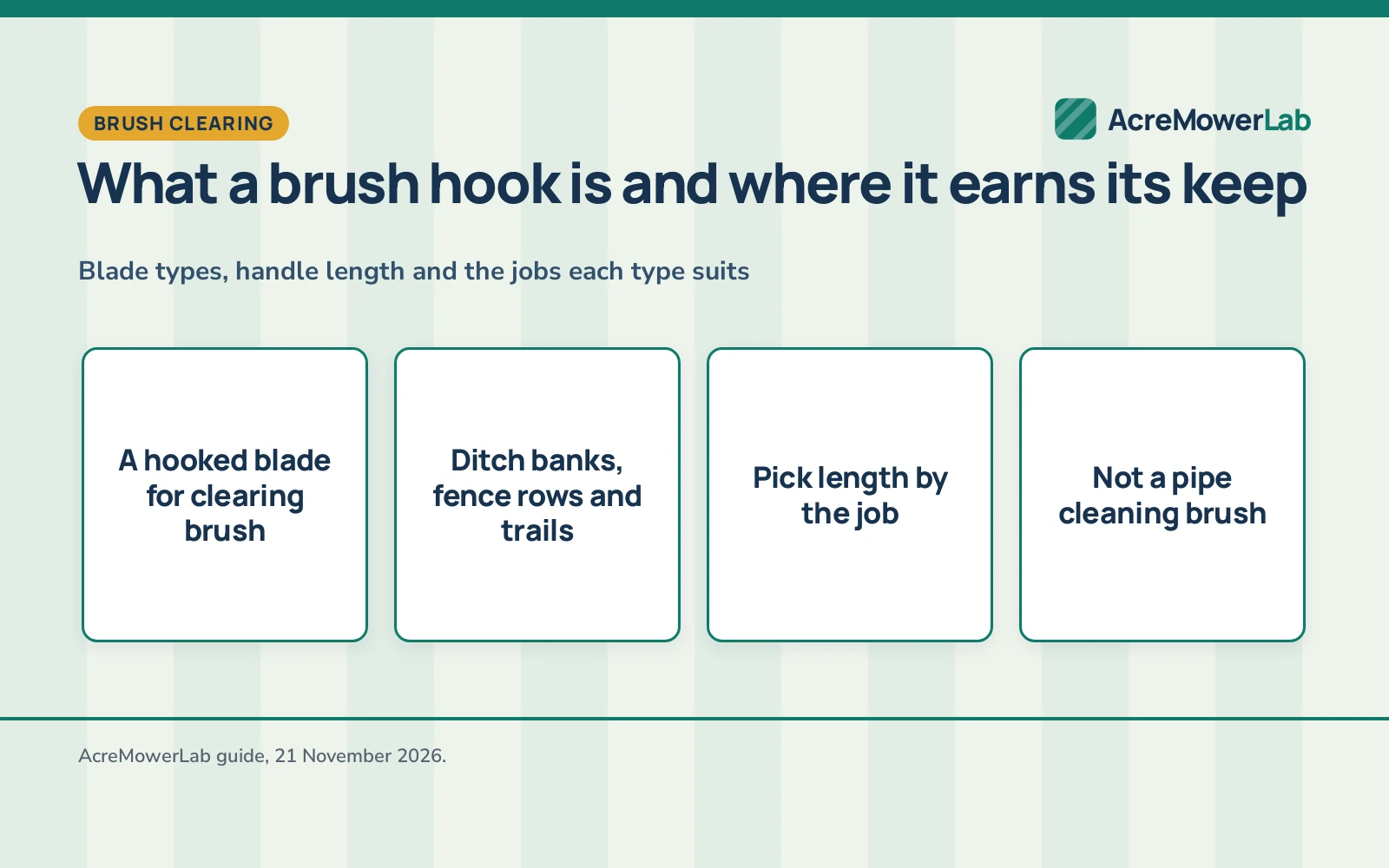
Thick brush takes over a fence line fast. Vines climb the posts, saplings crowd the ditch bank, and stalks lean across the path until the ground is hard to walk. A brush hook clears that growth by hand, with a hooked blade that pulls stems in close and slices them at the base. This guide shows how to use a brush hook step by step, from picking the right tool to piling the cut brush where it belongs.
As an Amazon Associate I earn from qualifying purchases. AcreMowerLab earns a commission when you shop through links here. It never changes your price. Affiliate disclosure.
How to use a brush hook: pick the right tool
| Tool | Best for | Limit |
|---|---|---|
| Truper 18-inch brush hook machete | Pulling vines and slicing dense brush with the hooked tip | Short handle, close-in work |
| Zenport 30.5-inch curved sickle | Weeds, vines and undergrowth cut with pull strokes | 9-inch blade covers a narrow arc |
| Truper 12-inch ditch bank blade | Fence rows, ditch banks and trails, cutting in both directions | 38-inch handle needs room to swing |
Where vines are part of the growth, the hooked blade helps, because the hook pulls vines in before it cuts. For powered clearing of heavier growth, see our best straight shaft brush cutter picks.
Step 2: walk the ground first
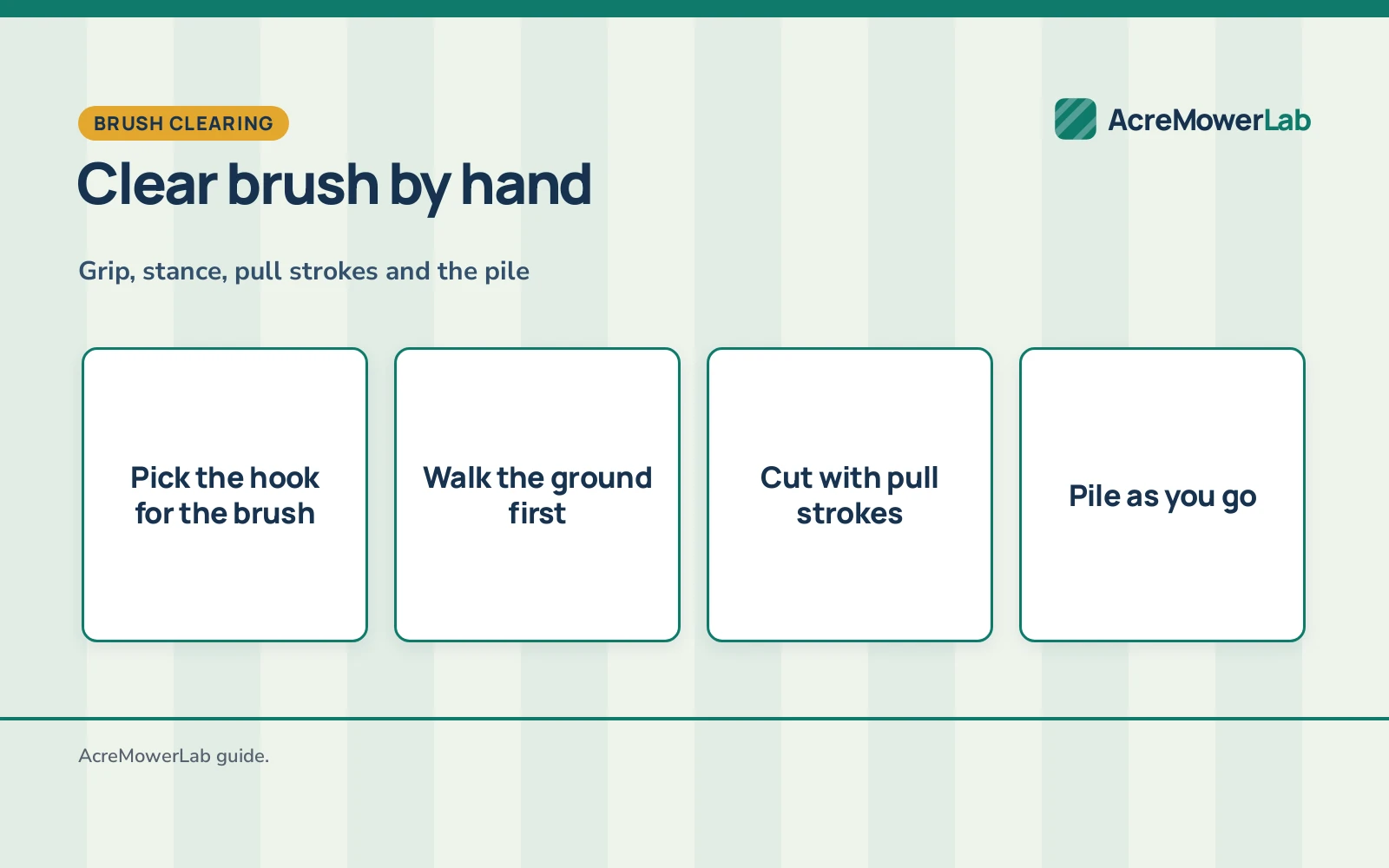
Walk the stretch you plan to clear before you swing anything. Look for wire, fence staples, stones, stumps and hidden debris that can catch a blade or throw it off line. Mark what stays, such as young trees and plantings you want to keep, and pull loose vines off fences by hand where they wrap tight. Clearing the ground first keeps the work steady and keeps the blade out of metal and stone.
Step 3: grip, stance and the pull stroke
Hold the handle where the grip feels balanced, and stand with feet apart and the cutting side clear of your legs. The Zenport sickle (on Amazon) lists an ergonomic wooden grip for control, and the Truper machete lists a high-impact polymer handle shaped for a secure grip. Cut low near the base with a short pull stroke where the tool has a hooked or curved blade, and let the hooked tip gather vines before the edge bites. The ditch bank blade is double-edged, so it cuts in both directions. Keep the free hand behind the blade path, and never cut toward your body.
Step 4: work in sections
Clear one stretch at a time and finish it before moving on. Cut the stems at the base, pull the cut growth aside, and check the ground again before the next pass. Working in sections keeps the pile from spreading back over cleared ground and shows how far the growth reaches before you commit to the next stretch.
Step 5: pile and clear the cut brush
Drag the cut brush to a pile as you go, instead of leaving it where it falls. A pile at the edge of the cleared ground stays out of the next pass and is easy to load or compost later. Check local rules before burning, since many counties restrict it, and keep the pile away from fences and buildings until it is gone.
Pick where the cut brush goes
Choose the pile spot before you start, because it sets the direction of every pass. Pick flat, dry ground near where you will compost, tarp or load, and away from drainage ditches and the property boundary so cut brush does not wash or blow back. Moving cut brush a short distance in many passes beats one long drag. For fence lines, pull cut growth into the open first, then to the pile.
Match the tool to the brush type
Vines suit the hooked tip: the Truper 18-inch brush hook machete lists a hooked tip made for pulling vines and clearing dense brush. Woody stalks and thick briars suit the Truper 12-inch ditch bank blade, which lists a double-edged high-carbon steel blade for cutting in both directions. Light weeds, vines and undergrowth suit the Zenport sickle, which lists a 9-inch curved carbon steel blade for controlled pull cuts. Match the blade to the growth, and switch tools when the growth changes instead of forcing one blade through everything.
Plan the property in zones
Divide the ground into zones, such as the driveway and paths, the fence line, the ditch bank and the field edge. Finish one zone before moving to the next, and start with the zones where brush returns fastest. If vines run along the property line, plan a second pass there after the last stems are cut. Keep a tarp at the pile so cut brush is easy to move without carrying it by hand.
Mind the weather and the ground
Dry brush cuts cleaner than wet growth, which clings and mats together. Wet ground is slippery underfoot, so skip steep or soggy ground when you can, and never cut toward a pond, ditch or road. Give yourself time and work at a steady pace.
Safety
Wear eye protection and sturdy shoes, and add gloves and long sleeves when the growth is thorny. Clear sticks, stones and other debris before you cut, and keep children, pets and bystanders away from the work area. Check the handle and blade before each session, and store the tool with the edge covered so it cannot catch a hand in the shed.
FAQ: mowing large lots
What is a brush hook used for?
A brush hook clears vines, brush and woody stalks by hand. The hooked tip pulls stems in close, and the edge slices them at the base, which suits fence rows, ditch banks, trails and overgrown edges where a powered cutter cannot reach or is more tool than the job needs.
Can a brush hook cut saplings?
Light woody growth is fair game: the Truper ditch bank blade lists thick briars, grass and woody stalks, and the Truper brush hook machete lists dense brush and thick vegetation. For growth with a thick trunk, a saw or a powered cutter is the right tool, and the hook stays in its role as a clearing blade.
How do you keep a brush hook sharp?
Hone the edge with a flat file, following the bevel the maker ground into the blade, and check the edge before each session. A keen edge cuts with a light pull stroke, while a dull edge needs force and slips off stems. Wipe the blade clean and dry before storage so the carbon steel stays free of rust.
Is a brush hook or a sickle better for vines?
Both cut vines, and the choice turns on reach. The hooked tip of the Truper 18-inch brush hook machete pulls vines in and slices them in close work, while the Zenport sickle gives 30.5 inches of reach with a 9-inch curved blade for pull cuts at arm’s length. For vines wrapped tight on a fence, pull them off by hand before cutting; for vines spread across open ground, the sickle’s longer reach lets you cut without bending.
What should you wear when using a brush hook?
Eye protection, gloves, long sleeves and sturdy shoes are the basics. Thorny growth calls for thick sleeves and gloves, and wet ground calls for boots with grip. Keep loose clothing tucked away from the blade path, and wear hearing protection only when a powered tool joins the work.