What Is a Brush Hook? Uses and Tool Types
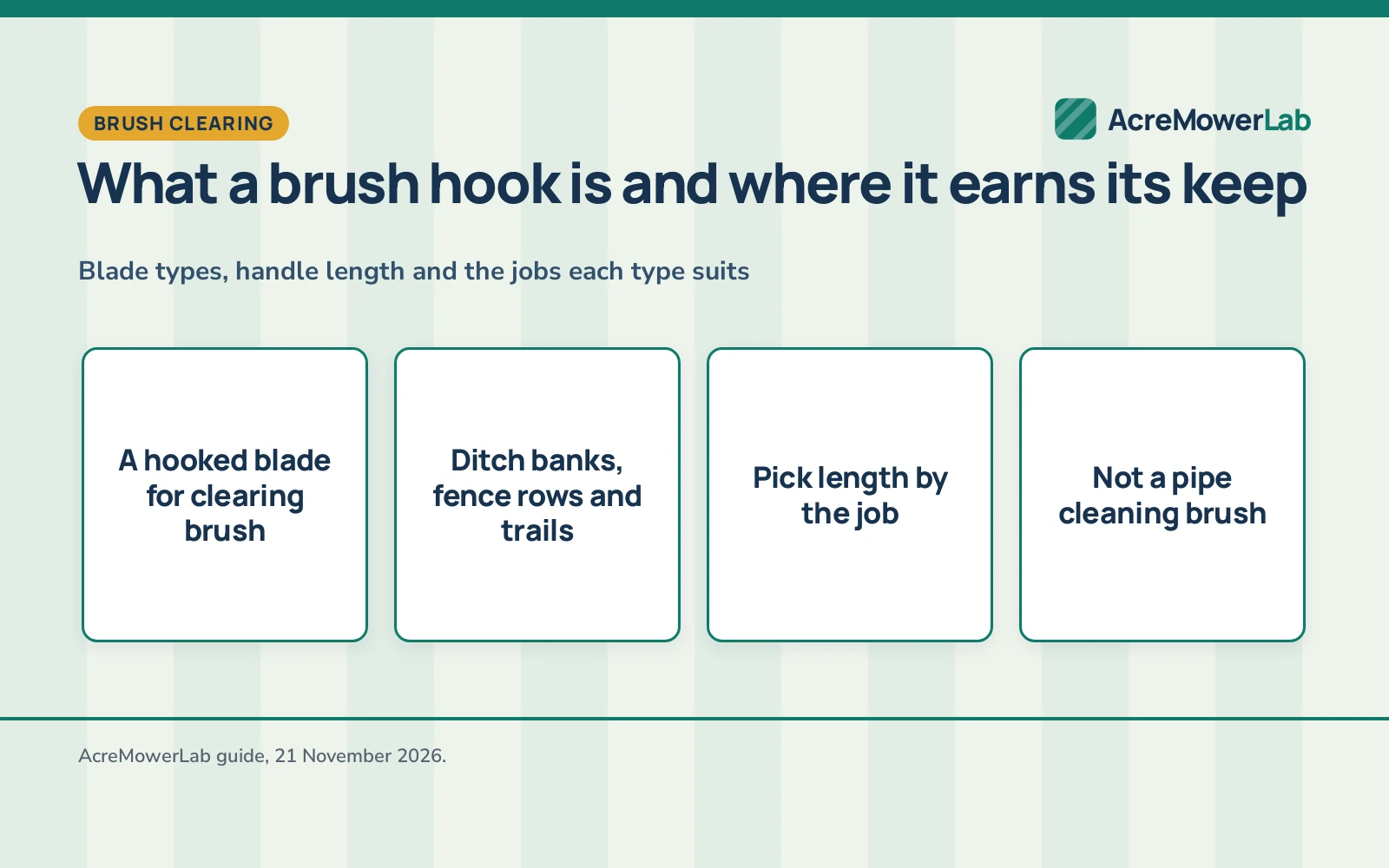
A brush hook is a hooked blade on a handle for clearing brush and woody growth along ditch banks, fence rows and trails.

On this page
What is a brush hook? It is a long-handled hand tool with a hooked, curved blade made for clearing brush, briars, weeds and woody stalks along ditch banks, fence rows and trails. It cuts by hand with a swinging or pulling motion, which makes it useful where wheels cannot go and where a mower cannot reach. This guide explains the main types, the jobs each type suits, and how to pick the right length and blade for your property.
As an Amazon Associate I earn from qualifying purchases. AcreMowerLab earns a commission when you shop through links here. It never changes your price. Affiliate disclosure.
What is a brush hook: a long-handled clearing blade
A brush hook is a manual clearing tool: a steel blade on a handle, shaped with a hook or a curve so the edge can catch and cut stems. The classic form is the ditch bank blade, a wide blade with sharp edges on both sides mounted on a wood handle. The maker of the Truper ditch bank blade (on Amazon) lists a 12-inch blade on a 38-inch wood handle, with a reinforced socket joining blade and handle, and lists the tool at 2.0 pounds. That size suits ditch banks and fence rows, where the long handle gives the reach the work needs.
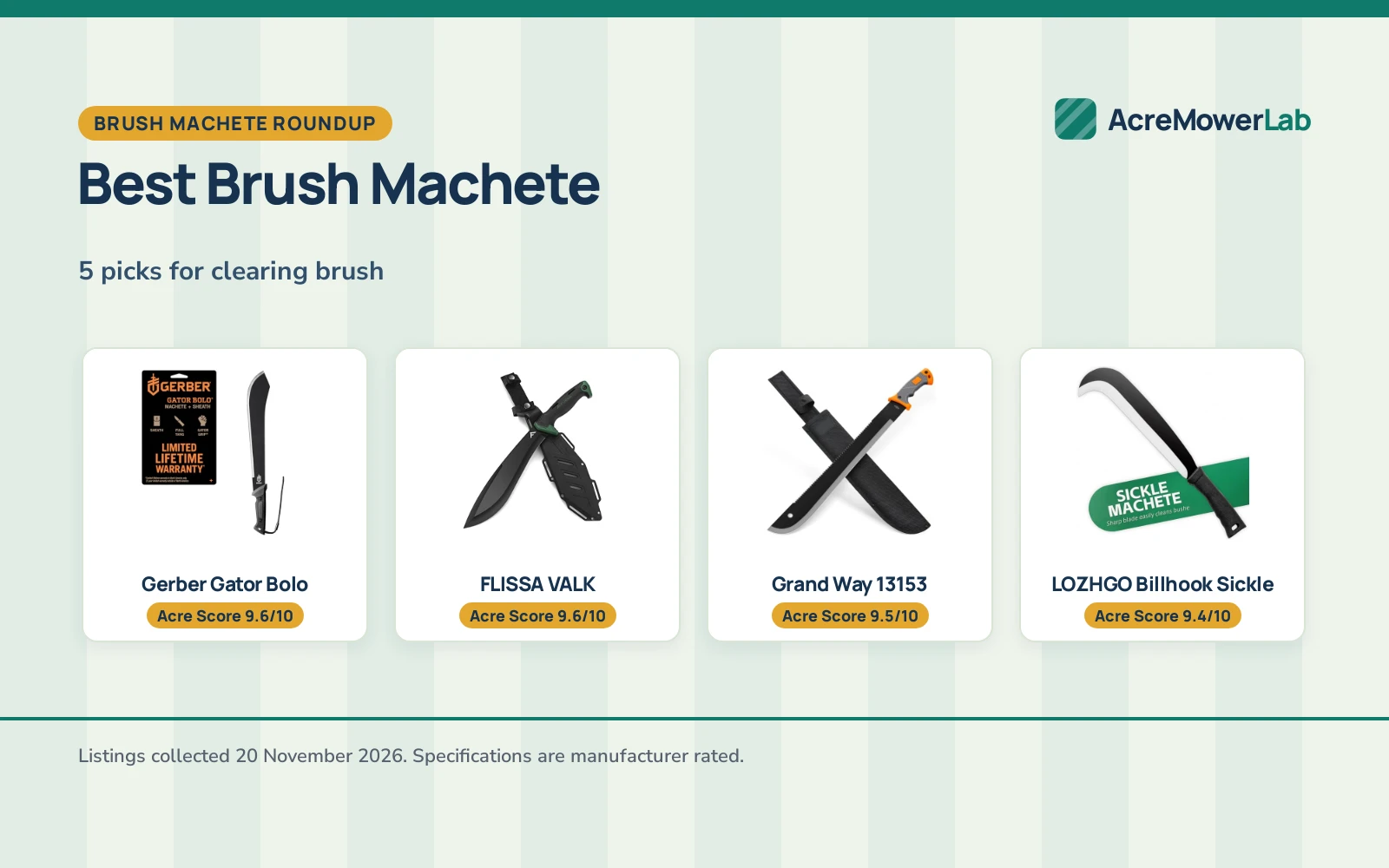
On a billhook, the hooked shape is what sets the tool apart from a straight blade. The hook catches stems and vines and pulls them into the edge, so the cut comes from the pull. The LOZHGO billhook sickle (on Amazon) pairs a 15 inch blade with an inverted hook shape, and the maker lists pulling vines, collecting cut grass and cleaning bushes among its uses. The maker also states a 1-year warranty for it.
Not every brush hook looks the same. Some have a short handle for close work, and some have a long handle for reach. The Zenport curved sickle (on Amazon) lists a 9-inch curved carbon steel blade and a 30.5-inch overall length, with a wooden grip, and the maker lists cutting weeds, vines, undergrowth and plant stems as its work. The long overall length helps reduce bending while working across larger areas, according to the maker.
| Tool | Best for | Limit |
|---|---|---|
| Ditch bank blade | Fence rows, ditch banks and trails | Needs room to swing |
| Billhook sickle | Pulling vines and cutting woody stalks by hand | Short handle, close-in work |
| Curved sickle | Weeds, vines and undergrowth with pull cuts | Lighter growth than a ditch bank blade |
For powered clearing on the same ground, see the brush cutter uses guide, and the brush and field mowers category for machines that handle heavier growth.
How a brush hook cuts
A brush hook cuts with a swing or a pull. A double-edged ditch bank blade cuts in both directions, so each pass back across the stems does work. A curved sickle suits pull cuts, where the hook draws stems into the edge with control. Let the weight of the blade do the work and keep a steady stance, with the cutting path clear of anything hard that could turn the edge.
Brush hook vs sickle vs machete
These tools overlap, and the names get mixed. One tool can carry more than one name at once: the LOZHGO tool is sold as both a sickle machete and a billhook. A sickle cuts grass, weeds and vines with a pull cut. A machete chops through thicker stems with a swing. A brush hook clears ditch banks and woody growth with a hooked or double-edged blade, cutting with a pull as much as a swing. When the job is grass and light weeds, a sickle is enough. When the job is briars and woody stalks along a fence row, the brush hook earns its place.
Where to use one on your property
A brush hook earns its keep on ground that mowers avoid: ditch banks, fence rows, trails, field edges and the banks of a drainage ditch. It clears briars and woody stalks that wrap around a string trimmer head, and it works on slopes where a wheeled machine loses footing. For grass along the same fence lines, a string trimmer is the powered option: see the best string trimmer for acreage picks.
Choosing handle length and blade size
Match the handle to the ground. A 38-inch handle with a 12-inch blade gives the reach for ditch bank work, and the maker lists that Truper blade at 2.0 pounds. A handheld billhook with a 15 inch blade suits close work around posts and corners, where a long handle is awkward. A 30.5-inch overall length with a 9-inch blade splits the difference, with enough reach to cut standing weeds with less bending.
Not a hook brush: the other meaning of the name
The name also turns up hook brushes, which are cleaning tools, not clearing tools. The Vikan hook brush lists a 14.17-inch curved brush for pipes, tubes and gutters, with a threaded recess for an extension pole. Hook and loop brushes clean hook and loop fasteners on barn tack and horse rugs. A detailing brush hanger with 5 hooks is a wall rack for storing brushes, measuring 15.75 inches long. None of these cut brush. Bristles, pipes and hook and loop fasteners mark a cleaning tool, not a brush hook.
Care and storage
Wipe the blade clean after use and keep the edge sharp, so it bites instead of tearing stems. Store the tool hung up or with the blade covered, away from children. A dull edge makes the work harder and the cuts ragged, so touch it up before the edge goes blunt.
Safety
Wear eye protection and sturdy shoes. Clear sticks, stones and other debris before you swing, and keep children, pets and bystanders away from the work area. Point the blade away from people and parked cars. See the Safety Disclaimer.
FAQ: mowing large lots
What is a brush hook used for?
Clearing brush, briars, weeds and woody stalks along ditch banks, fence rows, trails and field edges, by hand, where mowers and trimmers cannot reach.
Is a brush hook the same as a sickle?
No. A sickle is a curved blade for cutting grass, weeds and vines with a pull cut, while a brush hook clears ditch banks and woody growth with a hooked or double-edged blade. The Zenport curved sickle lists a 30.5-inch overall length with a 9-inch blade, and the Truper ditch bank blade lists a 38-inch handle with a 12-inch blade.
What size brush hook do I need?
Pick the handle by the ground: a 38-inch handle gives the reach for ditch bank work, a handheld billhook with a 15 inch blade suits close work around posts, and a 30.5-inch overall length suits standing weeds with less bending. Match the blade to the growth: a 12-inch double-edged blade for briars and woody stalks, a 9-inch curved blade for weeds and vines.
Can a brush hook clear small trees?
The maker of the LOZHGO billhook lists cutting small trees among its uses, along with clearing shrubs and harvesting. For anything thicker than small saplings, a saw is the right tool, and a brush hook is for brush, not timber.
Is a hook brush the same thing as a brush hook?
No. A hook brush is a curved cleaning brush for pipes, tubes and gutters, and the Vikan hook brush lists a 14.17-inch curved brush for that work. A brush hook is a clearing tool with a steel blade for brush and woody growth. The names sound alike, and the tools do different jobs.
More mowing guides
- Brush Cutter Uses: Jobs It Handles Best
- Best String Trimmer for Acreage: 4 Gas and Battery Picks
- Best Mower Blade Sharpener: 4 Picks for Riders and Large Lawns
- Best Backpack Leaf Blower: 3 Gas Picks for Acreage Leaf Cleanup
Use the Mower Matcher to narrow down choices by acreage, terrain, budget, and power type.