Leaf Blower vs Rake: Which One Should You Buy?
A blower clears open ground with less effort while a rake stays in control in beds and corners, so most acreage owners use both.

On this page
Top picks at a glance
As an Amazon Associate I earn from qualifying purchases.
- 1
 SuperHandy Walk Behind Leaf Blower9.7/10View on Amazon
- 2
 True Temper 2914912 Clog Free 24-Inch Poly Leaf Rake9.8/10View on Amazon
- 3
 Serqd 18-Inch 25-Tine Leaf Rake Set with 73-Inch Handle and9.7/10View on Amazon
- 4
 Leaf Rake and Leaf Bags ComboView on Amazon
- 5
 True Temper Steel Tine Leaf Rake with Hardwood/Steel HandleView on Amazon
- 6
 Truper TruPro Steel Leaf RakeView on Amazon
- 7
 Adjustable Garden Rake 71"View on Amazon
- 8
 Rake for LeavesView on Amazon
- 9
 Sun Joe Corded Electric Leaf Blower MachineView on Amazon
On a property with trees, fall cleanup comes down to a simple choice: move leaves with air, or gather them by hand. For leaf blower vs rake, the short answer is that a blower clears open ground with less effort, while a rake stays in control in beds, corners, and spots where leaves need lifting rather than pushing. Most acreage owners end up using both, and the right split depends on ground cover, obstacles, and where the leaves need to go.
Other machines to compare
 Leaf Rake and Leaf Bags ComboCheck price on Amazon
 True Temper Steel Tine Leaf Rake with Hardwood/Steel HandleCheck price on Amazon
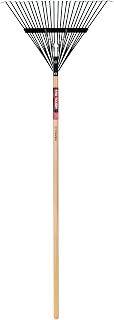 Truper TruPro Steel Leaf RakeCheck price on Amazon
 Adjustable Garden Rake 71"Check price on Amazon
 Rake for LeavesCheck price on Amazon
 Sun Joe Corded Electric Leaf Blower MachineCheck price on Amazon
AcreMowerLab earns a commission when you shop through links here. It never changes your price. Affiliate disclosure.
Leaf Blower vs Rake: How the Two Tools Differ
| Tool | Best for | Limit |
|---|---|---|
| Leaf blower | Open lawn, drives, and paths | Noise, fuel or a cord, and leaves that blow back in wind |
| Leaf rake | Beds, tight corners, and wet or matted leaves | Slow across wide open ground |
| Rake and bag combo | Raking and bagging in a single workflow | Bags fill up and need emptying before the job is done |
A blower moves a wide area without bending or dragging, which matters when leaves cover a lawn, a drive, and paths at the same time. It also clears hard surfaces well, since air pushes leaves off concrete and gravel without scraping. The trade is control: wind pushes back, leaves scatter around beds and fences, and moving leaves with air still leaves gathering and bagging as a separate step.
A rake gives control that air cannot match. Tines lift leaves out of grass, pull them from around plants, and gather wet leaves that mat down and resist air. A rake also works quietly and needs no fuel, no cord, and no charge. The trade is pace: raking a wide open lawn by hand takes far longer than blowing it.
When a Leaf Blower Wins
Choose the blower for open ground and hard surfaces. Lawns with scattered trees, long drives, and paths all suit air, because there is room to push leaves into rows and toward a collection point. Dry leaves suit a blower best, since they lift and slide easily. If leaves keep falling over a long season, a blower also makes repeat passes less of a chore, because each pass moves the fresh fall without a full raking session.
Wind direction sets the plan. Start on the upwind side and push downwind toward the collection area, in wide overlapping passes, rather than chasing single piles. Clear hard surfaces early so later passes do not blow leaves back onto them. See our best backpack leaf blower roundup for gas options.
When a Rake Wins
Choose the rake for beds, flower borders, and tight corners, where a blower would scatter mulch and disturb plants. A rake also wins on wet leaves: soaked piles mat together and resist air, while tines can still lift and drag them. Around fences, gates, and garden edges, a rake pulls leaves out of spots where air only swirls them around.
A rake suits small areas and touch-up work, too. After the main blowing pass, a rake cleans the edges, gathers what the wind left behind, and shapes the pile for bagging.
The Rake Gear in This Guide
The listings below cover the rake side of this comparison, ranked from the fullest cleanup kit to the easiest yard rake to carry.
GreatBuddy Leaf Rake and Leaf Bags Combo. This combo pairs a heavy-duty adjustable rake with leaf bags, so raking and bagging share a single workflow. The listing states a stainless steel handle and an aluminum-coated metal rake head with 25 tines, and handle lengths of 29, 43, 57, and 72 inches across telescoping settings. The kit includes 2 packs of 72-gallon reusable leaf bags, which the listing says can stand upright for hands-free filling or lie flat as a dustpan for scooping. The listed weight is 4.7 pounds, and the rake disassembles for compact storage.
True Temper Steel Tine Leaf Rake. This is the classic fixed rake of the three, with a steel head of 22 tines and a head width of 21.6 inches. The listing states a hardwood and steel handle with a 6 inch comfort grip, a flexible coil spring for smooth raking action, and a listed weight of 2 pounds. The maker lists a limited 15 year warranty against manufacturer defects.
HANGMAICOME Plastic Leaf Rake. This is the easiest rake of the three to carry, with the listing stating 1.65 lbs in its bullets. Note a contradiction inside the listing: its spec table lists 0.94 kg instead, so the bullets figure is the one used here. The rake head spans 16.5 inches with 23 flexible nylon tines, and the stainless steel handle adjusts from 36 to 65 inches. The nylon tines suit lawns, gardens, flower beds, and sidewalks where a gentler touch matters, and the handle detaches for storage.
What to Do With the Leaves
Decide the destination before the first pass, because the pile location sets the blowing and raking direction. Compost piles belong at the edge of the property, shredded leaves can mulch garden beds, and haul-off depends on local pickup or drop-off rules. If burning is on the table, check local rules and burn bans first, since many counties and states restrict it.
Work the property in zones, such as drives and paths, house lawn, and tree lines, and finish a zone before moving on. Keep a tarp or a trailer at the collection point so leaves do not travel far by hand.
Safety
Wear eye and hearing protection and sturdy shoes. Clear sticks, stones, and other debris before blowing or raking, and keep children, pets, and bystanders away from the work area. Point blower nozzles away from people and parked cars. Refuel only with the engine off and cool. On slopes, keep firm footing and take care on wet leaves underfoot.
FAQ: mowing large lots
How does a leaf blower work?
A leaf blower uses a fan to push a stream of air through a nozzle, and that air stream moves leaves across lawn, drives, and paths. Gas models run on fuel, battery models run on a charge, and corded models run on mains power through a cord. The air stream moves leaves across lawn, drives, and paths, and gathering them into a pile, a tarp, or a bag is still a separate step.
How do I buy a leaf blower?
Match the blower to the ground it will clear: open lawns and drives suit stronger airflow, while beds and small yards suit a lighter, more controllable model. Check the stated power type, weight, and nozzle options in the listing, and think about noise, fuel storage, and cord reach before choosing.
How long do gas leaf blowers last?
Gas blower life depends on care, use, and storage rather than a fixed span, and no listing in this guide states a lifespan figure. Follow the maker manual for fuel, maintenance, and storage, and store the unit dry between seasons.
How much do leaf blowers cost?
No prices appear in this guide, since listings and prices change and this guide compares tools rather than deals. In general, cost rises with airflow, battery size, and build. Compare the stated specs for the ground you own, rather than paying for power the yard never needs.
When does a rake beat a blower?
A rake beats a blower in beds, tight corners, and on wet or matted leaves, where air scatters or fails to lift. It also wins for quiet work, for small areas, and for touch-up passes after blowing.
More mowing guides
- Best Backpack Leaf Blower: 3 Gas Picks for Acreage Leaf Cleanup
- Best Garden Rake (2026): 5 Compared
- Best Leaf Rake for Fall Cleanup (2026): 4 Picks for the Yard
- Best Cordless Leaf Blower for Small Jobs (2026): 5 Compared
See our best garden rake picks and our leaf rake for fall cleanup picks for more rake options.