Post Driver Manual: Set Fence Posts by Hand
A step-by-step guide to using a manual post driver: choose the driver, mark the line, set the post and check it stays plumb.

On this page
Top picks at a glance
As an Amazon Associate I earn from qualifying purchases.
- 1
 VEVOR T Post DriverView on Amazon
- 2
 Fence Post DriverView on Amazon
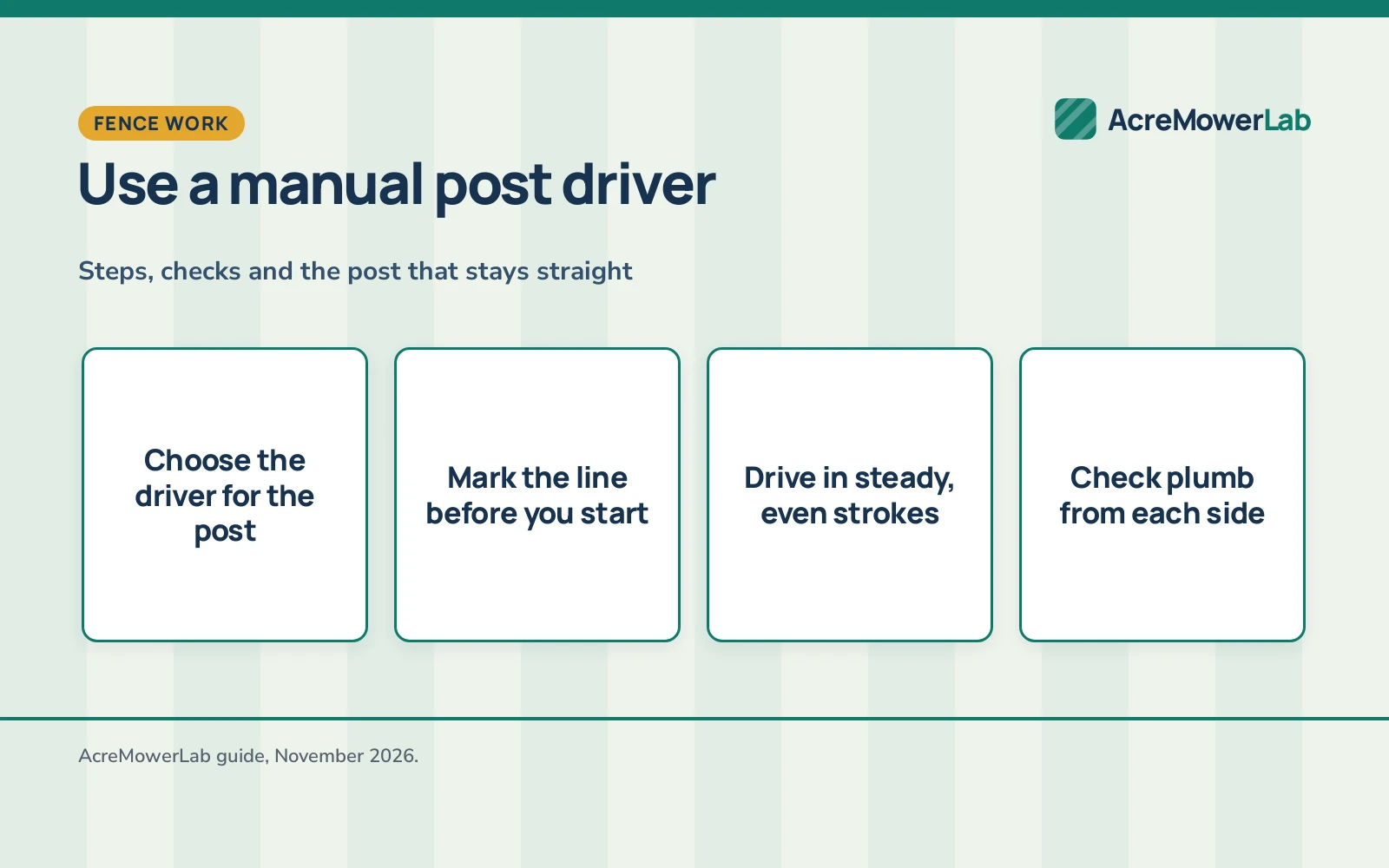
A post driver manual is the step-by-step guide to driving a fence post with a hand-powered post driver: set the post on its mark, slide the driver over the top, lift and drop it in steady strokes, and check the post stays plumb as it goes down. In ground that takes a driven post, no hole to dig and no power source to haul, just the driver, the post and a clear line. This guide walks through the whole job, from picking the driver to the final check, so the fence starts straight.
Other machines to compare
 VEVOR T Post DriverCheck price on Amazon
 Fence Post DriverCheck price on Amazon
AcreMowerLab earns a commission when you shop through links here. It never changes your price. Affiliate disclosure.
Post driver manual: choose the right driver
Start with the driver, not the post. A manual driver suits short runs and single posts, where a powered unit would be more machine than the job needs. A gas or hydraulic driver earns its keep on long runs and firm ground. The table below sets out the options, and the steps after it cover the job itself.
| Driver | Best for | Limit |
|---|---|---|
| Manual post driver | Short runs and single posts on open ground | Slow on long runs and hard ground |
| Long-handle post driver | Extra reach on taller posts | Heavier to lift and harder to control |
| Gas-powered post driver | Long fence runs and firm ground | Fuel, noise and weight to carry |
| Hydraulic post driver | Heavy posts and tractor-mounted work | Needs a host machine to run it |
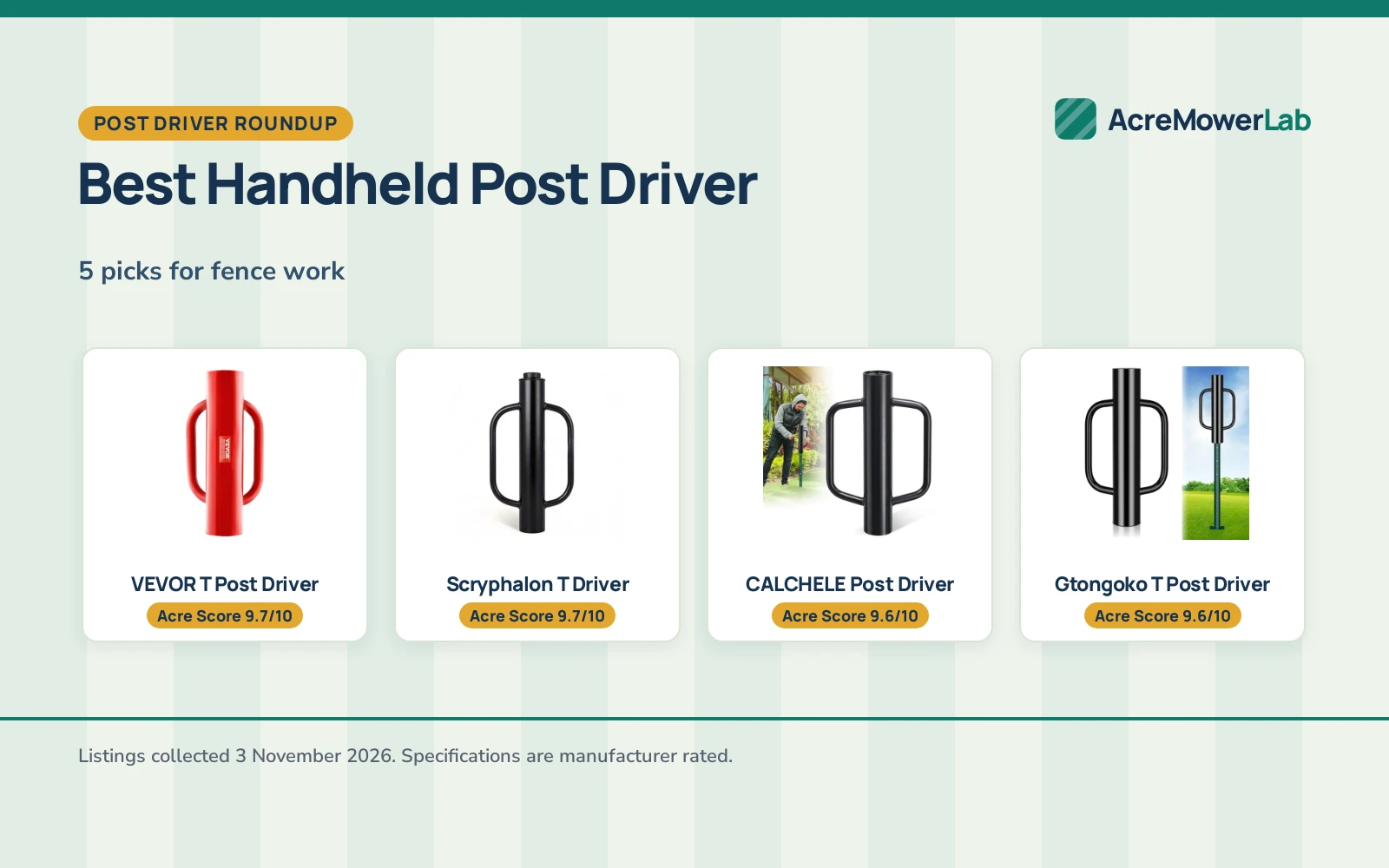
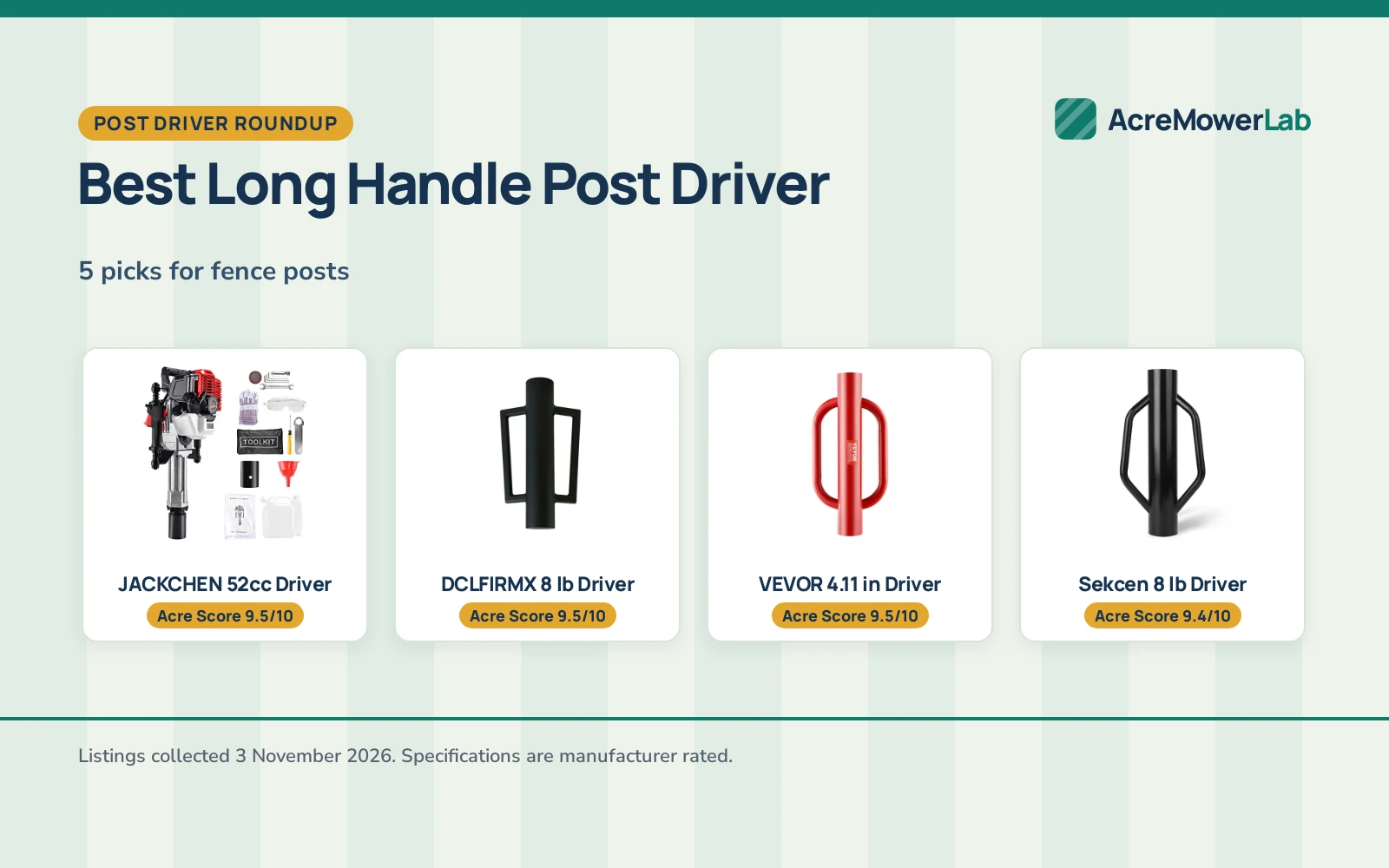
See the best handheld post driver roundup for hand-powered options, and the best long-handle post driver roundup when the posts run tall.
Step 2: mark the fence line
Walk the line before you drive anything. Set a string line or a row of marks from corner to corner, and clear brush, stones and old wire from the path so nothing knocks the post off its mark. Note where gates, corners and turns fall, because those posts carry the pull of the fence and deserve the most care. Before the first post goes in, check with your local utility locator service for buried lines along the route, and mark any line you find so the driver never meets it.
Step 3: set the post
Stand the post on its mark with the tip down and the straight face toward the line. Hold it plumb by hand, or have a helper hold it low on the post, clear of the driver, while you work the driver, and sight it from each side before the first stroke. A post that starts crooked is harder to straighten later, so spend the time here: nudge it true now, while it still moves with a hand, rather than after it is partway down.
Step 4: drive the post
Slide the driver over the top of the post and grip both handles. Lift it and let it drop in steady strokes, letting the weight of the driver do the work rather than forcing it down. Keep a firm grip on the handles and keep your hands clear of the post top as the driver drops, and keep your feet clear of the base. Pause after a run of strokes to check plumb from each side, and correct a lean while it is still small. If the post stops moving, lift the driver off and pull the post to look for a stone or root at the tip before you carry on.
Step 5: check plumb and finish
Drive the post until it stands at the height the line needs, then check it a final time from each side. Firm any loose soil at the surface around the base by foot, and sight down the line to catch a post that drifted off the mark.
- Check plumb from each side before the final strokes.
- Firm loose soil at the surface around the base by foot.
- Sight down the line to catch a post that drifted.
- Leave the top of the post clean for the rail or cap.
Match the driver to the post
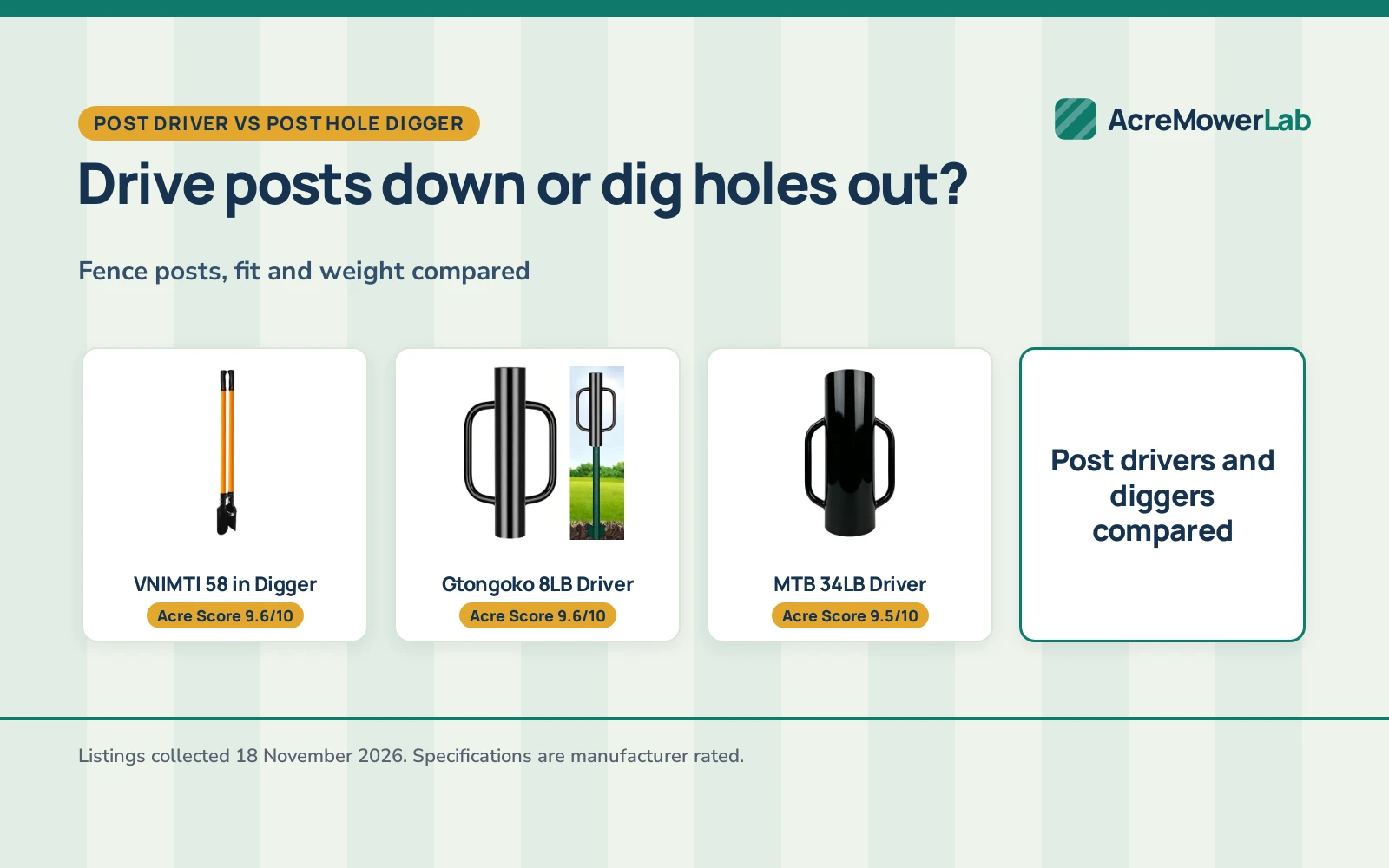
A driver must fit the post it drives. A loose driver wastes the stroke and can glance off the top, while a tight driver binds and will not slide. Check the fit before the first post: the driver should slide over the top and move freely without rattling. When the ground will not take a driven post, a dug hole is the fallback: see the best post hole digger for fence posts roundup.
Plan the fence line in sections
Divide a long fence into sections, and finish a section before you move to the next. Start with the corners and gate posts, because the line between them sets the run of every post after. Keep the posts and the driver at the work spot so you are not carrying them a long way by hand. After the line is set, the old boards along it may need a wash before paint or stain: see the best pressure washer for fences roundup.
Mind the weather and the ground
Wet ground is slippery underfoot, so wear sturdy shoes and take care on slopes. Dry, hard ground can stop a post short, while soft ground after rain lets a post sink deeper than planned if you keep driving. Work in dry weather when you can, and give frozen ground a miss until it thaws: a hand driver struggles to move a post through frost. On a slope, drive from the uphill side so you keep your footing and the post stays plumb.
Safety
Wear eye protection, gloves and sturdy shoes, and clear sticks, stones and other debris from the work area before you start. Keep children, pets and bystanders away from the work area, and never let anyone stand close while the driver is moving. Keep a firm grip on the handles and keep your hands clear of the post top as the driver drops. Gas drivers need open air and a cool engine before refueling, so follow the manual for the unit you run.
FAQ: mowing large lots
Can a single person use a manual post driver?
Yes. A manual post driver is a hand tool built for a single person: the driver slides over the post, and the lift and drop come from the arms and shoulders. A helper holding the post low, clear of the driver, helps on the opening strokes, but the driving itself is a single-person job.
What ground is too hard for a manual post driver?
Rocky ground and dry, hard ground can stop a driven post. Clear stones from the line before you start, and where the post will not move, dig the hole instead of forcing the driver. Frozen ground is a job for another day.
How do I keep the post straight while driving it?
Check plumb from each side as you go, and correct a lean while it is still small. A small lean caught early is easy to correct; a lean found late is harder to correct and may mean pulling the post and starting again. Sight down the line after every post to keep the run true.
Do I need to dig a hole first?
No. A driven post goes straight into the ground with no hole to dig, which is the point of the tool. Dig only where the ground will not take a driven post, or where the post must sit in a footing.
When should I use a powered driver instead?
On a long run, in firm ground, or where many posts go in over a short season, a powered driver saves time and effort. For a short run or a single post, the manual driver is the lighter tool to carry and the quicker tool to set up.
More mowing guides
- Best Garden Fence Panels (2026)
- Best Solar Lights for Garden Fence (2026): 5 Picks Compared
- Best White Vinyl Fence (2026): 5 Picks for Yards and Gardens
- Best Deck Privacy Screen (2026): 5 Picks for Decks and Patios
- Best Two Way Gate Latch (2026): 5 Picks for Wood and Metal Gates
- Best Fence Energizer (2026): 5 Picks for Pastures and Gardens
- Best Fence Gate (2026): 5 Picks for Wood and Chain Link
- Best Garden Fence to Keep Rabbits Out (2026): 5 Picks for Rabbit-Proof Beds
- Best Privacy Screen for Fence (2026): 5 Picks for Yards and Fences
- Best Fence Lock (2026): 5 Picks for Gates and Sheds
- Best Latch for Double Gate (2026): 5 Picks for Wood, Chain Link and Metal Gates
- Best Fence for Goats (2026): 5 Picks by Length and Height
- Vinyl vs Aluminum Fence Kit: Which One Should You Buy?
- Best Wood Gate Hinges: 4 Picks for Wood Gates
- Best Fence Stretcher (2026): 5 Picks for Wire Fences
- Best Metal Fence Posts (2026): 5 Compared by Spec
- Best Yard Fence (2026): 5 Picks for Yards and Gardens
- Best Outdoor Fence for Dogs (2026): 5 Picks Compared
- Best Fence Pliers (2026): 5 Picks for Fence Repair
- Best Outdoor Privacy Screen (2026): 5 Picks for Yards and Fences
- Best Solar Powered Electric Fence (2026): 5 Picks Compared
- Best No Dig Fence (2026): 5 Picks for Yards and Gardens
- Vinyl vs Chain Link Fence: Which One Should You Buy?
- Plastic vs Metal Deck Box: Which One Should You Buy?
- Steel vs Wood Fence Posts: Which One Should You Buy?
- Best Gate Hinges Heavy Duty (2026): 5 Picks for Wooden Fences and Driveway Gates
- Best Deer Fence (2026): 4 Netting Picks for Gardens
- Best Vinyl Fence Cleaner (2026): 5 Picks Compared
- Best Gate Latch (2026): 5 Picks for Fences and Gates
- Best Handheld Post Driver (2026): 5 Picks for Fence Work
- Best Long Handle Post Driver (2026): 5 Fence Picks
- Best Post Hole Digger for Fence Posts (2026)
- Best Fence Post Puller: 4 Picks for Fence Work
Use the Mower Matcher to narrow down choices by acreage, terrain, budget, and power type.