Shovel vs Spade: Which One Should You Buy?
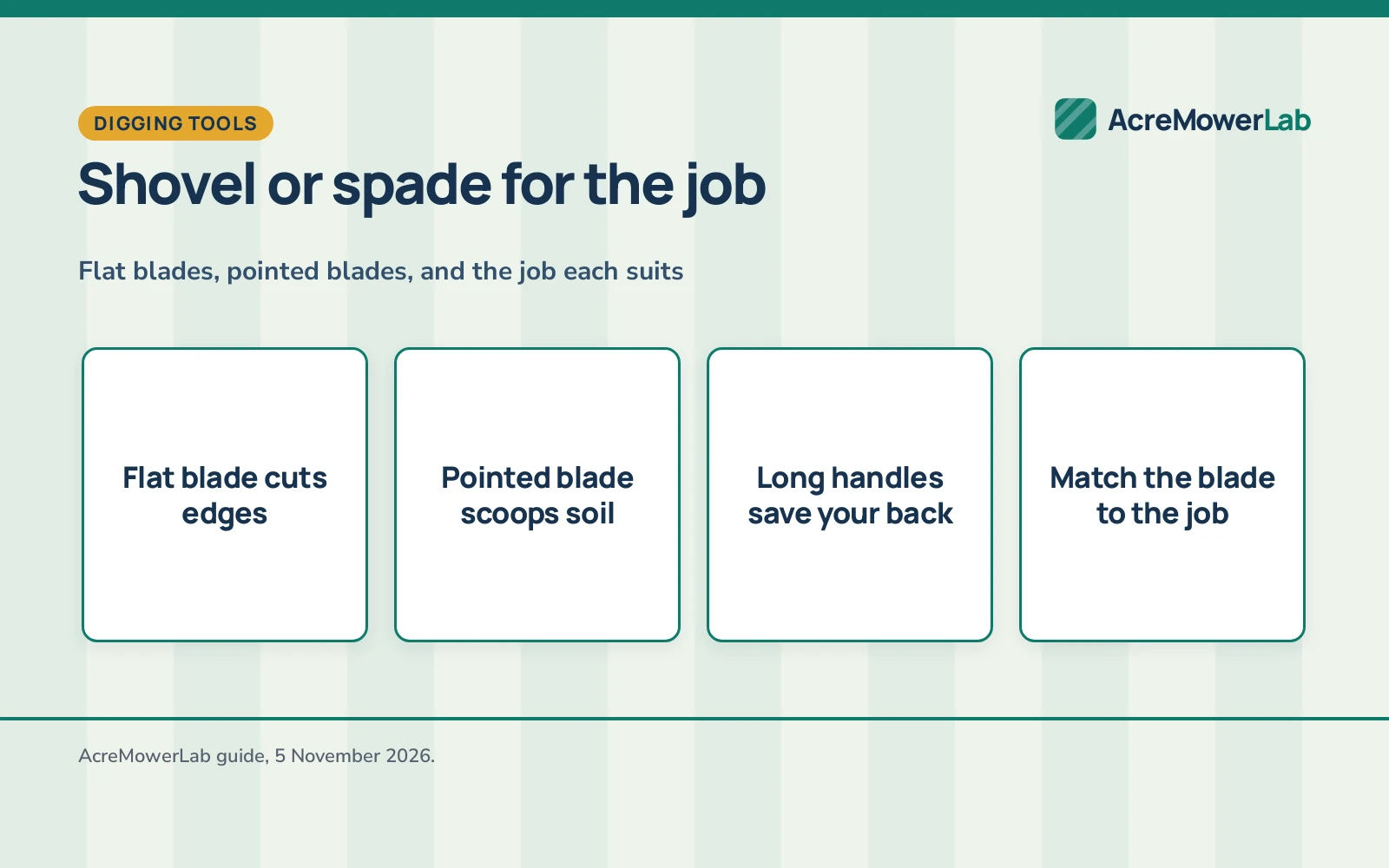
A shovel scoops and moves soil while a spade cuts edges and digs trenches: which blade suits the job in front of you.

On this page
Top picks at a glance
As an Amazon Associate I earn from qualifying purchases.
- 1
 Root Slayer 22011 Garden Shovel with Serrated Blade and9.8/10View on Amazon
- 2
 HANTOP Sharp Blade Spade Shovel9.7/10View on Amazon
- 3
 SPDTECH Garden Tool Shovel9.5/10View on Amazon
- 4
 PLACHIDAY Digging ShovelView on Amazon
- 5
 KOLEIYA 41 Inch Round Point Shovel for DiggingView on Amazon
- 6
 VNIMTI Shovel for DiggingView on Amazon
- 7
 Truper Tru Pro Round-Point ShovelView on Amazon
- 8
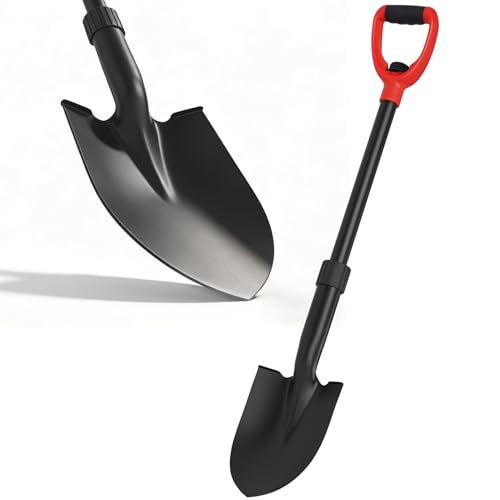 ShovelView on Amazon
- 9
 VNIMTI Spade Shovel for DiggingView on Amazon
Out past the lawn, where the beds meet the field edge, the digging jobs split by the blade: moving loose soil out of a hole, and cutting a clean edge along a bed. The question behind shovel vs spade is which blade the job needs. A shovel has a curved, pointed blade made for scooping and moving soil, while a spade usually has a flat, straight blade made for cutting edges, digging trenches and slicing turf.
Other machines to compare
 PLACHIDAY Digging ShovelCheck price on Amazon
 KOLEIYA 41 Inch Round Point Shovel for DiggingCheck price on Amazon
 VNIMTI Shovel for DiggingCheck price on Amazon
 Truper Tru Pro Round-Point ShovelCheck price on Amazon
 ShovelCheck price on Amazon
 VNIMTI Spade Shovel for DiggingCheck price on Amazon
AcreMowerLab earns a commission when you shop through links here. It never changes your price. Affiliate disclosure.
Shovel vs spade: the blade tells you the job
| Tool | Best for | Limit |
|---|---|---|
| Round point shovel | Scooping and moving loose soil | Poor at cutting a clean edge |
| Flat square spade | Cutting edges, digging trenches, edging beds | Poor at scooping loose soil |
| Narrow transplanting spade | Transplanting, digging in tight spaces | Small blade, slow for big digging jobs |
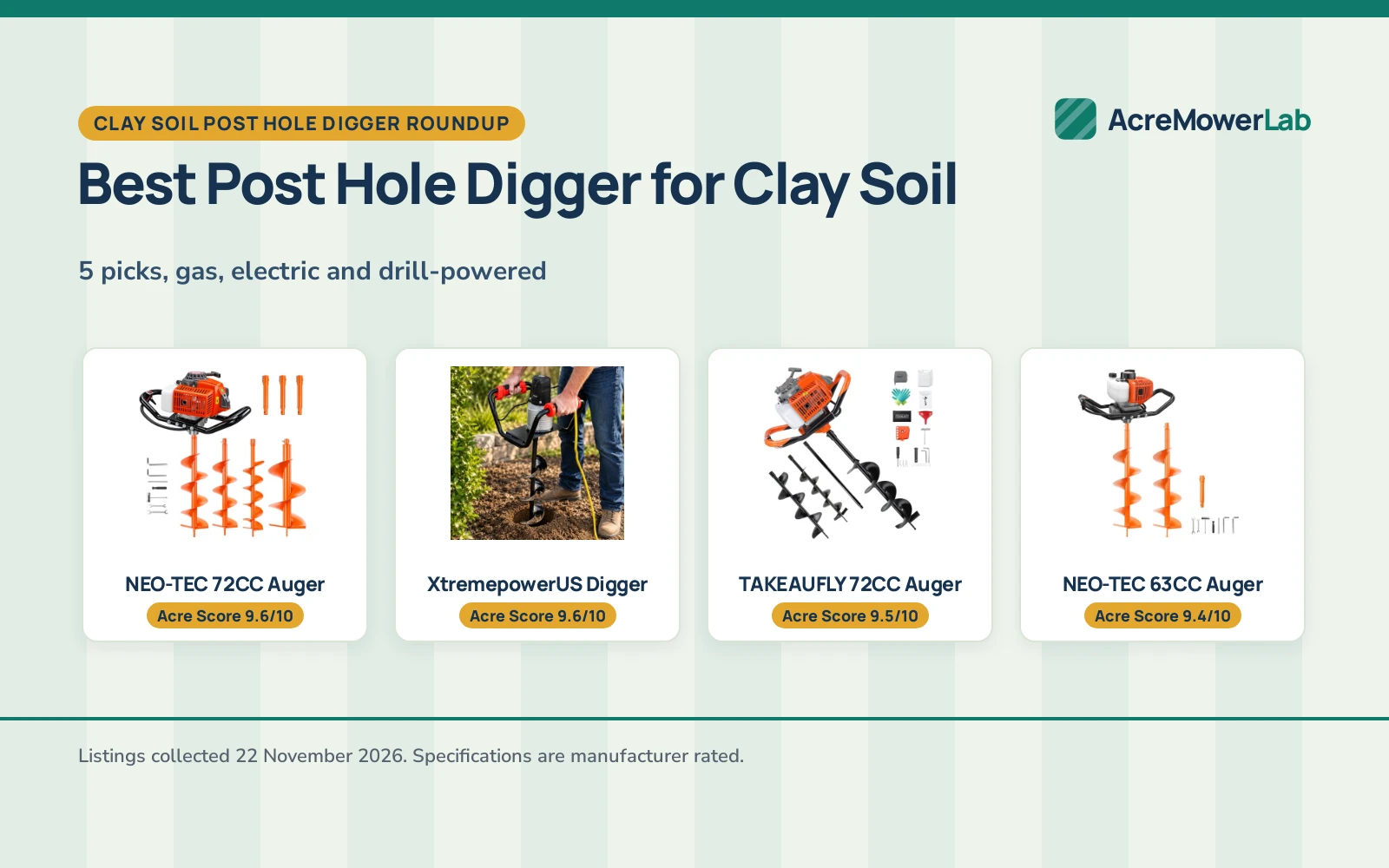
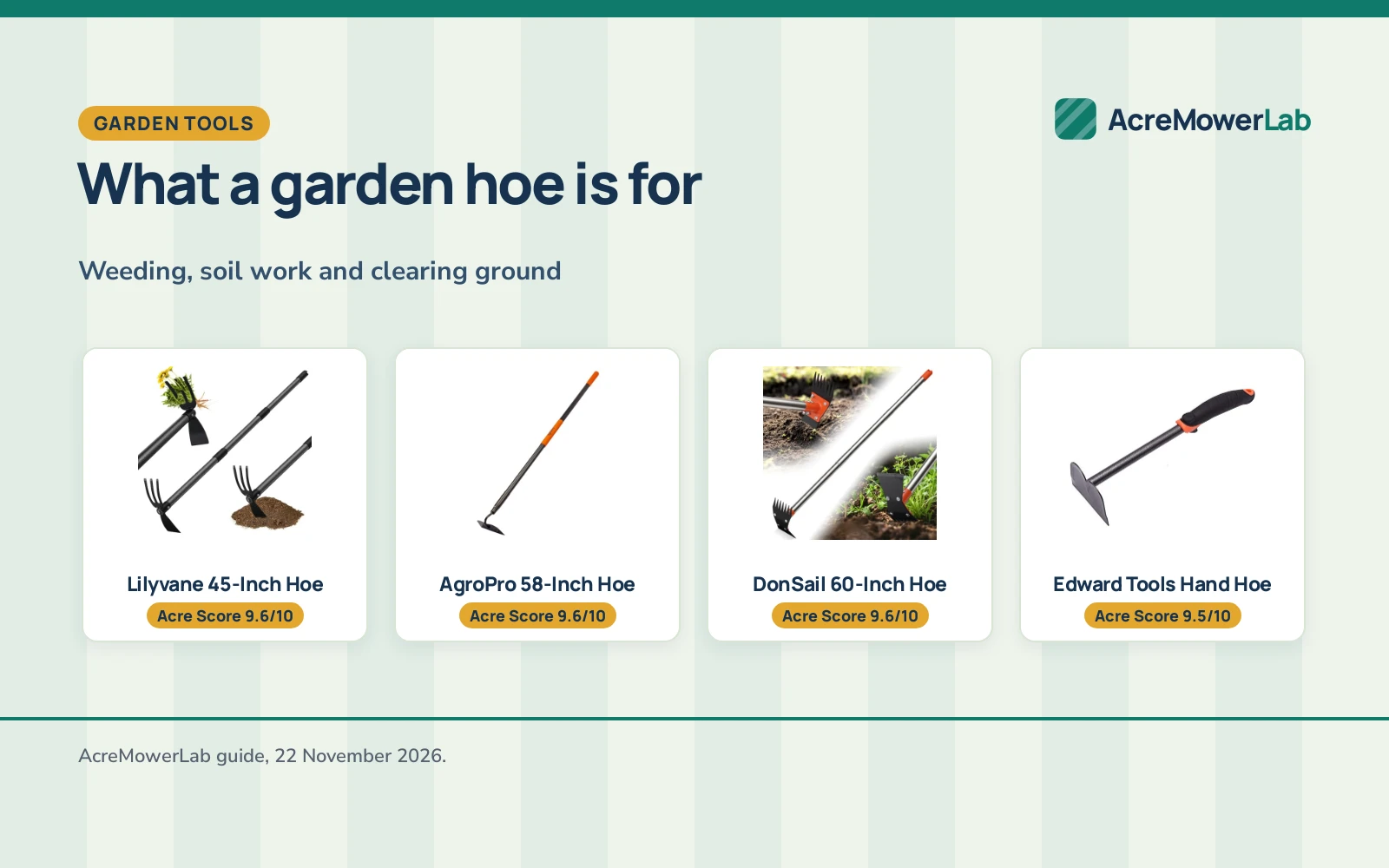
That split is the whole guide. A shovel moves soil, a spade cuts it, and the narrow spade does fine work between plants. Pick by the job, not by the name on the handle: listings here call the same tool a spade, a shovel and a sharp shooter in the same title, so read the blade shape before you buy.
The blade shapes
Flat blades cut. The HANTOP spade has a square point blade for digging trenches, digging holes, transplanting, edging, moving compost, cutting thick turf and furrowing, and the VNIMTI flat spade is built for digging, edging, cutting turf or lawn. A flat edge slices straight down, which is why spades edge beds and cut turf cleanly.
Pointed blades scoop. A round point shovel carries soil with each scoop, and the Spear Head blade is spear shaped to find the path of least resistance, especially in rocky soil. The VNIMTI transplanting spade sits between them: long and narrow, it plunges below root systems and cuts a round plug without damaging adjacent plants, which suits tight spaces and small plants.
Handles and grips
Handles decide how a long digging session feels. The HANTOP handle is fiberglass with a PP hand grip, and the Spear Head handle is steel-reinforced fiberglass with a cushioned D-grip. The VNIMTI spades use solid wood handles with D-grips, and the flat spade listing states that its solid wood handle will last for years without corrosion and will not break when digging or transferring heavy objects.
Footrests matter as much as handles. HANTOP widens its foot platforms for steady control when digging and to help drive the blade into soil, and Spear Head bends its footrests forward so the blade carries more soil with each scoop. The VNIMTI transplanting spade has corrugated foot plates that slip less, and the flat spade has non-slip treads on the head to steady foot contact while digging.
The digging tools in this guide
The tools below are listed in order, strongest listing first. Each is a spade by name, and each leans toward a different job.
Spear Head Spade SHFD3. The strongest listing here: a 40 inch spade with a 9 by 11 inch beveled blade in carbon manganese steel, a steel-reinforced fiberglass long handle and a cushioned D-grip. The blade is spear shaped, thicker and harder than standard digging shovels per the listing, and the head is self-sharpening: a powder-coated blade finished with epoxy resin that wears away with use, exposing the pre-sharpened edge. The title states 40 inches overall while the spec table lists 40.4 inches; we trust the title and bullets over the spec table.
HANTOP flat spade. A 43 inch spade with a 7.5 by 2 inch head in 1050MN steel, a fiberglass handle and a PP hand grip, weighing 4.5 pounds. The sawtooth blade is made to break into hard soil and hardened dirt clods, and the widened foot platforms help drive the blade down. The listing states uses from trenches and holes to transplanting, edging, moving compost, cutting turf and furrowing.
VNIMTI flat spade, 45 inches. A square flat shovel for gardening and edging, 45 inches long with a solid wood D-handle, weighing 3.74 pounds. The sharp blade is high-strength steel with a rust-resistant coating, and the listing states that it will not rust or corrode when digging in wet soil. Non-slip treads on the head steady foot contact, and the longer size reduces back stress per the listing.
VNIMTI transplanting spade, 45 inches. A long, narrow spade for transplanting, also called a drain spade and a sharp shooter shovel in the same title, 45 inches long with a wooden D-grip handle and weighing 3 pounds. The narrow width cuts a round plug without damaging adjacent plants and suits clay-like soil, hard soil and thick grass. The listing gives no steel grade, so it ranks last here on stated build detail.
Matching the tool to the soil
Hard ground wants a narrow blade or a toothed edge. The VNIMTI transplanting spade states that its narrow width maximizes the pressure you apply and cuts into clay-like soil, hard soil and thick grass, and the HANTOP sawtooth blade is made to break into hard soil and hardened dirt clods. For rocky soil, the Spear Head blade is spear shaped to find the path of least resistance.
Wet ground wants a coated blade. The VNIMTI flat spade states that its rust-resistant coating keeps the blade from rusting or corroding when digging in wet soil, and that the blade stays sharp even after heavy use. For bigger ground work, a hand tool is the wrong scale: see our garden fork vs tiller guide for when to step up to a tiller.
Safety
Wear sturdy shoes and eye protection, and clear sticks, stones and debris before you dig. Keep children and pets out of the work area, and lift with your legs, not your back. Before you dig deep, have buried lines marked, and never dig where lines are marked. See our Safety Disclaimer.
FAQ: mowing large lots
Can I use a spade as a shovel?
For cutting, yes; for scooping, poorly. A spade has a flat, straight blade that cuts edges and slices turf, while a shovel has a curved, pointed blade that carries soil. The flat spade listings here are built for digging, edging and cutting turf, and the HANTOP listing also names moving compost among its uses.
What is a spade best for?
Edging, digging trenches, cutting turf and transplanting. The HANTOP listing states uses from digging trenches and holes to transplanting, edging, moving compost, cutting thick turf and furrowing, and the VNIMTI flat spade is built for digging, edging and cutting turf or lawn.
How long should a digging spade be?
The spades here measure 40 inches (Spear Head), 43 inches (HANTOP) and 45 inches (the VNIMTI spades). The D handle gives leverage for lifting soil out of deep holes, per the VNIMTI transplanting spade listing, and the flat spade listing states that the longer size reduces back stress.
Can a spade cut into clay soil?
Yes, with a narrow blade. The VNIMTI transplanting spade states that its narrow width maximizes the pressure you apply and cuts into clay-like soil, hard soil and thick grass, and the HANTOP sawtooth blade is made to break into hard soil and hardened dirt clods.
Do I need a shovel and a spade?
If you dig and edge, yes. A shovel moves loose soil and a spade cuts edges and trenches, and no single blade here does the cutting and the scooping equally well. The narrow transplanting spade covers the fine work between plants, so the three blade shapes together cover most garden digging.
More mowing guides
- Garden Fork vs Tiller: Which One Should You Buy?
- Tiller vs Broadfork: Which One Should You Buy?
- Best Small Tiller (2026): 5 Battery Picks for Beds
- 20v vs 40v Tiller: Which One Should You Buy?
Use the Mower Matcher to narrow down choices by acreage, terrain, budget, and power type.