Subsoiler vs Cultivator: Which One Should You Buy?
Deep ripping and trenching against shallow surface work: how a subsoiler differs from a cultivator, and what three hitch-mounted rippers state.

On this page
Top picks at a glance
As an Amazon Associate I earn from qualifying purchases.
- 1
 Titan Attachments 3 Point Single Tine Subsoiler with PipeView on Amazon
- 2
 Titan Attachments 3 Point Single Tine Subsoiler Fits Cat 1View on Amazon
- 3
 Ripper/Middle Buster Plow/Subsoiler Plow/Potato PlowView on Amazon
- 4
 Sun Joe Electric Corded Garden Tiller & CultivatorView on Amazon
- 5
 Sun Joe Electric Garden Tiller CultivatorView on Amazon
- 6
 EGO Power+ CTA9500 9.5-inch Cultivator Attachment for EGOView on Amazon
Ground that stays hard under the mower, a garden row that needs loosening before sowing, and a pipe run that needs a narrow trench all point to the same question in the shed: which tool actually fits the job. That question is subsoiler vs cultivator, and the answer turns on depth. A subsoiler breaks deep, compacted ground and digs narrow trenches, while a cultivator works the surface layer into a seedbed. Pick the subsoiler for deep ripping and trenching, and pick a cultivator for shallow surface work.
Other machines to compare
 Titan Attachments 3 Point Single Tine Subsoiler with PipeCheck price on Amazon
 Titan Attachments 3 Point Single Tine Subsoiler Fits Cat 1Check price on Amazon
 Ripper/Middle Buster Plow/Subsoiler Plow/Potato PlowCheck price on Amazon
 Sun Joe Electric Corded Garden Tiller & CultivatorCheck price on Amazon
 Sun Joe Electric Garden Tiller CultivatorCheck price on Amazon
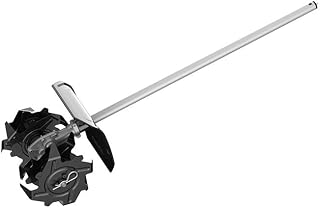 EGO Power+ CTA9500 9.5-inch Cultivator Attachment for EGOCheck price on Amazon
AcreMowerLab earns a commission when you shop through links here. It never changes your price. Affiliate disclosure.
Subsoiler vs cultivator: the depth difference
A subsoiler is a deep tool. The listings in this guide describe loosening soil, deep tillage, digging trenches to bury water pipes, power lines and drain water, laying pipes and wires, creating planting furrows, and installing fence posts. A cultivator, by contrast, works the surface: it breaks the top layer and prepares a seedbed without cutting deep lines through the property. Depth is therefore the main distinction. Where the job needs a deep line through hard ground, the subsoiler fits. Where the job needs an even surface for sowing, the cultivator fits, and a subsoiler would cut far deeper than the seedbed needs.
| Tool | Works at | Suits |
|---|---|---|
| Subsoiler | Deep lines and trenches | Compacted ground, pipe and wire runs, planting furrows, fence posts |
| Cultivator | Surface layer | Seedbed preparation and shallow surface work |
All three picks in this guide are subsoiler rippers, not cultivators. They are included as the gear section because they show what the deep side of the comparison looks like in practice: hitch-mounted teeth that rip and trench behind a tractor, an ATV or a UTV.
The gear in this guide, ranked
The three rippers below are ranked by stated depth adjustment, stated teeth and build, and stated warranty.
CAMMOO hitch mounted trencher ripper
The CAMMOO listing states a trencher that handles 3000 lbs, built from thickened carbon steel with professional welding, a rustproof coating and zinc-plated hardware. Its 2-inch receiver carries a high-strength alloy rod to resist breakage, and the 20mm shank is stated as 11% thicker to resist bending. The kit includes a 3-in-1 teeth set: pointed, flat and wide teeth, with the wide tooth for wider trenches. Shank depth comes in four positions from 12.5″-18.5″, and the listing states an item weight of 18.3 pounds and a 1 Year Manufacturer warranty. Fitment needs care: the listing states the distance from the pin hole center to the receiver mouth must be 2.75 inches or less, and the depth to the rear must be 1.96 inches or greater, and furrowing depth equals shank depth minus the minimum ground clearance of the 2-inch receiver. On stated teeth, stated depth range and stated warranty together, this is the strongest listing in the group.
Kingway hitch mounted ripper
The Kingway listing describes a light duty mini trencher for farms, gardens and park lawns, for loosening soil to sow seeds, digging underground crops like potatoes, and digging trenches to bury water pipes, power lines and drain water. The plow hook adjusts in height from 12.5″ to 17.5″, with a maximum plow depth of 10-12 inches, and the box blade shank carries 4 holes with a 1.7in/4.5cm spacing for height adjustment. The plough blade teeth are stated as hard alloy steel, with a replacement plough blade included, and the ripper fits 2″ receivers for ATV, UTV, tractor, CAT 0, CAT 1 and lawn mowers. The listing states a 30-day refund and 12-month free replacement, and the spec table states a 1 year warranty. One caveat matters: the listing states the digger is originally designed for tractors with 3-point lift systems, and on ATVs or UTVs with fixed-position 2-inch receivers, the receiver height from the ground must be pre-measured, since actual plow depth must subtract that height.
HOWBOW hitch mounted trencher
The HOWBOW listing describes a heavy duty subsoiler with a 16″ trenching shank, adjustable in 2″ increments from 12.5″ to 18.5″, with 2pcs replaceable teeth in two types for lawn, garden, soil, ditch, farm, fence and cultivate work. The teeth are stated as special alloys, described as cemented carbide, and the body is powder coated to prevent rust and corrosion. The ripper fits most ATVs, UTVs and tractors with 2″ receiver adapters, and is recommended for CAT 0 and CAT 1 tractors. The listing states all hardware required for installation is included, and that ripper teeth must face forward, since reverse installation misaligns the holes and shortens the life of the ripper. No warranty term is stated for this listing, which puts it behind the two listings above on stated support.
Hitch fit comes before depth
All three rippers fit 2-inch receiver setups, with the HOWBOW listing specifying receiver adapters, and the CAMMOO and Kingway listings tie depth to that mounting. A 3-point lift system allows height adjustment, while a fixed-position receiver on an ATV or UTV sets the starting height, and the CAMMOO and Kingway listings both say to measure before buying or using. Check the receiver size, the category of tractor, and the ground clearance at the receiver before ordering, since a ripper that cannot reach its stated depth on a given machine is the wrong pick whatever its stated range. See the tiller types and uses guide for how surface tools differ from these deep rippers.
When to use a subsoiler
Use a subsoiler when the job needs depth: breaking deep, compacted ground, opening a planting furrow or a single row for sowing, loosening soil for digging underground crops, or cutting a narrow trench for a pipe, a wire or drainage. The listings describe exactly those jobs, from farm and garden loosening to fence post installation. Do not reach for a subsoiler for a seedbed finish: that is surface work, and a deep ripper cuts lines the seedbed does not need. Match the tooth to the job as well: the CAMMOO kit offers pointed, flat and wide teeth, and the HOWBOW listing offers two tooth types for different ground, with the CAMMOO wide tooth for wider trenches.
Safety
Mark utilities before digging, and inspect the area before trenching. The CAMMOO listing warns to avoid large tree roots, rocks and buried hard objects, since impact may overload or damage the attachment, and buried lines are the reason the call comes first. Keep children, pets and bystanders away from the work area, keep teeth facing forward as the HOWBOW listing directs, and follow the tractor and attachment manuals for hitch limits and slope use. Never work under a raised attachment, and refuel only with the engine off and cool.
FAQ: mowing large lots
When should a subsoiler be used?
When the job needs depth: breaking compacted ground, deep tillage, planting furrows, loosening soil for sowing or digging crops, and trenches for pipes, wires and drainage. Those are the jobs the listings in this guide describe.
Can a subsoiler replace a cultivator for a seedbed?
No. A subsoiler cuts deep lines and trenches, while a cultivator works the surface layer into a seedbed. For a seedbed finish, use a surface tool; for deep ground, use the subsoiler. See the small tiller cultivator picks for surface tools.
What hitch fits these rippers?
All three listings describe 2-inch receiver fitment, with the HOWBOW listing specifying receiver adapters, and CAT 0 and CAT 1 tractor fitment stated. The Kingway listing is originally designed for tractors with 3-point lift systems, and both the Kingway and CAMMOO listings say to measure receiver height and clearance before use, since fixed receivers change the actual digging depth.
How deep do these rippers dig?
By listing: Kingway states a maximum plow depth of 10-12 inches with height adjustment from 12.5″ to 17.5″. CAMMOO states four shank positions from 12.5″-18.5″, with furrowing depth equal to shank depth minus the minimum ground clearance of the 2-inch receiver. HOWBOW states shank adjustment in 2″ increments from 12.5″ to 18.5″. Those CAMMOO and HOWBOW figures are shank settings, not digging depths, so compare each stated range against the machine, not against each other.
What should be checked before trenching?
Call the utility marking service first, then inspect the area for large tree roots, rocks and buried hard objects, as the CAMMOO listing warns. Confirm the teeth face forward, confirm the receiver fit, and confirm the depth setting before the first pass.