Types of Lawn Mower: Which One to Buy
A plain guide to the main kinds of lawn mower, from push and self-propelled walk-behind models to riding, zero-turn, robotic and reel mowers, and how to match a mower to your property.

On this page
Top picks at a glance
As an Amazon Associate I earn from qualifying purchases.
- 1
 Dreame A3 AWD LiDAR Robot Lawn Mower9.8/10View on Amazon
- 2
 WORX Robot Lawn Mower for 1/2 Acre9.7/10View on Amazon
- 3
 SENIX 20" Gas Lawn Mower9.7/10View on Amazon
- 4
 AMERISUN Self Propelled Gas Lawn MowerView on Amazon
- 5
 NovorikX X3 Robot Lawn Mower with RTK+Dual AI VisionView on Amazon
- 6
 GARDENA SILENO Flex Robotic Lawn MowerView on Amazon
- 7
 eufy Robot Lawn Mower E15 Gen2View on Amazon
- 8
 BLACK+DECKER Electric Lawn MowerView on Amazon
- 9
 BLACK+DECKER 3-in-1 String Trimmer/Edger & Lawn MowerView on Amazon
When the grass keeps growing across open lawn, beds, trees and slopes, the mower you walk behind or ride on sets how long the job takes and how tired you feel at the end of it. Types of lawn mower range from a simple push mower to a self-propelled walk-behind, a riding mower, a zero-turn, a robotic mower and a reel mower, and each kind suits a different kind of property. This guide explains what each kind does, where it works well, and where it falls short, so you can match the machine to the ground you mow.
Other machines to compare
 AMERISUN Self Propelled Gas Lawn MowerCheck price on Amazon
 NovorikX X3 Robot Lawn Mower with RTK+Dual AI VisionCheck price on Amazon
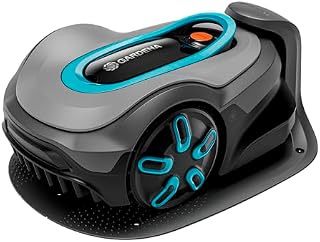 GARDENA SILENO Flex Robotic Lawn MowerCheck price on Amazon
 eufy Robot Lawn Mower E15 Gen2Check price on Amazon
 BLACK+DECKER Electric Lawn MowerCheck price on Amazon
 BLACK+DECKER 3-in-1 String Trimmer/Edger & Lawn MowerCheck price on Amazon
AcreMowerLab earns a commission when you shop through links here. It never changes your price. Affiliate disclosure.
Types of lawn mower: the main kinds at a glance
| Type | Best for | Limit |
|---|---|---|
| Push mower | Small, flat lawns and tight spots | You supply the push on every pass |
| Self-propelled walk-behind | Slopes and larger walk-behind lawns | Still a walk-behind pace on big ground |
| Riding mower | Wide lawns with room to turn | Needs storage space and wide gates |
| Zero-turn mower | Open ground with trees and beds to circle | Tricky on steep slopes and wet ground |
| Robotic mower | Frequent light cuts on a defined lawn | Needs setup and a defined lawn to follow |
| Reel mower | Quiet cuts on small, level lawns | Struggles with tall or rough growth |
The sections below take each kind in turn, with the power choices that go with it.
Push mowers
A push mower is the plain walk-behind: the engine or motor spins the blade while you push the deck across the lawn. With no drive to the wheels, it stays simple, with no drive parts to maintain, and it turns easily around beds, trees and fences. It suits a small lawn that you can cover in a short session, and it stores in a corner of the shed. On a slope, the push gets harder with every pass, and on wide ground the pace adds up, so a push mower earns its place on flat lawns close to the house.
Self-propelled walk-behind mowers
A self-propelled mower drives its own wheels, so you walk behind it and steer while the machine moves itself forward. Rear-wheel drive suits slopes and uneven ground, where traction matters more than on flat lawn. The AMERISUN listing shows one example on paper: a 21-inch deck, a 170cc 4-cycle OHV engine, rear-wheel drive, and a 6-position height adjustment that moves the cut from 1.5 to 3.9 inches with a single lever. The same listing gives the weight as 66.0 pounds and the size as 59.8 by 26.7 by 38.4 inches, and it folds for storage. The listing calls the deck 3-in-1, without stating what the three functions are. See the best 21-inch lawn mower picks for decks of this width, and compare drive styles in the variable speed vs fixed speed self propelled mower guide.
Riding mowers and lawn tractors
A riding mower puts you on a seat with a deck underneath, which changes the job on wide ground: you cover open lawn in long passes and steer around trees instead of pushing around them. Lawn tractors suit properties with room to turn and gates wide enough for the deck, plus a shed or garage bay for storage. A lawn tractor can handle attachments such as carts and spreaders, and riding mowers make sense where the lawn is too wide for a walk-behind pace. See how the two ride-on styles differ in the zero-turn vs lawn tractor guide.
Zero-turn mowers
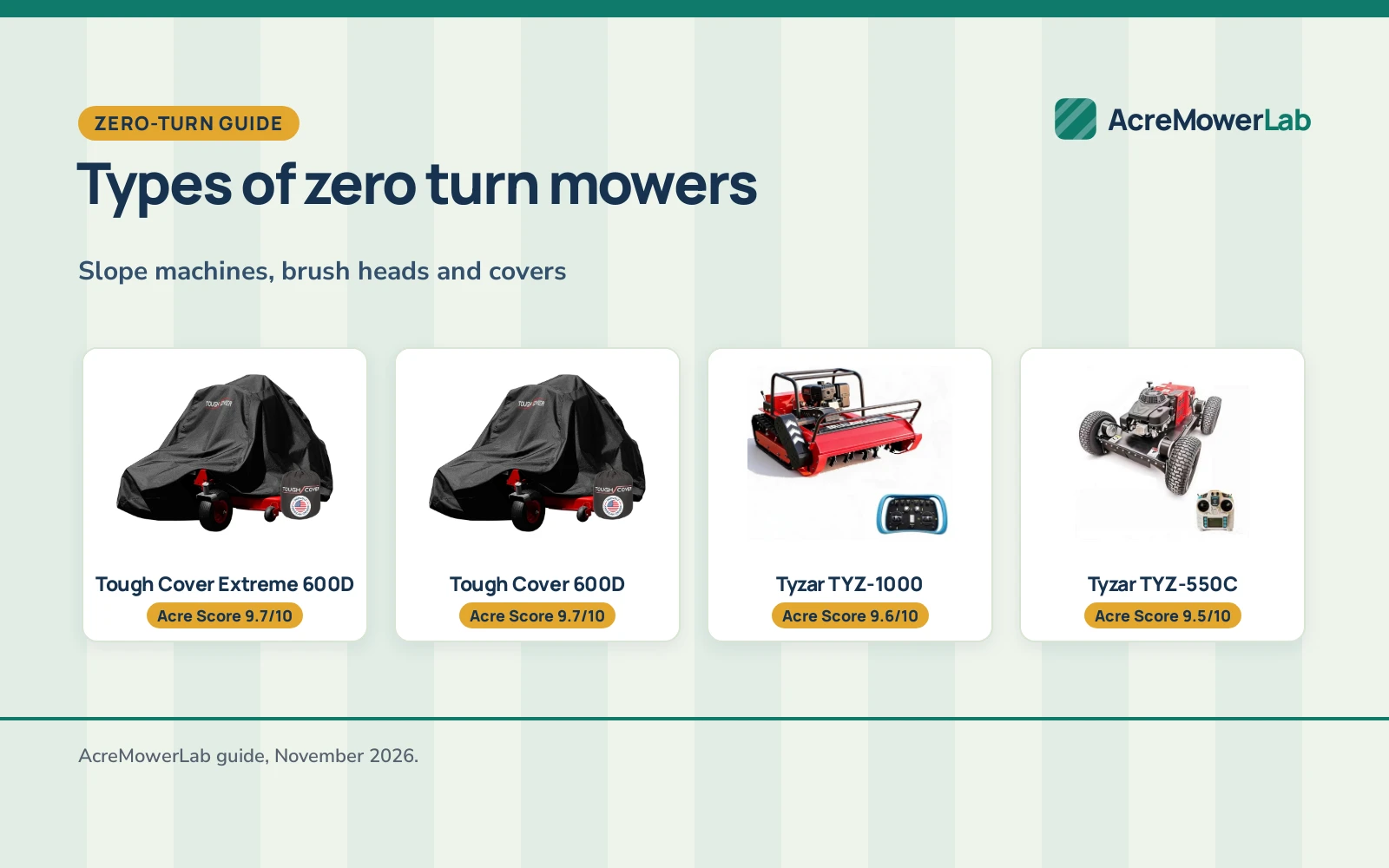
A zero-turn mower steers with a pair of levers that drive each rear wheel on its own, so the deck can pivot around trees, beds and posts with almost no uncut ring left behind. That tight turning suits open lawns broken up by obstacles, and the wide deck covers ground fast on the straight runs. The same steering that makes it nimble also asks for care on slopes and near ponds or ditches, where the rear wheels can lose grip, and it needs a shed or garage bay for storage.
Robotic mowers
A robotic mower mows on its own schedule inside the lawn you define, taking a little grass often instead of a lot at long gaps. It suits a defined lawn that you want kept short without a weekly session behind a mower, and it runs quiet enough to work while the house is in use. Setup takes care: the defined area, the charging dock and the slope limits all need to match your ground, and the mower still needs a path clear of toys, hoses and low branches. Compare the power and control choices in the gas lawn mower vs robotic mower guide, and the drive choice in robotic mower vs self propelled mower.
Reel mowers
A manual reel mower cuts with a spinning reel of blades against a fixed bed knife, giving a clean scissor cut with no engine, no cord and no fuel. It is quiet, light and simple to store, and it suits a small, level lawn kept short through the growing season. Tall growth, sticks and rough ground stop it short, so it fits a lawn you mow often and keep clear. See the best reel mower picks for this kind.
Gas or battery power
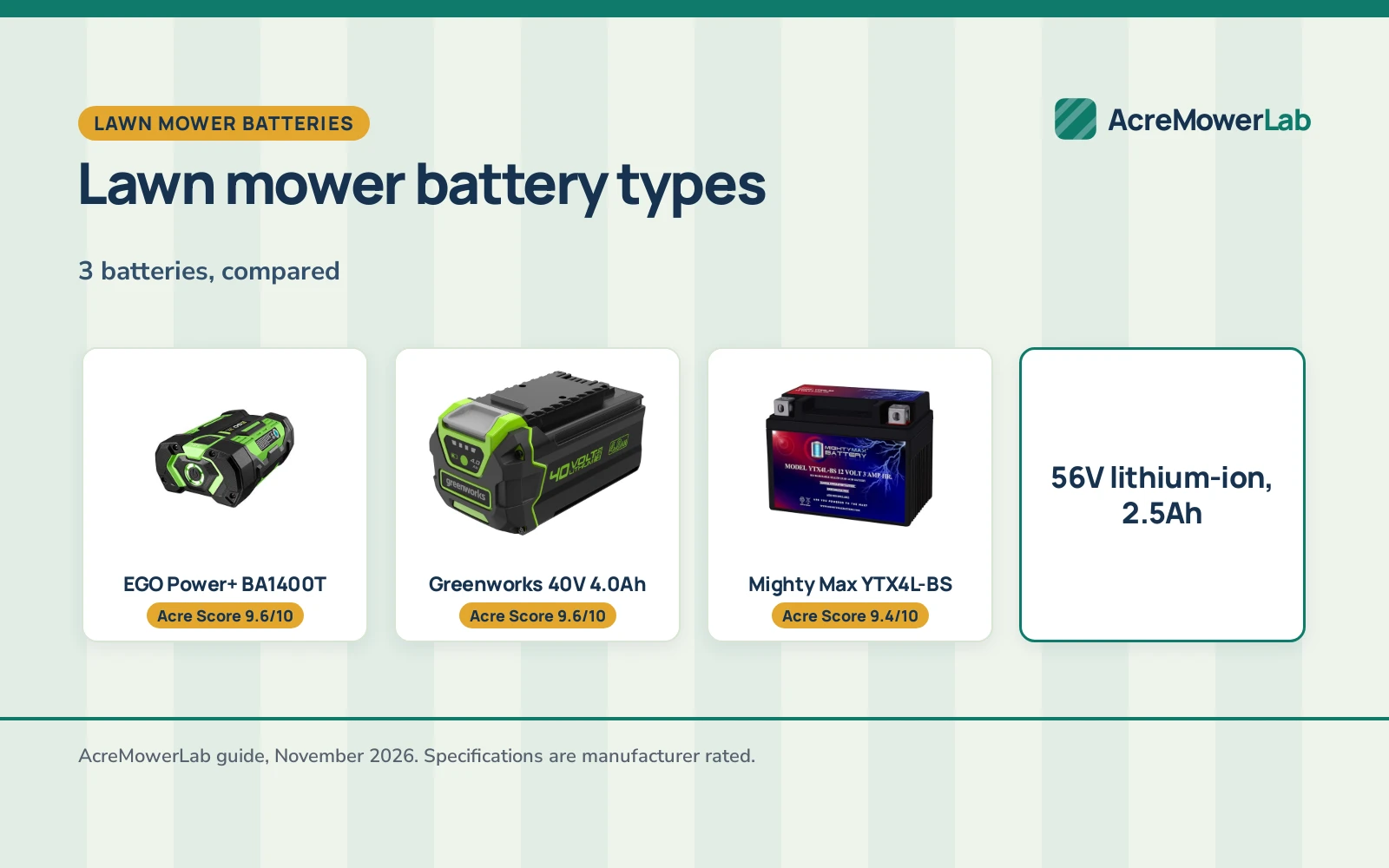
Push, self-propelled, riding and zero-turn mowers come in gas or battery form, while robotic mowers run on battery and reel mowers are usually pushed by hand, and the choice shapes noise, upkeep and run time. A gas engine suits long sessions and wide ground, with refuelling at the can and an engine to maintain through the season. A battery mower runs quieter and needs less upkeep, and suits a lawn you can finish on the charge you have. The 170cc engine on the AMERISUN listing above shows one gas example in the walk-behind class, while battery decks trade engine upkeep for charge planning. See the full tradeoff in the battery lawn mower vs gas guide.
Pick by property size and terrain
Start with the ground, not the machine. A small flat lawn near the house suits a push or reel mower, while slopes and long runs point to a self-propelled walk-behind. Wide open ground with room to turn suits a riding mower or a zero-turn, and a lawn broken up by trees and beds rewards the tight turning of a zero-turn. A defined lawn that you want kept short with little effort suits a robotic mower. Check how long each kind takes on your ground in the how long does it take to mow an acre guide, and walk the property once to note slopes, wet spots, gates and storage before you choose. See the full category in the walk-behind and robotic mower reviews.
Safety
Wear eye and hearing protection and sturdy shoes, and clear sticks, stones and other debris before you mow. Keep children, pets and bystanders out of the yard while the blades run, and stop the blades before you reverse or cross gravel and paths. Refuel only with the engine off and cool, and never mow toward people, parked cars or a road. On slopes, follow the mower’s slope limit in the manual, and keep clear of ponds and ditches where wheels can lose grip.
FAQ: mowing large lots
What type of lawn mower is right for a small yard?
A push or reel mower suits a small flat lawn, since both turn easily and store in little space. When the lawn has slopes, a self-propelled walk-behind takes the push out of the job.
Are self-propelled mowers worth it on slopes?
Yes, when the ground rises and falls: rear-wheel drive keeps traction on slopes, and the AMERISUN listing shows one example with a height adjustment from 1.5 to 3.9 inches, a 21-inch deck and a 170cc engine.
Should I buy a riding mower or a zero-turn?
A riding mower suits wide open lawns with room to turn and a shed bay for storage. A zero-turn suits ground broken up by trees and beds, where tight turning saves passes around obstacles.
Do robotic mowers work on large properties?
A robotic mower suits a defined lawn that you set out for it, mowing a little often to keep the grass short. Wide or rough ground with no clear boundary suits a riding mower or a zero-turn instead.
Gas or battery: which mower power should I pick?
Gas suits long sessions and wide ground, with refuelling at the can. Battery suits a lawn you can finish on a charge, with a quieter start and less upkeep. The choice turns on the size of your lawn and how you store fuel or charge batteries.