Walensee 4-Row Lawn Aerator Review: Pros, Cons and Who It Is For
A manual 4-row spike aerator with 20 steel spikes for small yards: what the listing states, who it suits and its limits.

On this page
Top picks at a glance
As an Amazon Associate I earn from qualifying purchases.
- 1
 Walensee 4-Row Lawn Aerator Tool with 20 Steel Spikes for9.6/10View on Amazon
- 2
 Walensee Twist Tiller with Large Steel Claw9.6/10View on Amazon
- 3
 Walensee Rotary Cultivator 2-in-1 Hand Tiller and Action Hoe9.4/10View on Amazon
- 4
 Agri-Fab 45-0365 Push Spike AeratorView on Amazon
- 5
 Suchtale 40-Inch Tow Behind Spike Aerator with GalvanizedView on Amazon
- 6
 21" Rolling Lawn AeratorView on Amazon
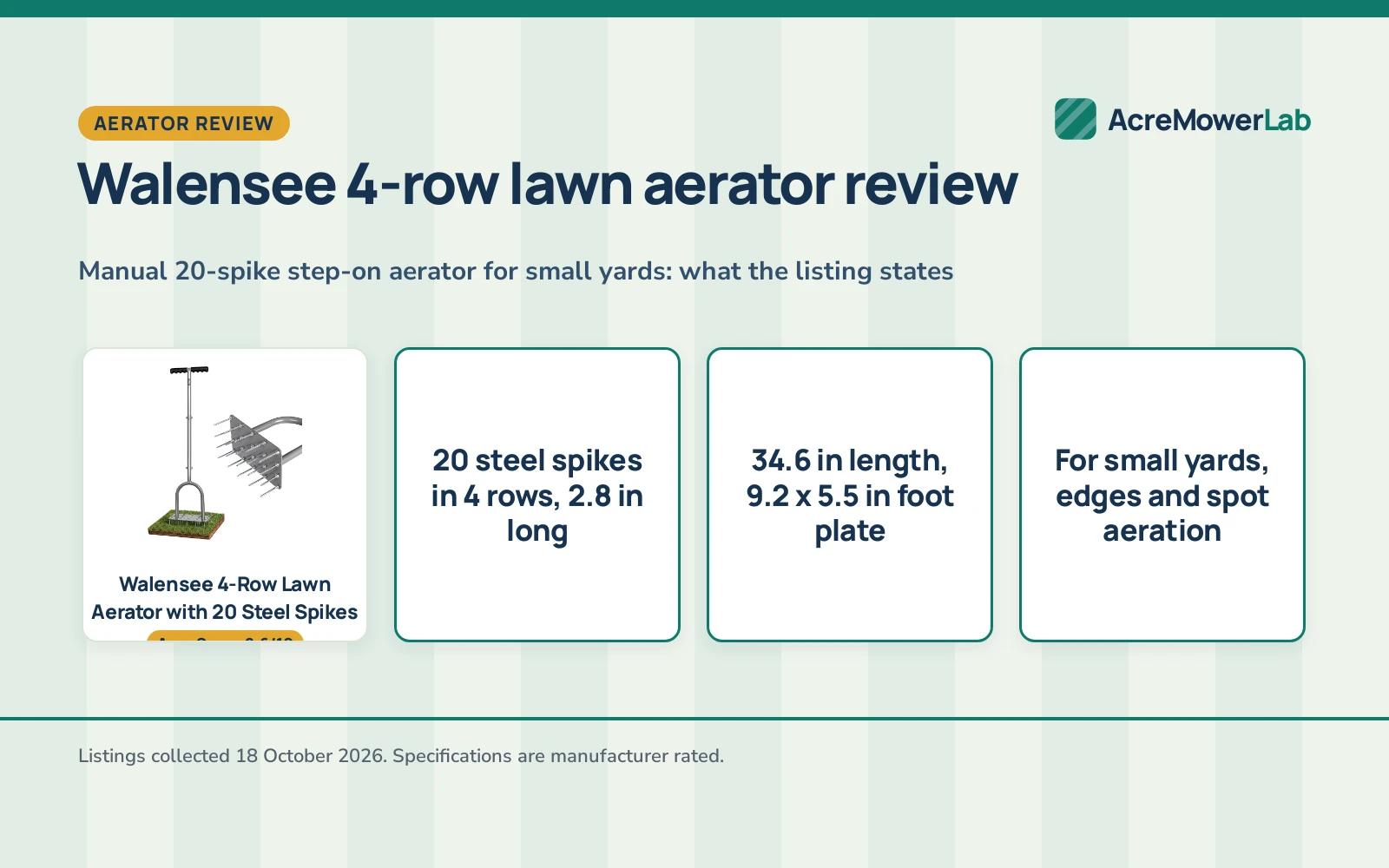
A small lawn that puddles after rain, edges and tight corners big machines struggle to reach: that is the ground this walensee 4-row lawn aerator review is written for. In 1 line: a manual step-on spike aerator with 20 steel spikes in 4 rows, listed at 34.6 inches long with a 9.2 by 5.5 inch foot plate, built for small yards and spot aeration rather than whole-acre work.
AcreMowerLab earns a commission when you shop through links here. It never changes your price. Affiliate disclosure.
This is a research-based review. We have not used this aerator. Every figure below comes from the Walensee Amazon listing for the GTL-B952-WA-DE, collected 18 October 2026. Where the listing does not state something, or contradicts itself, we say so.

Walensee 4-Row Lawn Aerator Tool with 20 Steel Spikes for Small Yards
This walensee 4-row lawn aerator review covers a manual step-on spike tool: 20 steel spikes in 4 rows, 2.8 in long, 34.6 in overall with a 9.2 by 5.5 in foot plate, for small yards and spot aeration.
Who it's for: homeowners with small lawns, edges and tight areas who want to aerate before overseeding or fertilizing.
Who should skip it: anyone aerating a large lawn or dealing with cement-hard ground who needs a tow-behind or powered aerator.
Read the full review
We have not used this aerator; this review is based on Walensee's Amazon listing for the GTL-B952-WA-DE and the specs published there. The pitch is straightforward: a step-on spike tool for small lawns, edges and garden borders, with 20 spikes in 4 rows making 20 holes per press.
2 points worth flagging. The listing is consistent on its core figures, 20 spikes, 2.8 in spikes, 34.6 in length and a 9.2 by 5.5 in foot plate, with no contradictions to report. The honest limit is scope: the maker positions it for small yards and spot aeration, and it is for firm but workable soil only. The warranty is not stated, so it scores nothing for warranty.
Pros
- 20 steel spikes in 4 rows punch 20 holes per press, covering small areas quickly for a hand tool
- 2.8 in spikes reach the root zone the listing targets for air, water and nutrient flow
- 9.2 by 5.5 in foot plate spreads the step evenly for stable pressing
- Heavy-duty steel build with 34.6 in length suits edges and tight spots big machines miss
Cons
- Manual tool for small yards and spot work only; not for aerating a full acre
- Listing warns against extremely hard dry ground and loose sandy soil
- No warranty term is stated
- Weight is not stated, so portability to the lawn is a guess
Other machines to compare
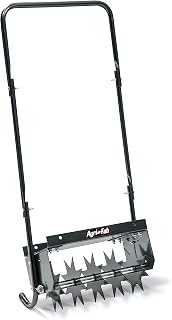 Agri-Fab 45-0365 Push Spike AeratorCheck price on Amazon
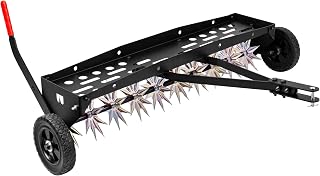 Suchtale 40-Inch Tow Behind Spike Aerator with GalvanizedCheck price on Amazon
 21" Rolling Lawn AeratorCheck price on Amazon
Walensee 4-row lawn aerator review: what the listing states
| Spec | Walensee 4-row lawn aerator (B0GCZ4HWMB) |
|---|---|
| Tool type | Manual 4-row spike lawn aerator |
| Spikes | 20 steel spikes in 4 rows, 2.8 in long |
| Coverage per press | 20 small holes per press |
| Overall length | 34.6 in |
| Foot plate | 9.2 x 5.5 in |
| Material | Heavy-duty steel |
| Power | Hand powered |
| Model | GTL-B952-WA-DE |
| Warranty | Not stated |
Who the Walensee 4-row lawn aerator is for
Homeowners with small lawns, lawn edges, garden borders and tight areas who want to open the soil before overseeding, reseeding or fertilizing. The listing positions it for spot aeration and lawn repair without tearing up large sections, and for firm but workable soil that has been moistened or recently rained on.
The aerator in detail
Lawn size, deck width and speed in; minutes per mow out. Or work backward from the time you want to spend.
What it does well
Twenty holes per press is honest coverage for a hand tool: each step down punches 20 channels, so a small lawn or a patch of compacted soil gets aerated in a reasonable number of steps. The 2.8 inch spikes are long enough to reach the root zone the listing talks about, and the 9.2 by 5.5 inch foot plate spreads your step across the tool so it presses evenly instead of rocking. Heavy-duty steel is the right material for something you stand on in soil, and the 4-row layout keeps the holes evenly spaced for water and fertilizer to soak in.
Limitations to know before you buy
The maker draws the line plainly: this is for firm but workable soil, and it warns against extremely hard, dry ground and overly loose sandy soil. Moisten the ground first or aerate after rainfall, per the usage tips, or the spikes will fight you. It is a manual tool with no stated weight, so you cannot judge how it carries from the shed to the lawn. No warranty term is stated. And scope matters most: the listing sells it for small yards and spot work, not for aerating a full acre.
Buying advice: getting results from a step-on aerator
How the 20-spike head works
Each press does one job: you step on the 9.2 by 5.5 inch foot plate and the 20 steel spikes, arranged in 4 rows and measuring 2.8 inches long, punch 20 small holes. The listing says the holes create deep air channels that let oxygen reach grass roots and promote stronger root development, and that the evenly spaced holes help rainwater and irrigation soak in quickly, reducing runoff and standing water. The 4-row layout is the coverage engine: with 20 holes per press, a small lawn gets real coverage in a reasonable number of steps, and the maker positions the tool for spot aeration and lawn repair without disturbing large sections. Heavy-duty steel is the right material for a tool you stand on in soil, and the foot plate spreads your step so the tool presses evenly.
Soil condition is everything
This is the make-or-break variable, and the listing is direct about it: the aerator is recommended for firm but workable soil, with a warning to use caution on extremely hard, dry ground or overly loose sandy soil. For easier penetration and smoother aeration, the usage tips say to slightly moisten the ground before use or aerate after rainfall. A 2.8 inch spike needs soil with some give; on baked-hard ground it will fight you and on loose sand the holes collapse behind it. If your lawn is somewhere between, which most established lawns are, the tool fits. If your ground is at either extreme, fix the soil condition first or pick a powered machine.
When to aerate
Time it to the listing’s stated uses: spot aeration, overseeding, reseeding, lawn repair and soil preparation before fertilizing. Spring or fall aeration ahead of overseeding or fertilizing is the standard rhythm, because the listing says aerating before fertilizing or seeding increases soil porosity so fertilizer, water and grass seed reach the root zone more efficiently, improving nutrient uptake and germination. Aerating a stressed summer lawn or a frozen winter one wastes the effort. One pass per season on the compacted spots is the pattern that pays; the tool is for targeted work, not for marching across a full acre.
Scope, storage and the warranty gap
Buy this tool for small yards, lawn edges, garden borders and tight areas, which is exactly the ground the listing names. For a full acre, the listing’s own positioning says no: that is tow-behind or powered territory, and the Alternatives section below covers it. The tool itself is simple to own: 34.6 inches long, hand powered with no fuel, battery or cord, and nothing to winterize beyond a dry shed spot. The one gap to accept is the warranty: the listing states no warranty term, so you buy on the strength of the heavy-duty steel build alone. If a stated warranty matters to you, that is a reason to look elsewhere.
Who should skip it
- Anyone aerating a large lawn, who needs a tow-behind or powered aerator instead; see our best tow-behind aerator picks.
- Anyone with cement-hard dry ground or very loose sandy soil, where the listing says to use caution.
- Anyone who wants a stated warranty term on paper.
Matching It to Your Property
- Small flat lawns and edges: the 20-spike, 4-row head suits spot aeration where big machines cannot go.
- Soil condition: works on firm but workable soil; moisten first or wait for rain.
- Storage: a 34.6 in steel tool leans on a shed wall; no fuel, no battery, no cord.
- Season: aerate in spring or fall before overseeding or fertilizing, per the listing’s stated uses.
Buried utility lines are a real risk: in the US, call 811 a few days before you dig or till new ground. Wear eye protection and sturdy boots, keep feet and hands away from the tines, and start on clear, rock-free soil. Refuel only with the engine off and cool. Read our Safety Disclaimer.
FAQ: mowing large lots
How many holes does the Walensee aerator make per press?
Twenty. The listing states 20 steel spikes in 4 rows, creating 20 small holes each time you step down.
How deep do the spikes go?
The spikes measure 2.8 inches. The listing does not state a working depth beyond the spike length, so plan on the spike length as the maximum.
Does it work on hard ground?
The listing recommends firm but workable soil and warns against extremely hard, dry ground. Moisten the ground before use or aerate after rainfall for easier penetration.
Is it for large lawns?
No. The maker positions it for small yards, edges, garden borders and spot aeration. For bigger jobs, a tow-behind or powered aerator suits better.
What is the warranty?
Not stated. The listing gives no warranty term, so buy it on the strength of the steel build alone.
Alternatives
For larger properties, our best tow-behind aerator picks cover tractor and mower-pulled options, including budget tow-behind aerator picks. For breaking soil rather than aerating it, see the best small tiller cultivators.