What Is a Hydrostatic Lawn Mower?
A clear explanation of how hydrostatic lawn mowers work, how hydraulic fluid replaces gears, and what to consider before choosing one for your property.

On this page
Top picks at a glance
As an Amazon Associate I earn from qualifying purchases.
- 1
 ECOTRIC Adjustable Lawn Mower Trailer Towing Hitch9.8/10View on Amazon
- 2
 Keystone Seats Steel Pan Lawn Mower Seat9.7/10View on Amazon
- 3
 Eapele Solid Iron Lawn Mower Trailer Hitch9.6/10View on Amazon
- 4
 BLACK+DECKER Electric Lawn MowerView on Amazon
- 5
 Inductive Hour Meter for Engine Generator Lawn Mower 2PcsView on Amazon
- 6
 LawnMaster MEB1114K Electric Corded Lawn Mower 15-Inch 11AMPView on Amazon
- 7
 BLACK+DECKER Electric Lawn Mower with Bike HandleView on Amazon
- 8
 LawnMaster Electric Lawn Mower 12AMP 19-Inch ME1218X.01View on Amazon
- 9
 LawnMaster MEB1216K Electric Lawn Mower 16-Inch 12AMPView on Amazon
When you manage several acres of turf, pastures or uneven ground, choosing the right transmission sets how easily you can navigate around trees, fences and garden beds. If you are asking what is a hydrostatic lawn mower, it is a riding mower or tractor that uses a hydraulic pump and motor system rather than a mechanical gearbox to drive the wheels. Instead of clutching or stopping to shift gears, you press a foot pedal or move a hand lever to change ground speed smoothly from a crawl to full travel. This fluid-driven design gives you immediate control when maneuvering in tight spots, trimming close to fence lines, or backing out of corners.
Other machines to compare
 BLACK+DECKER Electric Lawn MowerCheck price on Amazon
 Inductive Hour Meter for Engine Generator Lawn Mower 2PcsCheck price on Amazon
 LawnMaster MEB1114K Electric Corded Lawn Mower 15-Inch 11AMPCheck price on Amazon
 BLACK+DECKER Electric Lawn Mower with Bike HandleCheck price on Amazon
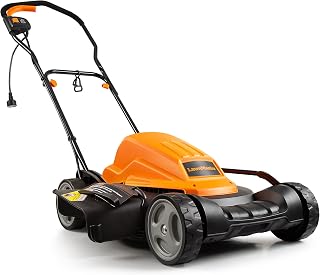 LawnMaster Electric Lawn Mower 12AMP 19-Inch ME1218X.01Check price on Amazon
 LawnMaster MEB1216K Electric Lawn Mower 16-Inch 12AMPCheck price on Amazon
AcreMowerLab earns a commission when you shop through links here. It never changes your price. Affiliate disclosure.
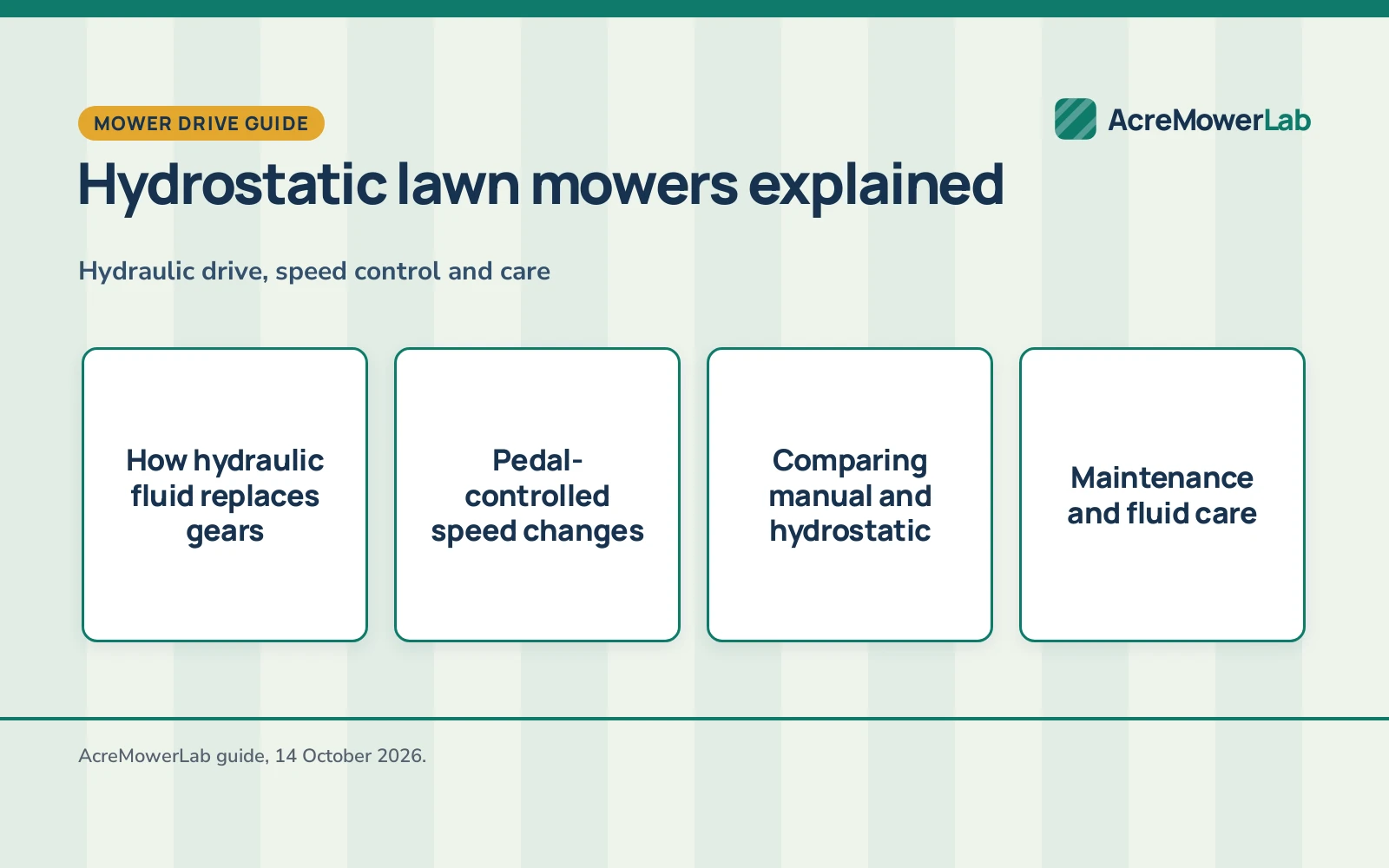
What is a hydrostatic lawn mower and how does it work?
In a conventional manual lawn tractor, the engine turns a pulley connected by a belt to a mechanical transaxle filled with gears. Changing travel speed requires selecting a specific gear ratio, which usually means coming to a full stop, depressing a clutch pedal, moving a shift lever into a new slot, and releasing the clutch.
A hydrostatic drive replaces those fixed gears with pressurized hydraulic fluid. The engine drives a hydraulic pump that pushes oil through internal passages to a hydraulic motor connected to the drive axles. When you press the forward drive pedal, a swashplate tilts inside the pump. Tilting the swashplate changes the stroke of the pump pistons, which increases or decreases the volume of oil flowing to the hydraulic motor. More oil flow spins the motor faster, increasing forward speed. Releasing the pedal allows the swashplate to return to center, stopping oil flow and bringing the machine to a halt.
Pressing the reverse pedal tilts the swashplate in the opposite direction. This reverses the flow of hydraulic oil through the motor, turning the drive wheels in reverse. Because oil flow changes smoothly across the full range of the swashplate angle, you get continuous acceleration without pauses or gear shifts.
Hydrostatic vs manual and CVT transmissions
Riding mowers and lawn tractors for rural acreages generally feature manual gear transaxles, belt-driven continuously variable transmissions (CVT), or hydrostatic systems.
| Transmission type | Speed control method | Best ground application |
|---|---|---|
| Manual gear drive | Fixed gear ratios selected with clutch and shift lever | Open, level acreage with long straight mowing runs |
| Belt-driven CVT | Variable-width pulleys adjusted by pedal pressure | Flat yards with light trimming and few obstacles |
| Hydrostatic drive | Variable hydraulic oil flow to a drive motor | Properties with trees, garden beds, slopes, and tight turns |
Manual transmissions offer mechanical efficiency on open ground, but mowing around obstacles requires constant stopping and shifting. Belt-driven CVT systems eliminate gear shifting but can slip under heavy loads. Hydrostatic drives house the pump and motor inside a transaxle case, delivering smooth pedal control without belt slippage between gears. To explore how these designs compare across different mower styles, see our guide to riding mower types and our breakdown of the difference between a lawn tractor and a riding mower.
Advantages of a hydrostatic transmission on acreage
Property owners who switch to a hydrostatic machine notice distinct operational benefits across their acreage.
Speed control is infinitely variable across the mowing range. When you approach tall, dense grass near an orchard or drainage ditch, you do not need to stop and shift gears to keep the mower deck from bogging down. You simply ease your foot back slightly on the drive pedal. Slowing your ground speed maintains engine speed, which keeps blade tip speed high for a clean cut.
Trimming around obstacles is straightforward. When trimming around fence posts, landscaping berms, rock outcroppings, or livestock pens, you can slow to a crawl, stop, reverse, and pull forward using only the pedals. Both hands remain on the steering wheel, providing steady steering control.
Additionally, hydrostatic drives deliver dynamic braking. When you lift your foot off the drive pedal, the hydraulic pump returns to neutral. Hydraulic resistance naturally slows the tractor on gentle slopes, reducing reliance on the mechanical brake pedal.
Tradeoffs and limitations of hydrostatic mowers
Despite their convenience, hydrostatic lawn mowers carry mechanical tradeoffs that property owners should consider before buying.
The main mechanical drawback is hydraulic efficiency loss. Converting mechanical energy from the engine into fluid pressure, and then converting fluid pressure back into axle rotation, generates heat. A hydrostatic drive consumes more engine horsepower through internal friction than a direct mechanical gear train.
Heat also affects hydraulic fluid. When mowing thick pastures or pulling utility attachments during hot summer weather, transaxle oil heats up. Overheated hydraulic oil thins, which can cause internal bypass leakage around pump pistons. When this happens, the mower can feel sluggish on hills or experience reduced forward speed until the oil cools down.
Additionally, hydrostatic units are more complex than manual gearboxes. Replacement transaxles or professional hydraulic repairs carry higher expenses than replacing a simple drive belt or shift linkage.
Engine sizes, speeds, and deck widths
Manufacturers match hydrostatic drives with gas engines and deck widths engineered to balance power, ground speed, and cutting capacity. Examining manufacturer specifications across current lawn tractors shows how these components fit together.
In entry residential lawn tractors, maker listings for the Husqvarna TS 120 specify a 19 HP, 540 cc Briggs & Stratton engine paired with a 42-inch stamped mower deck and a pedal-operated transmission. This configuration gives property owners responsive steering and speed variation for smaller acreage parcels.
For larger mowing areas, maker listings show the Husqvarna TS 120 with a 46-inch stamped mower deck powered by a 22 HP Briggs PXi series engine. This model incorporates a Tuff Torq hydrostatic transmission, a 2.5 gallon fuel capacity, and ground speeds listed at 5 mph forward and 2 mph reverse.
When moving up to wider cut widths, the Husqvarna TS 140X features a 54-inch stamped mower deck with 3 blades, driven by a 24 HP Briggs PXi engine. It uses a Tuff Torq hydrostatic transmission, carries a 3 gallon fuel capacity, and provides ground speeds of 5 mph forward and 2 mph reverse.
On zero-turn platforms, hydrostatic systems utilize dual independent hydraulic wheel motors to achieve zero-radius maneuvering. For instance, the Husqvarna Z254FX features a 54-inch fabricated steel deck with 3 blades, powered by a 22 HP Kawasaki 726 cc engine on a chassis with an item weight of 780 pounds. Comparing these ratings illustrates that wider decks and heavier chassis demand higher engine displacement and robust hydraulic units to sustain forward travel.
Hydrostatic transmission maintenance and fluid care
Long-term reliability of a hydrostatic lawn mower depends on keeping the transaxle cool, clean, and properly lubricated.
Many residential lawn tractors come equipped with sealed hydrostatic transaxles. Manufacturers design these units without external fluid reservoirs or drain plugs, classifying them as maintenance-free under normal residential mowing conditions. Commercial mowers and heavy-duty garden tractors feature serviceable transaxles equipped with spin-on oil filters, expansion tanks, and drain ports for periodic fluid flushes.
Regardless of whether your mower has a sealed or serviceable unit, cooling airflow is critical. Hydrostatic transaxles feature cooling fins cast into their aluminum housing, topped by a belt-driven cooling fan. During mowing, grass clippings, dry leaves, and dirt accumulate on top of the transaxle casing. When debris packs around the cooling fins, heat cannot escape. This trapped heat degrades the oil inside, leading to premature pump wear. After mowing, clear accumulated debris from the transaxle fins and fan blades with a blower or compressed air.
If your mower ever needs to be moved when the engine is off, locate the bypass freewheel lever at the rear hitch plate. Engaging this lever opens an internal valve that allows oil to bypass the hydraulic motor. Pushing or towing a hydrostatic mower without opening the bypass valve can force hydraulic fluid backward through closed pump chambers, causing severe transaxle damage. If your mower begins to exhibit sluggish travel or shuddering, consult our guide on how to fix a hydrostatic drive on a riding mower and review standard lawn tractor maintenance schedules.
Safety considerations on slopes and rough ground
Operating a hydrostatic lawn mower across rural acreage requires awareness of terrain, traction, and operating limits.
Always review and follow the manufacturer’s maximum slope rating for your specific mower model. While hydrostatic transmissions offer smooth pedal modulation, gravity and ground conditions dictate tire traction. On steep hills or damp grass, drive wheels can lose grip. If the rear tires begin to slide, hydraulic dynamic braking cannot stop the machine from sliding downhill. Never mow on slopes that exceed your machine’s stated limits, and avoid operating near steep drop-offs, retaining walls, ponds, or drainage ditches where banks can collapse. See our advice on the maximum slope for a riding mower for proper incline evaluation.
When operating near buildings, trees, or landscaping beds, always disengage mower blades before shifting into reverse. Looking behind you and ensuring the reverse path is clear prevents accidental contact with unseen objects. Keep children, pets, and bystanders far away from the mowing area before starting the engine, and never carry passengers on the mower or in towed carts.
Personal protective equipment is essential during all mowing operations. Wear eye protection to shield against thrown debris, hearing protection to guard against prolonged engine noise, and sturdy footwear with slip-resistant soles. When refueling, always turn off the engine and allow all exhaust and engine surfaces to cool thoroughly before adding fuel to the tank. Clear large sticks, wire, stones, and hidden debris from tall grass before making a mowing pass.
FAQ: mowing large lots
Is a hydrostatic lawn mower better than a manual mower?
For properties with obstacles, trees, garden beds, and rolling terrain, a hydrostatic lawn mower is generally superior because it allows smooth speed changes and instant direction shifts without stopping or clutching. A manual gear mower is suitable primarily for open, level fields where you can set a single gear and mow straight paths for extended periods.
Does a hydrostatic mower have a clutch or gears?
A hydrostatic mower does not have a traditional manual clutch or selectable forward and reverse gears. Instead, an engine-driven hydraulic pump circulates pressurized fluid to a hydraulic motor. Speed and travel direction are controlled continuously by adjusting internal fluid flow via foot pedals or a hand lever.
How fast does a hydrostatic lawn mower go?
Manufacturer listings for residential hydrostatic lawn tractors indicate forward ground speeds of 5 mph and reverse speeds of 2 mph. Actual mowing speed depends on turf thickness, terrain slope, cutting height, and how far you depress the drive pedal.
Do hydrostatic transmissions require fluid changes?
It depends on the transaxle design. Many residential riding mowers feature sealed transaxles that are filled with synthetic fluid at the factory and require no regular fluid replacement. Heavy-duty garden tractors and commercial mowers feature serviceable transaxles with oil filters and drain plugs that require periodic fluid and filter changes as outlined in the operator manual.
Why does a hydrostatic mower lose pulling power?
Loss of drive power typically occurs when the transaxle overheats, causing hydraulic fluid to thin and bypass internal pump pistons. Common causes include grass clippings packing around the transaxle cooling fins, a damaged cooling fan, a slipping engine-to-transmission drive belt, or air trapped within the hydraulic fluid passages.
More mowing guides
- How to Fix Hydrostatic Drive on Riding Mower
- Riding Mower Types: Complete Guide for Acreage Owners
- What Is the MAX Slope for a Riding Mower?
- Lawn Tractor Maintenance: Step-by-Step Care Guide
Explore our riding mowers section to compare models by acreage, deck size, and transmission type.