Zero Turn Mower Maintenance Schedule (2026)
A season-by-season zero turn mower maintenance schedule: before-mow checks, oil and filter service, blades, belts, hydraulics and storage.

On this page
On acreage, a zero turn mower works hard from the first green-up to the last leaf fall: long passes across open ground, tight turns around trees and fence lines, and dust from every dry stretch in between. A zero turn mower maintenance schedule keeps that work steady. In short: check oil, fuel, tires and the deck before each mow; change oil and filters and service the blades as the season goes on; and clean, inspect and store the machine with care when the season ends. This guide walks through each stage in order.
As an Amazon Associate I earn from qualifying purchases. AcreMowerLab earns a commission when you shop through links here. It never changes your price. Affiliate disclosure.
Zero turn mower maintenance schedule at a glance
| When | What to do | Why it matters |
|---|---|---|
| Before each mow | Check engine oil and fuel, look over tires, clear the deck and discharge chute, glance at belts and blades | Catches small problems while they are still small |
| Through the season | Change engine oil and oil filter, clean or replace the air filter and pre-cleaner, replace the fuel filter, check spark plugs, sharpen or replace blades, grease fittings where fitted | Keeps the engine breathing clean air and the cut clean |
| End of season | Clean the deck and frame, service filters and plugs, check belts, tires and battery, store under cover on dry ground | Stops rust and stale fuel from doing damage over winter |
| Start of season | Repeat the before-mow checks, confirm fresh fuel, inspect blades and belts after storage | Puts the machine back to work without surprises |
Your owner’s manual sets the exact service points for your engine and transaxles, so treat this schedule as the order of work and the manual as the authority. For brand-specific routines, see our Toro zero turn mower maintenance guide and the general lawn mower maintenance schedule.
Before each mow: the walk-around
Park on flat, dry ground with the engine off and cool. Check the engine oil level on the dipstick and top up only with the oil grade your manual names. Look at the fuel level and the fuel cap seal. Walk around the tires for cuts, bulges and low pressure, since a soft tire changes the cut height from side to side. Clear grass, sticks and wire from the deck top, the discharge chute and the area around the muffler. Look for frayed belts, loose guards and oil or fuel leaks on the ground where the machine sat. This pass takes little time and finds most problems before they stop a mowing day.
Through the season: oil, filters and plugs
Engine oil and the oil filter do the heavy lifting in a zero turn maintenance routine. Change them at the points your manual sets, and follow the manual’s guidance for dusty or heavy-use conditions. The air filter and its pre-cleaner keep grass dust out of the engine; tap out or replace them when they load up, since a clogged filter costs power and fuel. The inline fuel filter strains impurities before they reach the engine’s fuel system, and spark plugs keep starting and running smooth.
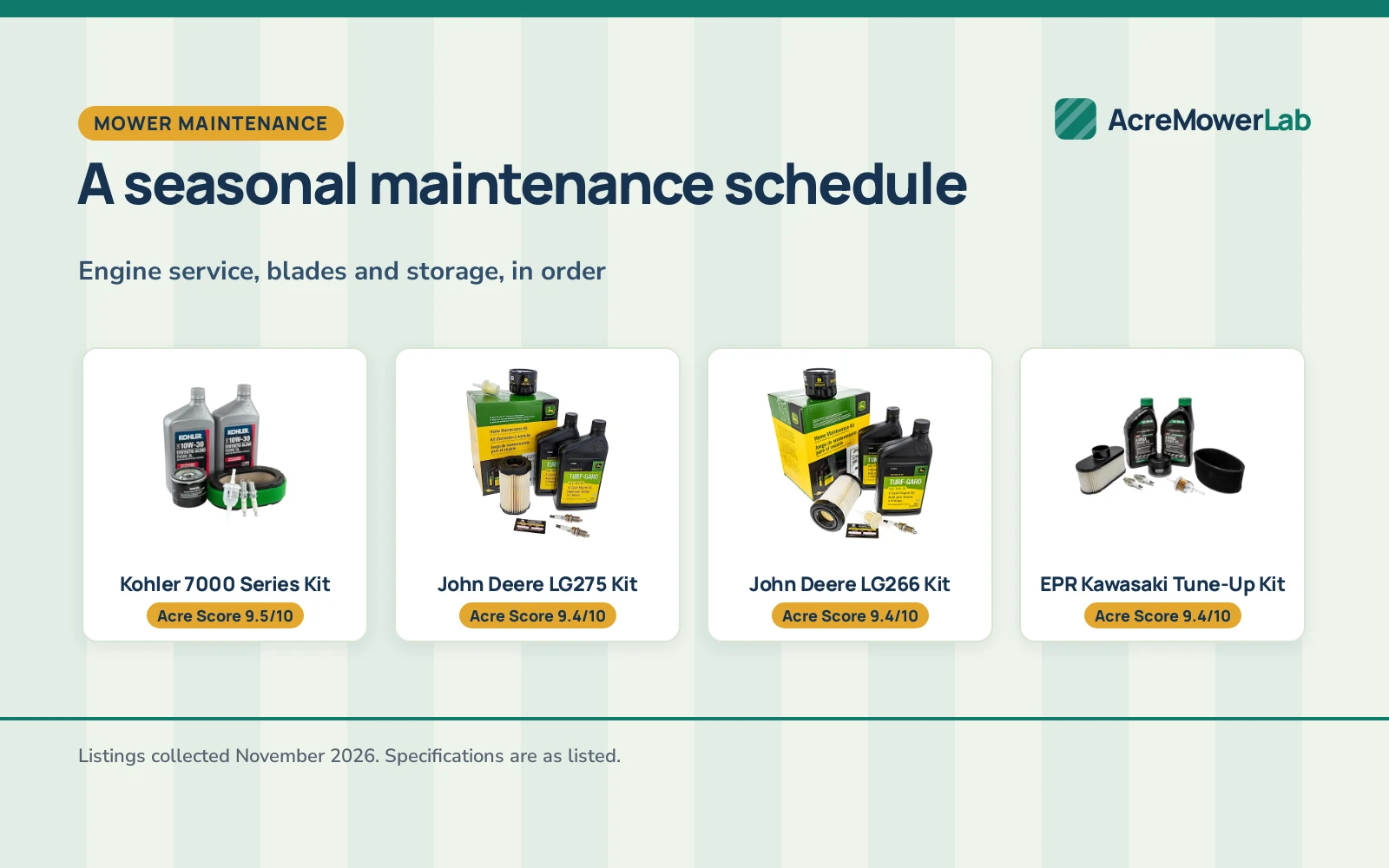
Maintenance kits bundle these parts for common engines. For example, one Kawasaki tune-up kit in our reference listings includes 2 air filters, 2 pre-cleaners, 2 oil filters, 2 fuel filters and 2 spark plugs, while a John Deere kit includes 1 primary air filter, 1 engine oil filter, 1 inline fuel filter and 2 spark plugs. Match the kit to your engine model and part numbers before ordering, and note the warranty term the maker states: some kits carry a 1-year warranty, while another states 3 Months. Our riding lawn mower maintenance kit guide explains what a complete kit should include.
Deck, blades and belts
A clean deck cuts better and lasts longer. Scrape built-up clippings from under the deck when they pack in, and keep the top of the deck clear so belts run clear and damp clippings do not sit against the deck. Dull blades tear grass instead of cutting it, which leaves a ragged lawn and strains the engine. Sharpen or replace blades when the edge rounds over or nicks appear, and replace a bent blade rather than straightening it. See our mower blade sharpener picks for sharpening options. Check deck and drive belts for cracks, glazing and frayed edges, and confirm tension and routing against your manual. When you need the machine raised for deck work, follow our guide on how to jack up a zero turn mower safely.
Hydraulics, tires and battery
The transaxles that drive a zero turn depend on clean hydraulic fluid and clean cooling fins. Keep grass and dust blown off the transaxle cases and fans, and follow your manual for fluid checks and changes where it provides for them; our hydraulic fluid maintenance guide covers the basics. Keep tires at the pressure your manual states, since pressure sets both cut level and traction on slopes. Keep battery terminals clean and tight, and keep the battery charged through storage so the first start of spring is easy.
End of season: clean and store
When mowing winds down, wash or blow off the frame, deck and engine shrouds, then let everything dry. Service the oil, filters and plugs so the machine sits with clean fluids, and deal with fuel the way your manual directs for storage. Inspect belts, blades and tires so worn parts can be ordered before spring. Store the mower under cover on dry ground, away from damp corners where rust starts. A machine put away clean and dry needs only the walk-around checks when the grass greens up again.
Safety
Shut the engine off, remove the key and let hot parts cool before any service work. Never reach under a raised deck without proper support, and keep hands clear of blades even when they look still. Wear eye and hearing protection when blowing off debris, and keep children, pets and bystanders away from the work area. Refuel only with the engine off and cool, outdoors and away from ignition sources. On slopes, never exceed the maximum slope your manual states, and remember that zero turns can lose traction on wet grass and near ponds and ditches. See our Safety Disclaimer.
FAQ: mowing large lots
What belongs on a zero turn mower maintenance schedule?
Before-mow checks of oil, fuel, tires and the deck; seasonal service of engine oil, oil filter, air filter, fuel filter and spark plugs; blade and belt care; hydraulic and battery attention; and a clean end-of-season storage routine.
How do I know when to change the oil and filters?
Follow the service points in your owner’s manual for your engine, including its guidance for dusty conditions and heavy use. The manual, not a general guide, sets the interval for your machine.
What does a zero turn maintenance kit include?
Kits vary by engine. Reference listings for common zero turn engines bundle an air filter and pre-cleaner, an oil filter, a fuel filter and spark plugs, and some add hydraulic or transmission filters for specific models.
Why does my zero turn cut unevenly after service?
Check tire pressure first, since a soft tire drops one side of the deck. Then confirm blade condition and deck level against your manual, and clear packed clippings from under the deck.
How should I store a zero turn mower over winter?
Clean and dry the machine, service oil and filters, handle fuel as your manual directs, inspect belts, blades and tires, and store it under cover on dry ground with the battery kept charged.
More mowing guides
- Lawn Mower Maintenance Schedule and Supplies
- Toro Zero Turn Mower Maintenance: The Routine
- Hydraulic Fluid Maintenance for Riding Mowers
- Riding Lawn Mower Maintenance Kit: What to Include
Browse our zero turn mower guides for model help matched to your acreage and terrain.