Fuel Caddy vs Gas Can: Which One Should You Buy?
A wheeled fuel caddy beats a carry can when several machines need fuel, and this guide compares four caddies by capacity, build and pump.

On this page
Top picks at a glance
As an Amazon Associate I earn from qualifying purchases.
- 1
 Garvee GC001-R 15 Gal Fuel Caddy with Pump9.6/10View on Amazon
- 2
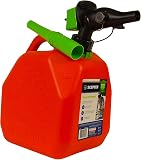 Scepter 2 Gal Gas Can9.7/10View on Amazon
- 3
 Midwest Can 2310 Safe-Flo Auto Shut Off 2 Gallon Gas Can9.6/10View on Amazon
- 4
 Scepter 1 Gal Gas CanView on Amazon
- 5
 Scepter 5 Gal Gas CanView on Amazon
- 6
 HEET Iso-HEET Water Remover & Gas Line AntifreezeView on Amazon
- 7
 Star TRON Enzyme Fuel TreatmentView on Amazon
- 8
 HEET Water Remover & Gas Line AntifreezeView on Amazon
On a property where the mower, the tractor and the boat all need fuel, carrying a small can back and forth gets old fast. The fuel caddy vs gas can question comes down to how much fuel you move and how far you move it. A caddy is a wheeled tank with a pump that brings fuel to the machine. A gas can is a small container you carry by hand. For a mower close to the shed, a can does the job. For several machines spread across acreage, a wheeled caddy saves trips. This guide compares the two options and four caddies by capacity, build, pump and wheels.
Other machines to compare
 Scepter 1 Gal Gas CanCheck price on Amazon
 Scepter 5 Gal Gas CanCheck price on Amazon
 HEET Iso-HEET Water Remover & Gas Line AntifreezeCheck price on Amazon
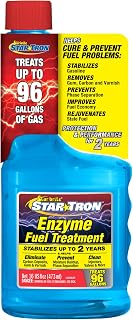 Star TRON Enzyme Fuel TreatmentCheck price on Amazon
 HEET Water Remover & Gas Line AntifreezeCheck price on Amazon
AcreMowerLab earns a commission when you shop through links here. It never changes your price. Affiliate disclosure.
Fuel caddy vs gas can: what sets them apart
A fuel caddy moves fuel on wheels, and the caddies here hold 15 gallons or 20 gallons. The caddies here use manual pumps to move fuel to the machine, so no power source is needed at the refueling spot. A gas can is lighter to carry and easier to store in a tight space, but it means repeat trips when several machines need fuel. The table below sums up the tradeoff.
| Option | Best for | Limit |
|---|---|---|
| Fuel caddy | Moving fuel to several machines across a property | Heavy when full, needs storage space |
| Gas can | A single machine, short carries, tight storage | Small capacity, repeat trips |
When a fuel caddy wins
A caddy wins when fuel has to travel. The listings here describe wheels built for grass, gravel, snow and concrete, and the Garvee adds a collapsible pull handle for pulling the tank to the machine instead of carrying fuel to it. A 20-gallon caddy cuts refill trips compared with a 15-gallon caddy, since the tank holds more before it needs refilling. A manual pump also matters where power is not reliable: the VEVOR listings state the bi-directional hand pump suits locations without reliable power or stable electricity. If the mower, the tractor and the boat all drink from one tank, a caddy keeps the fuel in one place.
When a gas can still makes sense
A gas can still makes sense for a single machine kept near the shed, where the walk is short and the tank is small. A can fits on a shelf or in a corner where a wheeled tank would not, and it is easier to lift into a truck bed. For a quick top-off before a mow, a can is faster to grab than rolling a tank out of storage. The tradeoff is trips: every refill means another walk with the can, while a caddy brings the whole supply at once.
Four fuel caddies, ranked
TUFFIOM 20 Gallon Fuel Gas Caddy. This iron caddy ranks first on the stated feature set: 20 gallons, a reversible rotary hand pump, an 8.9 ft hose, 10-inch wheels, an anti-static grounding clamp and a vent and oil level gauge. The wide diameter neck gives a larger opening for filling, and the listing states it suits gasoline and diesel. It measures 18.7 inches wide by 34 inches high and weighs 25 kg as listed.
VEVOR 20 Gallon Fuel Gas Caddy. This carbon steel caddy ranks second with the same 20-gallon capacity in a heavy-duty steel build: reinforced support ribs and a rust-resistant powder-coated finish, plus a bi-directional hand pump and large wear-resistant rubber wheels. The listing states it suits gasoline and diesel and describes complete fittings and sealing components for a secure connection after assembly. It measures 19.29 inches wide by 36.61 inches high and weighs 38.6 pounds.
VEVOR 15 Gallon Fuel Gas Caddy. This carbon steel caddy ranks third: the same build and bi-directional hand pump as its larger sibling, but 15 gallons, so it suits a smaller fleet or shorter hauls. The listing states it suits gasoline and diesel, with reinforced support ribs, a rust-resistant powder-coated finish and large wear-resistant rubber wheels. It measures 16.1 inches wide by 21.5 inches high and weighs 34.2 pounds.
Garvee 15 Gallon Gas Can. This HDPE caddy ranks fourth: 15 gallons in a lighter plastic build at 23.9 pounds, with a manual fuel transfer pump, a T-grip handle, a 10 ft hose, 6-inch wheels, a collapsible pull handle and side grips. The listing states dual shut-off valves, vapor-tight seals, a child-resistant cap and anti-static grounding, and it suits gasoline, diesel, kerosene and biodiesel. Note a contradiction in the listing: the title says 15 gallons while one bullet calls it a 17 gal gas can, and the spec table lists 15 gallons, so treat it as a 15-gallon tank. It measures 14 inches wide by 35 inches high.
Safety
Refuel only with the engine off and cool, and follow the manual for the machine being filled. Two caddies here include anti-static grounding: the TUFFIOM lists an anti-static grounding clamp, and the Garvee lists anti-static grounding with dual shut-off valves and vapor-tight seals. The VEVOR caddies describe complete fittings and sealing components for a secure connection after assembly. Store fuel away from ignition sources and keep caps and valves closed when the tank is not in use. See our gas tank cleaning guide for keeping tanks clean between fills.
FAQ: mowing large lots
Can a fuel caddy hold diesel and gasoline?
Yes, for the caddies here that state both fuels. The TUFFIOM and both VEVOR listings state gasoline and diesel, while the Garvee listing states gasoline, diesel, kerosene and biodiesel. Check the listing for the model you buy, since fuel ratings differ by model.
How do you move a full caddy?
Roll it on its wheels. The TUFFIOM lists 10-inch wheels, the Garvee lists 6-inch wheels with a collapsible pull handle and side grips, and the VEVOR caddies list large wear-resistant rubber wheels. Roll on firm ground where possible, since a full tank is heavy.
Do these caddies need power?
No. All four caddies here use manual pumps: the TUFFIOM uses a reversible rotary hand pump, the VEVOR caddies use a bi-directional hand pump, and the Garvee uses a manual fuel transfer pump with a T-grip handle. That makes them usable where power is not reliable.
What size caddy suits a mower fleet?
A 20-gallon caddy suits several machines because it cuts refill trips, while a 15-gallon caddy suits a smaller fleet or shorter hauls. Match the tank to how many machines draw from it and how far fuel has to travel.
Can you store a caddy outdoors?
The VEVOR listings describe a rust-resistant powder-coated finish built for long-term outdoor use, and the Garvee listing describes HDPE that resists corrosion, dents and UV rays. Keep caps and valves closed, and check the listing for storage guidance for the model you buy. For winter storage questions, see our gas over winter guide.