How to Pick Up Leaves with a Riding Mower
A step-by-step guide to picking up leaves with a riding mower using bagger attachments, tow-behind sweepers, or mulching blades.

On this page
Top picks at a glance
As an Amazon Associate I earn from qualifying purchases.
- 1
 BLACK+DECKER MTC220 20V 3-in-1 Trimmer/Edger/Mower9.5/10View on Amazon
- 2
 LawnMaster 24VMWBL Cordless 24V Max 13 inch Mower and Blower9.3/10View on Amazon
- 3
 YOOREAL Digital OEM Maintenance Hour Meter GaugeView on Amazon
- 4
 CRAFTSMAN 42" Gas Riding Lawn Mower with 17.5 HP* Briggs andView on Amazon
- 5
 YOOREAL Digital AC/DC Hour Meter 5-277VView on Amazon
- 6
 Husqvarna Z254F 54 in. 23 HP Kawasaki Zero Hydrostatic TurnView on Amazon
- 7
 AugFir Tow Behind Broadcast SpreaderView on Amazon
- 8
 EGO Power+ Rear Bumper for Z6 Zero Turn Riding Lawn MowersView on Amazon
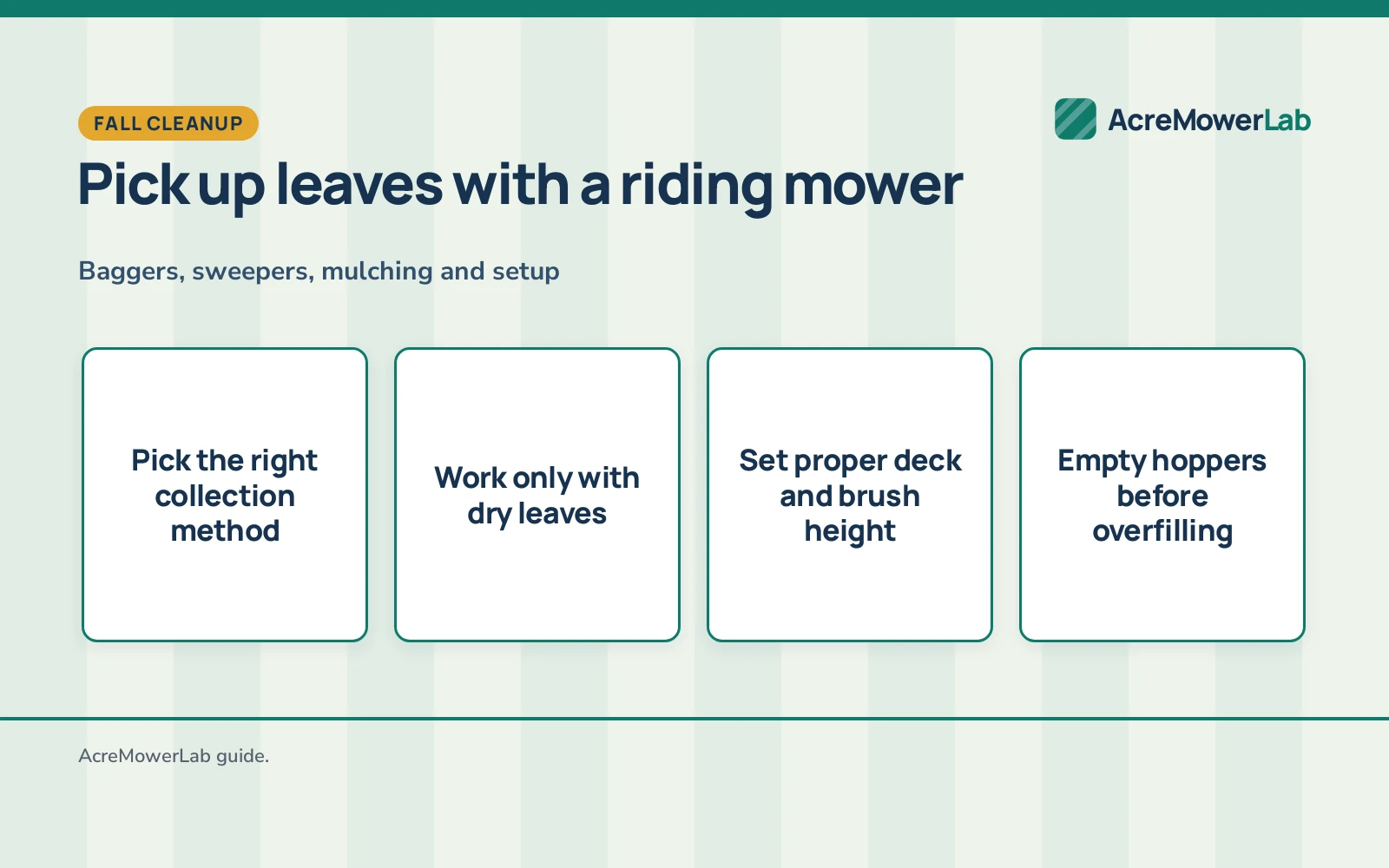
To pick up leaves with a riding mower, choose a collection method that fits your property: install a rear bagging attachment to vacuum leaves through the deck, hitch a tow-behind lawn sweeper to brush debris into a hopper, or install mulching blades to chop light layers into turf. Clear the lawn only when leaves are dry, raise the cutting deck slightly to prevent bulldozing, and drive at a steady pace in overlapping passes. This guide explains how to pick up leaves with a riding mower step by step.
Other machines to compare
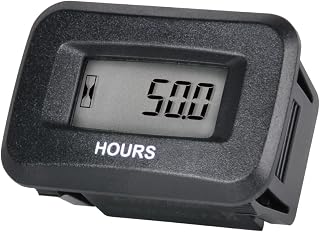 YOOREAL Digital OEM Maintenance Hour Meter GaugeCheck price on Amazon
 CRAFTSMAN 42" Gas Riding Lawn Mower with 17.5 HP* Briggs andCheck price on Amazon
 YOOREAL Digital AC/DC Hour Meter 5-277VCheck price on Amazon
 Husqvarna Z254F 54 in. 23 HP Kawasaki Zero Hydrostatic TurnCheck price on Amazon
 AugFir Tow Behind Broadcast SpreaderCheck price on Amazon
 EGO Power+ Rear Bumper for Z6 Zero Turn Riding Lawn MowersCheck price on Amazon
AcreMowerLab earns a commission when you shop through links here. It never changes your price. Affiliate disclosure.
How to pick up leaves with a riding mower: choose your method
| Method | Best for | Limit |
|---|---|---|
| Rear bagging system | Thorough collection and a clean lawn finish | Chutes can clog in damp debris; bags require frequent dumping |
| Tow-behind lawn sweeper | Large yards and heavy leaf coverage across open ground | Requires a rear hitch; collects leaves without shredding |
| Mulching blade pass | Light leaf cover where chopped organic matter feeds turf | Heavy layers can smother turf and bog down the engine |
| Backpack blower combo | Clearing fence lines, ditches and beds toward the mower path | Requires manual carrying and separate fuel or battery charging |
Most owners combine a riding setup with a blower for fence lines and garden beds. See our best backpack leaf blower roundup for gas options that move perimeter piles into the open lawn.
Step 2: choose your timing
Dry leaves lift and flow cleanly. Wet leaves stick to the deck underside and plug discharge chutes, forming dense clumps that cause mower belts to slip. Wait for a clear afternoon after morning dew has evaporated and dry conditions have settled before running your riding mower over leaf cover.
Timing across the fall is equally important. Do not wait until the final tree drops its canopy. Thick leaf blankets smother grass, block sunlight, and force your mower to crawl. Multiple lighter collection runs throughout the season keep the lawn healthy and prevent equipment clogs.
Step 3: adjust deck and attachment height
Setting the proper operating height determines how cleanly your riding mower gathers leaves. When using a mower deck for bagging or mulching, raise the cutting deck slightly higher than your normal cut. Setting the deck higher prevents the front edge from bulldozing leaves into piles, allowing debris into the chamber where blades lift and shred it. Cutting too low scalps uneven turf.
When towing a lawn sweeper, adjust the brushes so their tips lightly touch the top of the grass. The Scotts listing notes that setting brushes too low can push debris forward, bind in thick grass, and make the sweeper difficult to move, while setting brushes too high misses leaves completely. For tow-behind models, the MAXLANDER and VINGLI listings feature a 42-inch sweeping width with a lever-operated brush height adjustment. The Shulemin sweeper listing states a lever lifts its brush from 1 inch to 4 inches for transitions across turf, gravel, and pavement. The Brinly model provides indexed height adjustment with a twist-lock mechanism to keep the 42-inch sweeping assembly stable over rough terrain.
Step 4: drive in overlapping passes
Drive your riding mower at a steady, moderate pace. Moving too fast leaves uncollected debris behind the wheels and blows leaves out from under the deck. A moderate speed gives spinning blades or brushes sufficient time to lift leaves from the turf.
Travel in straight, slightly overlapping passes. Because front tires flatten leaves before the deck reaches them, overlapping each row ensures flattened leaves are gathered on the return pass. If you are bagging leaves, keep the discharge chute pointed away from uncut areas. For heavy leaf cover, sweep or mow crosswise on an additional pass. For rear bagging systems, using proper blades is critical: see our guide on the best lawn mower blade for bagging for high-lift options that generate maximum airflow into chutes, and review how often should you sharpen mower blades to maintain clean cutting edges.
Step 5: decide what to do with the pile
Plan your unloading spot before filling the hopper. Riding mower baggers and tow-behind sweepers fill quickly, and stopping to find disposal space with a full load wastes daylight.
Tow-behind sweepers offer substantial holding volume. The MAXLANDER and VINGLI listings publish a 12 cubic foot hopper capacity, while the Brinly sweeper features a 20 cubic foot hamper. For larger acreage, the VORTEXTOVE and Shulemin listings provide a 25 cubic foot hopper capacity. Models from Brinly, MAXLANDER, and Shulemin feature an integrated dumping rope or pull cord to empty the hopper from the tractor seat without dismounting. For standard collection hoods, oversized fabric catchers like the TerraKing XL bag provide 54 cubic feet of volume to reduce emptying stops.
Decide how you will manage the collected debris:
- Compost: deposit shredded leaves in a dedicated pile at the property edge to create leaf mold.
- Garden mulch: spread shredded leaves over flower beds to insulate roots through winter.
- Haul-off: transport leaves in a utility trailer or collection bags to a municipal drop-off site.
- Burning: check municipal rules, burn bans, and local permits before considering open burning.
Pick a collection spot
Before starting, walk the lawn to select unloading locations. Note where terrain or wind patterns naturally trap leaves, such as along sheltered fence rows or tree groves. Placing your primary drop point near these spots reduces travel distance with a full hopper.
Choose flat, well-drained ground that offers easy access for a tractor, wheelbarrow, or trailer. Avoid soggy swales and steep banks where damp turf causes drive wheels to spin. Keep unloading piles away from property boundaries and roadways so wind does not blow debris onto neighboring yards. On larger acreage, establishing multiple drop points along your route is faster than returning to a single distant pile every time the hopper fills.
Match the tool to the leaf type
The trees on your property determine whether your riding mower should bag, sweep, or mulch:
- Maple, birch, and ash leaves: thin and brittle, these species shred easily under mulching blades and break down quickly to nourish soil.
- Oak, sycamore, and sweetgum leaves: thick and leathery, these leaves decompose slowly; heavy layers should be bagged or swept because thick mats block light and air from turf roots.
- Pine needles and cones: needles slip between grass blades and resist mower suction; rotating sweeper brushes pull needles out of turf more effectively, though the Scotts sweeper listing notes pine needles and nuts may collect inconsistently.
- Wet or matted leaves: wet leaves stick to turf, clump inside cutting decks, and cause sweeper drive wheels to skid. Neither bagging nor sweeping works well on wet foliage; wait for dry conditions before collecting.
For details on leaving shredded debris versus collecting it, read our guide on is it better to mulch or bag leaves. For whole-property clearing strategies across mixed woodlots, see how to clear leaves on a large property.
Plan the property in zones
Dividing a large property into zones keeps leaf cleanup organized and prevents covering the same ground twice. Map sections: front lawn, open back acreage, fence lines, and driveway borders. Complete each zone before moving equipment to the next.
Begin by clearing obstacles, beds, and edges. Use a backpack blower to push leaves away from walls, tight corners, and tree rings into open turf where your riding mower can gather them. Work with the wind toward your drop zone, then run your mower in orderly rows. Exploring our trimmers and blowers guides will help you choose handheld tools for tight perimeters.
Mind the weather and the ground
Late autumn requires extra attention to ground conditions. Cold temperatures make grass slick, and morning frost causes tractor tires to lose traction on inclines. Never operate a riding mower across steep slopes or near pond banks when the ground is damp or leaf-covered.
Fallen leaves conceal hazardous debris. Thick leaf carpets hide fallen branches, rocks, irrigation heads, and hoses that can damage blades or bend sweeper brush shafts. Clear visible obstacles before driving over unknown areas, and inspect tire pressure and belt tension before starting heavy hauling runs.
Safety
Always disengage blades, set the parking brake, and shut off the tractor engine before inspecting the deck, clearing a clogged chute, or emptying collection hoppers. Never reach into the discharge chute or hopper while the engine runs.
Keep children, pets, and bystanders away from the work area. Spinning blades can turn hidden sticks and stones into dangerous projectiles. Wear eye protection, hearing protection, and sturdy work boots. On rolling terrain, follow your tractor manufacturer’s maximum slope guidelines; drive straight up and down slopes rather than across to reduce rollover risk, and slow down when towing loaded sweepers. Allow the engine to cool before refueling. See our Safety Disclaimer.
FAQ: mowing large lots
Can a riding mower pick up wet leaves?
Riding mowers struggle with wet leaves. Wet foliage sticks to the deck underside, clumps in discharge chutes, and mats into turf where suction and sweeper brushes cannot lift it. Wait until sun and wind dry the leaves thoroughly before mowing or sweeping.
Is it better to bag, sweep, or mulch leaves with a riding mower?
Mulching is ideal for light leaf cover because shredded pieces decompose into natural lawn fertilizer. For heavy autumn leaf drop, bagging or towing a lawn sweeper is better because thick blankets block sunlight and air, smothering grass if left in place.
How high should I set the mower deck when picking up leaves?
Set the mower deck slightly higher than your normal cutting height. Raising the deck prevents the front edge from pushing leaves into piles, allowing debris into the cutting chamber where blades shred it and direct it into the chute.
How does a tow-behind lawn sweeper attach to a riding mower?
A tow-behind lawn sweeper attaches to the rear hitch plate of a riding mower using a hitch pin and cotter clip. As the tractor pulls the sweeper, wheels turn the internal brushes to sweep debris into the collection hamper.
What should I do with leaves collected by a riding mower?
Collected leaves can be added to a compost pile, shredded as garden bed mulch, or hauled to a municipal yard waste site. Check local rules regarding open burning before considering disposal by fire.
More mowing guides
- Best Backpack Leaf Blower: 3 Gas Picks for Acreage Leaf Cleanup
- Is It Better to Mulch or Bag Leaves?
- How to Clear Leaves on a Large Property
- Best Lawn Mower Blade for Bagging (2026): 5 Picks Compared
Use the Mower Matcher to narrow down choices by acreage, terrain, budget, and power type.