Pressure Washer Maintenance: Step-by-Step Care Guide
A complete care plan for pressure washers on acreage: routine pump checks, engine upkeep, clear nozzles, and winter storage.

On this page
Top picks at a glance
As an Amazon Associate I earn from qualifying purchases.
- 1
 JANZ 24 in Stainless Steel Pressure Washer Surface Cleaner9.8/10View on Amazon
- 2
 JANZ 30 in Stainless Steel Pressure Washer Surface Cleaner9.7/10View on Amazon
- 3
 PowerSmart Gas Pressure Washer9.6/10View on Amazon
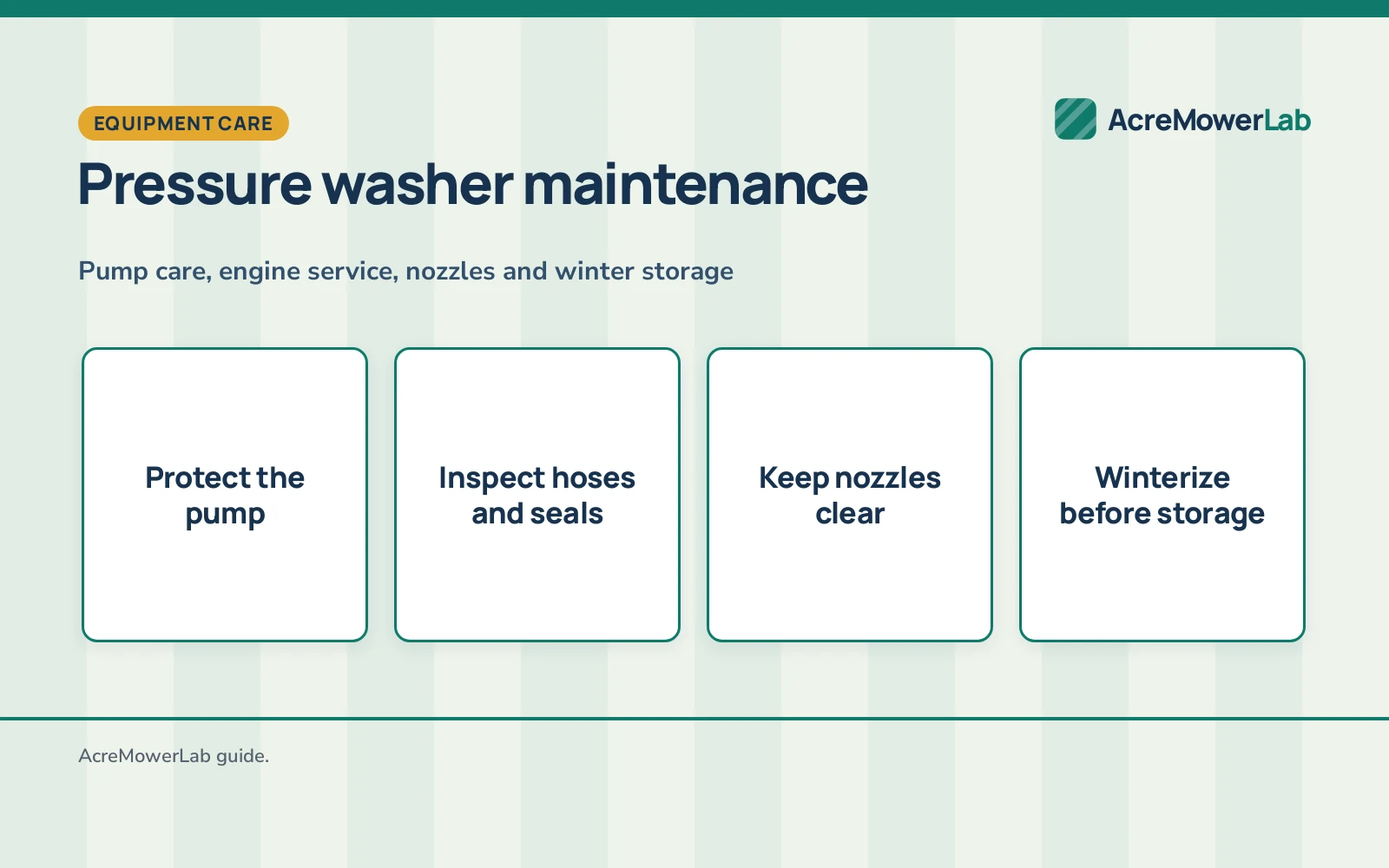
Maintaining equipment across open acreage, gravel lanes, and pastures leaves tractors, mower decks, and trailers coated in grime. Routine pressure washer maintenance protects the pump, engine, and fittings through clean water supply, regular lubricant checks, clear spray tips, and winter storage. Keeping up with these basic inspections prevents loss of water pressure, avoids blown seals, and ensures equipment is ready whenever property cleanup begins. This guide explains the essential maintenance steps in the order that saves time and protects your investment.
AcreMowerLab earns a commission when you shop through links here. It never changes your price. Affiliate disclosure.
Pressure washer maintenance: start with the pump and water supply
The high-pressure pump is the most vulnerable component on any pressure washer. Starving the pump of water causes cavitation, which ruins internal valves and seals within moments. Establishing a dependable water supply and verifying inlet connections before every cleaning session forms the foundation of equipment care.
| System | Routine care | What to watch for |
|---|---|---|
| High-pressure pump | Check lubricant on serviceable units, maintain water feed, apply winterizing fluid | Milky oil on serviceable units, surging pressure, manifold leaks |
| Water inlet and filter | Clear sediment screen, flush garden hose before connecting | Restricted water flow, debris in screen |
| Hoses and couplers | Inspect outer jacket for abrasions, lubricate rubber o-rings | Bulges, cuts, leaking connections |
| Spray gun and wand | Check trigger safety latch, clean nozzle orifice with wire | Distorted spray fan, leaking trigger valve |
| Engine or motor | Inspect oil level, service air filter, check power cord or fuel | Hard starting, tripped electrical breakers |
Acreage owners depend on these machines to wash tractors, mower decks, and outbuildings. See our gas pressure washer guide for heavy-duty options, or explore our overview of pressure washers for property cleanup equipment.
Step 2: flush the water supply and inspect the inlet screen
Before attaching your garden hose, turn on the spigot and allow water to run freely across the ground. This flushing purge clears accumulated rust, sand, and mineral flakes from the supply line before debris enters the pump. Well water systems on rural acreage frequently carry fine grit that can score brass valves and damage high-pressure packings.
Once the hose runs clear, shut off the spigot and inspect the mesh filter screen inside the pump water inlet fitting. Rinse away trapped sediment under clean water, and never operate the machine without this screen in place. Ensure the garden hose fits tightly without crimping, because air bubbles pulled into the pump cause pressure fluctuations and internal hammering.
Step 3: check hoses, fittings, and spray wand
High-pressure hoses endure vibration, gravel abrasion, and pressure spikes during daily operation. Unroll the hose completely before starting work, eliminating kinks that restrict flow. Feel along the hose for bulges, cuts, or exposed wire reinforcement. Any hose showing structural damage must be replaced immediately, as high-pressure blowouts present severe injection hazards.
Examine the quick-connect couplers at the pump outlet, hose ends, and spray wand base. Each fitting relies on a rubber o-ring seated inside the coupler socket to create a watertight seal. If an o-ring is cracked or missing, water sprays from the joint and drops operating pressure. Apply silicone grease periodically to keep o-rings pliable, and confirm the wand trigger safety lock engages firmly.
Step 4: service engine fluids and pump oil
The power source driving your pump requires consistent preventive care. On gasoline models, check engine oil with the dipstick before every use on level ground. Top off with fresh oil according to the manufacturer specifications in your owner manual. Replace stale fuel with clean, stabilized gasoline, and clean the air filter to keep dirt out of the engine during dusty yard chores. For electric units, inspect the power supply cord for cracked insulation and verify the ground-fault circuit interrupter functions properly.
While many residential axial pumps are sealed from the factory and require no fluid changes, commercial and serviceable pumps feature an oil reservoir that lubricates internal crankshaft bearings. Locate the sight glass or dipstick on the pump crankcase. Healthy pump lubricant appears clear or amber. If the oil looks milky, water has breached internal seals, requiring immediate service. When changing pump oil, use non-detergent pump lubricant designed specifically for pressure washers to prevent foaming.
Step 5: clear nozzles and winterize the pump
Spray nozzles control output pressure and determine the shape of the water fan. Even a tiny particle of sand or dried mineral deposit lodged in the nozzle orifice restricts flow, spikes internal pressure, and causes the pump unloader valve to cycle rapidly. When the spray fan distorts or the machine surges, stop the engine or motor, relieve trapped pressure, remove the tip, and clear the obstruction with a fine cleaning wire. If operating pressure gradually drops over time while spraying with an unobstructed tip, the nozzle orifice has likely worn larger from abrasive water flow and requires replacement.
Winter preparation is the most critical maintenance task for acreage owners facing freezing temperatures. Water trapped inside the pump expands as it freezes, cracking brass manifolds and destroying check valves. In autumn, connect pump protector and winterizer fluid to the inlet, drawing the fluid into the pump until it discharges from the outlet. This lubricates internal seals and prevents catastrophic freeze damage.
Choose a dedicated wash station
Operating a pressure washer on acreage requires thoughtful site selection. Establish a dedicated cleaning station on firm, level ground such as a concrete apron or compacted gravel driveway. Washing heavy machinery on soft turf or bare dirt creates deep mud ruts that splatter fresh grime back onto clean mower decks and make footing slick.
Ensure the wash area drains away from domestic wells, ponds, livestock pens, and garden beds. Runoff from equipment washing contains grease and weed seeds that should never drain into clean water sources. Position hoses along straight paths away from tractor traffic to protect brass fittings from being crushed.
Match the nozzle tip to the cleaning surface
Selecting the proper spray nozzle protects delicate surfaces while delivering adequate cleaning power for tough farm grime. Standard quick-connect spray tips use color-coded angles to indicate fan width. A wide fan nozzle distributes pressure gently, making it suitable for washing painted tractor hoods, vehicle panels, and wooden fences without peeling finish or splintering grain. Medium fan nozzles offer balanced cutting power for clearing mud off mower decks and tiller tines.
Reserve narrow fan and pinpoint tips strictly for stubborn deposits on unpainted cast iron, steel plow shares, and solid concrete. Narrow streams applied too close to soft surfaces can etch stone and gouge wood. For broad flat areas like shop floors and driveways, using your machine with a pressure washer surface cleaner speeds up progress. Review our guide on what size pressure washer do I need to match cleaning force to your chores.
Plan equipment cleaning in zones
Cleaning equipment across an entire property becomes far more manageable when organized into defined zones. Divide cleanup into logical groups, such as mowing machinery, tillage implements, trailers, and outbuilding walls. Finishing each equipment zone completely before moving to the next minimizes hose repositioning and machine runtime.
Within each zone, begin by rinsing away heavy mud and loose chaff with a broad fan. When applying detergent, spray from the bottom upward to prevent streaks from setting into the surface. Allow the cleaning solution dwell time to break down heavy grease and plant sap, then rinse thoroughly from the top downward so dirty runoff flows off cleaned metal. Washing equipment immediately after use, before clay mud and wet grass clippings bake onto metal decks in the sun, substantially reduces washing time and keeps rust from forming under mower housings.
Mind freezing weather and storage conditions
Cold weather poses severe hazards to high-pressure cleaning machinery. When autumn temperatures dip toward freezing, residual water remaining inside the pump, unloader valve, or wand will freeze solid. Even brief overnight cold snaps can burst an unprotected pump manifold or split a wand tube. Never store a pressure washer in an unheated shed without complete winterization.
Disconnect all hoses, guns, and wands and hang them vertically so internal moisture drains completely. Store high-pressure hoses in loose coils away from concrete floors, sharp edges, and pests. Keep the machine in a dry, ventilated workshop away from fertilizer bags and road salt, as corrosive fumes degrade metal components and electrical switches over winter months. When preparing to wash in chilly weather, always confirm the water supply line is completely thawed and purge air through the wand until water flows steadily before starting the engine.
Safety
Operating high-pressure washing machinery demands strict adherence to basic safety practices. Always wear impact-resistant eye protection, hearing protection, long pants, and sturdy work boots with slip-resistant soles. The focused water stream discharged from a spray nozzle carries sufficient force to pierce skin and cause deep tissue injuries; never point the spray wand at yourself, other people, livestock, or pets. Clear the work area of loose gravel, children, and pets before pulling the trigger, as the pressurized water stream can throw stones and debris at high velocity.
Gasoline-powered pressure washers produce toxic carbon monoxide exhaust and must be operated strictly outdoors in open, well-ventilated air, never inside a barn, garage, or enclosed outbuilding. Allow the engine to cool down thoroughly before adding fuel, and wipe up any gasoline spills immediately. On electric models, connect power cords solely to ground-fault circuit interrupter outlets and keep electrical connections elevated off wet ground. Always engage the trigger safety latch whenever you pause spraying, and relieve trapped line pressure by pulling the trigger after shutting off the engine and closing the water spigot. See our Safety Disclaimer.
FAQ: mowing large lots
How often does a pressure washer need maintenance?
Check engine oil before starting work, check pump lubricant on serviceable models, inspect hoses and inlet screens before every session, clean spray tips whenever the pattern distorts, and apply pump antifreeze before freezing weather arrives. Routine care prevents sudden component failures and extends the service life of internal pump seals.
Can I run a pressure washer without water?
No. The pump requires continuous water flow for lubrication and cooling. Running the pump dry causes the internal pistons and packings to overheat and fail within moments, leading to cracked plungers and ruined water seals. Always verify that water flows freely from the spray wand before starting the motor or engine.
What happens if a pressure washer pump freezes?
Water expands as it turns into ice, which cracks the brass or aluminum pump manifold, breaks check valves, and destroys internal seals. Freeze damage ruins the pump assembly and typically requires replacing the entire pump mechanism. Treating the pump with specialized antifreeze and lubricant before winter prevents catastrophic freeze cracking.
How do I know if my pressure washer pump oil needs changing?
Many residential axial pumps are sealed from the factory and do not require oil changes. On serviceable commercial and triplex pumps, check the sight glass or dipstick on the crankcase. Fresh pump oil appears clear or amber, while milky oil indicates water leaking past the seals, and dark black oil indicates heat breakdown. Follow your equipment manual to drain and refill the crankcase with non-detergent pump lubricant whenever discoloration appears.
Why is my pressure washer pulsing or losing pressure?
Pulsing usually stems from a partially clogged spray tip that causes the unloader valve to cycle, air trapped in the lines, or insufficient water volume from the supply hose. Gradual loss of steady pressure, by contrast, typically points to a worn nozzle orifice, a dirty inlet filter screen, or worn pump packings. Clear nozzle clogs with a cleaning wire, purge trapped air with the machine off, and verify uninterrupted water flow from the spigot.
More mowing guides
- Best Gas Pressure Washer: 3 Picks for Farm and Acreage Cleanup
- What Size Pressure Washer Do I Need?
- Best Pressure Washer Surface Cleaner (2026): 5 Picks Compared
- Best Pressure Washer for Beginners (2026): 5 Picks Compared
Use the Mower Matcher to narrow down choices by acreage, terrain, budget, and power type.