Belt Drive vs Hydrostatic Riding Mower: Which One Should You Buy?
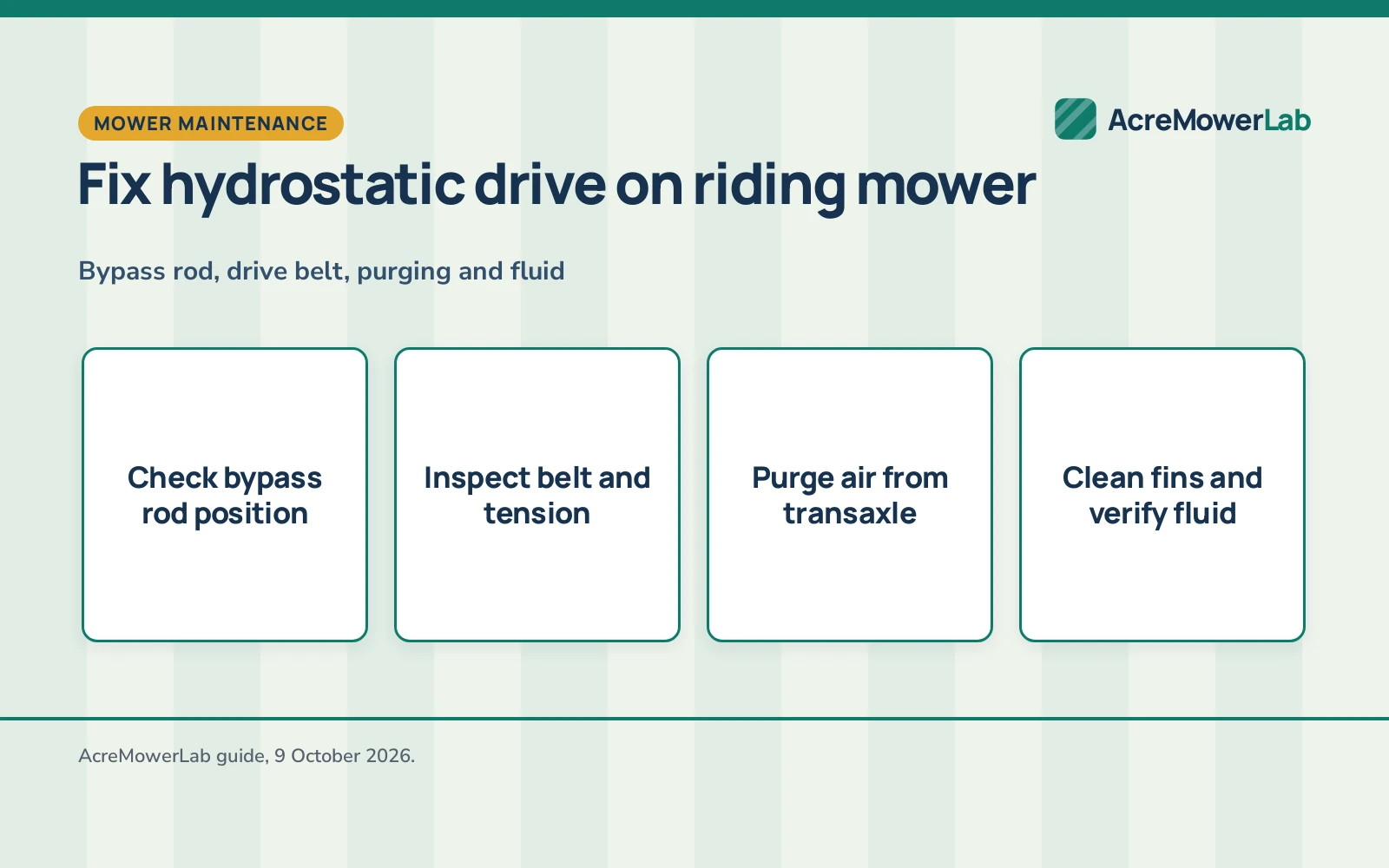
A plain look at how belt and hydrostatic drives move a riding mower, the parts that carry each system, and the care that keeps them moving.

On this page
Top picks at a glance
As an Amazon Associate I earn from qualifying purchases.
- 1
 RTPOWER 954-04195A Auger Drive Belt 2 Pack9.5/10View on Amazon
- 2
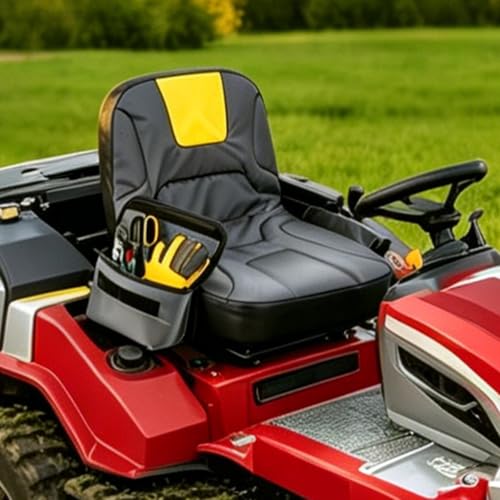 BeGyoku Riding Mower Seat Cover with Side Pockets9.7/10View on Amazon
- 3
 SizendHK 07200007 35 in Auger Drive Belt for Ariens9.5/10View on Amazon
- 4
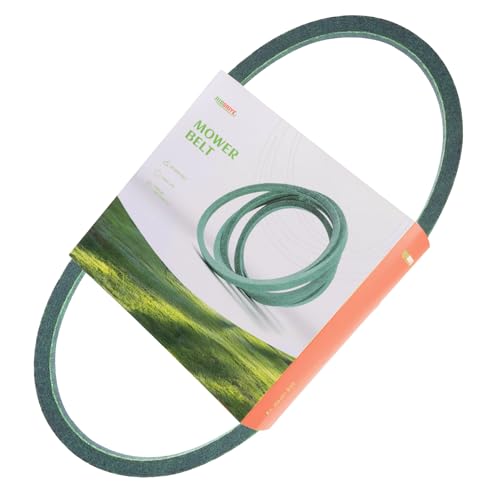 Riodrive 954-05040 954-0241A Kevlar Upper Drive Belt for MTDView on Amazon
- 5
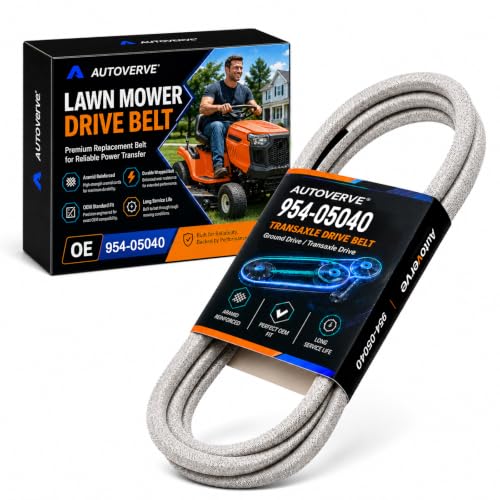 Autoverve 954-05040 954-0241A Upper Drive Belt Fits Troy BiltView on Amazon
- 6
 754-04252 Riding Mower Hydrostatic Transmission Drive BeltView on Amazon
- 7
 Riding Mower Tractor Hydrostatic Transmission Belt 1/2" xView on Amazon
- 8
 119-3321 Lawn Mower Drive Belt Fits for Exmark Toro 119-3321View on Amazon
- 9
 Lawn Mower Tractor Hydrostatic Transmission Belt with AramidView on Amazon
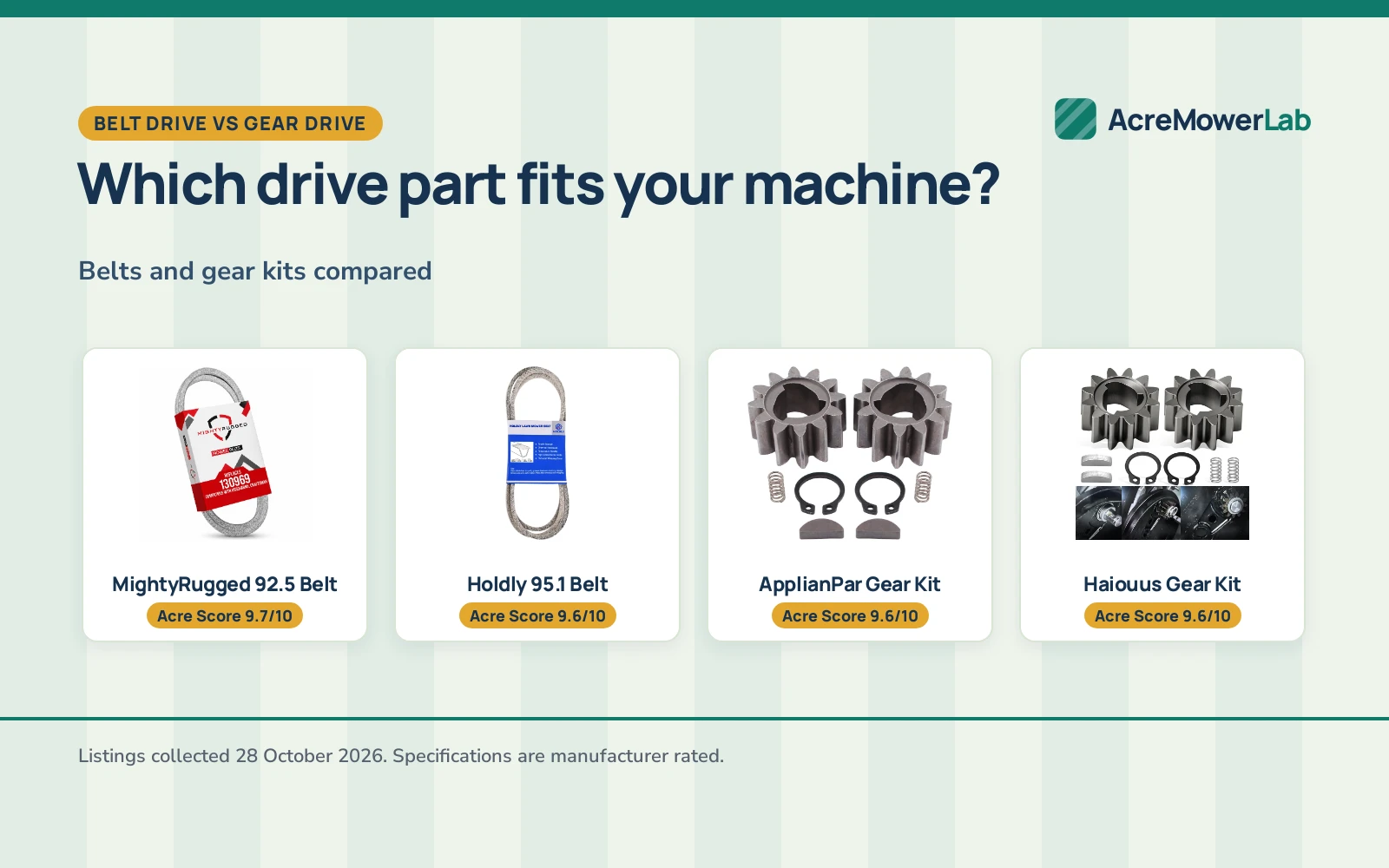
A belt drive vs hydrostatic riding mower choice comes down to how power moves from the engine to the wheels. A belt drive carries power through a belt and pulleys, and the belt wears with use until a new belt helps restore steady movement. A hydrostatic drive moves power through fluid in the transmission, and the fluid guards the internal parts against wear, corrosion and oxidation. This guide lays out how each system works, the parts that carry each one, and the care that keeps each one moving, so you can match the drive to your ground.
Other machines to compare
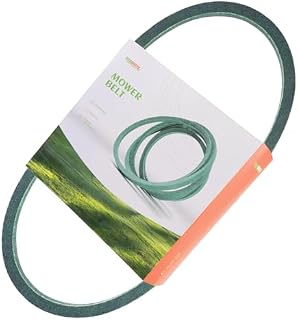 Riodrive 954-05040 954-0241A Kevlar Upper Drive Belt for MTDCheck price on Amazon
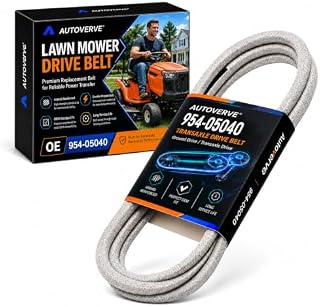 Autoverve 954-05040 954-0241A Upper Drive Belt Fits Troy BiltCheck price on Amazon
 754-04252 Riding Mower Hydrostatic Transmission Drive BeltCheck price on Amazon
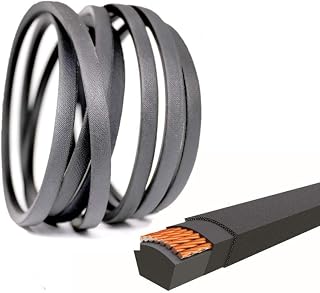 Riding Mower Tractor Hydrostatic Transmission Belt 1/2" xCheck price on Amazon
 119-3321 Lawn Mower Drive Belt Fits for Exmark Toro 119-3321Check price on Amazon
 Lawn Mower Tractor Hydrostatic Transmission Belt with AramidCheck price on Amazon
AcreMowerLab earns a commission when you shop through links here. It never changes your price. Affiliate disclosure.
Belt drive vs hydrostatic riding mower: how each drive works
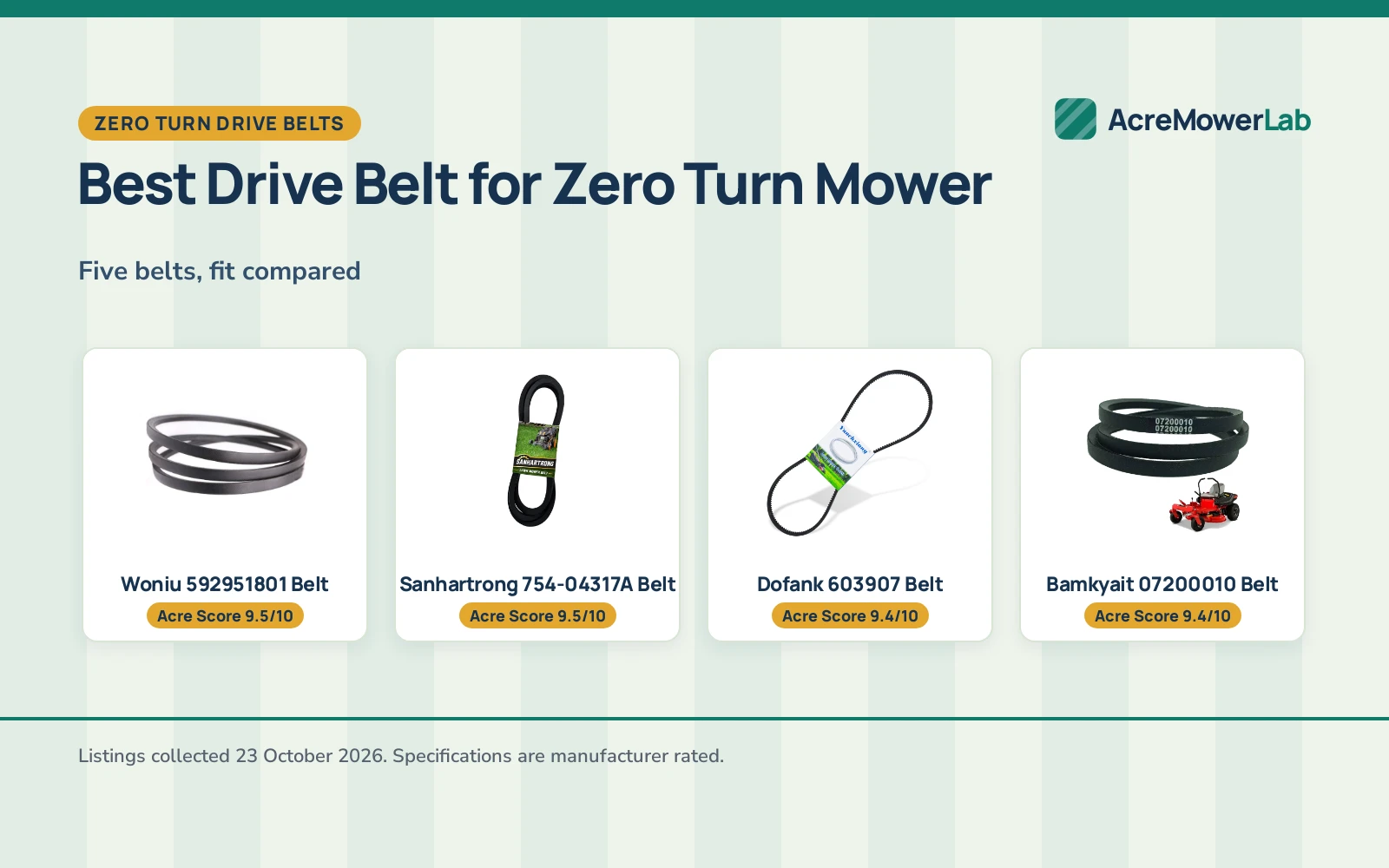
A belt drive is the simpler path. The engine turns a pulley, the belt carries that turn to the transmission pulley, and the mower moves. The belt is a wear part by design: it flexes, rubs and heats up every time the mower runs, and the listing for a worn belt names the signs plainly, sluggish movement, slipping, hesitation, squealing, inconsistent ground speed, or a mower that will not move correctly even though the engine runs. When those signs show up, a new belt matched to the OE number helps restore steady power transfer.
A hydrostatic drive has no drive belt in the listings here. Power moves through fluid inside the transmission, and the fluid does the guarding: the Lucas Oil listing states premium anti-wear protection, corrosion protection, resistance to oxidation, and added dispersancy and detergency for clean internal parts. The transaxle is the unit that carries the drive to the wheels, and the listing for the Tuff Torq unit states only its part numbers, with no dimensions, no fitting notes and no warranty term.
| Drive | How power moves | What wears | What to watch |
|---|---|---|---|
| Belt drive | A belt and pulleys carry power from the engine to the wheels | The belt: cracks, frayed edges, glazing, exposed cords, stretching, heat damage | Match the OE number, model number, belt position and routing before you order |
| Hydrostatic drive | Fluid in the transmission carries power to the wheels | Internal parts: wear, corrosion and oxidation; the fluid guards them | Use fluid made for hydrostatic transmissions and keep internal parts clean |
The parts that carry each drive
The listings below run in ranked order, strongest listing at the top. Each one is a drive part, not a mower, and each one shows what its maker actually states.
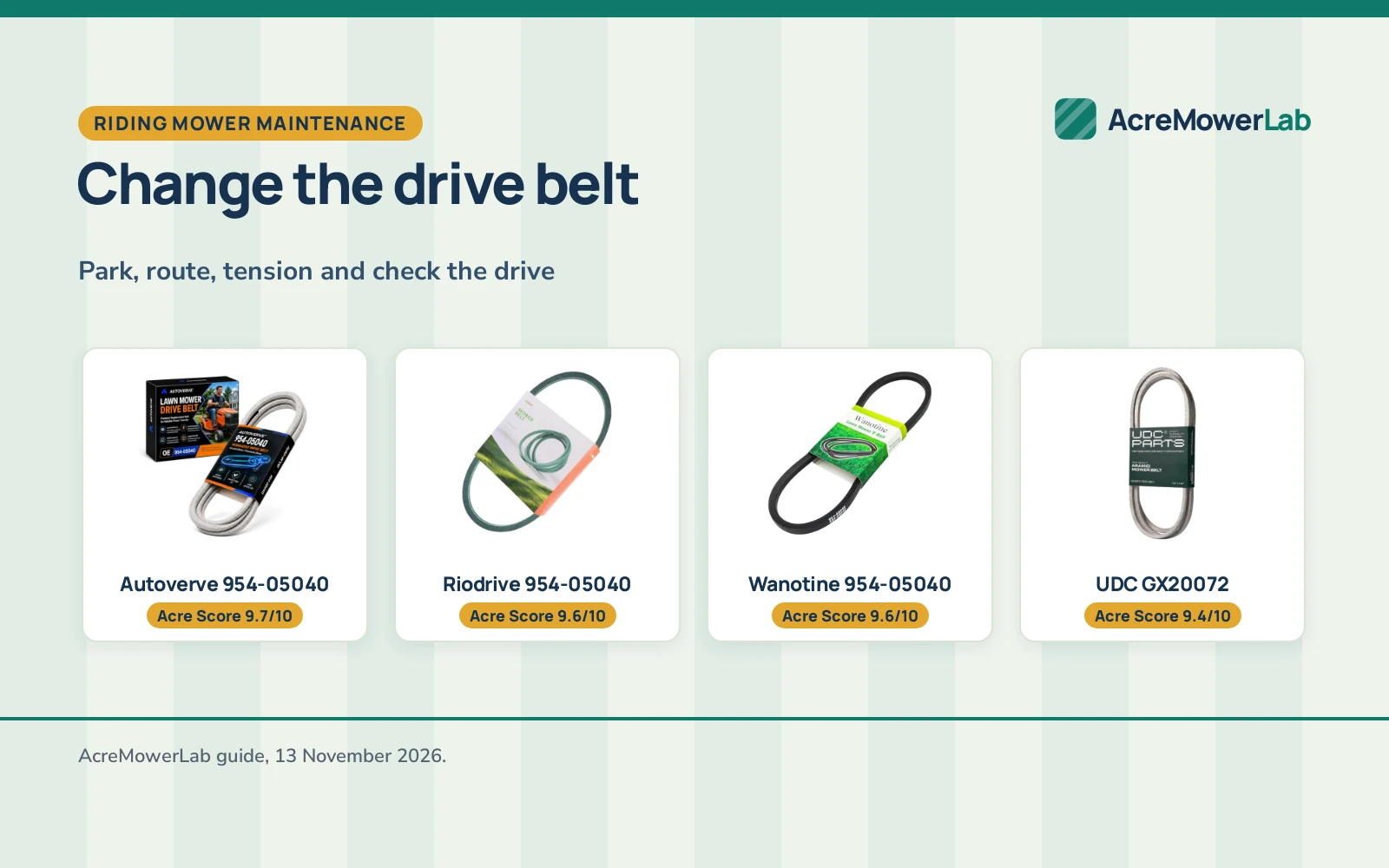
Autoverve 954-05040 Upper Drive Belt. The strongest listing here is the Autoverve upper transmission belt, and the strength comes from detail. The listing states an official reference size of 35.25-inch belt length x 0.656-inch top width, and it names the belt as an upper transmission and ground-drive belt for selected MTD-built riding mowers, not a deck belt and not a lower drive belt. It replaces 954-05040, 754-05040, 954-0241A and 754-0241A, among other numbers, and it fits selected Troy-Bilt TB30, TB30B, TB30R, TB42 and Pony models, selected Craftsman R110, T110, T100 and T1000 models, and selected Cub Cadet, Huskee, Murray and Yard Machines models. The listing warns that several applications fit only the specific model numbers in the compatibility chart, and that brand name, mower family or deck width alone cannot prove fitment. Your purchase is backed by a lifetime warranty and 24-hour support, as the listing states it.
Riodrive 954-05040 Kevlar Upper Drive Belt. The Riodrive belt is the same kind of part with a thinner listing. The title states a Kevlar upper drive belt of 5/8″ x 35.25″ size, with a Kevlar cord and neoprene with short Kevlar filaments, a multi-weave structure and a reverse-seam design, built to OEM specifications for Troy-Bilt Pony, TB30 and TB42, Craftsman R110, T110 and T1000, and MTD 700 Series lawn tractors. The listing contradicts itself on size: the title states 35.25 inches while the spec table lists 35.0 inches x 0.625 inches, so trust the title and the bullets over the spec table. No warranty term is stated, and the color is listed as Green.
Lucas Oil 11300 Hydrostatic Transmission Fluid. The Lucas Oil fluid is the hydrostatic side of this guide. The title states a heavy duty synthetic blend, SAE 20W-50, in a 1 Quart size, and the bullets state premium anti-wear protection, corrosion protection, resistance to oxidation, and added dispersancy and detergency for clean internal parts, made with synthetic and premium base oil. The spec table lists a size of One Size and a part number of LUCA11300, and its warranty field reads only “Warranty”, with no term stated, so no warranty term can be claimed for this listing.
Tuff Torq Hydrostatic Transaxle. The Tuff Torq transaxle is the weakest listing in this set because it states almost nothing. The title names a Craftsman riding mower Tuff Torq hydrostatic transaxle with part numbers 405384 and 426120, and the bullets repeat the title with no added detail. No dimensions, no fitting notes, no specs and no warranty term are stated. Match the part number to your mower before you order, and expect to lean on the mower manual for the rest.
Which drive fits your ground
Match the drive to how you keep your machines. A belt drive suits an owner who checks the belt now and then and swaps it when the signs show: the wear is visible, the part is a belt, and the fix is a matched belt and a careful routing. A hydrostatic drive suits an owner who would rather tend fluid than belts: the wear hides inside the unit, so the care is about the fluid and the part numbers, not about a belt you can see. Uneven ground is where a belt drive earns its keep: the Riodrive listing names uneven terrain as the place where a belt must keep sending consistent power. Keep the drive matched to the mower, and keep the mower matched to the ground you actually mow.
Care that keeps the drive moving
For a belt drive, look at the belt before the mowing season and after any run that felt wrong. Replace the belt when you see cracks, frayed edges, glazing, exposed cords, stretching or heat damage, and verify the original OE number, the exact mower model number, the belt position and the routing before you buy. Inspect the pulleys, bearings, guides and tension components before you fit the new belt, because a damaged drive system can wear a new belt fast. For a hydrostatic drive, keep the fluid and the internal parts clean, and match the fluid to a hydrostatic transmission. Refuel only with the engine off and cool, and keep the yard clear of debris before you mow.
Safety
Stay inside your mower’s maximum slope limit, and never mow beyond it. Keep children, pets and bystanders out of the yard while the mower runs, and never carry passengers on a riding mower. Turn the blades off when you reverse. Wear eye and hearing protection, and clear sticks, stones and other debris before you mow. Refuel only with the engine off and cool, and follow the manual for your mower.
FAQ: mowing large lots
Which drive lasts longer on a riding mower?
The listings state no service life for either drive, so there is no stated answer. A belt shows its wear where you can see it, in cracks, frayed edges, glazing, exposed cords, stretching and heat damage, and a new belt restores steady power transfer. A hydrostatic drive hides its wear inside the unit, and its care is the fluid: anti-wear protection, corrosion protection, resistance to oxidation, and clean internal parts.
What signs show a drive belt needs a new belt?
Sluggish movement, slipping, hesitation, squealing, inconsistent ground speed, or a mower that will not move correctly even though the engine runs can all point to a worn belt. On the belt itself, look for cracks, frayed edges, glazing, exposed cords, stretching or heat damage; when you see those, the belt is done and a matched replacement is due.
Can a belt from a different brand fit my mower?
Only if the numbers match. Verify the original OE number, the exact mower model number, the belt position and the routing before you buy, and check the compatibility chart for your mower. Brand name, mower family or deck width alone cannot prove fitment, and several applications fit only the specific model numbers the maker lists.
What does hydrostatic transmission fluid do?
It guards the inside of the transmission. The Lucas Oil listing states premium anti-wear protection, corrosion protection, resistance to oxidation, and added dispersancy and detergency for clean internal parts, in a heavy duty synthetic blend, SAE 20W-50. Use fluid made for hydrostatic transmissions, and check that SAE 20W-50 is the spec your mower manual calls for.
Is a hydrostatic transaxle a part I can swap like a belt?
Not on the strength of this listing. The Tuff Torq listing states only part numbers 405384 and 426120, with no dimensions, no fitting notes and no warranty term, so there is nothing here to plan a swap from. Match the part number to your mower, follow the mower manual, and treat the transaxle as a unit-level part rather than a wear part like a belt.