Do Robotic Mowers Work on Large Lawns?
A practical guide to mowing large lawns with robotic mowers: coverage ratings, wire-free navigation, battery runtime, and multi-zone layouts.

On this page
Top picks at a glance
As an Amazon Associate I earn from qualifying purchases.
- 1
 WORX Robot Lawn Mower for 1/2 Acre9.7/10View on Amazon
- 2
 SENIX 20" Gas Lawn Mower9.7/10View on Amazon
- 3
 SENIX 201cc 22" 3-in-1 Single Speed Self Propelled Gas Lawn9.7/10View on Amazon
- 4
 Lymow One Plus Robot Lawn MowerView on Amazon
- 5
 Sunseeker S4 Robot Lawn MowerView on Amazon
- 6
 14 Inch Small Corded Lawn Mower with 12.5-Amp MotorView on Amazon
- 7
 Segway Navimow i105N Robot Lawn Mower Perimeter Wire Free 1/8View on Amazon
- 8
 Robot Lawn Mower NO WireView on Amazon
- 9
 Garage for ECOVACS Goat Robot Lawn Mower Dual-LiDAR NavigationView on Amazon
Do robotic mowers work on large lawns? Yes, robotic mowers can work on large lawns, but success depends on navigation technology, daily acreage capacity, and yard layout. While many residential wire-free units are rated only for 0.25 to 0.5 acre, high-capacity models and multi-unit setups handle properties of 1 acre plus without perimeter wires. To maintain acreage without a conventional tractor, you need a machine rated for your property size or multiple units managing assigned zones. This guide explains how robotic mowing works on large properties, where limits lie, and how to plan a reliable setup.
Other machines to compare
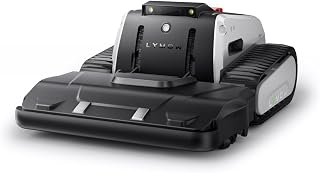 Lymow One Plus Robot Lawn MowerCheck price on Amazon
 Sunseeker S4 Robot Lawn MowerCheck price on Amazon
 14 Inch Small Corded Lawn Mower with 12.5-Amp MotorCheck price on Amazon
 Segway Navimow i105N Robot Lawn Mower Perimeter Wire Free 1/8Check price on Amazon
 Robot Lawn Mower NO WireCheck price on Amazon
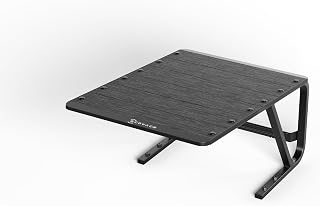 Garage for ECOVACS Goat Robot Lawn Mower Dual-LiDAR NavigationCheck price on Amazon
AcreMowerLab earns a commission when you shop through links here. It never changes your price. Affiliate disclosure.
Do robotic mowers work on large lawns: pick the right setup
| Navigation System | Best for | Limit |
|---|---|---|
| RTK Satellite Navigation | Open acreage with clear sky views | Signal loss under dense tree canopies or beside tall structures |
| 3D LiDAR Scanning | Properties with heavy tree cover and shaded yards | Higher equipment complexity and optical lens cleaning needs |
| AI Vision and Camera Sensors | Obstacle detection along boundary edges | Reduced precision in low-light conditions or tall weeds |
| Multi-Sensor Fusion | Large properties combining open fields and wooded perimeters | Requires initial satellite antenna positioning and multi-zone mapping |
Acreage owners with 1 acre plus typically choose multi-sensor fusion or LiDAR to maintain reliable positioning. See our best robotic mower for large lawns guide for dedicated wire-free models, or explore best robotic mower under 3000 for residential options.
Step 2: choose wire-free navigation over boundary wire
Physical boundary wire becomes difficult to maintain past a modest yard. Circling large acreage requires extensive cabling, creating electrical resistance and vulnerability to breaks from burrowing wildlife, aeration equipment, or shifting soil. Wire-free systems replace buried wire with virtual boundaries mapped through smartphone apps. RTK systems use a base antenna and satellite positioning to calculate location within centimeters. Optical LiDAR systems, such as the 360 degree 3D LiDAR on the Sunseeker S4, map physical surroundings directly, while multi-sensor platforms like the Mammotion LUBA 3 AWD 3000 combine 360 degree LiDAR with NetRTK and AI vision to maintain navigation beside dense tree lines where satellite signals fluctuate.
Step 3: calculate daily mowing capacity and run cycles
Robotic mowers maintain turf through continuous maintenance instead of a weekly pass, trimming grass tips on a regular daily schedule. Rating specifications must therefore be evaluated as daily capacity rather than single-charge coverage.
For example, Lymow rates the Lymow One Plus for up to 1.73 acres daily coverage, using a 16-inch cutting width and a 15000mAh battery that cuts 0.57 acres per 3-hour charge across up to 3 cycles per day. In contrast, LOPKIN rates the L2500 for up to 0.9 acres with a 9.45-inch cutting width, an 8Ah battery running up to 200 minutes per charge, and a 5A charger requiring approximately 180 minutes to recharge. Standard residential models are built for smaller properties: Husqvarna rates the 410iQ for up to 0.5 acre with a 9.4-inch cutting width, roborock rates the RockMow X115H for up to 0.37 acre with a 9.49-inch cutting width and 120 minutes of runtime, and Sunseeker rates the S4 for 0.25 acre (10,890 sq. ft.) with a 7-inch cutting width. If a property exceeds the daily capacity of a single machine, grass can outgrow the cutting height before the unit completes a full cycle.
Step 4: evaluate slope climbing and rough ground traction
Large rural and suburban properties often feature rolling terrain and drainage swales. All-wheel-drive hub motors and tracked drive systems offer superior climbing capability on acreage. Lymow uses a heavy-duty track drive on the Lymow One Plus to achieve 100% slope climbing capability (45 degrees) with 2.8-inch obstacle clearance. For wheeled models, Mammotion equips the LUBA 3 AWD 3000 with AWD motors to climb slopes up to 80% (38.6 degrees), while DREAME rates the A3 AWD 1000 for slopes up to 80% (38.7 degrees) and 2.17-inch obstacles. LOPKIN rates the L2500 for slopes up to 57% (30 degrees) with stable operation on 40% (22 degrees) inclines, and Husqvarna rates the 410iQ for up to 45% slopes. Before choosing a machine, inspect hillside borders to ensure they fall within the manufacturer’s published slope ratings.
Step 5: configure multi-zone layouts and boundary corridors
Driveways, fences, sidewalks, and outbuildings divide acreage into distinct sections. To mow the entire property, a robotic mower must support multi-zone management with defined transit corridors and no-go areas. Lymow supports up to 80 zones, Sunseeker supports up to 100 zones and 5 maps, and Mammotion supports up to 30 mowing zones. Pathways connecting different zones must provide sufficient clearance: Sunseeker specifies passages down to 31.5 inches, while roborock lists passage navigation down to 2.3 feet on the RockNeo Q110H. Establishing no-go zones around flower beds, surface tree roots, and gravel driveways prevents the machine from becoming trapped.
Position the base station and satellite antenna
The charging station and RTK reference antenna require careful placement to maintain communication across acreage. The charging base needs a level surface, proximity to an outdoor electrical outlet, and an unobstructed approach path. RTK antennas require a panoramic view of the sky to track GNSS satellites without building interference. For wireless communication across expansive grounds, LOPKIN includes a Wi-Fi HaLow router rated for coverage up to 80,000 sq. m. (about 20 acres) in ideal open areas, while Husqvarna includes 4G connectivity and roborock equips the RockMow X115H with 4G for real-time monitoring across distant lawn sections.
Match cutting capacity to lawn size
A robot mower deck is narrower than a traditional lawn tractor deck, making cutting capacity essential on large acreage. In the wire-free robot category, cutting widths range from 7 inches on the Sunseeker S4 up to 15.7 inches on the Mammotion LUBA 3 AWD 3000 and 16 inches on the Lymow One Plus. Because narrower decks cover fewer square feet per hour (for instance, LOPKIN rates its 9.45-inch deck at 2421 sq. ft. per hour, while Mammotion rates its 15.7-inch deck at 5400 sq. ft. per hour), selecting a wider cutting deck and higher battery runtime ensures the mower keeps up with acreage turf volume.
Plan obstacle management and no-go zones
Large properties accumulate fallen branches, garden hoses, and animal activity. Modern models use camera vision, ultrasonic sensors, and artificial intelligence to recognize and navigate around yard objects in real time. Systems on the Mammotion LUBA 3 AWD 3000 and LOPKIN L2500 identify over 300 common obstacle types, while DREAME lists avoidance for over 300 objects. Setting permanent no-go zones around fixed obstacles such as fire pits, pond edges, septic cleanouts, and play equipment keeps the mower on safe turf and prevents unnecessary stops.
Mind wet grass and weather pauses
Mowing wet grass can cause wheel slippage on slopes and clipping accumulation under the deck. Robotic mowers designed for large lawns incorporate rain sensors that pause mowing schedules when precipitation begins, commanding the unit to return to its charging station until the grass dries. LOPKIN and Sunseeker include automated rain-delay sensors that pause operation during wet weather. When mowing resumes, the machine returns to its last recorded position rather than restarting the zone.
Safety
Robotic lawn mowers operate automatically, making safety protocols essential on acreage. Clear sticks, stones, wire, and loose debris from the lawn before mowing to prevent blade damage or thrown objects. Keep children and pets indoors while the machine runs. Manufacturers equip units with internal lift and tilt sensors that stop spinning blades immediately if the mower is lifted or tilts excessively. PIN code lockouts and anti-theft alarms, such as those on Husqvarna and roborock models, prevent unauthorized use. Always adhere to the manufacturer’s stated slope ratings, and never operate near open water, steep retaining walls, or unmapped drop-offs. When inspecting blades or cleaning the deck, switch off the main power switch and wear protective gloves.
FAQ: mowing large lots
Can a robot mower handle 1 acre plus?
Yes, but choosing a model with sufficient daily capacity is critical. While standard residential units are rated for 0.25 to 0.5 acre, high-capacity models like the Lymow One Plus (rated for up to 1.73 acres daily) can maintain 1 acre plus independently. For larger properties, owners coordinate multiple units across separate zones.
How long does a robotic mower take to mow an acre?
Robotic mowers cut in continuous cycles rather than a single pass. For example, Lymow states each 3-hour charge mows 0.57 acres, running up to 3 cycles per day to reach 1.73 acres daily. LOPKIN lists 2421 sq. ft. per hour, while Mammotion rates the LUBA 3 AWD 3000 at 5400 sq. ft. per hour. See how long does it take to mow an acre to compare times.
Do robotic mowers work under dense tree shade?
Dense tree shade can weaken standard RTK satellite signals. Wooded acreage benefits from 3D LiDAR or camera vision that navigates without satellite reception. Sunseeker equips the S4 with 360 degree 3D LiDAR for shaded lawns, and Mammotion uses 360 degree LiDAR on the LUBA 3 AWD 3000 to maintain orientation near tree lines.
What happens when it rains on a large lawn?
Most wire-free robotic mowers feature rain sensors that detect precipitation and pause mowing. The machine returns to its charging dock to prevent wheel slippage on wet grass and turf rutting. When the lawn dries, the robot resumes mowing from where it paused.
Can robotic mowers climb steep hills on large acreage?
Yes, if slopes stay within the manufacturer’s maximum rating. Track drive and all-wheel-drive hub motors provide traction on hills. Lymow rates the Lymow One Plus for 100% climbing capability (45 degrees), Mammotion rates the LUBA 3 AWD 3000 for up to 80% (38.6 degrees) slopes, and Husqvarna rates the 410iQ for up to 45% slopes.
More mowing guides
- Best Robotic Mower for Large Lawns: 4 Wire-Free Picks
- Best Robotic Mower Under 3000 (2026): 5 Wire-Free Picks
- How to Store a Robotic Mower in Winter
- How Long Does It Take to Mow an Acre? Times by Mower Type
Use the walk-behind and robotic mower guides to compare specifications, ratings, and yard coverage.