How to Store a Robotic Mower in Winter
A complete guide to storing your robotic lawn mower for winter: cleaning, battery care, indoor storage and charging station protection.

On this page
Top picks at a glance
As an Amazon Associate I earn from qualifying purchases.
- 1
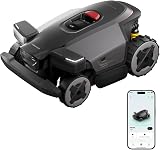 roborock RockMow X130H Robot Lawn Mower9.6/10View on Amazon
- 2
 DREAME Robot Lawn Mower Decal for A3 AWD Series9.5/10View on Amazon
- 3
 WORX Robot Lawn Mower for 1/2 Acre9.7/10View on Amazon
- 4
 Robot Lawn Mower NO WireView on Amazon
- 5
 Segway Navimow i105N Robot Lawn Mower Perimeter Wire Free 1/8View on Amazon
- 6
 ECOVACS Goat O1000 RTK Robot Lawn MowerView on Amazon
- 7
 ECOVACS Goat A3000 LiDAR PRO Robotic Lawn MowerView on Amazon
- 8
 DREAME LiDAR 3500 Robot Lawn Mower A3 AWD Pro Wire Free No RTKView on Amazon
- 9
 YARDCARE M800Plus Cordless Robot Lawn Mower with GPS + VisualView on Amazon
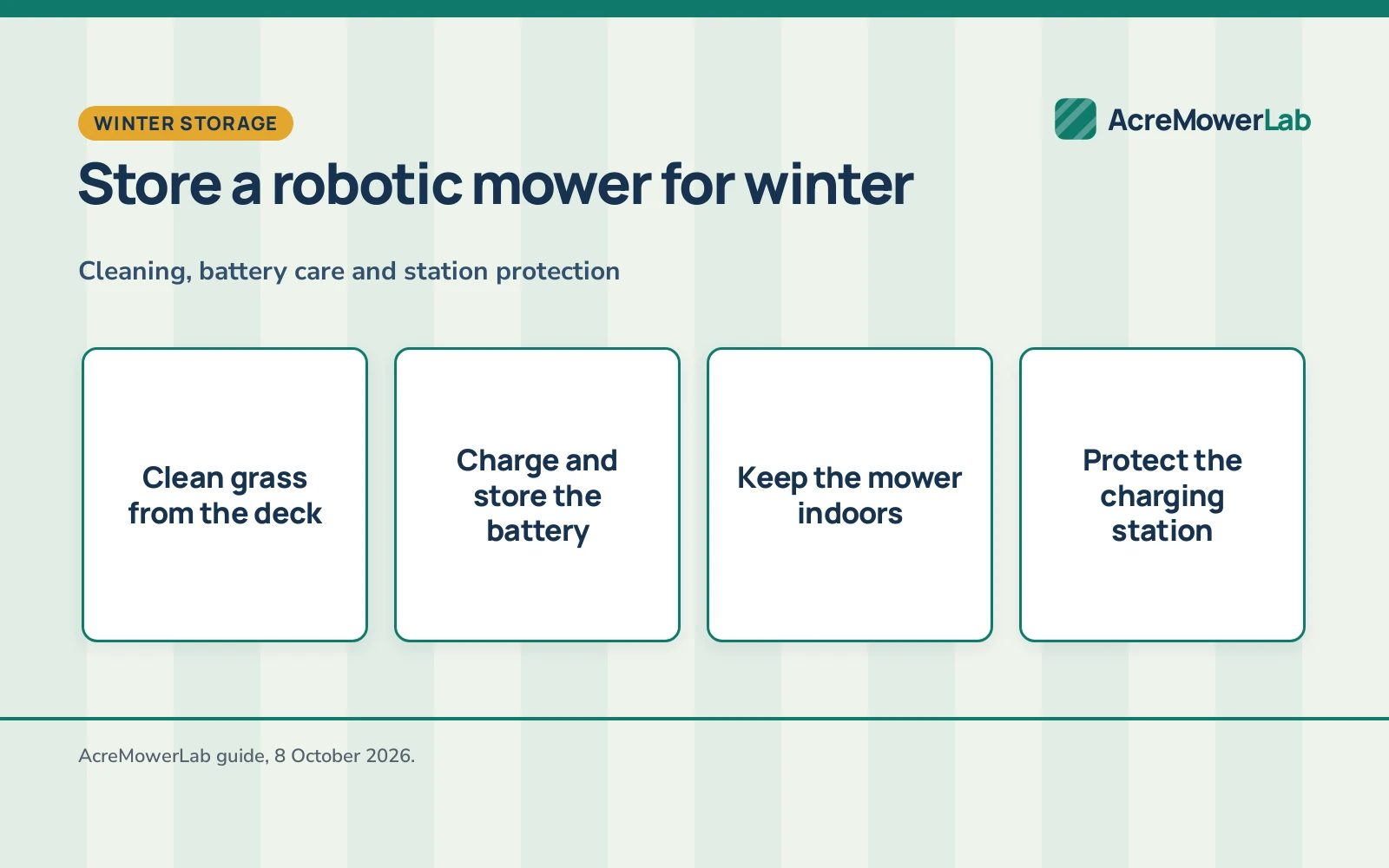
To know how to store a robotic mower in winter, clean the cutting deck, charge the battery pack, switch off the master safety power, and house the unit indoors in a dry, frost-free space. The charging station can remain outdoors with continuous power connected or come indoors per manufacturer guidance. For wired systems, boundary cabling stays in the ground with sealed terminals, while wire-free beacons require shelter. This guide explains each winter storage stage step by step.
Other machines to compare
 Robot Lawn Mower NO WireCheck price on Amazon
 Segway Navimow i105N Robot Lawn Mower Perimeter Wire Free 1/8Check price on Amazon
 ECOVACS Goat O1000 RTK Robot Lawn MowerCheck price on Amazon
 ECOVACS Goat A3000 LiDAR PRO Robotic Lawn MowerCheck price on Amazon
 DREAME LiDAR 3500 Robot Lawn Mower A3 AWD Pro Wire Free No RTKCheck price on Amazon
 YARDCARE M800Plus Cordless Robot Lawn Mower with GPS + VisualCheck price on Amazon
AcreMowerLab earns a commission when you shop through links here. It never changes your price. Affiliate disclosure.
How to store a robotic mower in winter: clean the machine
Thorough cleaning prevents dried grass clippings, soil, and organic debris from trapping moisture against the cutting disc, drive wheels, and chassis during cold storage. Removing packed clippings stops corrosion on bearings, fasteners, and charging pins while letting you inspect the underside for wear.
Use a stiff nylon brush, wooden scraper, or damp cloth to clean the deck and drive treads. Clear debris from obstacle sensors and charging contacts. Never use a high-pressure washer or submerge the unit. Unless your user manual specifically permits gentle rinsing with a low-pressure garden hose, clean using dry brushes, wooden scrapers, and damp cloths to remove debris safely without running water.
| Component | Storage Location | Key Winter Action |
|---|---|---|
| Robotic mower unit | Heated or frost-free indoor room | Clean chassis, charge battery, switch off main power |
| Internal battery pack | Inside mower (climate-controlled room) | Maintain charge level and protect against freezing temperatures |
| Charging base station | Indoors or powered outdoor dock | Store indoors or leave connected to power per maker guidance |
| Boundary wire and connectors | Outdoors in place | Seal exposed wire ends against winter snow and moisture |
| RTK reference station | Mounted pole or indoor storage | Disconnect power or cap outdoor terminals per maker manual |
Dedicated indoor storage protects robotic investments on acreage. See our roundup of the best robotic mower for large lawns to compare wire-free navigation designs, or browse our walk-behind and robotic mowers section for seasonal advice.
Step 2: charge the battery
Lithium-ion batteries degrade quickly if left depleted in freezing temperatures, causing capacity loss or dead cells. Always charge the mower before off-season storage.
Dock the mower until the pack reaches the level specified in the manual. Some makers call for a full charge, while others prefer a partial storage charge to limit cell stress. For example, LOPKIN lists an 8Ah battery for its L2500 model, noting that its 5A fast charger completes a full charge in approximately 180 minutes.
Once charged, switch off the master power switch or remove the safety key to stop parasitic battery drain from standby sensors.
Step 3: house the mower indoors
While robotic mowers handle rain during the season, sub-freezing cold, ice, and deep snow stiffen rubber seals, crack plastic bumpers, and degrade internal electronics. Store the machine indoors in a dry, frost-free space such as a basement or heated garage.
Handling weight varies across models. For example, the maker SUNSEEKER lists a 25-pound item weight for its S4 mower, allowing easy carrying. By comparison, ANTHBOT lists an item weight of 46 pounds for its Genie model, making a dedicated shelf or ground-level spot practical.
To keep off workshop dust, Easecos lists a cover measuring 44.5 inches long by 39.4 inches wide made of 600D Oxford fabric with an adjustable drawstring that slips over automatic mowers in storage.
Step 4: winterize the charging station
Check maker guidance for the charging station. Some brands recommend leaving the base outside connected to power so low-level circuit current prevents internal condensation. Others recommend disconnecting the power transformer and storing the base indoors.
If storing indoors, unplug the transformer, disconnect wire terminals, and store the base alongside the mower. If keeping the base outside, leave power connected to keep electronics dry. Never leave an unpowered dock outdoors in snow.
Canopies and shelters vary in winter duty. CNAINFC lists a garage shelter measuring 35 inches long by 35 inches wide and 17 inches high with 600D high-density waterproof oxford fabric and an alloy steel frame, with an item weight of 4.9 pounds, noting that in freezing temperatures the structure can be disassembled and stored frost-free alongside the mower. For permanent outdoor docks, NEBAIKA lists a shelter measuring 40 inches deep by 32 inches wide and 18 inches high constructed with polycarbonate panels and an anchoring kit to shield docking areas from heavy snow and falling debris.
Step 5: protect boundary wires and navigation beacons
Perimeter boundary wires stay buried in frozen soil without harm. However, if the charging dock is moved indoors, exposed wire ends must be protected from moisture and corrosive salts.
Place exposed wire ends into a grease-filled waterproof connector or wrap them in weatherproof electrical tape, then seal them inside a plastic container. Mark the spot with a lawn stake for spring retrieval.
For wire-free RTK or vision systems, permanent eave-mounted antennas remain in place if cables are sealed, while temporary ground stakes should be brought inside before soil freezes.
Inspect blades and hardware before spring
Examine the cutting disc before putting the machine away. Robotic mowers use small pivoting razor blades attached to a spinning disc that dull from autumn leaves and twigs.
Check blades for nicks and verify they spin freely on shoulder screws. If worn, replace the entire set of blades and screws to maintain disc balance.
Maintaining clean cutting edges promotes healthy grass growth in spring. While conventional riding mowers use heavy steel blades that can be sharpened (see our advice on how often should you sharpen mower blades), robotic mower razor blades are disposable and should always be replaced rather than sharpened.
Maintain battery charge during cold months
Lithium-ion cells slowly self-discharge over months of storage. Check the battery level periodically through the winter to prevent deep discharge.
If the charge drops significantly, provide a top-up charge. If the charging dock is stored indoors, place the mower on the station in a heated room. If the dock is outside, never charge the mower in sub-freezing air: bring the dock inside temporarily or wait for mild weather so cells reach room temperature first.
For more battery maintenance advice, read our companion guide on how to store a battery mower for winter.
Protect the base station against outdoor moisture
When leaving the charging station outdoors, keep it powered per maker instructions to prevent internal frost and dampness. Clean away leaves and soil so winter water drains freely away from charging prongs.
Shield the docking pad with a weather cover, elevate the power transformer above standing water and snowdrifts, and ensure electrical connections sit inside a weatherproof outdoor outlet box.
Prepare your spring restart schedule
Prepare your lawn and equipment before spring grass growth begins. Walk the yard to clear sticks, stones, and pinecones that could damage blades or trip obstacle sensors.
If stored indoors, reinstall the dock on level ground, anchor the base, and connect power. Confirm the indicator light shows a solid loop signal. Place the mower on the station for a full charge, check app settings and firmware, and supervise the first mowing run.
Safety
Always turn off the master power switch or remove the safety key before lifting, cleaning, or servicing the robotic mower. Wear heavy work gloves when handling razor-sharp cutting blades.
Never use high-pressure washers or submerge the unit. Store the mower away from heat sources in a dry, ventilated indoor space. Keep children and pets away from equipment and electrical cables. Unplug transformers before servicing outdoor wiring. See our Safety Disclaimer.
FAQ: mowing large lots
Can a robotic mower stay outside during winter?
No. Freezing temperatures harm lithium-ion cells, while ice and snow damage optical sensors and seals. Store the mower indoors in a dry, frost-free space.
Should the charging station stay outdoors or come inside?
Follow your manual. Some brands allow outdoor storage if power stays connected. If disconnecting power, always store the dock indoors away from snow.
How should the robotic mower battery be stored over winter?
Charge the pack to the level your manual recommends, turn off the master switch, and store indoors at room temperature. Check the charge periodically.
Do perimeter boundary wires need to be removed for winter?
No. Boundary cables remain buried in the soil. If moving the dock inside, cap exposed wire ends in waterproof connectors to prevent copper corrosion.
When is the right time to put a robotic mower away for the season?
Store the mower in late fall once grass stops growing and before freezing temperatures arrive. Housing the machine early protects batteries from frost.
More mowing guides
- Best Robotic Mower for Large Lawns: 4 Wire-Free Picks
- Best Robotic Mower Under 3000 (2026): 5 Wire-Free Picks
- How to Store a Battery Mower for Winter
- How Often Should You Sharpen Mower Blades?
Use the Mower Matcher to narrow down choices by acreage, terrain, budget, and power type.