Garden Fork Uses and What It Is Best For
A garden fork loosens soil, turns compost, moves mulch, harvests root crops and aerates beds: here is what each use looks like and which fork fits it.

On this page
Top picks at a glance
As an Amazon Associate I earn from qualifying purchases.
- 1
 Garden Guru Stainless Steel Hand Weeder Fork9.8/10View on Amazon
- 2
 Berry&Bird Digging Fork 37.4 in Stainless Steel Garden Fork9.8/10View on Amazon
- 3
 Pitch Fork for Garden9.7/10View on Amazon
A garden bed that has sat all winter turns hard and tight, and a shovel slices through it in slabs. Garden fork uses center on a different motion: the tines slide into the soil and lift it apart instead of cutting it. A garden fork loosens and turns soil, lifts and turns compost, moves mulch, harvests root vegetables and opens beds for air and water. This guide covers each use in turn, and how to pick a fork that fits the work.
AcreMowerLab earns a commission when you shop through links here. It never changes your price. Affiliate disclosure.
Garden fork uses: what the tool does best
A garden fork is a digging fork with tines that pierce the soil and lift it. Where a shovel cuts a slice, a fork breaks the ground into clumps and leaves the soil structure open. That one difference drives every use below: loosening, turning, lifting and aerating all come from the same motion of pushing the tines in, levering back and lifting.
| Use | How the fork helps | Limit |
|---|---|---|
| Loosen soil | Tines lift and break compacted ground without turning it into slabs | Hard, dry ground is easier to work after watering |
| Turn compost | Tines lift and mix the pile so air reaches the middle | A tall pile needs a long handle and steady footing |
| Move mulch | Tines carry loose mulch, straw and leaves in one scoop | Fine material slips between the tines |
| Harvest roots | Tines lift root crops from the soil without slicing them | Wet, heavy soil clings to the tines |
| Aerate beds | Tines open holes that let air and water into the soil | Deep compaction needs a dedicated aerator |
A fork and a shovel do different work in the same bed. See the best digging shovel picks for cutting and moving soil in slabs.
Loosen and turn soil
Loosening soil is the main garden fork use. Push the tines straight down, step on the shoulder to drive them in, then pull the handle back to lever the soil up and break it apart. Work across the bed in rows so no strip stays packed. The fork leaves clumps that break down with a rake, and the soil stays open enough for roots to spread. This suits beds planted every year, where rain and foot traffic pack the ground down.
Turn compost and move mulch
A garden fork turns a compost pile by lifting material from the edges into the middle and from the middle out to the edges. The tines catch stems, leaves and kitchen scraps and carry them in one lift, and the pile opens up so air can reach the center. Turn the pile when the middle feels cool and the outer layer looks dry.
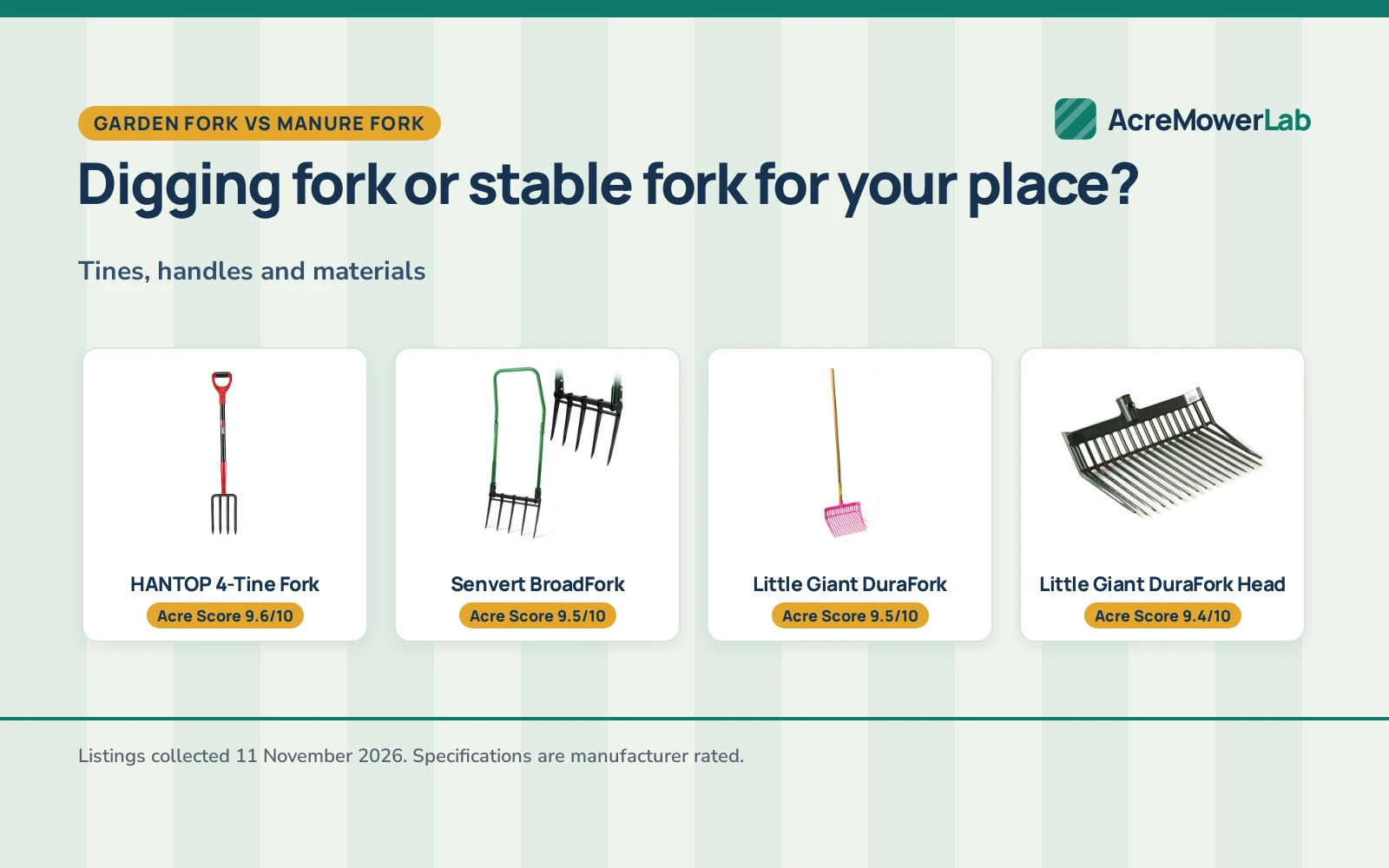
The same lifting motion moves mulch, straw, hay and leaves. A fork lifts loose material in scoops and drops it where it is needed, though fine material slips between the tines. See the best compost spreader for garden beds picks for spreading finished compost in an even layer. For light, loose material, a manure fork is the closer match: see garden fork vs manure fork for the differences.
Harvest root vegetables and lift plants
To harvest root vegetables, push the fork in beside the row, lever the soil up and lift the whole plant out with the roots attached. The tines slide past potatoes, carrots and other root crops instead of cutting through them when the fork goes in beside the row. Shake the soil off over the bed and pick the roots out of the loosened clumps. The same lift works for transplanting: drive the fork in a ring around the plant, lever the root ball out and move it to the new hole.
Aerate beds and lawns
A garden fork aerates by punching holes into the soil. Push the tines in, rock the handle back and forth to widen the hole, pull out and repeat across the bed. The holes let air and water reach the roots, which matters most on beds that see heavy rain and on paths where feet pack the ground down. For a lawn, the same motion works on small worn patches, but a whole lawn is slow work with a fork alone. See the best lawn aerator tool picks for tools built to cover a lawn.
Choose the right fork
The full-size forks here carry 4 steel tines and a 45-inch handle. That length suits most gardeners standing upright at a bed, and 4 tines give enough grip on the soil without making the head too heavy to lift. A D-shaped handle gives a firm grip for levering, and the handle material decides how the fork feels over a long session.
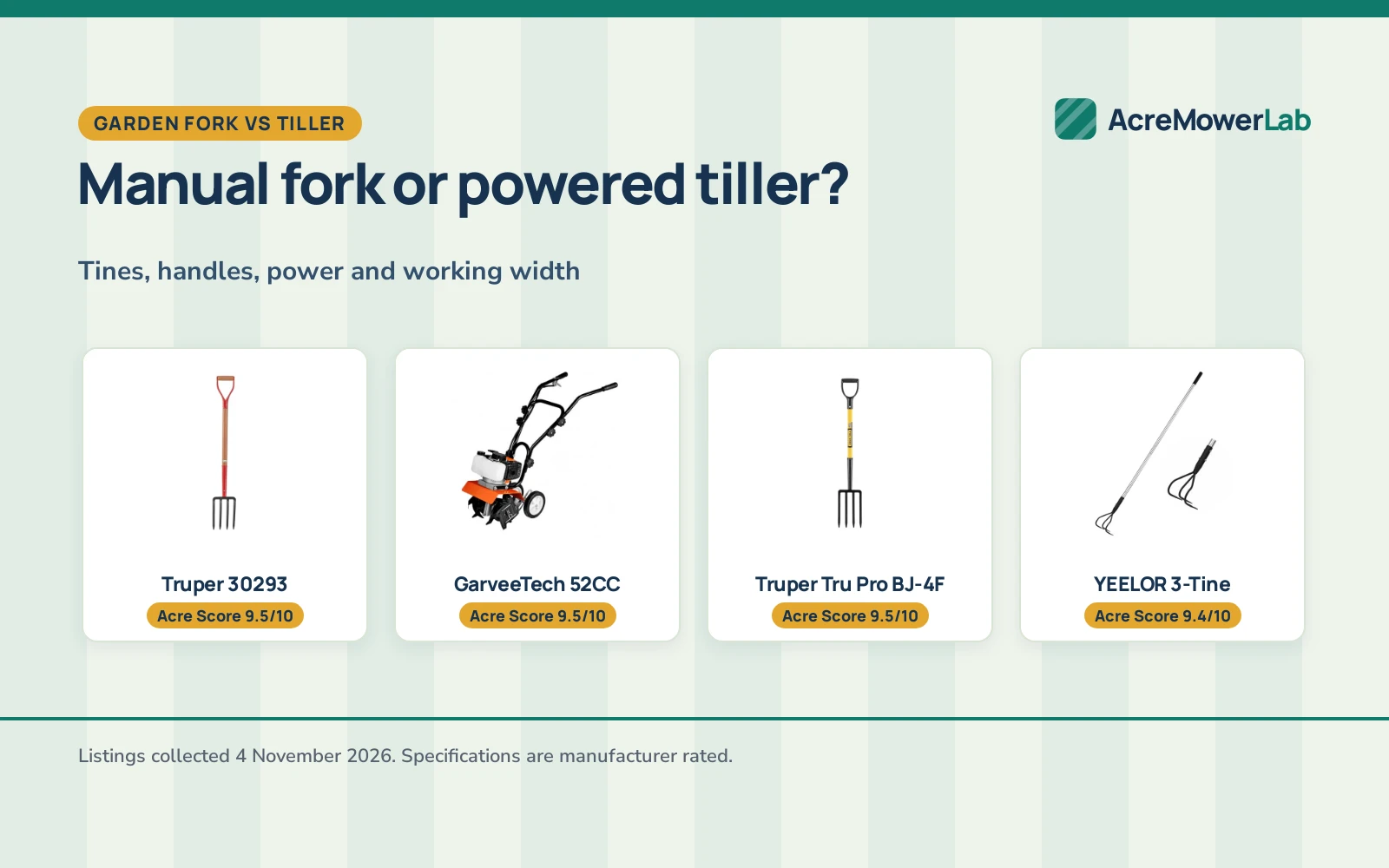
The wangyanhao fork (on Amazon) weighs 3.5 pounds and has a fiberglass handle with a D-shaped grip and a bright orange accent that makes the tool easy to spot among plants. The Coopvivi fork lists 4 steel prongs on a 45-inch handle with a D-grip and an all-steel build that resists splintering. The DeWit small fork is a compact cultivator for tight spaces, with tempered boron steel tines, an ash hardwood handle and a lifetime warranty. Pick the full-size fork for beds and compost, and the compact fork for raised beds and work between close plants. See hand tiller vs cultivator for the manual options, and the top rated garden tillers and cultivators picks for powered ones.
How to use a garden fork
Start with the fork upright and the tines on the soil. Step on the shoulder with one foot to drive the tines in, keeping the handle close to vertical so the tines go straight down. Pull the handle back to lever the soil up, then lift the fork and shake the soil off the tines. Move back a step and repeat, working across the bed in rows. Keep the work steady rather than forceful: if the tines stop short, lift the fork, move it a little to the side and try again. On hard ground, water the bed first and let it soak in before digging.
Care and storage
Knock soil off the tines after each use and wipe the handle dry before storing. A fork left caked in wet soil rusts at the head and loosens at the socket. Hang the fork or lean it with the tines down, out of the weather, so the handle stays dry and the tines stay out of the path. Check the handle now and then for cracks and splinters, and check that the head sits tight on the shaft.
Safety
Wear sturdy shoes and gloves, and keep your feet on the shoulder, not on the tines, when you step down. Check for buried lines before digging in a new spot, and keep children and pets out of the work area while the fork is in use. Never leave a fork standing tines-up in a path, and point the tines down when carrying it. See the Safety Disclaimer.
FAQ: mowing large lots
What is a garden fork used for?
A garden fork loosens and turns soil, lifts and turns compost, moves mulch, harvests root vegetables and aerates beds. The tines slide into the soil and lift it apart, which suits breaking ground, mixing a pile and lifting a harvest without slicing through it.
Can a garden fork replace a shovel?
No. A fork loosens and lifts soil, while a shovel cuts and moves it. Use the fork to break ground and lift a harvest, and the shovel to cut edges, dig a clean hole and move soil in slabs. See the best digging shovel picks for the shovel side of the work.
What is the difference between a garden fork and a manure fork?
A garden fork is built for digging into soil, with sturdy tines that pry ground apart. A manure fork is built for moving loose material such as manure, straw and mulch. See garden fork vs manure fork for a full comparison.
How do I turn compost with a garden fork?
Push the tines into the pile, lift material from the edges into the middle and from the middle out to the edges. Keep turning until the material looks even through the pile, and turn again when the middle feels cool and the outer layer looks dry.
What size garden fork should I buy?
Full-size forks here have a 45-inch handle, which suits most gardeners standing upright at a bed. A compact fork suits tight beds, raised beds and work between close plants, where a long handle gets in the way.
More mowing guides
- Garden Fork vs Manure Fork: Which One Should You Buy?
- Best Digging Shovel (2026): 4 Picks for Garden and Yard Work
- Hand Tiller vs Cultivator: Which One Should You Buy?
- Top Rated Garden Tillers and Cultivators (2026): 5 Picks Compared
Browse the tillers and cultivators guides for powered options when a fork is not enough for the ground you work.