Types of Garden Forks: Digging, Turning and Spading Forks
Digging, spading, border and compost forks compared by tine shape, handle length and head material, with the right fork for each garden job.

On this page
Top picks at a glance
As an Amazon Associate I earn from qualifying purchases.
- 1
 Fiskars Ergo Garden Trowel9.7/10View on Amazon
- 2
 Garden Weasel Oversized Potting Scoop for Soil and Potting Mix9.7/10View on Amazon
- 3
 FLORA GUARD 6-Piece Garden Tool Set with Double Hoe9.6/10View on Amazon
On a property with beds to turn, compost to move and root crops to lift, the fork earns its place beside the spade. Types of garden forks come down to the head and the handle: a digging fork for loosening soil, a spading fork for turning beds, a border fork for tight spaces, and a pitchfork for moving compost and mulch. This guide explains each type, what it does well, and how to pick the right fork for the job.
AcreMowerLab earns a commission when you shop through links here. It never changes your price. Affiliate disclosure.
Types of garden forks: digging, spading, border and compost forks
| Fork | Best for | Limit |
|---|---|---|
| Digging fork | Loosening soil and lifting root crops | Cannot cut sod or scoop loose soil |
| Spading fork | Turning beds and mixing in compost | Not made for prying rocks |
| Border fork | Tight beds and edging work | Short reach and a small head |
| Pitchfork | Moving compost, mulch and hay | Not for digging compacted soil |
| Hand fork | Small pots and tight corners | Too small for bed work |
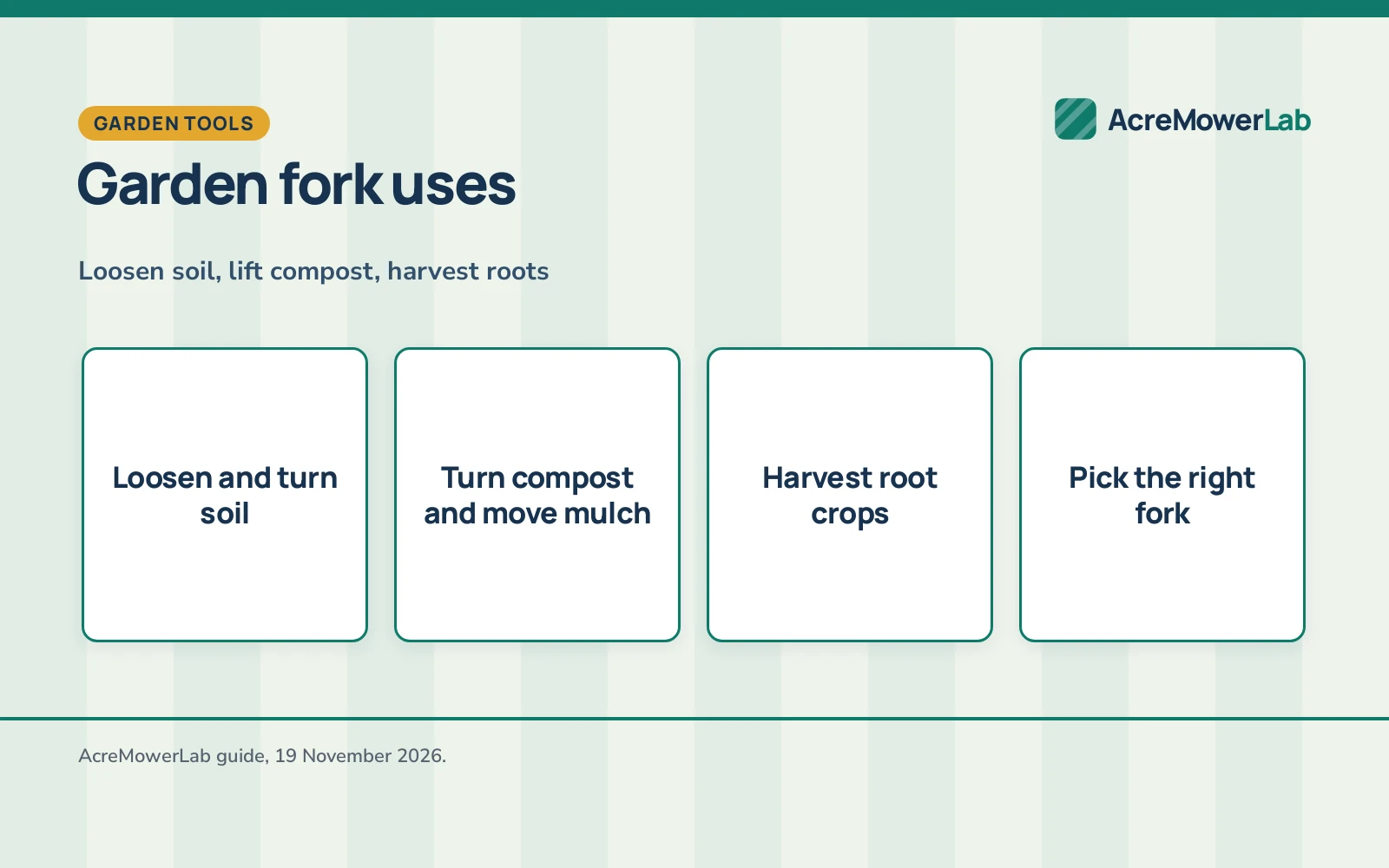
A digging fork and a pitchfork for compost make a practical starting pair. See our garden fork uses guide for the jobs each type handles.
Step 2: loosen soil with a digging fork
The digging fork is the standard fork for breaking ground. Its head usually carries 4 tines that slide into the soil, and the long handle gives leverage to lift and turn the ground without cutting through it the way a spade does. The Wangyanhao fork (on Amazon) lists a 45-inch fiberglass handle at 3.5 pounds, with 4 steel tines and a D-shaped handle with an orange grip. The Coopvivi fork lists a 45-inch all-steel handle with a D-grip and 4 steel prongs. The Wangyanhao fork lists breaking up soil, transplanting and harvesting root vegetables among its uses, while the Coopvivi fork lists breaking up compact soil, loosening dirt and digging up vegetables. Push the tines straight down, lever the handle back, and lift the soil in clods rather than prying sideways, which bends tines.
Step 3: turn compost and move mulch with a pitchfork
The pitchfork looks like a digging fork but works on loose material. Its tines slide under a pile and lift it, which suits compost, mulch, hay, straw and leaves. The Coopvivi fork lists a 45-inch handle and 4 steel prongs, and its maker lists compost turning, moving mulch and stall cleaning among its uses. Keep the load small and lift with the legs, not the back, and use a pitchfork where a spade would clog: loose piles, not compacted ground. See our best rotating compost bin guide for compost storage to match.
Step 4: work tight beds with a spading or border fork
A spading fork turns soil in a bed with flat tines, and a border fork does the same work in a smaller head for tight spaces. For the smallest corners, a hand fork works at ground level: the DeWit small fork measures 10.8 by 1.0 by 2.6 inches, with tempered boron steel and an ash hardwood handle, and the maker lists a lifetime warranty. Its compact size suits cultivating in tight spaces and smaller hands. Use a border fork along edging and between plants, where a standard digging fork would catch roots and stems.
Step 5: choose the handle, tines and weight
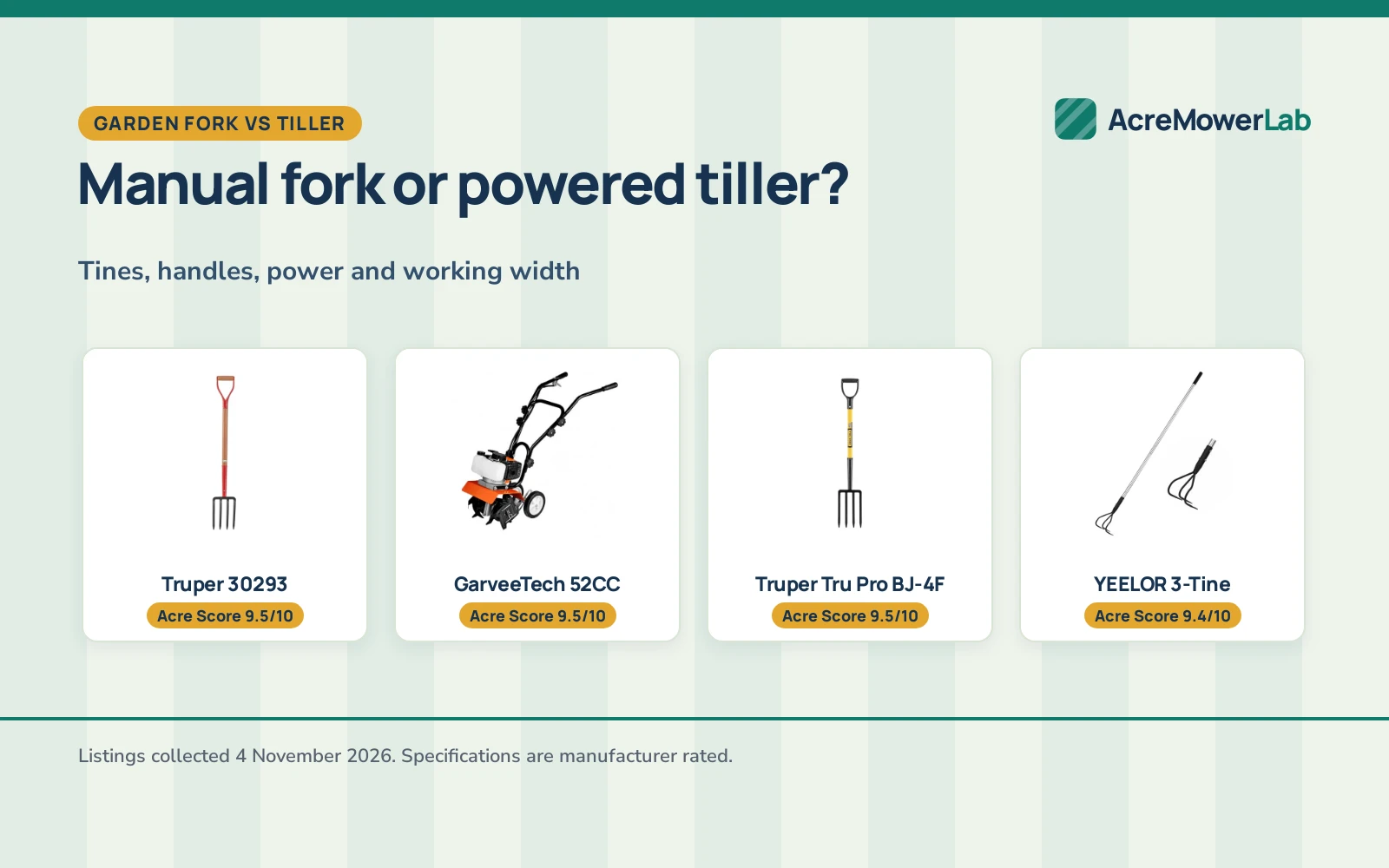
Handle length sets the working height. The full-size forks here list 45-inch handles, while the compact DeWit fork measures 10.8 inches long. The Wangyanhao fork pairs a fiberglass handle with a listed weight of 3.5 pounds. All-steel handles, like the Coopvivi fork, resist splintering and suit heavy use. Ash hardwood, like the DeWit handle, suits a smaller tool. Count the tines before buying: the full-size forks here carry 4 tines. A D-shaped grip spreads the load across the hand. When a fork is not enough for the ground, a tiller covers the bigger job: see our front tine vs mid tine tiller comparison.
FAQ: mowing large lots
What is the difference between a digging fork and a spading fork?
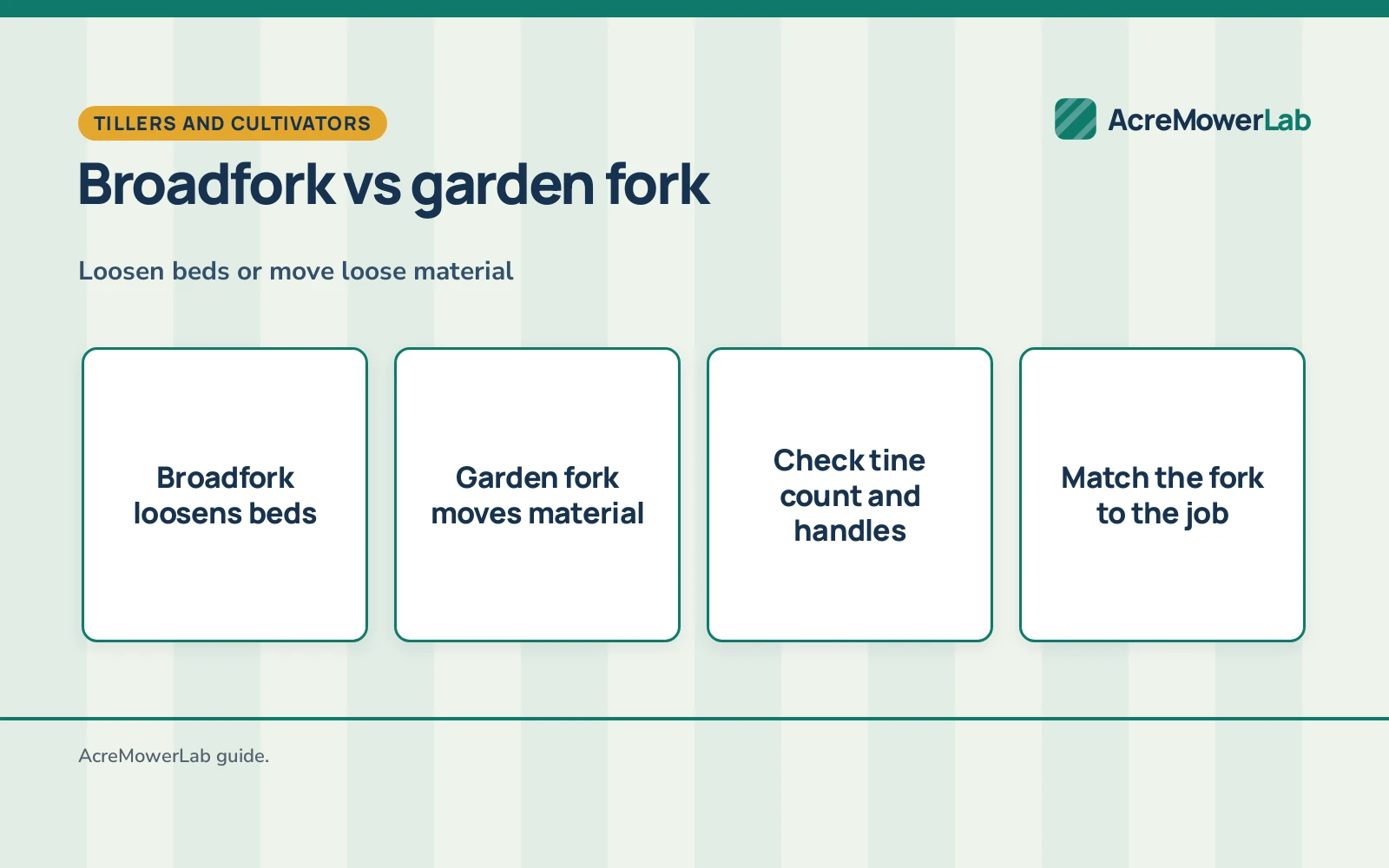
A digging fork loosens and lifts soil with sturdy tines, while a spading fork turns beds with flat tines that move through loose soil. For breaking new ground, reach for the digging fork; for turning a bed that is already loose, the spading fork is the better tool.
How many tines should a garden fork have?
The full-size forks in this guide carry 4 tines, which suit digging, turning and lifting. A 4-tine head balances strength and soil penetration for most garden jobs.
What length handle should a garden fork have?
The full-size forks in this guide list 45-inch handles, which suit standing work in beds. The compact DeWit fork measures 10.8 inches long for tight spaces and smaller hands.
Can a garden fork replace a shovel?
No. A fork loosens and lifts, while a shovel cuts and scoops. Keep both on hand: the fork for turning soil and compost, the shovel for moving soil and digging holes. See our garden shovel types guide.
Which fork is best for compost?
A pitchfork. The Coopvivi pitchfork in this guide lists 4 steel prongs and a 45-inch handle, which suit sliding under loose piles at standing height. See our best compost spreader for garden beds guide for spreading the finished compost.
More mowing guides
- Garden Fork Uses and What It Is Best For
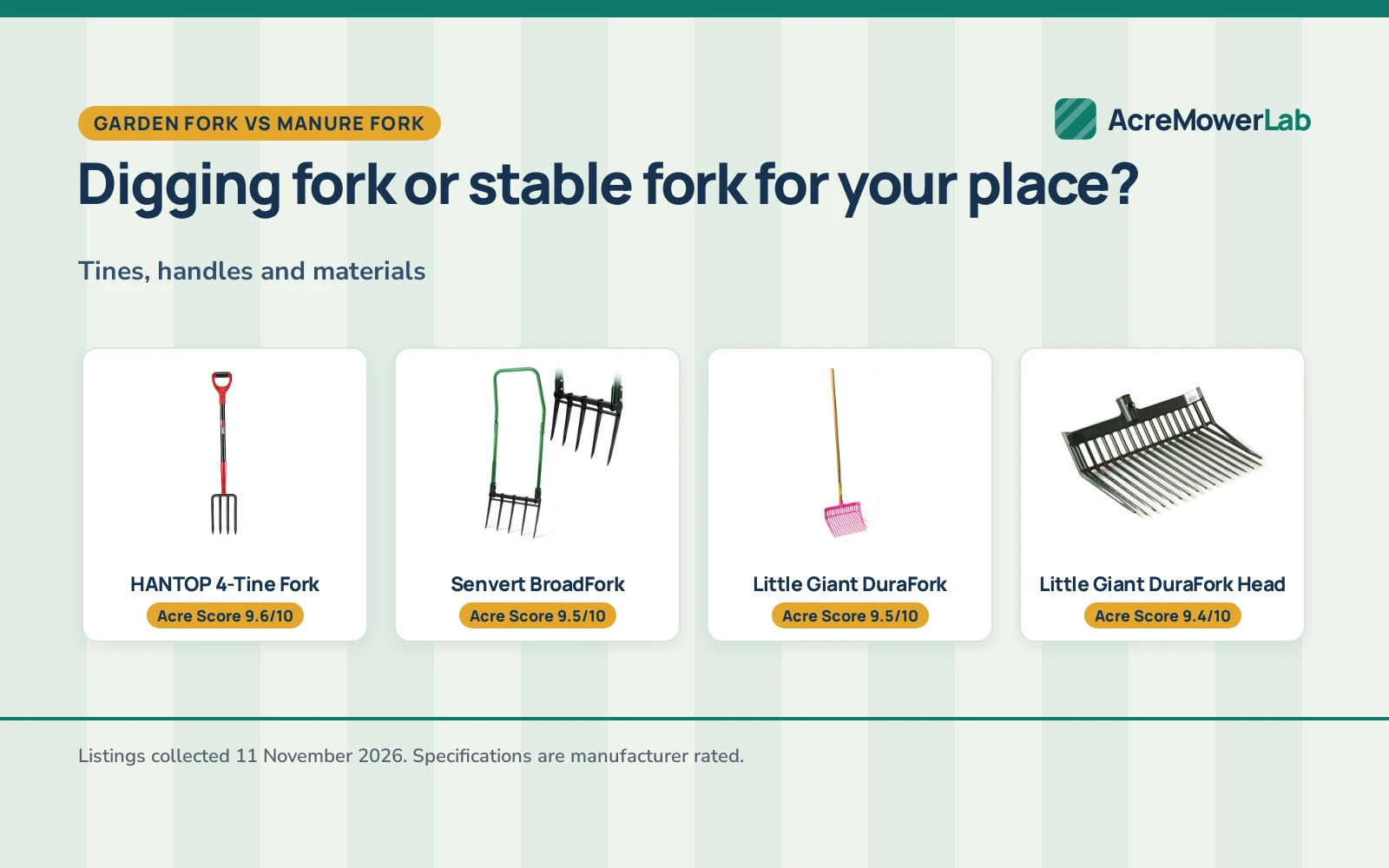
- Garden Fork vs Manure Fork: Which One Should You Buy?
- Garden Shovel Types and Which One to Buy
- Best Digging Shovel (2026): 4 Picks for Garden and Yard Work
Use the Mower Matcher to narrow down choices by acreage, terrain, budget, and power type.