Is an Electric Riding Mower Worth It?
An honest look at electric riding mowers: runtime, battery lifespan, maintenance savings, deck sizes and whether going cordless fits your acreage.

On this page
Top picks at a glance
As an Amazon Associate I earn from qualifying purchases.
- 1
 EGO Power+ Z6 Zero Turn Electric Riding Lawn Mower9.6/10View on Amazon
- 2
 Greenworks 60V 54" MaximusZ Zero Turn Mower9.6/10View on Amazon
- 3
 EGO Power+ Electric Riding Lawn Mower9.5/10View on Amazon
- 4
 BLACK+DECKER Electric Lawn MowerView on Amazon
- 5
 LawnMaster MEB1114K Electric Corded Lawn Mower 15-Inch 11AMPView on Amazon
- 6
 BLACK+DECKER Electric Lawn Mower with Bike HandleView on Amazon
- 7
 LawnMaster Electric Lawn Mower 12AMP 19-Inch ME1218X.01View on Amazon
- 8
 LawnMaster MEB1216K Electric Lawn Mower 16-Inch 12AMPView on Amazon
- 9
 BLACK+DECKER BEMW482BH Electric Lawn MowerView on Amazon
So, is an electric riding mower worth it for your property? The short answer is yes if your lawn size matches the battery capacity of available models (ranging up to 2.0 acres for a residential tractor and up to 4.4 acres for a large zero-turn), you want to avoid engine oil changes, spark plugs, and fuel cans, and you have an accessible outlet for charging. It is not worth it if you cut larger acreage exceeding single-charge limits, need heavy ground-engaging attachments, or prioritize the lowest upfront cost. Battery riders eliminate engine service, but battery replacement expense and runtime limits remain key trade-offs.
Other machines to compare
 BLACK+DECKER Electric Lawn MowerCheck price on Amazon
 LawnMaster MEB1114K Electric Corded Lawn Mower 15-Inch 11AMPCheck price on Amazon
 BLACK+DECKER Electric Lawn Mower with Bike HandleCheck price on Amazon
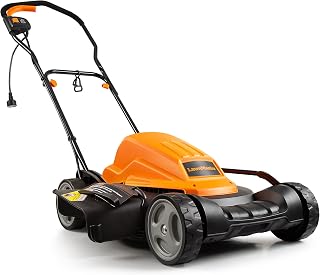 LawnMaster Electric Lawn Mower 12AMP 19-Inch ME1218X.01Check price on Amazon
 LawnMaster MEB1216K Electric Lawn Mower 16-Inch 12AMPCheck price on Amazon
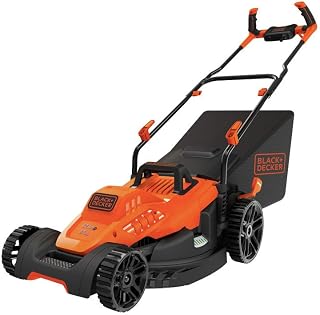 BLACK+DECKER BEMW482BH Electric Lawn MowerCheck price on Amazon
AcreMowerLab earns a commission when you shop through links here. It never changes your price. Affiliate disclosure.
Is an electric riding mower worth it: compare battery and gas
| Factor | Battery Riding Mower | Gas Riding Mower |
|---|---|---|
| Routine upkeep | No engine oil, spark plugs, air filters, or fuel stabilizer | Requires seasonal oil changes, filters, and spark plug service |
| Noise and exhaust | Quiet operation with zero local exhaust fumes | Loud engine noise and combustion exhaust emissions |
| Coverage per session | Up to 2.0 acres on a 42-inch rider or 4.4 acres on a 60-inch rider | Continuous operation limited only by fuel tank capacity |
| Power output | Matches a 16 HP or 31HP gas engine on stated models | Broad horsepower range across single and twin cylinders |
| Energy storage | Battery capacity fades gradually over seasons of use | Fuel system requires fuel stabilizer before off-season storage |
Choosing between battery power and gasoline comes down to how your property matches these capabilities. If you manage a smaller lot, our guide to the best riding mower for 1 acre compares suitable options by deck width and maneuverability.
Step 2: calculate your acreage and runtime needs
Acreage is the primary factor when deciding if a battery rider makes sense. Unlike a gasoline tractor that refuels in minutes, a battery machine must finish your lawn on one charge or pause while the pack replenishes.
Manufacturer ratings provide a clear baseline. The PRORUN 42-inch lawn tractor listing states an 80 minutes runtime covering up to 2.0 acres using its included 60V power system. For larger lawns, the Greenworks 60-inch commercial-style zero-turn mower provides an average battery life of 105 minutes and is rated to cut up to 4.4 acres on a full charge. Smaller walk-behind mowers like the Greenworks 25-inch self-propelled unit cover up to 3/4 acre with a 70-min runtime, showing why dedicated riders are necessary on larger properties.
Tall or wet grass forces blade motors to draw more current, shortening runtime. If your lawn borders a mower’s upper limit, explore larger capacity options in our electric riding mower coverage.
Step 3: evaluate charging access and electrical requirements
Every electric rider requires a sheltered charging location. Your garage, shed, or barn needs an accessible outlet that eliminates running extension cords across outdoor areas.
Charging systems differ by battery size. Smaller riders plug into standard household outlets with included chargers, replenishing between mowing sessions. Larger models use high-output chargers. For example, the Greenworks 60-inch zero-turn listing includes a 1500W wall fast charger (1.5kW) to restore its complete battery setup. High-draw chargers work best on a dedicated circuit to prevent breaker tripping.
Ambient temperature also affects charging. Lithium-ion batteries should not be charged in freezing conditions, which can permanently damage internal cells. If your storage area drops below freezing, bring removable battery packs indoors to charge safely.
Step 4: compare maintenance requirements and upkeep
The main advantage of an electric rider is eliminating routine engine upkeep. Gas mowers require changing oil, replacing oil and air filters, inspecting spark plugs, and cleaning cooling fins every season. Battery riders remove these tasks entirely.
Furthermore, many electric models use direct-drive brushless motors mounted to each cutting blade. The PRORUN 42-inch rider, for example, powers its twin blades with direct-drive brushless motors, eliminating the deck belts, idler pulleys, and tension springs that wear or snap on belt-driven decks.
Electric riders still require blade sharpening, correct tire inflation, and deck cleaning. To make cleanup easier, the PRORUN 42-inch stamped steel deck includes a washout port for connecting a garden hose. Keep electrical terminals clean and check safety switches periodically.
Step 5: factor in long-term battery lifespan and replacement
While an electric rider saves money on oil and tune-ups, long-term costs depend on battery longevity. All lithium-ion cells lose capacity over seasons of repeated charging, eventually reducing maximum runtime.
Manufacturer warranties indicate expected reliability. PRORUN backs its 42-inch rider with a 3-Year residential tool and battery warranty, while Greenworks provides a 4-year warranty on its riding machine. Understanding warranty coverage is vital because replacement packs represent a major expense. Our guide on battery lifespan examines how storage habits and cell chemistry affect degradation over time.
Battery design also matters. The PRORUN rider includes six battery ports with automatic switchover between batteries, allowing flexible pack configurations. Greenworks uses removable suitcase-style packs (such as 20.0Ah and 8.0Ah batteries) that can be brought inside for winter storage or replaced individually.
Assess your property terrain and slope limits
Property terrain strongly influences whether an electric rider fits your yard. Electric drive motors deliver instant torque from a standstill, providing smooth acceleration without gear shifting. However, machine weight and tire traction dictate slope performance.
Electric riders carry substantial weight from heavy decks and battery banks. The PRORUN 42-inch tractor lists an item weight of 330.7 pounds, while the commercial-grade Greenworks 60-inch zero-turn weighs 1120 pounds. Extra mass increases downhill momentum, lengthening stopping distances on damp grass. Zero-turn mowers are particularly prone to sliding on slopes because steering depends entirely on independent rear-wheel traction.
Never exceed the manufacturer stated maximum slope rating in your manual, and avoid mowing steep banks or ditch edges. On moderate slopes within published limits, a lawn tractor with front-wheel steering generally tracks contours more predictably than a zero-turn. Check our picks for riding mowers for hills to evaluate slope ratings.
Match deck width and cutting performance to your turf
Mowing efficiency depends on matching deck width to property layout. A wider deck reduces passes across open turf, but requires wider gates and extra storage space.
Deck construction also influences durability. The PRORUN 42-inch rider features a 14-gauge stamped steel deck designed with smooth airflow for mulching and discharge on finished turf. In contrast, the Greenworks 60-inch zero-turn utilizes a heavy-duty 10-gauge fabricated steel deck built to withstand impacts on rough rural acreage.
Blade speed ensures a clean cut without stragglers. The Greenworks mower maintains a constant blade tip speed of 17,900 ft/min across three brushless motors to prevent bogging down in dense turf. For height adjustment, the PRORUN rider offers 7 positions ranging from 1 to 4.5 inches, while the Greenworks model provides 8 positions from 1.5 to 4.5 inches.
Check towing capacity and attachment capability
Many acreage owners use riding mowers for towing yard carts, aerators, or spreaders. If you plan to pull attachments, examine stated towing capacity before buying.
Electric drivetrains handle towing smoothly because electric motors deliver steady torque at low speeds. The Greenworks 60-inch zero-turn listing specifies a 300 lb towing capacity along with front and rear hitch capability, easily moving a loaded utility dump cart, lawn roller, or broadcast spreader across flat ground.
However, towing heavy loads strains electric transaxles and depletes battery reserves faster than mowing alone. If a rider listing states no towing capacity, do not tow heavy attachments that could overload drive motors.
Storage considerations and winter battery care
Off-season storage differs significantly between electric and gas mowers. Gasoline equipment requires fuel stabilizer or draining the carburetor to prevent gumming.
Electric mowers eliminate fuel concerns, but lithium battery packs require care to avoid cell damage. Never leave batteries completely drained over winter, as voltage can drop below recoverable levels. Store packs at recommended charge levels in a cool, dry area protected from freezing temperatures.
If your mower has removable batteries, storing them indoors protects against freeze-thaw cycles. Our guide on storing a battery mower for winter outlines practical maintenance steps.
Safety
Operating a riding mower safely requires strict adherence to manufacturer instructions. Because electric riders run quietly, family members or pets may not hear an approaching machine. Always clear the mowing area of children, pets, and bystanders before engaging blades.
Follow these essential safety practices:
- Never exceed the manufacturer stated maximum slope rating in the operator manual, and avoid mowing near steep drop-offs, retaining walls, or ponds.
- Zero-turn mowers can lose steering traction on slopes, especially when grass is damp.
- Always use the rollover protective structure and fasten the seat belt if equipped.
- Never carry passengers or children on the mower or towed carts.
- Disengage mower blades before shifting into reverse, and look behind before backing up.
- Wear protective eyewear, sturdy footwear, and hearing protection.
- Clear rocks, branches, and debris from the lawn before mowing.
- Remove the safety key and disconnect power packs before inspecting blades or cleaning the deck.
FAQ: mowing large lots
How long do electric riding mower batteries last before needing replacement?
Residential lithium battery packs generally provide dependable service across multiple mowing seasons. Manufacturers back packs with warranties such as a 3-Year term on the PRORUN rider or a 4-year term on Greenworks machines. Pack longevity depends on operating temperatures, annual acreage cut, and winter storage care.
Can an electric riding mower handle hills and slopes?
Electric mowers provide instant torque for climbing slopes within the manufacturer stated maximum slope rating in the manual. However, operators should never use riding mowers on steep inclines, severe drop-offs, or wet grass where heavy machines can slide. Check your manual for published slope limits.
What happens if the battery runs out while mowing far from the charger?
Modern electric riders include digital dashboard displays showing battery levels. Most machines alert the operator when power runs low, and many automatically shut down blade motors while reserving enough drive power to return the machine to your charging outlet.
Is an electric riding mower cheaper to maintain than a gas mower?
Yes. Ongoing upkeep is lower because electric mowers eliminate oil changes, spark plugs, air filters, and drive belts. Owners avoid buying gasoline and oil. However, eventual battery pack replacement remains a significant future expense.
Can an electric riding mower pull utility carts and yard attachments?
Many electric riding mowers can pull light yard equipment if equipped with a hitch. For example, the Greenworks 60-inch zero-turn lists a 300 lb towing capacity for utility trailers or spreaders. Always consult the manual for towing limits to avoid overloading electric drive motors.
More mowing guides
- Best Riding Mower for 1 Acre: 4 Picks by Deck Size
- Best Electric Riding Mower: 4 Picks by Rated Acres
- How Long Do Electric Riding Mower Batteries Last?
Explore our riding mower reviews to compare options across cutting widths, battery capacities, and terrain types.