What Is a Shear Pin and When to Replace It
A shear pin is a small pin made to break first, so a rock or stump stops the auger instead of breaking the gearbox.

On this page
Top picks at a glance
As an Amazon Associate I earn from qualifying purchases.
- 1
 4 Pack 2-Stage Snow Blower Shear Pin ASP2400D for EGO 24" 28"View on Amazon
- 2
 Snow Blower Shear Pin 703063 Cotter Pins 10 PackView on Amazon
- 3
 For Polaris ATV Snow Plow Shear Pin Glacier Plow Pin ReplaceView on Amazon
- 4
 KPALAG 10PCS Snow Blower Shear Pin SetsView on Amazon
What is a shear pin? It is a small pin that sits in the driveline between the engine and the working part of a machine, such as the auger of a snow blower or the tines of a tiller, and it is made to break before anything more expensive does. When the auger or tines hit a rock, a stump or a hidden piece of metal, the pin snaps and the working part stops turning, which keeps the gearbox and the engine from taking the hit. This guide explains what a shear pin looks like, where it sits, how to tell when it has broken and how to fit a new one.
Other machines to compare
 4 Pack 2-Stage Snow Blower Shear Pin ASP2400D for EGO 24" 28"Check price on Amazon
 Snow Blower Shear Pin 703063 Cotter Pins 10 PackCheck price on Amazon
 For Polaris ATV Snow Plow Shear Pin Glacier Plow Pin ReplaceCheck price on Amazon
 KPALAG 10PCS Snow Blower Shear Pin SetsCheck price on Amazon
AcreMowerLab earns a commission when you shop through links here. It never changes your price. Affiliate disclosure.
What is a shear pin and what it protects
A shear pin joins two parts of a driveline, usually a shaft and the hub of an auger, a fan or a set of tines, and it carries the turning force from the engine to the working part. The pin is made from softer metal than the shaft and the gearbox, so when the working part jams, the pin shears in two and the working part stops turning. That break is the point: the pin is the part made to fail, while a stripped gearbox or a bent shaft takes the machine out of work.
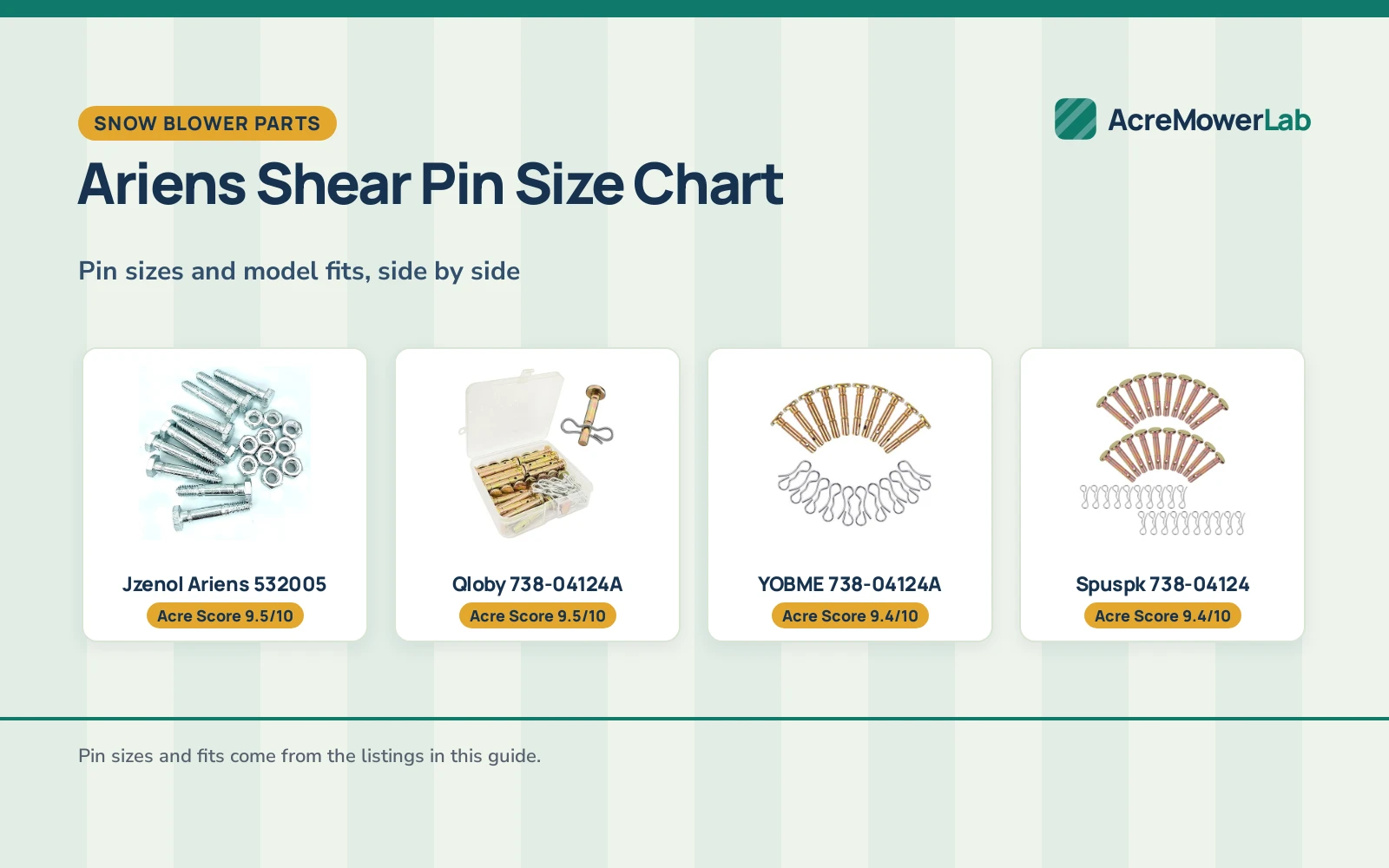
The shear pins for the snow blowers named here measure 1/4 inch across, in lengths of 1-1/2, 1-9/16 and 1-3/4 inches. Huthbrother lists its pins at 1/4 inch across and 1-9/16 inches long, sold as a pack of 30 shear pins with 30 cotter pins. KOCBSYY lists a kit of 20 shear pins and 20 cotter pins at 1/4 inch by 1-1/2 inches, made to fit a 3/4 inch auger shaft. The cotter pin goes through a small hole in the end of the shear pin and keeps it from sliding out while the machine runs.
Always fit the pin size the maker of your machine calls for. A pin that is too thick will not break when it should, and the gearbox takes the hit instead. A pin that is too thin will break under normal work and leave you changing pins in the middle of a job. Your manual gives the part number: listings cross-reference numbers such as 738-04124A and 738-05273 for MTD, Troy-Bilt, Cub Cadet and Craftsman snow blowers, and 1501216MA for Murray, AYP, Sears and Craftsman machines. See the Ariens shear pin size chart for sizes and fits.
What does a shear pin look like
A shear pin looks like a short, plain steel pin, about the length of a finger joint, with a hole near one end for the cotter pin. Most snow blower pins are a dull gold or silver color, and many have a narrow groove or a waist in the middle where the pin is made to break. The groove is the weak point, and it is what lets the pin shear cleanly instead of bending.
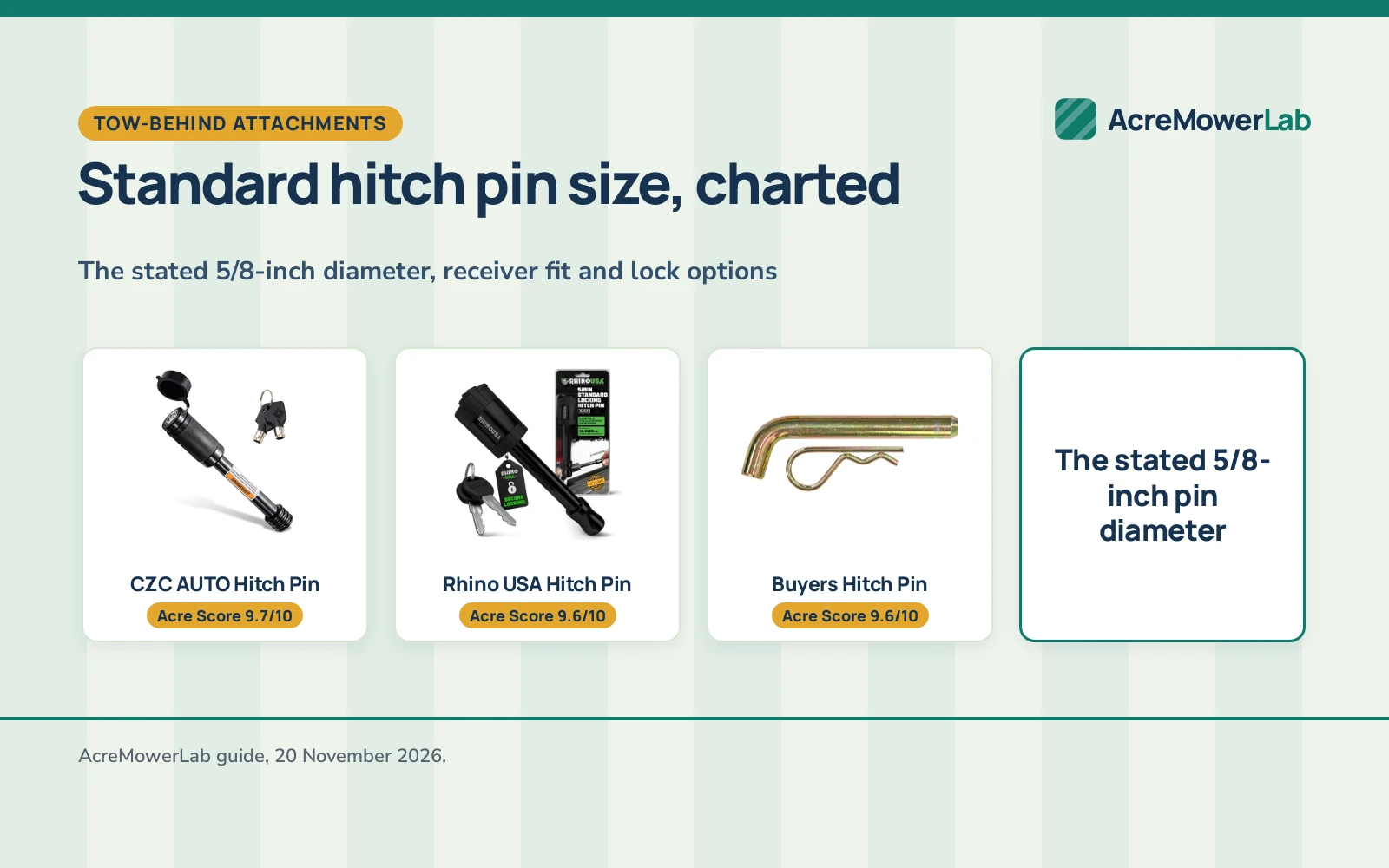
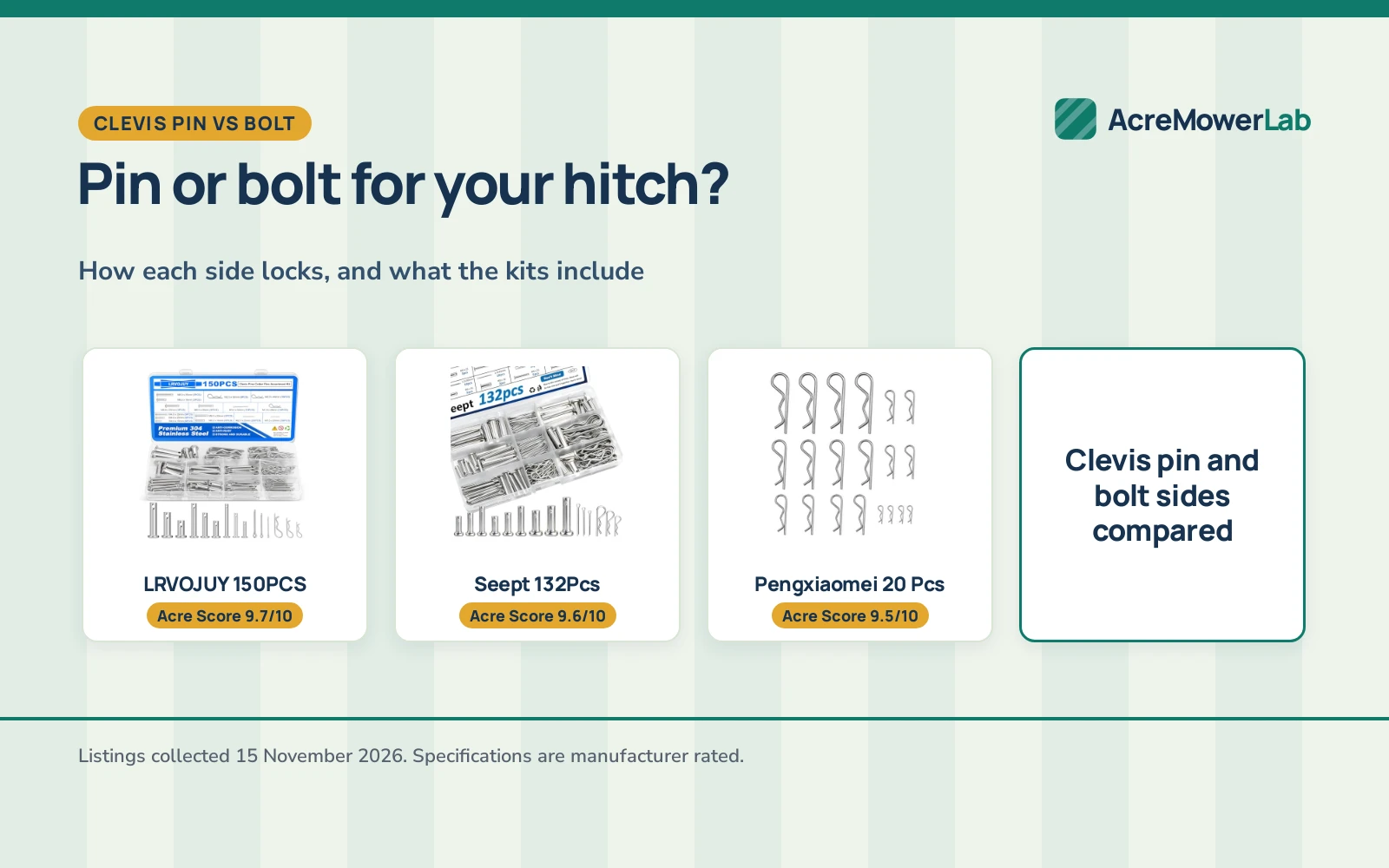
Do not confuse a shear pin with the other small pins in a parts drawer. A roll pin is a hollow, slotted spring pin that expands to grip the hole, sold in sets of 230 pieces in 10 sizes from 1/16 to 3/8 inch. A clevis pin is a headed pin with a hole for a cotter pin, sold in a 60 piece set with hole sizes of 3/32, 1/8 and 5/32 inch. A cotter pin is the split pin that locks a shear pin or a clevis pin in place, sold in sets of 1000 pieces in 6 sizes from 1/16 to 5/32 inch. Each has its own job, and only the shear pin is made to break. The clevis pin vs bolt guide explains how headed pins differ from bolts.
Where a shear pin sits on your machine
On a two-stage snow blower, a shear pin goes through the auger shaft and the hub of each auger blade, so each side of the auger has its own pin. On a tiller, the pin sits where the tine shaft meets the drive, and on a brush hog it sits in the PTO shaft between the tractor and the mower. The pin sits between the power source and the working part, because that is the part that can jam.
To find the pin on your machine, follow the shaft from the gearbox to the working part and look for a small pin with a cotter pin through its end, passing through both the shaft and the hub. Your manual shows the spot and the part number. Keep a few spare pins and cotter pins in the shop, because a pin tends to break when the machine is needed most, in deep snow or in the middle of tilling. The best shear pins for snow blower picks cover kits that include cotter pins, and the brush hog parts guide lists blades, belts and shear pins for rotary cutters.
How to tell when a shear pin has broken
The clearest sign is a machine that runs but does not work: the engine runs, yet the auger does not turn or the tines do not dig. Sometimes only one side of a snow blower auger stops, because each side has its own pin and only the jammed side breaks. If the machine suddenly stops throwing snow or stops digging while the engine keeps running, shut it off and check the pins.
Look at the pin itself: a broken shear pin shows a clean snap across the pin, and the two halves may sit loose in the hub or fall out when you pull the cotter pin. If the pin is bent but whole, replace it anyway, because a bent pin has already taken a hit and may not break cleanly next time.
How to fit a new shear pin
Shut the engine off and wait for every moving part to stop before you touch the auger or the tines. Pull the cotter pin out of the broken shear pin, then push the broken pieces out of the shaft and the hub. Line up the holes in the shaft and the hub, slide the new shear pin through both, and fit a new cotter pin through the hole in its end. Spread the ends of the cotter pin so it cannot slip out.
Check the fit before you start the machine: the shear pin should slide in without force, and the hub should turn the shaft when you move it by hand. If the holes do not line up, turn the hub until they do. Never drill the hole larger or force the pin in. Start the machine and run the working part briefly to confirm it turns as it should.
Safety
Shut the engine off and wait for all moving parts to stop before you work on the auger, the tines or the PTO shaft. Wear eye protection and work gloves, and keep hands, loose clothing and hair clear of the auger and the tines. Never reach into a running snow blower or tiller to clear a jam. If the machine needs work beyond a shear pin, follow the manual or take it to a repair shop.
FAQ: mowing large lots
What does a shear pin look like?
A short steel pin with a hole near one end for a cotter pin, often with a narrow groove in the middle where it is made to break. The pins for the snow blowers named here measure 1/4 inch across, in lengths of 1-1/2, 1-9/16 and 1-3/4 inches.
Can I use a bolt instead of a shear pin?
No. A bolt is stronger than a shear pin and will not break when the auger or tines jam, so the force goes into the gearbox and the shaft instead. Always fit the shear pin size your manual calls for.
How do I know which shear pin fits my machine?
Check the part number in your manual. Listings cross-reference numbers such as 738-04124A and 738-05273 for MTD, Troy-Bilt, Cub Cadet and Craftsman snow blowers, and 1501216MA for Murray, AYP, Sears and Craftsman machines.
What breaks a shear pin?
A rock, a stump, a chunk of ice or a hidden piece of metal that stops the auger or the tines in a single turn. The pin takes the hit so the gearbox and the shaft do not.
Do I need to replace the cotter pin too?
Yes, fit a new cotter pin with each new shear pin. Kits are sold with both: Huthbrother lists 30 shear pins with 30 cotter pins, and KOCBSYY lists 20 shear pins with 20 cotter pins. A worn cotter pin can slip out and let the shear pin walk free.